
 Se i rummet
 Del som kort
 Del
Del
 Detaljer
 Guide
Guide

 Download
 Lignende værker
 Røntgenundersøgelse
 Diasshow
 Spørgsmål og svar
 Statistikker
Girl in the greenery

- 120.0 x 159.0 cm


 Vis mere
Få en printklar fil, der rækker langt ud over web-forhåndsvisningen. Hvert digitalt billede, vi sælger, stammer fra en højopløst master i vores database — typisk mellem 5.000 og 15.000 pixels i bredden — så du med selvtillid kan printe stort, beskære tæt eller gengive fine detaljer.
Ingen fil forlader vores studie uden at være blevet behandlet. En digital ekspert kontrollerer farverne i forhold til det originale maleri og korrigerer dem efter behov, hvorefter klarhed og detaljer forbedres med professionelle retoucheringsværktøjer — altid med fuld respekt for kunstnerens penselstrøg og stil. Resultatet er et billede, der ligner selve maleriet, og ikke blot et scannet billede med et filter.
Du godkender først, når du er tilfreds: Vores ekspert sender billedet til din gennemgang via e-mail inden for 72 timer. Ikke tilfreds? Bed om rettelser eller forbedringer, eller anmod om en refundering, hvis kvaliteten ikke lever op til forventningerne.
Dette er den kvalitet, som forlag, designstudier, gallerier og trykkerier stoler på.
Digitalt billede
Download en højopløselig fil til personlig fremvisning, print og kreative projekter. ( Skift til printsalg Køb håndmalet maleri)
Inkluderet i alle ordrer på digitale billeder
Ekspertise i digital levering, garanteret
Når du vælger OriginalUniqueArt.com, får du ikke blot et billede – du modtager et professionelt optimeret digitalt kunstværk, skabt med præcision og sikret med en tilfredshedsgaranti. Her er alt, hvad din ordre automatisk indeholder:

Hurtig levering via e-mail
Din højtopløselige digitale billedfil sendes til din e-mail inden for 72 timer efter bestilling – klar til øjeblikkelig brug.

AI-optimeret digital fil
Dit kunstværk optimeres professionelt ved hjælp af avancerede AI-værktøjer og manuel redigering, hvilket sikrer maksimal detaljegrad, klarhed og farvenøjagtighed.

Gratis livslang genlevering
Har du ved en fejl slettet eller mistet din fil? Ingen bekymring – vi sender den igen til enhver tid, helt gratis.

Ingen importgebyrer – nogensinde
Nyd dit kunstværk med det samme uden told, afgifter eller leveringsgebyrer – digitale downloads er altid skattefrie.

Garanteret farvenøjagtighed
Vi sikrer, at dit digitale billede gengiver de originale farver så præcist som muligt ved hjælp af professionelle værktøjer og farvestyring.

100 dages tilfredshedsgaranti
Hvis du ikke er tilfreds med dit digitale billede, vil vi revidere det eller refundere 100% inden for 100 dage – uden spørgsmål.

100% Pengene tilbage-garanti
Ik tilfreds? Få fuld refusion inden for 100 dage efter modtagelse af din digitale fil – uden spørgsmål.

Mængderabat ved storkøb
Køb 3 billeder, spar 10% - Køb 5, spar 15% - Køb 10+, spar 20%. Ideelt til kreative projekter, gallerier og bureauer.
August Macke’s ‘Girl in the Greenery’: A Burst of Expressionist Joy
August Macke's Girl in the Greenery, painted in 1914, is more than just a depiction of a group enjoying a sunny afternoon; it’s a vibrant distillation of the German Expressionist movement’s core tenets. Measuring 120 x 159 cm, this oil on canvas work immediately captivates with its bold color palette and dynamic composition, reflecting Macke's desire to capture not just what he saw, but how he *felt* about it. Created at the cusp of a world teetering on the brink of conflict, the painting embodies an almost childlike joy – a fleeting moment of serenity amidst an increasingly uncertain era.
A Symphony of Color and Geometric Form
Macke’s technique is instantly recognizable. He employs flattened planes of color, characteristic of Post-Impressionism but pushed to its expressive extreme within the Expressionist framework. The figures are rendered with simplified geometric shapes – circles, squares, and triangles – contributing to a sense of movement and energy. This deliberate abstraction isn't about rejecting reality; rather, it’s an attempt to distill emotion and experience into their purest forms. Notice how the greens of the foliage aren’t blended or softened but applied in distinct blocks, creating a visual rhythm that draws the eye across the canvas. The inclusion of birds – soaring above and perched amongst the trees – adds another layer of symbolic richness, representing freedom, aspiration, and perhaps even a longing for escape.
Historical Context: A Moment Frozen in Time
Painted in 1914, just months before the outbreak of World War I, the artwork offers a poignant glimpse into a world on the verge of collapse. Macke’s focus on everyday scenes – a group of people simply enjoying themselves outdoors – is a deliberate counterpoint to the looming anxieties of the time. The painting can be seen as an affirmation of life and beauty in the face of impending darkness, a testament to the enduring human spirit. It's crucial to understand that Macke was working within the context of the German Expressionist movement, which sought to express subjective emotions and experiences through distorted forms and intense colors – a reaction against the perceived superficiality of academic art.
Symbolism and Emotional Impact
The ‘Girl in the Greenery’ is not merely a portrait; it's an evocation of mood. The bright, optimistic color scheme, combined with the dynamic composition, creates a powerful sense of joy and vitality. The figures are presented as unified within their natural surroundings, suggesting harmony and connection. Macke’s ability to translate this feeling onto canvas is remarkable, creating a work that continues to resonate with viewers today. It's a reminder of the beauty that can be found in simple moments and the importance of cherishing those fleeting instances of peace and happiness.
Spørgsmål og svar
Hvor kan jeg finde en guide til "Girl in the greenery"?
Elevguide-siden for "Girl in the greenery" af August Macke tilbyder et printbart faktablad på to sider: kunstværket med dets identitetstabel, en tidslinje der placerer det i kunstnerens levetid, andre værker af kunstneren, den målte farvepalette og citater klar til kopiering i fire forskellige stilarter.
Hvad er målene på det originale "Girl in the greenery" af August Macke?
Det originale værk "Girl in the greenery" af August Macke måler 120 x 159 cm.
I hvilket år og inden for hvilken stilart blev "Girl in the greenery" skabt?
"Girl in the greenery" blev skabt i 1914 som en del af German Expressionism-bevægelsen.
Kunstnerens biografi
A Life Cut Short: The Vibrant World of August Macke
August Robert Ludwig Macke, a name forever intertwined with the brief but brilliant flowering of German Expressionism, lived a life tragically curtailed by the horrors of the First World War. Born in 1887 in Meschede, a small town nestled within the Sauerland region of Westphalia, his artistic journey was one of rapid evolution and profound exploration – a relentless pursuit to capture not just what he *saw*, but how he *felt* about it. Macke’s early years were marked by a restless spirit and an insatiable curiosity, leading him away from his family's building business and towards the vibrant world of art. His formal training at the Düsseldorf Art Academy, though ultimately deemed insufficient by his own discerning eye, provided a crucial foundation, while independent study and extensive travel proved to be the true catalysts for his unique artistic voice. These formative years were characterized by an absorption of Impressionist and Post-Impressionist techniques – particularly the evocative use of light and color – laying the groundwork for the bolder, more emotionally charged expressions that would define his later work. He supplemented his income through stage design, a demanding profession that honed his compositional skills and sharpened his eye for visual harmony.Influences and Artistic Development
Macke’s artistic trajectory was profoundly shaped by encounters with some of the most influential figures and movements of the early 20th century. A pivotal moment arrived in Paris in 1912, where he met Robert Delaunay, a leading proponent of Orphism – a branch of Cubism that focused on pure abstraction and the ecstatic harmony of color. This encounter proved transformative, introducing Macke to the concept of simultaneous contrast and profoundly influencing his approach to composition. He began experimenting with broken planes of color and abstracted forms, seeking to convey not just what he saw, but how he *felt* about it – a key characteristic of Expressionism. Simultaneously, his close friendship with Franz Marc, a fellow artist and a central figure in the influential group Der Blaue Reiter (The Blue Rider), drew him into the orbit of Wassily Kandinsky and other avant-garde thinkers. While Macke’s style remained distinct from Kandinsky's more purely abstract explorations, he embraced the group’s spirit of artistic freedom and spiritual inquiry. His paintings began to reflect a growing interest in depicting the emotional resonance of landscapes and everyday life – imbued with a sense of joy, optimism, and a yearning for connection. The influence of Henri Matisse, whose bold use of color and simplified forms captivated Macke during his time in Paris, is also evident in many of his works. He was particularly drawn to the Fauvist movement’s emphasis on vibrant hues and expressive brushstrokes, incorporating these techniques into his own distinctive style.The Blue Rider and Beyond: A Unique Expressionist Vision
As an integral member of Der Blaue Reiter, Macke contributed significantly to the group's exhibitions and publications, helping to disseminate its radical ideas about art and spirituality. However, he wasn’t simply a follower; he forged his own unique path within the movement. Unlike some of his colleagues who leaned towards darker, more angst-ridden themes – often reflecting the anxieties of the time – Macke consistently sought to portray beauty and harmony in the world around him. His paintings, such as *Bathing Girls with Town in the Background*, exemplify this approach – vibrant colors, simplified forms, and a sense of idyllic tranquility characterize his work. He masterfully blended elements of Fauvism, Cubism, and Futurism into a distinctly personal style, creating compositions that are both visually striking and emotionally resonant. *Woman in a Green Jacket*, painted in 1913, is another prime example – a portrait radiating warmth and vitality through its bold color palette and confident brushwork. His later works, like *Türkisches Café*, demonstrate his luminist approach, capturing the play of light and shadow with remarkable sensitivity. The influence of Japanese art, particularly woodblock prints, can also be detected in his use of composition and perspective.A Tragic End and Lasting Legacy
The outbreak of World War I brought a sudden and devastating end to Macke’s promising career. Driven by patriotic fervor – a sentiment tragically common among many artists at the time – he volunteered for military service in 1914. Tragically, he was killed in action just weeks later, on September 26th, at the front near Champagne, France, at the young age of 27. His final painting, *Farewell*, poignantly captures the somber mood that descended upon Europe as war engulfed the continent – a haunting testament to his untimely demise. Despite his tragically short life, August Macke left behind a body of work that continues to captivate and inspire. He remains a significant figure in the history of Expressionism, celebrated for his vibrant colors, dynamic compositions, and optimistic vision. His paintings offer a glimpse into a world on the cusp of change – a world grappling with modernity, industrialization, and the looming threat of war – imbued with a sense of beauty and hope amidst growing uncertainty.Exploring Macke’s World Today
Today, August Macke's works are held in prominent collections worldwide, including the Staatsgalerie Moderner Kunst in Munich, the Museum Ludwig in Cologne, and the Kunsthaus Zürich. Several museums dedicated to Expressionism feature his paintings prominently, offering visitors a chance to experience the power of his art firsthand. The Westfälisches Landesmuseum Münster and the Kunstmuseum Bonn are particularly noteworthy for their holdings of Macke’s work. His influence can be seen in the continued exploration of color and emotion by contemporary artists. For those seeking to delve deeper into his world, resources like Artnet and Wikipedia provide valuable biographical information and insights into his artistic development. Exploring his paintings through online databases such as OriginalUniqueArt allows for a closer examination of his technique and subject matter – revealing the enduring appeal of this remarkable artist whose life was tragically cut short but whose legacy continues to shine brightly.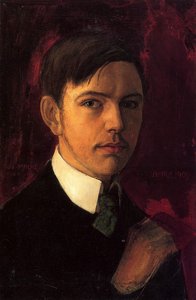
August Macke
1887 - 1914 , Tyskland
Kort fortalt
- Artistic Movement Or Style: Expressionisme
- Artists Or Movements Influenced By This Artist: ['Der Blaue Reiter']
- Artists Who Influenced This Artist:
- Franz Marc
- Robert Delaunay
- Date Of Birth: 3. januar 1887
- Date Of Death: 26. september 1914
- Full Name: August Robert Ludwig Macke
- Nationality: Tysk
- Notable Artworks:
- Baderpiger med by baggrund
- Gartentor
- Türkisches Café
- Place Of Birth: Meschede, Tyskland