Symbolism
Comus 21 (Artur Lajos Halmi)
Artur Lajos Halmi (1866–1939) har skabt Comus 21. Det tilhører Symbolism-bevægelsen. Den er udført i Ink On Paper.
- Ink On Paper

 Se i rummet

 Håndmalet oliemalerie
 Del som kort
 Del
 Faktablad


 Download
 Lignende værker
 Røntgenundersøgelse
 Diasshow
 Spørgsmål og svar

 Statistikker
Comus 21 kort fortalt
- Titel
- Comus 21
- Kunstner
- Artur Lajos Halmi (1866–1939)
- Kunstner født i
- Pest, Ungarn
- Materiale
- Ink On Paper
- Bevægelse
- Symbolism
- Periode
- Modern
- Motiv
- woman, dancing, tree, water, foliage, drapery
Hvad forestiller Comus 21?
Identification of Comus 21 by Artúr Lajos Halmi
We are looking at Comus 21, a work by the Hungarian artist Artúr Lajos Halmi. Born in 1866 in Pest, Halmi developed a presence in the art world that spanned continents, eventually passing away in New York City on December 3, 1939. This particular piece belongs to a series of explorations into mythological and allegorical themes, capturing a specific moment of movement and grace.
The title refers to the mythological figure associated with festivity and revelry. In this composition, Halmi moves away from the formal portraiture for which he was often sought, opting instead for a more ethereal, illustrative approach. The figures within the work appear to float, caught in a dance that feels both light and slightly melancholic. It is a quiet departure from his more structured studies, leaning into the dreamlike qualities of fantasy.
Halmi’s hand is evident in the delicate way the forms are defined. There is a sense of weightlessness here that contrasts with the grounded, earthy tones used throughout the scene. It is an intimate glimpse into the artist's ability to translate folklore into a visual language of flowing lines and soft, diffused light.
Visual Composition and Subject Matter
The composition centers upon two female figures positioned in the middle ground. They appear to be caught in a moment of movement, dancing or floating gracefully above the surface of the water. Their forms are draped in flowing robes, a detail that suggests they may be spirits or fairies rather than mortal beings. This sense of weightlessness creates a quiet dynamism at the heart of the scene.
In the background, the space is populated by a crowd of indistinct figures, adding a sense of scale to the ethereal setting. Stylized trees and dense foliage rise behind the dancers, providing a sense of depth and atmosphere to the landscape. The arrangement of these natural elements helps to frame the central figures, drawing the eye toward their rhythmic motion. The subject matter draws from the realms of folklore or mythology, presenting a scene that feels pulled from a dream or an ancient legend.
Artistic Style and Visual Elements
The aesthetic of this piece is defined by a whimsical and ethereal quality, reminiscent of the signature style of Arthur Rackham. There is a palpable sense of movement achieved through the use of delicate, flowing lines that trace the contours of the figures and the surrounding landscape. These organic, curvilinear shapes emphasize the weightless nature of the drapery and the natural forms of the foliage, creating a scene that feels suspended between reality and a dreamlike state.
The color palette remains muted and earthy, relying on a restrained selection of grey, brown, beige, and pale blue. This limited range contributes to the soft, diffused lighting that permeates the composition. Rather than relying on harsh shadows, the artist uses subtle variations in tone to establish depth. Texture is suggested through precise hatching and cross-hatching techniques, particularly within the dense foliage and the folds of the clothing, providing a tactile dimension to the otherwise airy atmosphere.
Technique and Artistic Medium
The execution of this piece relies on the delicate interplay between pen and ink and soft watercolor washes. This combination allows for a precise definition of form while maintaining a sense of lightness. The artist employs intricate hatching and cross-hatching to build volume within the foliage and the drapery of the figures. These fine lines create a tactile quality, giving weight to the organic shapes without sacrificing the ethereal atmosphere of the scene.
There is a certain fluidity in the way the medium is applied. The watercolor washes are used to create a muted, earthy palette, favoring shades of beige, grey, and pale blue. This restrained use of color avoids harshness, contributing to the dreamlike quality of the work. The soft, diffused lighting is achieved through these subtle tonal shifts rather than through sharp highlights or heavy shadows. It is a quiet, controlled approach to illustration.
Related Works by the Same Artist
The artist’s exploration of this particular theme is quite extensive, as seen in other compositions from the same series. You might find interest in Comus 16 or Comus 19, which share a similar thematic focus. These pieces allow for a deeper understanding of how the artist approached the subject matter through different visual arrangements.
Within the artist's broader body of work, Comus 11 also holds a significant place. This specific piece is part of the 1921 Comus illustration series. Examining these related works provides a sense of the continuity present in the artist's vision during that period of production.
Højopløselige billeder af Comus 21
Public domain: kunstneren døde i 1939.
Artur Lajos Halmi, Comus 21.
Artur Lajos Halmi (1866–1939), Comus 21, ink on paper. Frit tilgængelig Billede: OriginalUniqueArt.com.
Spørgsmål om Comus 21 besvaret
Hvilken teknik er "Comus 21" udført med?
"Comus 21" er udført i Ink On Paper.
Hvad forestiller "Comus 21" af Artur Lajos Halmi?
"Comus 21" af Artur Lajos Halmi forestiller: woman, dancing, tree, water, foliage, drapery, sky.
Er "Comus 21" fri for ophavsret?
Ophavsretsstatus for "Comus 21" af Artur Lajos Halmi: værket er i det offentlige domæne – ophavsretten er udløbet. Dette afgør, om der frit må foretages reproduktioner af billedet.
Hvilken kunstner tilskrives "Comus 21"?
Kunstneren bag "Comus 21" er Artur Lajos Halmi. Værket er katalogiseret under Artur Lajos Halmis navn.
Hvilken kunstretning tilhører "Comus 21" af Artur Lajos Halmi?
"Comus 21" af Artur Lajos Halmi tilhører Symbolism-bevægelsen. Denne bevægelse giver den stilistiske kontekst for værket.
Hvor i Artur Lajos Halmis karriere placerer "Comus 21" sig?
"Comus 21" repræsenterer Artur Lajos Halmis Mature Period.
Er "Comus 21" af Artur Lajos Halmi i det offentlige domæne, og hvorfor?
"Comus 21" af Artur Lajos Halmi er i det offentlige domæne – ophavsretten er udløbet. Ophavsretten beregnes ud fra kunstnerens dødsår, og Artur Lajos Halmi døde i 1939.
Hvordan passer "Comus 21" ind i Artur Lajos Halmis temaer og stil?
"Comus 21" er et værk fra Artur Lajos Halmis Symbolism-periode, hvis gennemgående temaer inkluderer mihály munkácsy, hans makart, mythological themes, illustrative fantasy style.
Hvordan relaterer motivet i "Comus 21" sig til Artur Lajos Halmis sædvanlige temaer?
"Comus 21" skildrer woman, dancing, tree, water, foliage, drapery, sky, mens Artur Lajos Halmis registrerede temaer er mihály munkácsy, hans makart, mythological themes, illustrative fantasy style. En sammenligning af de to viser, hvordan værket relaterer sig til kunstnerens sædvanlige motiver.
Om kunstneren, Artur Lajos Halmi

1866–1939, Ungarn
Artur Lajos Halmi
A Luminary af den Gyldne Alder: Livet og Kunsten hos Arthur Rackham Arthur Rackham, et navn der er synonymt med den fortryllende verden af britisk bogillustration, opstod under en periode ofte fejret som dens “Gyldne Alder.” Han blev født i 1867 i Lewisham, Kent, midt i en stor familie på tolv børn, og hans tidlige liv antydede den kunstneriske vej, han ville forfølge. En rejse til Australien i alderen sytten, foretaget af sundhedshensyn sammen med to tanter, viste sig at være formende, og udløste en udforskning, der ville definere hans karriere. Selvom han oprindeligt var bestemt til et mere konventionelt erhverv – clerksarbejde ved Westminster Fire Office – Rackhams passion førte ham til aftentimer på Lambeth School of Art, en afgørende beslutning, der satte ham på vej til at blive en af de mest elskede illustratører nogensinde. Hans begyndelser var ydmyge, bidrog med illustrationer og rapportering for *Westminster Budget*, men det var hans dedikation til at perfektionere sit håndværk, der i sidste ende adskilte ham fra mængden.
Om Artur Lajos Halmi Bemærkelsesværdige værker af Artur Lajos Halmi
Også af Artur Lajos Halmi
 Eventyr med paraply
 Jack the Giant-Killer 4
 There is almost nothing that has such a keen sense of fun as a fallen leaf (also known as Joy of a Fallen Leaf)1906
 Hansel picked up the glittering white pebbles and filled his pockets with them.
Essays om Comus 21
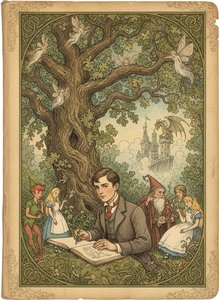 Arthur Rackham: A Master of British Illustration & the Enchanted Realm of Fairy TalesExplore the enchanting world of Arthur Rackham (1867-1939), a leading figure in British Golden Age illustration. Discover his iconic fairy …
 The 25 Masterpieces of Akseli Gallen-Kallela: A Journey Through Finnish Soul and MythBorn from the devastating loss of his daughter Marjatta, Flower of Death (1895) transforms private sorrow into a profound visual poetry.
 25 Mystical Landscapes and Ethereal Figures by Mikalojus Konstantinas Čiurlionis25 works created between 1904 and 1909, including Pisces and Bridges, detailing the symbolist evolution of Mikalojus Konstantinas Čiurlioni…