

 Se i rummet
 Send
Send Del
Del
 Detaljer
 Studieguide til kunstværker

 Download
 Lignende værker
 Røntgenundersøgelse
 Se diasshow
 Statistik
Garden Scene
 Oil On Canvas
- WallArt
- Modernism of his day
 1907
1907- Early Modern
 36.0 x 49.0 cm
 Arnold Schönberg Center
 Læs mere
Håndlavet oliereproduktion
Håndmalet olie på lærred i din valgte størrelse og ramme, udført efter bestilling af vores kunstnere. ( Skift til printversion Skift til digitalt billede)




P118B Dkr10

P118H Dkr10

P118W Dkr10

P438Z Dkr10

P508JH Dkr12

P508YH Dkr12

P805H Dkr10

P805Z Dkr10

P919BZ Dkr10

P919G Dkr10

P919XJ Dkr10

P959ZH Dkr10

P968JZ Dkr12

W106C Dkr8

W218G Dkr10

W218JH Dkr8

W218Y Dkr10

W307PJ Dkr10

W316G Dkr10

W316PJ Dkr8

W316Y Dkr10

W398PJ Dkr8

W4111J Dkr10

W500HY Dkr15

W500JH Dkr15

W692G Dkr12

W849H Dkr8

W940BG Dkr15

W953PJ Dkr8




Vælg mellem vores forudindstillede størrelser, der matcher kunstværkets originale proportioner.

Indtast den bredde og højde, du har brug for, så det passer til din ramme eller din væg. Da dette er håndmalet, kan kunstneren ved en anden form på størrelsen male lidt mere rundt om billedet eller skære lidt væk — det er op til dig. Vi sender dig et digitalt mockup til godkendelse, før maleriet påbegyndes. Billedet, der vises på denne side, viser ikke det endelige resultat — det er kun mockuppet, der gør.
Efter bestilling vil OriginalUniqueArt.com team sende en e-mail til kunden for at indhente instruktioner og fremsende et udkast til gennemgang.
Levering i hele verden () på 3-4 uger i stedet for de standard 5 uger. (22 oktober). Ingen kompromiser med kvaliteten.

Gratis ekspresforsendelse til hele verden

Lærred af linned i høj kvalitet

Komplet transportforsikring

Garanti for refusion af told og importafgifter

Garanti for autentisk farvegengivelse

100 dages returret ved fabrikationsfejl

100% fuld returret

Mængderabat ved flere køb
 Glasmulighed er kun tilgængelig i størrelser under 110 cm

Garden Scene
Reproduktionsmateriale
Reproduktionsstørrelse
-


Samlet pris
Dkr 1957
A Moment of Spontaneous Harmony: Exploring Arnold Schönberg’s ‘Garden Scene’
Arnold Schönberg's “Garden Scene,” painted in 1907, is more than just a depiction of an outdoor gathering; it’s a visceral expression of the artist’s revolutionary approach to color and form. Created during a pivotal moment in artistic history – a time when established conventions were being aggressively challenged – this work embodies Schönberg's commitment to spontaneity and his willingness to embrace unconventional materials, reflecting the burgeoning spirit of Modernism. Measuring 36 x 49 cm, the painting immediately captivates with its vibrant palette and seemingly effortless composition. The scene unfolds with a group of figures enjoying themselves beneath a lush green canopy, seated around tables laden with simple yet elegant dining ware. This isn’t a meticulously rendered landscape; rather, it's an impression, a fleeting moment captured through a deliberate disregard for traditional artistic constraints.
Technique and Materiality: A Radical Experiment
What truly distinguishes “Garden Scene” is Schönberg’s audacious technique. He abandoned the conventional practice of priming surfaces – a cornerstone of academic painting – opting instead to utilize plywood and board directly, exposing the raw texture of the support. This decision, repeated in over 50 distinct combinations across his œuvre, speaks volumes about his desire for immediacy and an unvarnished truthfulness in his work. The visible grain of the wood, coupled with the layering of pigments, creates a dynamic surface that shifts with the light, adding depth and complexity to the scene. Schönberg’s preference for a fluid approach is evident in the loose brushwork and the blending of colors, suggesting a process driven by intuition rather than precise calculation. This rejection of traditional methods aligns him squarely within the modernist movement's pursuit of new forms of expression.
Historical Context: Vienna at the Dawn of Modernism
To fully appreciate “Garden Scene,” it’s essential to understand its historical context. Schönberg was working in Vienna, a city that was a hotbed of artistic innovation at the turn of the 20th century. The late 1890s and early 1900s witnessed a dramatic shift away from representational art, with artists like Schönberg, Gustav Klimt, and Egon Schiele pushing boundaries in color theory, composition, and subject matter. Schönberg’s exploration of atonality in his musical compositions – a radical departure from traditional harmony – mirrored his artistic experimentation, reflecting a broader cultural upheaval. The painting's creation coincides with the premiere of his String Quartet No. 2 (1907-1908), further solidifying his position as a leading figure in this revolutionary movement.
Symbolism and Emotional Impact
While seemingly simple, “Garden Scene” resonates with subtle symbolic layers. The figures gathered around the tables represent community, leisure, and perhaps even contemplation – themes frequently explored in Impressionist and Post-Impressionist art. The vibrant green of the canopy evokes a sense of tranquility and renewal, while the varied textures and colors contribute to an overall feeling of warmth and conviviality. Schönberg’s deliberate use of unprimed surfaces adds a layer of vulnerability and honesty to the work, inviting viewers to connect with it on a deeply emotional level. This piece is not merely a representation of a garden; it's a testament to the power of artistic freedom and the pursuit of authentic expression.
Spørgsmål & svar
Hvilken kunsthistorisk placering har "Garden Scene" af Arnold Schönberg?
"Garden Scene" af Arnold Schönberg tilhører Modernism of his day-bevægelsen inden for Early Modern-perioden. Sammen giver de værket dets plads i kunsthistorien.
Hvilken tone læner "Garden Scene" sig mod?
En Green to Violet Spectrum nuance løber gennem "Garden Scene" af Arnold Schönberg.
Hvor intense er farverne i "Garden Scene" af Arnold Schönberg?
Farveintensiteten i "Garden Scene" er Balanced. Intensitet beskriver, hvor kraftige farverne fremstår.
Om kunstneren
tidligt liv og musikalske begyndelser
Arnold Schönberg, en østrig-amerikansk komponist, blev født den 13. september 1874 i Wien, Østrig. Hans tidlige liv var præget af en ydmyg begyndelse, da hans far var skobutiksejer. På trods af dette førte Schönbergs medfødte passion for musik til, at han i vid udstrækning selvuddannede sig inden for feltet.musikalsk udvikling og bemærkelsesværdige værker
Schönbergs tidlige værker, såsom Verklärte Nacht (1899), fremviste en syntese af Brahms og Wagner. Som han skred frem, blev han den centrale figur i den anden wienerskole, sammen med Anton Webern og Alban Berg. Hans kompositioner, herunder Strygekvartet nr. 2 (1907–1908), Erwartung (1909) og Pierrot Lunaire (1912), eksemplificerede hans innovative tilgang til atonalitet.undervisning, emigration og senere liv
Schönberg trak sig tilbage fra det preussiske kunstakademi i 1933 på grund af nazisternes magtovertagelse, som stemplede hans musik som "degenereret". Han underviste derefter i USA, blandt andet ved University of California, Los Angeles (1936–1944), hvor faciliteter er opkaldt efter ham i hans ære. [https://OriginalUniqueArt.com/@/arnold-scherichia](opdag mere om Schönbergs liv og værker på OriginalUniqueArt).- Schönberg udforskede filmmusik og skrev mere tonal musik, hvilket kulminerede i hans kammersymfoni nr. 2 i 1939.
- Han satirisede fascistiske tyranner i Ode til Napoleon (1942), inspireret af Byron.
- Efterkrigstidens Wien tilbød ham æresborgerskab, men han var syg, hvilket skildres i hans strygetrio (1946).
eftermæle og indflydelse
Da verden lærte om Holocaust, mindedes Schönberg dets ofre i A Survivor from Warsaw (1947). Israels konservatorium og akademi for musik valgte ham som ærespræsident i 1951. [https://OriginalUniqueArt.com/@@/a@d3bqc7-the-museum-destroyed-by-fire-(united-states)](lær mere om betydningen af hans arbejde på OriginalUniqueArt). hovedpunkter:- Schönbergs innovative musik var blandt de mest indflydelsesrige og omdiskuterede inden for det 20. århundredes klassiske musik.
- Mindst tre generationer af komponister videreudviklede hans noget formelle principper.
- Hans æstetiske og musikhistoriske synspunkter påvirkede musikologerne Theodor W. Adorno og Carl Dahlhaus.

Arnold Schönberg
1874 - 1951 , Østrig
Hurtige fakta
- Artistic Movement Or Style: Tolvtoneteknik; Ekspressionisme
- Artists Or Movements Influenced By This Artist:
- Anton Webern
- Alban Berg
- Artists Who Influenced This Artist:
- Johannes Brahms
- Richard Wagner
- Date Of Birth: 13. september 1874
- Date Of Death: 1951
- Full Name: Arnold Schoenberg
- Nationality: Østrigsk-amerikansk
- Notable Artworks:
- Suite, op. 29
- Music Typewriter
- Staffliner
- Place Of Birth: Wien, Østrig
Relaterede artikler

Beyond the Lines: Mastering the High-Impact World of Contemporary Abstraction
Master the high-impact world of contemporary abstraction. Discover how bold colors, textures, and modern movements like Abstract Expressionism can transform your space with premium, high-energy art curated for the design-conscious professional.

Geometrisk Abstraktion: Top 10 Kunstværker der Definerede Bevægelsen | OriginalUniqueArt.dk
Oplev de 10 mest ikoniske værker inden for geometrisk abstraktion! Fra Kandinsky til Mondrian – lær historierne bag disse banebrydende kunstnere og deres farverige malerier. Find museumskvalitets reproduktioner & inspiration til din indretning på OriginalUniqueArt.dk.

Kandinskys 25 Mesterværker: En Rejse Ind i Abstrakt Kunst | OriginalUniqueArt.com
Oplev Kandinskys 25 mest ikoniske værker! Dyk ned i abstrakt kunst, ekspressionisme og farvernes sprog. Find luksus reproduktioner af berømte malerier som 'Komposition VIII' på OriginalUniqueArt.com – inspiration til din vægkunst & indretning.
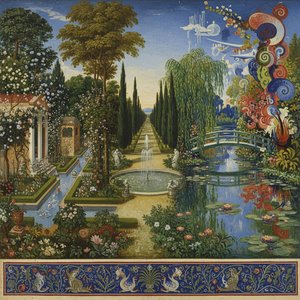
Cultivating Paradise: A Historical & Artistic Exploration of Gardens in Painting
Explore the rich history of gardens in painting! Discover masterpieces from Renaissance to Impressionism & beyond. Learn about symbolism, artists like Monet & Klimt, and find your perfect artwork at OriginalUniqueArt.

Top 10 Abstrakt Ekspressionisme Mesterværker – Kunst der Forandrede Verden | OriginalUniqueArt.com
Oplev de 10 mest ikoniske værker inden for Abstrakt Ekspressionisme – Jackson Pollock, Mark Rothko og mere. Lær historien bag kunstnerne & teknikken. Find museumskvalitets reproduktioner på OriginalUniqueArt.com.


