Romanticism · 1890
Honeymoon (Arnold Böcklin, 1890)
Arnold Böcklin (1827–1901) har skabt Honeymoon. Det er fra 1890. Det tilhører Romanticism-bevægelsen. Den er udført i Oil On Canvas. Det opbevares på Städel Museum i Frankfurt, Tyskland. Målene er 72 × 52 cm.
- 1890
- Oil On Canvas
- 72 × 52 cm
- Städel Museum, Frankfurt

 Se i rummet

 Håndmalet oliemalerie
 Del som kort
 Del
 Faktablad


 Download
 Lignende værker
 Røntgenundersøgelse
 Diasshow
 Spørgsmål og svar

 Statistikker
Honeymoon kort fortalt
- Titel
- Honeymoon
- Kunstner
- Arnold Böcklin (1827–1901)
- Kunstner født i
- Basel, Schweiz
- Dato
- 1890
- Medium
- Oil On Canvas
- Dimensioner
- 72 × 52 cm
- Hvor det kan ses
- Städel Museum, Frankfurt, Tyskland
- Bevægelse
- Romanticism
- Periode
- 19th Century
- Motiv
- romantic landscape, mountain view, intimate scene, atmospheric art, detailed texture, ethereal mood
Hvad forestiller Honeymoon?
A Moment of Sublime Romance: Arnold Böcklin’s “Honeymoon”
Arnold Böcklin's "Honeymoon," painted in 1890, is more than just a picturesque landscape; it’s a carefully constructed meditation on love, aspiration, and the profound connection between humanity and nature. Measuring 72 x 52 cm, this oil-on-canvas work exemplifies Böcklin's signature style within the Symbolist movement – a style characterized by its evocative mood, symbolic resonance, and meticulous attention to detail. The scene depicts a young couple perched atop a rugged rock formation, overlooking a vast, hazy expanse that speaks of both beauty and mystery. It’s a tableau designed not merely to represent a romantic encounter but to evoke a deeply felt emotion within the viewer.
Romanticism's Embrace: Composition and Technique
- Compositional Strength: The figures, centrally placed yet subtly distanced, draw the eye immediately, establishing a powerful focal point. The horizontal thrust of the rocky outcrop anchors the scene while simultaneously directing the gaze towards the distant landscape. This deliberate arrangement creates a sense of depth and stability, crucial elements within Böcklin’s approach.
- Meticulous Brushwork: Böcklin's technique is immediately apparent in the incredibly detailed brushwork. Layer upon layer of oil paint has been skillfully applied to build up the textures of the stone – rough, weathered, and undeniably ancient – as well as the flowing drapery of the woman’s dress and the delicate strands of her hair. This painstaking process imbues the painting with a remarkable tactile quality.
- Atmospheric Perspective: The use of atmospheric perspective—the subtle blurring of details in the background to suggest distance—further enhances the illusion of depth, transporting the viewer into this serene, almost dreamlike setting.
Symbolic Layers: Interpretation and Meaning
“Honeymoon” is rich with symbolic meaning, reflecting Böcklin’s fascination with themes of mortality, mythology, and the human condition. The elevated position of the figures on the rocky outcrop can be interpreted as a representation of aspiration – a desire to reach for something beyond the mundane. The vast landscape behind them symbolizes the immensity of emotion or experience, suggesting that love is both intensely personal and profoundly connected to the wider world. The muted color palette—browns, ochres, and greens—contributes to the painting’s melancholic yet hopeful mood, reminiscent of Romanticism's exploration of intense feelings and the sublime.
A Masterpiece of the Symbolist Era
Painted in 1890, “Honeymoon” stands as a testament to Arnold Böcklin’s mastery of the Symbolist style. His ability to capture not just visual beauty but also profound emotional and symbolic resonance is evident in every detail. This artwork offers a glimpse into the heart of the Symbolist movement – a movement that sought to express ideas and emotions through evocative imagery, rather than literal representation. A hand-painted reproduction of “Honeymoon” would bring this timeless piece into any interior space, offering a touch of Romantic elegance and contemplative beauty.
Hvilket museum udstiller Honeymoon?
Städel Museum
Frankfurt, Tyskland
Oprindelse og historie for Städel Museum Städel Museum har sine rødder i den personlige samling tilhørende Johann Friedrich Städel, en bankmand fra Frankfurt og en sand mæcen for kunsten. Institutionen blev etableret som en borgerlig fond i 1815 og blev formelt grundlagt i 1817. Städels vision var at bevare hans omfattende kunstskatte og sikre offentligheden adgang til de værker, han havde samlet gennem sine rejser og forretningsmæssige aktiviteter.


Højopløselige billeder af Honeymoon

Public domain: kunstneren døde i 1901.
Andre størrelser, beskæringer og kildehenvisning →Arnold Böcklin, Honeymoon (1890), Städel Museum. Public domain
Spørgsmål om Honeymoon besvaret
Hvor kan man i dag se "Honeymoon" af Arnold Böcklin udstillet?
Originalen af "Honeymoon" af Arnold Böcklin opbevares på Städel Museum, Frankfurt, Tyskland. En reproduktion gør det muligt at udstille værket i hjemmet.
I hvilket år blev "Honeymoon" af Arnold Böcklin skabt?
"Honeymoon" af Arnold Böcklin blev skabt i 1890.
Hvilken teknik er brugt til "Honeymoon" af Arnold Böcklin?
"Honeymoon" af Arnold Böcklin er udført i Oil On Canvas. Reproduktionerne har til formål at gengive denne tekniks visuelle udtryk.
Hvad er målene på det originale "Honeymoon" af Arnold Böcklin?
De registrerede mål for "Honeymoon" af Arnold Böcklin er 72 x 52 cm. Reproduktioner kan bestilles i andre størrelser, mens de samme proportioner bevares.
Hvad forestiller "Honeymoon"?
Motiverne i "Honeymoon" er romantic landscape, mountain view, intimate scene, atmospheric art, detailed texture, ethereal mood, symbolism, vintage painting.
Er "Honeymoon" af Arnold Böcklin i det offentlige domæne?
Hvad angår ophavsret, er "Honeymoon" i det offentlige domæne – ophavsretten er udløbet.
Hvem har skabt "Honeymoon"?
"Honeymoon" blev skabt af Arnold Böcklin. Informationen på denne side beskriver Arnold Böcklins originale værk.
Hvilken stilart tilhører "Honeymoon"?
"Honeymoon" af Arnold Böcklin tilhører Romanticism-bevægelsen. Denne bevægelse giver den stilistiske kontekst for værket.
Hvilken periode i Arnold Böcklins karriere tilhører "Honeymoon"?
Inden for Arnold Böcklins karriere tilhører "Honeymoon" perioden Mature Period, hvilket gør det muligt at sammenligne værket med kunstnerens øvrige værker.
Om kunstneren, Arnold Böcklin
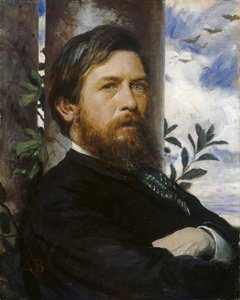
1827–1901, Schweiz
Arnold Böcklin
Øens skygge Basel, Schweiz, udgør udgangspunktet for et liv defineret af spændingen mellem det håndgribelige og det spektrale. Født den 16. oktober 1827 af Christian Frederick Böcklin og Ursula Lippe, bevægede den unge mand sig i sidste ende væk fra sin fars silkehandel mod Düsseldorf Akademiens strenge sale. Under Schirmers vejledning begyndte han at opsuge landskabets sprog, en færdighed der senere ville blive brugt til at kortlægge den menneskelige sjæls geografi.
Om Arnold Böcklin Bemærkelsesværdige værker af Arnold Böcklin
Også af Arnold Böcklin
 Dødens ø (Første version)1880
 Selvportræt med døden der spiller violin
 Kriget1896
 The Isle of the Dead (Version 2)1880

Essays om Honeymoon
 A Study in Melancholy: Finding Human Sorrow within the Post-Impressionist TraditionExplore the profound expression of grief through Munch, Van Gogh, and Degas. Discover the soul of Post-Impressionism with our expert study.
 The Language of Brushstrokes: Decoding Emotion and Technique in Art HistoryExplore the profound connection between technique and emotion. From the sculptural depth of impasto to classical mastery, decode the langua…
 Nature's Sublime Majesty: The Emotional Resonance and Spiritual Depth of Romantic Landscape PaintingExplore the spiritual depth of German Romanticism and Caspar David Friedrich's sublime landscapes. Discover the power of nature's majesty n…