
 Se i rummet
 Del som kort
 Del
Del
 Detaljer
 Guide
Guide

 Download
 Lignende værker
 Røntgenundersøgelse
 Diasshow
 Spørgsmål og svar
 Statistikker
Two Jaguars from Peru

- 242.0 x 314.0 cm


 Vis mere
Giclée / Kunsttryk
Giclée- eller lærredstryk i museumskvalitet med hurtig produktion og fleksible muligheder for finish. ( Køb håndmalet maleri Skift til digitalt billede)




P118B Dkr10

P118H Dkr10

P118W Dkr10

P438Z Dkr10

P508JH Dkr12

P508YH Dkr12

P805H Dkr10

P805Z Dkr10

P919BZ Dkr10

P919G Dkr10

P919XJ Dkr10

P959ZH Dkr10

P968JZ Dkr12

W106C Dkr8

W218G Dkr10

W218JH Dkr8

W218Y Dkr10

W307PJ Dkr10

W316G Dkr10

W316PJ Dkr8

W316Y Dkr10

W398PJ Dkr8

W4111J Dkr10

W500HY Dkr15

W500JH Dkr15

W692G Dkr12

W849H Dkr8

W940BG Dkr15

W953PJ Dkr8




Vælg mellem vores forudindstillede størrelser, der matcher kunstværkets originale proportioner.

Indtast den bredde og højde, du har brug for, så det passer til din ramme eller din væg. Et print kan kun beskæres, aldrig gøres større end selve billedet, så en størrelse med et andet format vil medføre, at dele af motivet går tabt. Vi sender dig en digital mockup til godkendelse, før vi printer noget. Billedet vist på denne side viser ikke den faktiske beskæring — det er kun mockuppen, der gør.
Verdensomspændende levering () på 2 uger i stedet for de sædvanlige 4/5 uger. (8 november)

Gratis ekspresforsendelse til hele verden

Lærred af linned i høj kvalitet

Fuld transportforsikring

Garanti for refusion af told og importafgifter

Garanti for præcis farvegengivelse

100 dages returret ved fabrikationsfejl

100% fuld returret

Mængderabat ved flere køb
 Glasmulighed er kun tilgængelig i størrelser under 110 cm

Two Jaguars from Peru
Giclée / Kunsttryk
Størrelse på reproduktion
-


Samlet pris
Dkr 540
Two Jaguars from Peru – A Masterpiece of Romantic Animal Sculpture
Antoine-Louis Barye’s *Two Jaguars from Peru*, completed in 1833, stands as a cornerstone of animal sculpture and exemplifies the fervent spirit of Romanticism. More than just a depiction of magnificent creatures—the jaguar, revered as a symbol of power and nobility in Mesoamerican cultures—this watercolor captures a moment of palpable interaction between two animals, skillfully rendered with meticulous detail and infused with dramatic emotion.
- Subject Matter: The painting portrays two jaguars positioned close together. One jaguar stands upright on the left, while the other lies prone on the right, creating an arresting juxtaposition of postures that speaks to Barye’s fascination with animal anatomy and behavior.
- Style & Technique: Barye's approach distinguishes him from his contemporaries; he eschewed idealized representations in favor of capturing animals in their natural habitat with remarkable realism. Watercolor was chosen as the medium, allowing for subtle gradations of tone and highlighting textures—particularly crucial for conveying the fur’s sheen and musculature. The artist employed a squared paper technique, ensuring precise proportions and facilitating accurate transfer onto canvas.
The historical context surrounding *Two Jaguars from Peru* is equally significant. Barye was deeply influenced by classical sculpture—particularly Michelangelo's David—and sought to emulate its grandeur and expressive power. Simultaneously, he embraced Romantic ideals of sublime beauty and emotional intensity, mirroring the broader artistic trends of his time.
- Historical Context: Barye’s work emerged during a period marked by scientific exploration and fascination with exotic cultures. The jaguar imagery draws upon Aztec and Mayan beliefs about animal spirits and divine power—a reflection of the burgeoning interest in Mesoamerican archaeology.
- Symbolism: Beyond its aesthetic qualities, *Two Jaguars from Peru* embodies symbolic representations of strength, vigilance, and primal instinct. Barye’s masterful rendering captures not merely an animal form but also a psychological state – conveying a sense of alertness and connection within the natural world.
The emotional impact of this artwork is undeniable. Barye's ability to convey dynamism and immediacy—evident in the subtle shading and expressive poses—transcends mere visual representation. It invites contemplation on the beauty and majesty of wildlife, while simultaneously hinting at a deeper exploration of human connection with the natural world. *Two Jaguars from Peru* remains an enduring testament to Barye’s artistic genius and his pivotal role in establishing animal sculpture as a respected genre.
Spørgsmål og svar
Er farverne i "Two Jaguars from Peru" af Antoine-Louis Barye livlige eller dæmpede?
Farven på "Two Jaguars from Peru" har en mætning på Subtle Color og en intensitet på Balanced.
Hvilke proportioner har "Two Jaguars from Peru" af Antoine-Louis Barye, og hvor stor er den?
"Two Jaguars from Peru" af Antoine-Louis Barye har proportionerne af et Landscape værk på 242 x 314 cm.
Hvor høj er kontrasten i "Two Jaguars from Peru" af Antoine-Louis Barye?
Lys-mørke-kontrasten i "Two Jaguars from Peru" er registreret som Statement. Kontrast beskriver, hvor kraftigt lyse og mørke områder adskiller sig fra hinanden.
Kunstnerbiografi
Antoine-Louis Barye: Naturens Skulptør og Romantikken i Bronze
Antoine-Louis Barye, født i Paris i 1795, er en skikkelse der står som en pioner inden for 1800-tallets skulpturkunst. Han var ikke blot en dygtig håndværker, men en visionær, der med enestående anatomisk nøjagtighed og dramatisk intensitet indfangede dyreriget i bronze og gips. Baryes arbejde revolutionerede skulpturen ved at hæve *animalier* – kunsten at skildre dyr – til et niveau af fin kunst, som tidligere var forbeholdt menneskelige figurer eller mytologiske fortællinger. Hans rejse begyndte ikke i en traditionel atelier, men som lærling hos sin fader, en guldsmed, hvilket gav ham en grundlæggende forståelse for metalarbejde og en præcision, der skulle vise sig uvurderlig senere hen. Yderligere studier under François-Joseph Bosio og Baron Antoine-Jean Gros gav ham et solidt fundament i klassiske principper, men det var mødet med dyrene i Jardin des Plantes omkring 1823, der virkelig tændte den kunstneriske gnist.Fra Guldsmed til Dyrenes Mester: En Unik Stil Udvikles
Baryes engagement i at studere dyr var næsten besættende. Han observerede dem ikke blot flygtigt; han analyserede deres anatomi, bevægelser og adfærd med en videnskabelig grundighed kombineret med romantisk passion. Denne realisme var langt fra klinisk – den var gennemsyret af den følelsesmæssige intensitet, der kendetegnede Romantikken. Tidlige værker som “Milo af Crotone fortært af en løve” (1819) og “Herkules med Erymanthe-vildsvinet” (ca. 1820), skabt mens han stadig var studerende, antydede hans spirende talent for dynamiske kompositioner og dramatiske fortællinger. Men det var med skulpturer som "Tiger der fortærer en Gavial-krokodille" (1831) – en monumental gipsmodel, der vakte sensation på Salon – og “Løve der knuser en slange” (1832), støbt i bronze, at Barye virkelig etablerede sin signaturstil. Disse var ikke blot statiske gengivelser; de var øjeblikke af rå magt frosset i tiden, der indfangede naturens brutale skønhed og kampen for overlevelse. Han gik ud over simpel imitation og forsøgte at formidle selve essensen af dyrelivet – deres styrke, smidighed og utæmmede ånd.Monumentale Værker og Kongelige Bestillinger
Gennem hele sin karriere skabte Barye en imponerende samling af skulpturer, hver især et vidnesbyrd om hans exceptionelle evner til at gengive dyreformer og bevægelser. Ud over de ikoniske "Tiger der fortærer en Gavial-krokodille" og “Løve der knuser en slange”, demonstrerede mesterværker som "Theseus og Minotaurus" (1843), “Roger og Angelica på Hippogriffen” (1846), “Lapitha og Kentaur” (1848) og “Jaguar der fortærer et Hare” (1850) hans alsidighed og fantasifulde kraft. Han var ikke begrænset til skildringer af rovdyrs konfrontationer; han udforskede også mytologiske scener, hvor han indgav dem den samme dynamiske energi og anatomiske præcision, der definerede hans dyrestudier. Hans talent rakte ud over mindre bronzestøberier, da han modtog prestigefyldte bestillinger til monumentale værker, herunder “Løven på Juli-søjlen”, et kraftfuldt symbol på fransk modstandsdygtighed, og skulpturer der prydede Tuileries Haven i Paris. Disse store projekter demonstrerede hans evne til at omsætte sin kunstneriske vision til offentlig kunst, hvilket cementerede hans ry som en af Frankrigs førende skulptører.Indflydelse, Udfordringer og Varig Betydning
Baryes arbejde var et resultat af forskellige indflydelser. Den romantiske bevægelses fokus på følelser og individualitet er tydelig i spændingen i hans skulpturer. Samtidig hentede han inspiration fra klassisk kunst, hvilket ses i hans opmærksomhed på anatomisk nøjagtighed og idealiserede former. Det var dog hans videnskabelige tilgang til observation – et direkte resultat af de utallige timer, han brugte på at studere dyr i Jardin des Plantes – der virkelig adskilte ham fra mængden. På trods af den kritiske anerkendelse oplevede Barye også vanskeligheder i sit liv, herunder økonomiske problemer gennem store dele af sin karriere. En konkurs i 1848 tvang ham til at sælge sine modeller og forme, hvilket førte til en periode, hvor ringere kopier oversvømmede markedet og skadede hans ry. Han fandt en vis stabilitet som professor i tegning ved Museum for Naturhistorie i 1854, men det var først posthumt, at hans geni fik sin fulde anerkendelse. I dag er Antoine-Louis Barye anset som faderen til moderne dyreskulptur. Hans indflydelse på efterfølgende generationer af kunstnere er ubestridelig, og hans værker fejres for deres kraft, realisme og varige skønhed. Hans arv fortsætter med at inspirere ærefrygt og beundring hos samlere og museer over hele verden.
Antoine-Louis Barye
1796 - 1875 , Frankrig
Kort om kunstneren
- Artistic Movement Or Style: Romantikken
- Artists Or Movements Influenced By This Artist: ['Animal sculptors']
- Artists Who Influenced This Artist:
- Francois-Joseph Bosio
- Baron Antoine-Jean Gros
- Date Of Birth: 24. september 1795
- Date Of Death: 25. juni 1875
- Full Name: Antoine-Louis Barye
- Nationality: Fransk
- Notable Artworks:
- Tiger Devouring a Gavial
- Lion Crushing a Serpent
- Theseus and the Minotaur
- Roger & Angelica
- Lapitha and Centaur
- Jaguar Devouring Hare
- Place Of Birth: Paris, Frankrig
Relaterede artikler

Ephemeral Visions: Exploring the History & Emotional Resonance of Watercolor Painting
Explore the captivating history of watercolor painting, from ancient techniques to modern masters like Kandinsky & Blake. Discover essential artists, collecting tips & the emotional power of this luminous medium. Expert insights for art enthusiasts.

Top 10 Akvarelmesterværker: Kunst der Ændrede Historien | OriginalUniqueArt.dk
Oplev de 10 mest legendariske akvarelmesterværker, der har ændret kunsthistorien! Fra Turner til Monet – lær om teknikken og historierne bag ikoniske værker. Find museumskvalitets reproduktioner & inspiration til din indretning på OriginalUniqueArt.com.
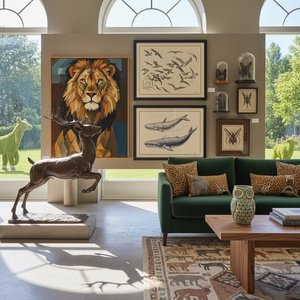
Animalia: Dyrenes Vedvarende Tilstedeværelse i Kunst og Indretning
Udforsk dyrenes fascinerende symbolik i kunsthistorien! Fra antikken til moderne indretning – lær om betydningen og find smukke reproduktioner hos .

Ephemeral Visions: Exploring the Artistic Legacy & Nuances of Watercolor Painting
Explore the captivating world of watercolor painting! Discover its rich history, essential techniques, influential artists & collecting tips from art experts. A comprehensive guide for enthusiasts.

Ephemeral Visions: Exploring the Artistic Legacy & Contemporary Practice of Watercolor Painting
Explore the captivating world of watercolor painting! Discover its rich history, essential techniques, influential artists & collecting tips. A comprehensive guide for art enthusiasts from OriginalUniqueArt.

