
 Se i rummet
 Del som kort
 Del
Del
 Detaljer
 Guide
Guide

 Download
 Lignende værker
 Røntgenundersøgelse
 Diasshow
 Spørgsmål og svar
 Statistikker
Ecce Homo


 Vis mere
Giclée / Kunsttryk
Giclée- eller lærredstryk i museumskvalitet med hurtig produktion og fleksible muligheder for finish. ( Køb håndmalet maleri Skift til digitalt billede)




P118B Dkr10

P118H Dkr10

P118W Dkr10

P438Z Dkr10

P508JH Dkr12

P508YH Dkr12

P805H Dkr10

P805Z Dkr10

P919BZ Dkr10

P919G Dkr10

P919XJ Dkr10

P959ZH Dkr10

P968JZ Dkr12

W106C Dkr8

W218G Dkr10

W218JH Dkr8

W218Y Dkr10

W307PJ Dkr10

W316G Dkr10

W316PJ Dkr8

W316Y Dkr10

W398PJ Dkr8

W4111J Dkr10

W500HY Dkr15

W500JH Dkr15

W692G Dkr12

W849H Dkr8

W940BG Dkr15

W953PJ Dkr8




Vælg mellem vores forudindstillede størrelser, der matcher kunstværkets originale proportioner.

Indtast den bredde og højde, du har brug for, så det passer til din ramme eller din væg. Et print kan kun beskæres, aldrig gøres større end selve billedet, så en størrelse med et andet format vil medføre, at dele af motivet går tabt. Vi sender dig en digital mockup til godkendelse, før vi printer noget. Billedet vist på denne side viser ikke den faktiske beskæring — det er kun mockuppen, der gør.
Verdensomspændende levering () på 2 uger i stedet for de sædvanlige 4/5 uger. (7 november)

Gratis ekspresforsendelse til hele verden

Lærred af linned i høj kvalitet

Fuld transportforsikring

Garanti for refusion af told og importafgifter

Garanti for præcis farvegengivelse

100 dages returret ved fabrikationsfejl

100% fuld returret

Mængderabat ved flere køb
 Glasmulighed er kun tilgængelig i størrelser under 110 cm

Ecce Homo
Giclée / Kunsttryk
Størrelse på reproduktion
-


Samlet pris
Dkr 540
Ecce Homo af Antoine Étex: Et møde mellem klassisk stil og religiøs refleksion
Antoine Étex var en kunstner af bemærkelsesværdig alsidighed – først og fremmest skulptør, men også maler og arkitekt – der udtrykte den skiftende strømninger, som førte Frankrig fra klassicismens formelhed mod romantikkens følelsesmæssige intensitet. Étex var ikke kendt for radikal innovation, men snarere for en dygtig syntese af tradition og nye tendenser, hvilket gjorde hans arbejde til et fascinerende refleksion over sin tid. Hans tidlige talent for skulptur førte ham til formel træning i denne disciplin, hvor han erhvervede sig en præcis teknik og dyb forståelse for klassiske former. Denne grundlæggende stil var særdeles præget af klassisk geometri og symmetri, hvilket gjaldt både hans monumentale værker og mindre dekorative kunstværker. Han søgte inspiration i gamle kunstformer og udtrykte denne kærlighed til klassisk æstetik gennem hele sit kunstneriske liv. Étexs tidlige karriere blev præget af flere betydningsfulde offentlige projekter, hvor han blandt andet skabte imponerende statuer til forskellige kirker og monumenter i Paris og andre europæiske byer. Disse værker demonstrerede hans tekniske kunnen og hans evne til at formidle komplekse idéer gennem kunst – et aspekt af hans kunstneriske arbejde, der fortsatte med at fascinere publikum og kritikere gennem hele hans karriere. Hans mest kendte monumentale værk er naturligvis Ecce Homo, hvor han præsenterede Jesus Kristus for offentligheden i en stil, der var både ærerlig og følelsesladet. Dette arbejde blev udført i marmor og udtrykte dybe religiøse temaer om selvgab og accept af lidelse – hvilket gjorde det til et ikonisk eksempel på romantikken og klassicismens fusion. Ecce Homo er ikke blot en teknisk imponerende skulptur, men også et symbol på kristendommens centrale fortælling om Jesu død og opstandelse. Skulptørens brug af lys og skygge var særdeles effektiv til at fremhæve Jesu ansigt og kroppen og til at skabe en følelse af dramatik og ærefrygt blandt betragterne. Denne effektive brug af perspektiv og komposition var typisk for klassicistens stil og bidrog til værket’s evne til at kommunikere dybe følelser og idéer til publikum. Det blev udført i marmor, hvilket gav skulptøren mulighed for at arbejde med en materiale, der var kendt for sin stabilitet og elegance – hvilket også afspejles i værket’s klassiske æstetik. Udover dets tekniske præstationer er Ecce Homo også betydningsfuldt som et produkt af Étex's kunstneriske vision og hans forståelse for den religiøse ånd i sin tid. Skulptøren var en aktiv deltager i kunstneriske diskussioner og udtrykte sine tanker om kunstens rolle i samfundet gennem sit arbejde – hvilket gjorde Ecce Homo til et vigtigt vidnesbyrd om Étex's kunstneriske perspektiv og hans engagement i klassisk kunst og romantik. Dette arbejde blev udført i 1856 og er placeret i Saint-Eustache kirke i Paris, hvor det fortsat imponerer besøgende med sin imponerende størrelse og detaljerede udtryk af religiøs følelse. Det repræsenterer en betydningsfuld milepæl inden for kunsthistorien og er et eksempel på klassisk kunst og romantikens harmoniske fusion.- Materiale: Marmor
- Årstal: 1856
- Kunstner: Antoine Étex
- Stil: Neoklassicisme
- Tema: Ecce Homo (Behold the Man) – Jesu præsentation for offentligheden
Spørgsmål og svar
Hvilket rum anbefales "Ecce Homo" af Antoine Étex til?
"Ecce Homo" af Antoine Étex anbefales til et Stue og opholdsrum. Denne anbefaling er baseret på værkets motiv, farver og stemning.
Kan "Ecce Homo" af Antoine Étex, som findes på Saint-Eustache, reproduceres lovligt?
Ophavsretten til "Ecce Homo" af Antoine Étex er afklaret: værket er i det offentlige domæne – ophavsretten er udløbet. Dets placering hos Saint-Eustache ændrer ikke på denne status.
Hvor kan jeg finde statistik om "Ecce Homo" af Antoine Étex?
Der findes en Besøgsstatistik-side for "Ecce Homo", som viser de månedlige besøgstal for kunstværket og kunstnerens øvrige værker, opdelt efter land og sprog.
Kunstnerbiografi
A Life Bridging Worlds: Antoine Étex and the French Artistic Transition
Antoine Étex, born in Paris in 1808 and passing away in Chaville in 1888, occupies a fascinating, if sometimes overlooked, position within the landscape of 19th-century French art. He was an artist of remarkable versatility—a sculptor first and foremost, but also a painter and architect—who embodied the shifting currents that moved France from the formality of Neoclassicism toward the emotional intensity of Romanticism. Étex’s career wasn't defined by radical innovation, but rather by a skillful synthesis of tradition and emerging sensibilities, making his work a compelling reflection of its era. His early aptitude for the arts led him to formal training in sculpture, a discipline that would remain central to his artistic identity throughout his life, instilling within him a meticulous technique and deep understanding of classical forms.Early Recognition and Monumental Commissions
Étex first presented his work to the public at the prestigious Paris Salon in 1833, immediately signaling his arrival as a talent to watch. Two pieces were exhibited that year: a marble reproduction of *Death of Hyacinthus* and a plaster cast titled *Cain and His Race Cursed by God*. These early works demonstrated not only technical proficiency but also an ability to imbue mythological narratives and biblical scenes with dramatic weight and emotional resonance. However, it was a commission from Adolphe Thiers, then Minister of Public Works, that truly propelled Étex into the forefront of French artistic life. He was entrusted with creating the sculptural groups of *Peace* and *War* intended to adorn the east facade of the Arc de Triomphe. Completed between 1833 and 1837, these monumental sculptures were more than just decorative elements; they were statements of national identity and civic virtue, and their successful execution cemented Étex’s reputation as a leading sculptor of his generation. The scale and ambition of this project established him as an artist capable of handling large-scale public works with both technical skill and artistic vision.A Diverse Oeuvre: Sculpture, Painting, and Architecture
While best known for the Arc de Triomphe sculptures, Étex’s creative output was remarkably diverse. His oeuvre encompassed a wide range of sculptural groups exploring mythological and religious themes, demonstrating his continued engagement with classical subject matter. Beyond sculpture, he also undertook architectural projects, designing tombs and monuments that showcased his understanding of spatial relationships and decorative detail. Perhaps surprisingly to some, Étex also produced paintings, such as *Eurydice* and *The Martyrdom of Saint Sebastian*, revealing a versatility across different media that speaks to the breadth of his artistic interests. His style is characterized by a compelling blend of Neoclassical precision—evident in the anatomical accuracy and careful modeling of his figures—and Romantic expressiveness, which manifests in the dramatic narratives and heightened emotionality of his compositions. He didn’t abandon classical forms entirely, but infused them with a new sense of dynamism and psychological depth.A Poignant Tribute: The Tomb of Théodore Géricault
Among Étex's most poignant achievements is the tomb he designed for fellow artist Théodore Géricault in Père Lachaise Cemetery. This memorial stands as a powerful testament to both artistic skill and personal respect. It features a bronze figure of Géricault himself, gazing thoughtfully into the distance, alongside a low-relief depiction of his controversial masterpiece, *The Raft of the Medusa*. The choice to include this specific work is particularly significant; it acknowledges Géricault’s bold departure from academic conventions and his unflinching portrayal of human suffering. Étex's tomb isn’t merely a marker of death but a celebration of artistic courage and a poignant dialogue between two generations of French artists. It demonstrates Étex’s ability to capture complex emotions and translate them into enduring sculptural form.Legacy and Historical Significance
Antoine Étex was not solely dedicated to the practical execution of art; he also engaged with its intellectual underpinnings, authoring essays on subjects related to artistic theory and practice. This demonstrates a thoughtful engagement with the broader artistic discourse of his time. While perhaps not as widely celebrated today as some of his contemporaries, Étex’s contributions remain vital for understanding the development of 19th-century French sculpture and art. His work reflects the transitional period between Neoclassicism and Romanticism, bridging the gap between classical tradition and modern expression. He influenced subsequent generations of sculptors who sought to combine technical mastery with emotional depth, leaving behind a legacy that continues to resonate within the history of French art. His influence can be seen in the continued exploration of narrative sculpture and the integration of dramatic storytelling into monumental public works.
Antoine Étex
1808 - 1888 , France
Kort om kunstneren
- Full Name: Antoine Étex
- Nationality: French
- Date Of Birth: 1808
- Date Of Death: 1888
- Place Of Birth: Paris, France
- Notable Artworks:
- Peace
- War
- Géricault's Tomb
- Blanche de Castille
- Eurydice
- The Martyrdom of Saint Sebastian
- Artistic Movement Or Style: Neoclassical, Romanticism
Relaterede artikler

Bronzeskulpturers Mestre: 10 Værker der Ændrede Kunsthistorien | OriginalUniqueArt
Oplev de 10 mest legendariske bronzeskulpturer, der har formet kunsthistorien! Fra Rodin til Vigeland – lær historierne bag mesterværkerne og find inspiration til din indretning. Køb museumskvalitets reproduktioner på OriginalUniqueArt.com.

The Enduring Form: Exploring Themes & Techniques in Sculpture Across Historical Periods
Explore the rich history of sculpture from ancient masterpieces to contemporary innovations. Discover key techniques, influential artists & investment potential for discerning art collectors.
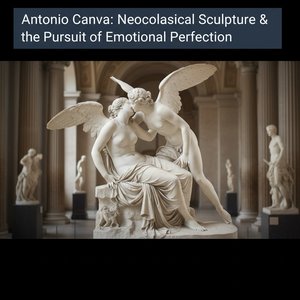
Antonio Canova: Neoclassical Sculpture & the Pursuit of Emotional Perfection
Explore the life & art of Antonio Canova, the greatest Neoclassical sculptor. Discover his masterpieces, innovative techniques, and lasting influence on fine art collecting. Expert insights for discerning investors.

Top 10 Bronzemesterværker: Kunsthistorien Ændret for Evigt | OriginalUniqueArt.dk
Oplev de 10 mest legendariske bronzemesterværker, der har formet kunsthistorien! Fra Rodin til Degas – lær historierne bag ikoniske skulpturer og find inspiration til din indretning. Køb museumskvalitets reproduktioner på OriginalUniqueArt.com.

The Enduring Form: Sculpture Across History, Technique & Emotional Resonance
Explore the rich history of sculpture with OriginalUniqueArt. Discover key techniques, influential artists & investment potential for discerning collectors. Expert insights into valuing and collecting timeless masterpieces.
