- Hjem

- Digitalt billede
- andrzej dluzniewski
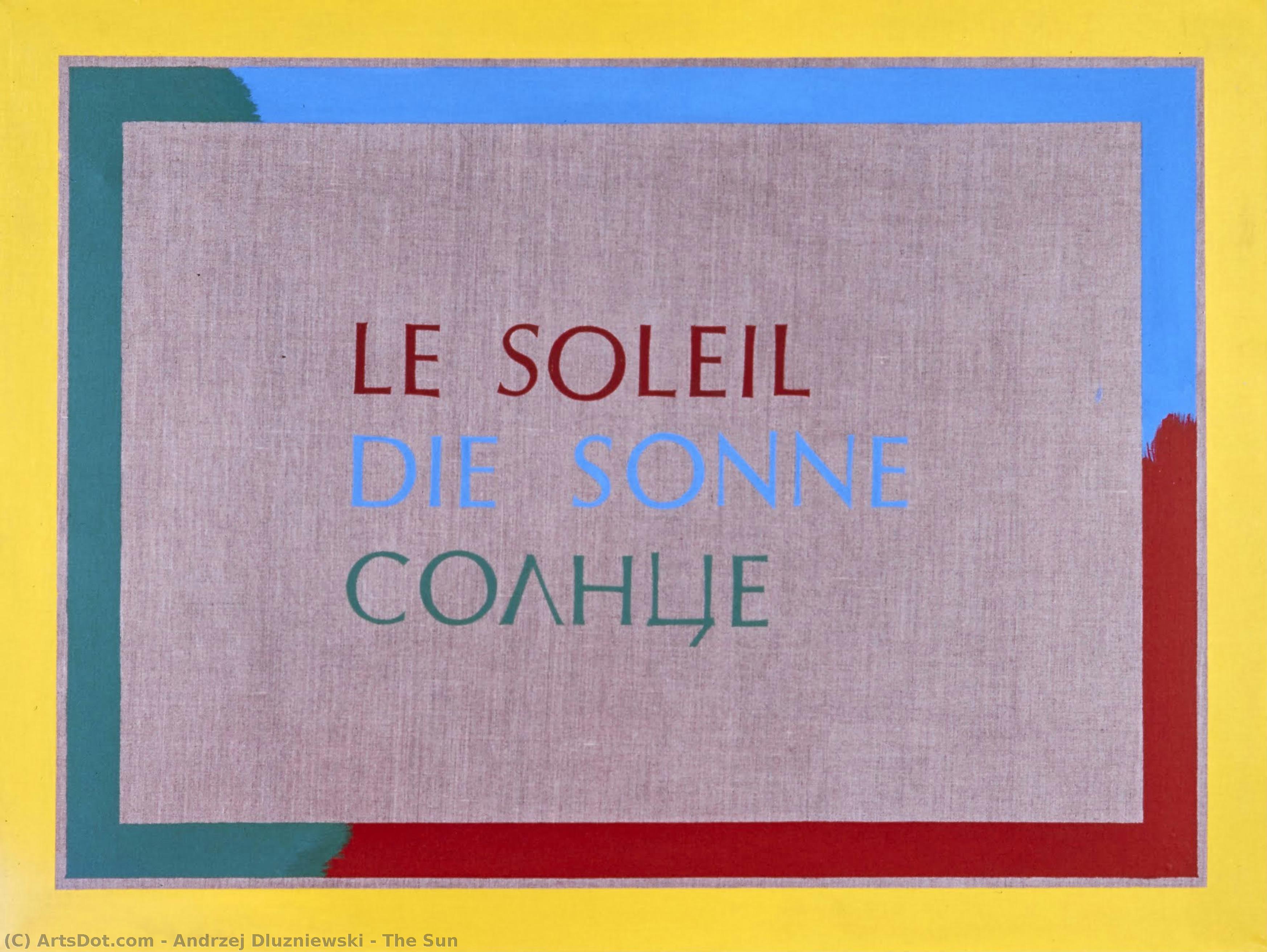
- The Sun
 Preview
 Bestil tryk Bestil maleri
 Del
Del
 Del
Del
 Detaljer
 Tilføj til favoritter

 Download
 Lignende værker
 Røntgenundersøgelse
 Diasshow
The Sun
 1989
1989 80.0 x 120.0 cm
 Ujazdowski Castle Centre for Contemporary Art
 Se mere
Køb et højopløst, forbedret digitalt billede, der er langt bedre end online-forhåndsvisningen.
Hver fil er omhyggeligt forberedt af vores interne specialister ved hjælp af avancerede værktøjer og ekspertmæssig manuel retuschering. Vi sikrer, at hvert billede har enestående klarhed, præcis farvegengivelse og fine detaljer.
Den endelige fil leveres via e-mail inden for 72 timer og er optimeret til øjeblikkelig brug i professionelle, redaktionelle og trykte miljøer. Det er den samme kvalitet, som førende designstudier, forlag og gallerier har tillid til.
Digitalt billede
Download en højopløselig fil til personlig fremvisning, print og kreative projekter.
Inkluderet i alle ordrer på digitale billeder
Ekspert digital levering, garanteret
Når du vælger OriginalUniqueArt.com, får du ikke blot et billede – du modtager et professionelt optimeret digitalt kunstværk, skabt med præcision og sikret med en tilfredshedsgaranti. Her er alt, hvad din ordre automatisk indeholder:

Hurtig levering via e-mail
Din højkvalitets digitale billedfil vil blive sendt til din e-mail inden for 72 timer efter bestilling – klar til øjeblikkelig brug.

AI-optimeret digital fil
Dit kunstværk optimeres professionelt ved hjælp af avancerede AI-værktøjer og manuel redigering, hvilket sikrer maksimal detaljegrad, klarhed og farvenøjagtighed.

Gratis livslang genlevering
Har du ved en fejl slettet eller mistet din fil? Ingen bekymring – vi sender den igen til enhver tid, helt gratis.

Ingen importgebyrer – nogensinde
Nyd dit kunstværk med det samme uden told, afgifter eller leveringsgebyrer – digitale downloads er altid skattefrie.

Garanteret farvenøjagtighed
Vi sikrer, at dit digitale billede gengiver de originale farver så præcist som muligt ved hjælp af professionelle værktøjer og farvestyring.

60 dages tilfredshedsgaranti
Hvis du ikke er tilfreds med dit digitale billede, vil vi revidere det eller refundere 100% inden for 60 dage – uden spørgsmål.

100% Pengene tilbage-garanti
Ik tilfreds? Få fuld refusion inden for 60 dage efter modtagelse af din digitale fil – uden spørgsmål.

Mængderabat
Køb 3 billeder, spar 10% - Køb 5, spar 15% - Køb 10+, spar 20%. Ideelt til kreative projekter, gallerier og bureauer.
Kunstnerens biografi
Andrzej Dłużniewski: Sculpting the Unseen
Andrzej Dłużniewski (1939-2012) stands as a towering figure in contemporary Polish sculpture, an artist whose profound impact extends far beyond the purely visual. Often described as a poet of form and material, he carved a unique space for himself within the art world—one characterized by intellectual rigor, symbolic depth, and a persistent questioning of perception. Born in Poznań, Poland, Dłużniewski’s artistic journey was shaped not only by formal training but also by a deeply ingrained philosophical sensibility, a willingness to challenge conventional notions of representation, and an enduring fascination with the interplay between language, image, and reality. His career spanned nearly six decades, marked by a constant evolution in style and technique, culminating in works that are both monumental in scale and intensely intimate in their exploration of human experience.Early Influences and Artistic Formation
Dłużniewski’s artistic trajectory began with studies at the Wrocław University of Technology, initially focused on architecture—a discipline that instilled within him a fundamental understanding of spatial relationships and structural principles. However, his true calling lay in sculpture, leading him to pursue further education at the Warsaw Academy of Fine Arts under the tutelage of prominent figures like Marian Wnuk and Oskar Hansen. These formative years were crucial, exposing him to diverse artistic approaches—from the expressive dynamism of Wnuk’s work to the conceptual rigor of Hansen’s design philosophy. Crucially, his time in Warsaw also coincided with a period of significant social and political change in Poland, an environment that fostered critical thinking and a desire to engage with pressing societal issues through art. The influence of Fluxus, a loosely organized international artistic movement emphasizing spontaneity, collaboration, and the blurring of boundaries between art and life, is evident in his early explorations of performance and object-based sculpture.The Language of Form: Iconograms and Beyond
A defining characteristic of Dłużniewski’s oeuvre is his deliberate manipulation of language within the visual realm. His series of “Iconograms” (1974), exhibited at Foksal Gallery in Warsaw, exemplifies this approach. These meticulously crafted works—featuring fifty-five pieces that combined images with text—demonstrated a profound understanding of semiotics and the ways in which meaning is constructed through the interplay of symbols. The title itself suggests a desire to move beyond literal representation, hinting at a deeper, more elusive truth. Later, in 1978, he produced “Image of an Absent Picture,” a photographic documentation of a blank wall—a seemingly simple gesture that nonetheless interrogated the very nature of perception and the role of the artist’s intervention. This work, along with his exploration of grammatical gender in language (“Rodzaj i cień”, 1984-1994), reveals a sustained interest in deconstructing established systems of thought and exposing their inherent contradictions.A World Without Sight: The Geonauts and the Shift in Perspective
The tragic loss of Dłużniewski’s sight in 1997 marked a pivotal moment in his artistic practice, forcing him to re-evaluate his relationship with form and space. Remarkably, rather than succumbing to despair, he embraced this new sensory experience, creating an astonishing body of work—including the miniature bronze sculptures known as “Geonauts” (1998-2004)—that are imbued with a unique poignancy and depth. These tiny figures, seemingly poised on the brink of departure, represent a profound meditation on human existence, mortality, and the search for meaning in an indifferent universe. The creation of these sculptures, often undertaken with the assistance of his wife and son, became a deeply collaborative process—a testament to the enduring power of artistic connection.Legacy and Historical Significance
Andrzej Dłużniewski’s legacy extends far beyond the confines of the Polish art world. His work has been exhibited internationally, earning him critical acclaim and recognition as one of the most important sculptors of his generation. He was awarded the Katarzyna Kobro Award (2003) and the Jan Cybis Award (2006), both prestigious accolades recognizing his contributions to contemporary art. More importantly, Dłużniewski’s artistic practice serves as a powerful reminder of the transformative potential of art—its ability to challenge assumptions, provoke thought, and offer new perspectives on the world around us. His willingness to embrace ambiguity, to question established conventions, and to explore the hidden depths of human experience ensures that his work will continue to resonate with audiences for generations to come. He remains a sculptor who dared to sculpt the unseen, revealing profound truths through the language of form.
andrzej dluzniewski
1939 - 2012 , Poland
Kort om kunstneren
- Artistic Movement Or Style: Monumental sculpture
- Artists Or Movements Influenced By This Artist: ['Fluxus']
- Artists Who Influenced This Artist: ['Oskar Hansen']
- Date Of Birth: August 3, 1939
- Date Of Death: December 16, 2012
- Full Name: Andrzej Dłużniewski
- Nationality: Polish
- Notable Artworks:
- The Sun
- Geonauts
- Iconograms
- Place Of Birth: Poznań, Poland

