School of Paris · 1928
Rita van Leer (André Derain, 1928)
André Derain (1880–1954) har skabt Rita van Leer. Det er fra 1928. Det tilhører School of Paris-bevægelsen. Den er udført i Oil On Panel. Målene er 41 × 34 cm.
- 1928
- Oil On Panel
- 41 × 34 cm

 Se i rummet

 Håndmalet oliemalerie
 Del som kort
 Del
 Faktablad


 Download
 Lignende værker
 Røntgenundersøgelse
 Diasshow
 Spørgsmål og svar

 Statistikker
Rita van Leer kort fortalt
- Titel
- Rita van Leer
- Kunstner
- André Derain (1880–1954)
- Kunstner født i
- Chatou, Frankrig
- Dato
- 1928
- Medium
- Oil On Panel
- Dimensioner
- 41 × 34 cm
- Bevægelse
- School of Paris
- Periode
- Modern
- Motiv
- woman, portrait, face, shoulders, gray, black
Hvad forestiller Rita van Leer?
The Portrait of Rita van Leer
In this intimate portrait, André Derain turns his attention to Rita van Leer. Created about 1928, the work moves away from the loud colorism of his earlier years, focusing instead on the quiet presence of the sitter. There is a certain stillness here, a moment captured in a way that prioritizes her character over a mere photographic likeness. She meets the viewer with a directness that feels both personal and somewhat guarded.
André Derain captures the subject with an expressive likeness, favoring the essence of her personality over rigid, academic precision. The portrait focuses on the head and shoulders, stripping away unnecessary distractions to ensure the viewer's attention remains fixed upon her gaze. It is a study of a person rather than a mere likeness, offering a glimpse into a specific, fleeting moment of her life.
Composition and Visual Elements
The composition is centered entirely upon the woman’s face, which occupies the majority of the frame. Presented in a close-up view, the subject's head and shoulders emerge from a dark, minimalist background. This lack of environmental detail ensures that the viewer's attention remains fixed on the sitter. Her head is slightly tilted, a subtle movement that introduces a sense of dynamism to an otherwise still moment.
There is a directness in her gaze, as she looks straight toward the viewer. This connection is established through the careful placement of her features and the use of tonal variations rather than sharp, photographic lines. Light and shadow work together to define the contours of her face, creating a sense of three-dimensionality through the layering of different shades.
Technique and Artistic Style
The work is characteristic of early modern art, leaning into the expressive possibilities of Fauvism and Expressionism. Rather than seeking photographic accuracy, the artist employs a loose and gestural application of paint to capture the sitter. There is a palpable sense of immediacy here, driven by the visible brushstrokes that define the form. This approach prioritizes the emotional essence of the subject over a strictly realistic representation.
One notices how the artist uses short, choppy strokes to build up the features of the face and the contours of the hair. This method creates a textured, almost rugged surface. The use of thick impasto is particularly evident, providing a physical depth that makes the paint feel sculptural. These heavy applications of pigment allow the light to catch the ridges of the brushwork, adding a sense of movement to the portrait.
Materials and Physical Properties
This work is executed in oil paint, applied with a deliberate and textured hand. The artist has worked upon a surface of either canvas or panel, a choice that supports the heavy impasto visible throughout the piece. Such tactile application allows the paint to hold its form, creating a physical presence that catches the light in subtle ways. The dimensions of the work are 41 x 34 cm, a scale that invites a close, intimate inspection of the surface.
The palette is notably restrained, eschewing the riotous color often associated with the artist's earlier years. Instead, we find a monochromatic arrangement of gray, black, and white. These tones are layered to build depth and define the contours of the subject. The interplay of light and shadow is achieved through these varying shades, providing a sense of volume without the need for chromatic intensity. It is a quiet, disciplined approach to the medium.
Højopløselige billeder af Rita van Leer
Public domain: kunstneren døde i 1954.
André Derain, Rita van Leer (1928). Public domain
Spørgsmål om Rita van Leer besvaret
Hvornår er "Rita van Leer" af André Derain skabt?
"Rita van Leer" af André Derain er dateret til 1928.
Hvilket medie er "Rita van Leer" af André Derain udført i?
"Rita van Leer" af André Derain er udført i Oil On Panel. Reproduktionerne har til formål at gengive denne tekniks visuelle udtryk.
Hvad er målene på det originale "Rita van Leer" af André Derain?
De registrerede mål for "Rita van Leer" af André Derain er 41 x 34 cm. Reproduktioner kan bestilles i andre størrelser, mens de samme proportioner bevares.
Hvad forestiller "Rita van Leer" af André Derain?
Motiverne i "Rita van Leer" er woman, portrait, face, shoulders, gray, black, white.
Er "Rita van Leer" fri for ophavsret?
Ophavsretsstatus for "Rita van Leer" af André Derain: værket er i det offentlige domæne – ophavsretten er udløbet. Dette afgør, om der frit må foretages reproduktioner af billedet.
Hvem har skabt "Rita van Leer"?
Kunstneren bag "Rita van Leer" er André Derain. Værket er katalogiseret under André Derains navn.
Hvilken kunstretning tilhører "Rita van Leer" af André Derain?
Kunstretningen forbundet med "Rita van Leer" af André Derain er School of Paris. Denne klassificering placerer værket blandt relaterede kunstnere og kunstværker.
Hvor i André Derains karriere placerer "Rita van Leer" sig?
"Rita van Leer" repræsenterer André Derains Late Period.
Hvor gammel var André Derain, da "Rita van Leer" blev skabt?
André Derain skabte "Rita van Leer" i en alder af 48. Kunstneren blev født i 1880, og værket er dateret 1928.
Om kunstneren, André Derain
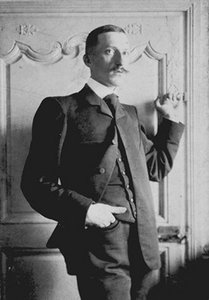
1880–1954, Frankrig
André Derain
Tidligt liv, familie og uddannelse I året 1880 trådte André Derain ind i verden i Chatou, en landsby indlejret i den franske Yvelines-region. Hans tidlige år blev formet af de stille landskaber i Île-de-France, hvor en naturlig nysgerrighed for omgivelserne begyndte at slå rødder. Allerede i 1895 var han begyndt at studere på egen hånd, i et forsøg på at forstå den visuelle verden gennem sine egne øjne frem for gennem formel undervisning. Denne periode med selvstændig udforskning gjorde det muligt for ham at udvikle en personlig måde at se på, før akademiets strenge disciplin kunne påtvinge ham sin vilje.
Også af André Derain
 bathers1907
 London Bridge1906
 Charing Cross from sw1906
 Landscape at L'Estaque1906
Essays om Rita van Leer
 Fauvism vs German Expressionism: Distinguishing Color and EmotionMaster the differences between Fauvism and German Expressionism through expert analysis. Learn to decode the emotion behind the color today.
 Dutch artworks of the 1860s1860s Dutch masterpieces by Vincent van Gogh, Gerard Bilders, and August Allebé. View the full collection online at OriginalUniqueArt.com.
 The Silent Dialogue: Examining Intimacy and Psychological Depth in Classical PortraitureExplore the psychological depth of classical portraiture through masters like Rembrandt and Vermeer. Discover the power of the gaze today.