Art Nouveau
(86) (Alphonse Mucha)
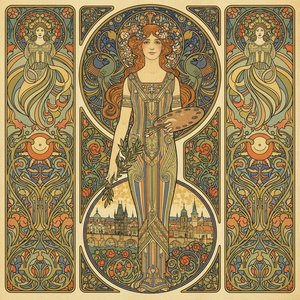
Alphonse Mucha (1860–1939) har skabt (86). Det tilhører Art Nouveau-bevægelsen. Den er udført i Acrylic On Canvas.
- Acrylic On Canvas

 Se i rummet

 Håndmalet oliemalerie
 Del som kort
 Del
 Faktablad


 Download
 Lignende værker
 Røntgenundersøgelse
 Diasshow
 Spørgsmål og svar

 Statistikker
(86) kort fortalt
- Titel
- (86)
- Kunstner
- Alphonse Mucha (1860–1939)
- Kunstner født i
- Ivančice, Tjekkiet
- Medium
- Acrylic On Canvas
- Bevægelse
- Art Nouveau
- Periode
- 19th Century
Hvad forestiller (86)?
Alphonse Mucha’s “86”: A Symphony of Art Nouveau
“86,” a captivating painting by Alphonse Maria Mucha, presents a scene brimming with feminine grace and vibrant energy – a quintessential embodiment of the artist's signature Art Nouveau style. This work, likely created around the early 20th century when Mucha was at the height of his fame, immediately draws the eye with its bold color palette: a luminous yellow background punctuated by striking red accents that lend an almost theatrical intensity to the composition. The painting depicts a group of women, their figures rendered in flowing robes and adorned with elaborate floral headdresses – a recurring motif in Mucha’s oeuvre – suggesting a scene of leisure, perhaps a gathering of friends or a salon setting. Scattered throughout are several chairs, strategically placed to guide the viewer's eye and contribute to the overall sense of movement and dynamism.
The Masterstroke of Art Nouveau
Alphonse Mucha’s artistic legacy rests firmly within the framework of Art Nouveau, a style that rejected academic traditions in favor of organic forms, flowing lines, and an emphasis on beauty. Influenced by artists like Pierre-Auguste Renoir and Gustave Moreau, Mucha developed his own distinctive approach – one characterized by idealized female figures, intricate floral designs, and a deliberate sense of movement. “86” exemplifies these qualities perfectly. Note the sinuous curves of the women’s garments, mirroring the natural world; the delicate rendering of the flowers in their hair, each petal meticulously crafted with an almost obsessive attention to detail; and the overall feeling that the scene is perpetually caught in a graceful, flowing moment. Mucha's work was not merely decorative; it aimed to evoke a sense of wonder and enchantment, transporting the viewer to a realm of beauty and serenity.
Symbolism and Narrative
While the precise narrative of “86” remains somewhat open to interpretation, several symbolic elements contribute to its rich visual language. The abundance of women suggests themes of community, friendship, and perhaps even fertility – common motifs within Art Nouveau. The bird, subtly integrated into the composition, could represent freedom, joy, or a connection to nature. Mucha frequently employed such subtle symbols to add layers of meaning to his work, inviting viewers to engage in a deeper contemplation of its subject matter. The painting’s overall atmosphere is one of lively celebration and feminine power, reflecting Mucha's fascination with portraying idealized female beauty.
Hand-Painted Reproduction: Bringing Mucha to Life
OriginalUniqueArt offers a meticulously hand-painted reproduction of “86,” capturing the essence of Mucha’s original masterpiece. Each reproduction is created by skilled artisans, employing traditional oil painting techniques to faithfully recreate the vibrant colors and intricate details of the artwork. The result is a stunning piece of art that will enhance any interior space while celebrating the enduring legacy of Alphonse Mucha. Available in various sizes, this reproduction provides an accessible way to own a significant work of Art Nouveau history. Order yours today and experience the magic of Mucha’s vision firsthand.
Højopløselige billeder af (86)
Public domain: kunstneren døde i 1939.
Alphonse Mucha, (86). Public domain
Spørgsmål om (86) besvaret
Hvilket medie er "(86)" af Alphonse Mucha udført i?
Alphonse Mucha brugte Acrylic On Canvas-teknikken til "(86)". Teknikken definerer det originale værks materielle karakter.
Er "(86)" af Alphonse Mucha i det offentlige domæne?
Ophavsretsstatus for "(86)" af Alphonse Mucha: værket er i det offentlige domæne – ophavsretten er udløbet. Dette afgør, om der frit må foretages reproduktioner af billedet.
Hvem har skabt "(86)"?
"(86)" tilskrives Alphonse Mucha.
Hvilken stilart tilhører "(86)"?
"(86)" er et værk fra Art Nouveau. Denne stilart angiver den kunstneriske tradition, som værket indgår i.
Er "(86)" af Alphonse Mucha i det offentlige domæne, og hvorfor?
"(86)" af Alphonse Mucha er i det offentlige domæne – ophavsretten er udløbet. Ophavsretten løber fra kunstnerens dødsår, som var 1939.
Om kunstneren, Alphonse Mucha

1860–1939, Tjekkiet
Alphonse Mucha
Alphonse Mucha: En Art Nouveau-legende fra Prag Alphonse Maria Mucha, en kunstner hvis navn er synonymt med elegance og dekadens, blev født i den lille tjekkiske by Ivanačice i 1860. Hans barndom var præget af en stærk kærlighed til musik – han var en talentfuld fløjtenist – og et tidligt engagement i kunstnerisk udtryk. Selvom hans familie ikke havde råd til at finansiere en formel uddannelse, viste Alphonse fra ung alder en evne til at tegne og male, der hurtigt fangede opmærksomheden hos lokale handelsfolk. Denne tidlige anerkendelse førte til et tilbud om at studere på kunstakademiet i Prag, hvor han dog snart blev skuffet over de traditionelle metoder og besluttede at søge sin egen vej mod Paris, centrum for den spirende Art Nouveau-bevægelse.
Om Alphonse Mucha Bemærkelsesværdige værker af Alphonse Mucha
Også af Alphonse Mucha
 The Moon
 Nude
 The Apotheosis of the Slavs1926
 Stained-Glass Window in St. Vitus Cathedral
Essays om (86)
 Alphonse Mucha: A Comprehensive Exploration of Art Nouveau's Master of Decorative SymbolismExplore the life & art of Alphonse Mucha, master of Art Nouveau! Discover his iconic posters, stunning illustrations, and the monumental Sl…
 Renoirs Mesterværker: Top 25 Kunstværker til Dit Hjem | OriginalUniqueArt.dkOplev Renoirs 25 mest ikoniske malerier! Fordyb dig i Impressionismens verden, fra 'Bal du moulin de la Galette' til 'Umbrellas'. Køb museu…
 Feathered Masterpieces: The Enchanting World of Impressionist Bird ArtDiscover the ethereal beauty of Impressionist bird art. Explore how masters like Monet and Renoir captured light and motion through feather…