

 Se i fuld skala
 Del
Del Del
Del
 Detaljer

 Download
 Lignende værker
 Røntgenundersøgelse
 Diasshow
Ali Touré Farka


 Se mere
Håndlavet oliereproduktion
Håndmalet olie på lærred i din valgte størrelse og ramme, udført efter bestilling af vores kunstnere. ( Køb print Køb billede)




P118B $10

P118H $10

P118W $10

P438Z $10

P508JH $12

P508YH $12

P805H $10

P805Z $10

P919BZ $10

P919G $10

P919XJ $10

P959ZH $10

P968JZ $12

W106C $8

W218G $10

W218JH $8

W218Y $10

W307PJ $10

W316G $10

W316PJ $8

W316Y $10

W398PJ $8

W4111J $10

W500HY $15

W500JH $15

W692G $12

W849H $8

W940BG $15

W953PJ $8




Vælg mellem vores forudindstillede størrelser, der matcher kunstværkets originale proportioner.

Du kan indtaste dine egne mål for at passe til en bestemt ramme eller plads. Hvis den valgte størrelse ikke stemmer overens med det originale billedes proportioner, vil vi enten beskære kunstværket eller udvide maleriet med yderligere håndmalede elementer. En digital skitse sendes til din godkendelse, før produktionen påbegyndes.
Bemærk venligst, at forhåndsvisningen på skærmen ikke afspejler den faktiske beskæring eller udvidelse. Kun skitsen vil nøjagtigt vise den endelige komposition.
Selvom specialmål er mulige, anbefaler vi at vælge en dimension fra den foruddefinerede liste for at bevare de originale proportioner.
Efter bestilling vil OriginalUniqueArt.com team sende en e-mail til kunden for at få instruktioner og levere et udkast til en skitse.
Levering i hele verden () på 3/4 uger i stedet for de standard 5 uger. (21 august). Ingen kompromiser med kvaliteten.

Gratis ekspresforsendelse til hele verden

Lærred af linned i høj kvalitet

Fuld transportforsikring

Garanti for refusion af told og importafgifter

Garanti for præcis farvegengivelse

60 dages returret (kun ved fabrikationsfejl)

100% Tilfredshedsgaranti

Mængderabat tilgængelig
 Glasmulighed er kun tilgængelig i størrelser under 110 cm

Ali Touré Farka
Reproduktionsmetode
Størrelse på reproduktion
-


Samlet pris
$ 300
Beskrivelse af kunstværket
A Portrait of Resilience: Exploring Ali Touré Farka Touré’s Album Cover
The album cover for Ali Touré Farka Touré's seminal recording, “Ali Touré,” stands as more than just a visual representation of a musician; it embodies the spirit of Malian culture and the enduring legacy of African blues. Created in 1976, this striking image captures Touré’s gaze—a direct confrontation with the viewer—against a vibrant tapestry of color that speaks volumes about artistic intention and stylistic influence.The Visual Narrative: Composition and Symbolism
At its core, the composition centers on Touré's face, positioned squarely in the middle of the frame. This deliberate choice emphasizes his presence as both performer and emblem of Malian identity. His hands gently cradle a guitar, subtly suggesting musical prowess and grounding him within the realm of artistic expression. The guitar itself isn’t merely an instrument; it symbolizes storytelling—the transmission of culture and heritage through sound—a cornerstone of African traditions. The slight curve of Touré's face mirrors the contours of the guitar neck, creating visual harmony and reinforcing the connection between man and music. Furthermore, the bold geometric lines underpinning the image contribute to a sense of stability and strength, mirroring Touré’s unwavering dedication to his craft.Technique and Aesthetic Influences: Screen Printing Brilliance
The artwork's aesthetic is firmly rooted in mid-century modern design sensibilities—a stylistic choice that reflects the burgeoning global interest in African art during the 1970s. The vibrant color palette—primarily reds, yellows, and blues—draws inspiration from traditional Malian textiles and heraldic motifs, injecting visual richness into the composition. The technique employed was likely screen printing, a method known for its ability to produce durable prints with exceptional color saturation. This process lends a subtle grainy texture to the image, hinting at the materiality of the print itself and adding depth to the overall visual experience. It’s a deliberate decision that elevates the artwork beyond mere decoration—it communicates an awareness of artistic craftmanship.Historical Context: The Rise of African Blues
“Ali Touré” arrived during a pivotal moment in music history, marking the emergence of African blues as a globally recognized genre. Touré's pioneering fusion of Malian folk music and American blues traditions challenged conventional musical boundaries and captivated audiences worldwide. This album cover serves as a visual testament to this cultural exchange—a celebration of artistic innovation born from cross-cultural dialogue. The image encapsulates not only Touré’s personal artistry but also the broader ambition to elevate African culture onto the international stage.Emotional Resonance: Capturing Intimacy and Authenticity
Ultimately, the album cover succeeds in conveying a profound sense of intimacy and authenticity. Touré's unwavering gaze invites contemplation—encouraging viewers to engage with his music on an emotional level. The artwork’s simplicity underscores its core message: a commitment to preserving cultural heritage while embracing artistic experimentation. It’s a piece that speaks to the enduring power of visual art to communicate ideas and emotions across borders, cementing Ali Touré Farka Touré's legacy as one of musical brilliance and artistic vision.Kunstnerens biografi
**early life and musical influences**
ali farka touré, a renowned malian singer, and multi-instrumentalist, was born in 1939 in the village of kanau, on the banks of the niger river. his family belonged to the songhai community, and his nickname "farka," meaning "donkey," symbolized tenacity and stubbornness. * **early musical influences:** + a performance by the national ballet of guinea in 1956 inspired touré to pursue a career in music. + he learned to play the guitar and sing in seven languages, including songhay, fulfulde, tamasheq, and bambara. + john lee hooker's music influenced him, but he insists his music is not blues.**musical career and style**
* **the first african bluesman:** + touré was known as "the african john lee hooker" for his unique blend of traditional malian music and african american blues. + his breakthrough album, ali farka touré, established his reputation in the world music community. * **notable works:** + the mirror of music (not a direct work by touré, but an example of music's influence on art) + at the music hall loie fuller (another example of music's impact on visual arts)**legacy and impact**
* **ranked:** + number 76 on rolling stone's "the 100 greatest guitarists of all time" + number 37 on spin magazine's "100 greatest guitarists of all time" * **inspirational figure:** + the ali farka touré allstars (2012) and the ali farka touré band (formed 2014) continued his musical legacy. **explore more on OriginalUniqueArt:** * [https://OriginalUniqueArt.com/@/ali-ibrahim-toure](https://OriginalUniqueArt.com/@/ali-ibrahim-toure) - ali farka touré's profile * /en/art/show/art-d3c627-en/ - top 5 famous artists of all time (for context on musical influence in art) * [https://en.wikipedia.org/wiki/ali_farka_tour%c3%a9](https://en.wikipedia.org/wiki/ali_farka_tour%c3%a9) - ali farka touré's wikipedia page (external link, but relevant for further reading)**conclusion**
ali ibrahim touré's enigmatic maestro of malian music left an indelible mark on the world. his unique blend of traditional and african american blues continues to inspire musicians and artists alike. explore his legacy and the intersection of music and art on OriginalUniqueArt.com.
ali ibrahim touré
1939 - 2006 , Mali
Kort om kunstneren
- Artistic Movement Or Style: African Blues
- Artists Or Movements Influenced By This Artist: ['Desert Blues']
- Artists Who Influenced This Artist: ['John Lee Hooker']
- Date Of Birth: 1939-10-31
- Date Of Death: 2006-03-06
- Full Name: Ali Ibrahim Touré
- Nationality: Malian
- Notable Artworks:
- The Mirror of Music
- At the Music Hall Loie Fuller
- Place Of Birth: Kano, Mali
Relaterede artikler

Top 10 Berømte Malerier i Skønne Slate Blue Nuancer – Kunst til Dit Hjem
Oplev skønheden i 10 berømte malerier domineret af den elegante slate blue nuance. Fra Monet til Van Gogh – lær historierne bag ikoniske kunstværker og find inspiration til dit hjem. Køb museumskvalitets reproduktioner på OriginalUniqueArt.com
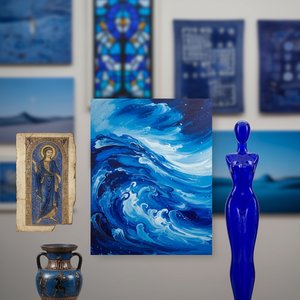
The Allure of Azure: Exploring the Symbolic & Aesthetic Depths of Blue in Art History
Explore the rich history of blue in art! Discover its symbolism, from ancient pigments to modern masterpieces by Kandinsky & Seurat. Uncover the psychological impact and cultural meanings behind this captivating hue.
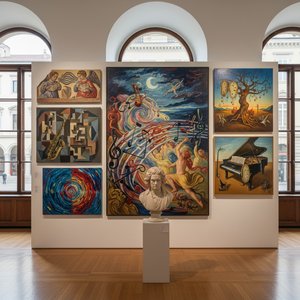
Harmonies on Canvas: Exploring the Visual Representation of Music in Art History
Explore the fascinating history of music's visual representation in art! From ancient symbolism to modern abstraction, discover how artists have captured sound and emotion on canvas. Expert insights & stunning examples.
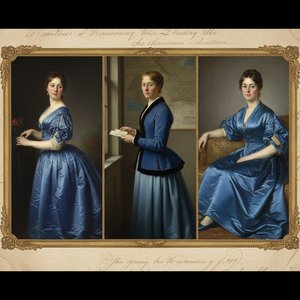
Azure Visions: Exploring Representations of the Blue Dress in Western Art History
Explore the rich history of the blue dress in Western art! Discover its symbolism, from Renaissance masterpieces to modern interpretations by artists like Martin & Schiele. Uncover cultural meanings and artistic techniques.

Eksklusive Museumsture: Skræddersyede Oplevelser for Kræsne Gæster
Oplev eksklusive private museumsture skræddersyet til dine ønsker. guider dig til unikke kulturelle oplevelser i København, Island og andre destinationer. Luksusrejser med personlig service.

