
 Se i fuld skala
 Del
Del Del
Del
 Detaljer

 Download
 Lignende værker
 Røntgenundersøgelse
 Diasshow
Ser muy querido
 Oil On Canvas
- WallArt
- Contemporary Realism
 1907
1907- 19th Century
 87.0 x 98.0 cm
 Colección Mac Kellar
 Se mere
Håndlavet oliereproduktion
Håndmalet olie på lærred i din valgte størrelse og ramme, udført efter bestilling af vores kunstnere. ( Køb print Køb billede)




P118B $10

P118H $10

P118W $10

P438Z $10

P508JH $12

P508YH $12

P805H $10

P805Z $10

P919BZ $10

P919G $10

P919XJ $10

P959ZH $10

P968JZ $12

W106C $8

W218G $10

W218JH $8

W218Y $10

W307PJ $10

W316G $10

W316PJ $8

W316Y $10

W398PJ $8

W4111J $10

W500HY $15

W500JH $15

W692G $12

W849H $8

W940BG $15

W953PJ $8




Vælg mellem vores forudindstillede størrelser, der matcher kunstværkets originale proportioner.

Du kan indtaste dine egne mål for at passe til en bestemt ramme eller plads. Hvis den valgte størrelse ikke stemmer overens med det originale billedes proportioner, vil vi enten beskære kunstværket eller udvide maleriet med yderligere håndmalede elementer. En digital skitse sendes til din godkendelse, før produktionen påbegyndes.
Bemærk venligst, at forhåndsvisningen på skærmen ikke afspejler den faktiske beskæring eller udvidelse. Kun skitsen vil nøjagtigt vise den endelige komposition.
Selvom specialmål er mulige, anbefaler vi at vælge en dimension fra den foruddefinerede liste for at bevare de originale proportioner.
Efter bestilling vil OriginalUniqueArt.com team sende en e-mail til kunden for at få instruktioner og levere et udkast til en skitse.
Levering i hele verden () på 3/4 uger i stedet for de standard 5 uger. (20 august). Ingen kompromiser med kvaliteten.

Gratis ekspresforsendelse til hele verden

Lærred af linned i høj kvalitet

Fuld transportforsikring

Garanti for refusion af told og importafgifter

Garanti for præcis farvegengivelse

60 dages returret (kun ved fabrikationsfejl)

100% Tilfredshedsgaranti

Mængderabat tilgængelig
 Glasmulighed er kun tilgængelig i størrelser under 110 cm

Ser muy querido
Reproduktionsmetode
Størrelse på reproduktion
-


Samlet pris
$ 300
Beskrivelse af kunstværket
A Quiet Encounter with Time: The Soul of Ser muy querido
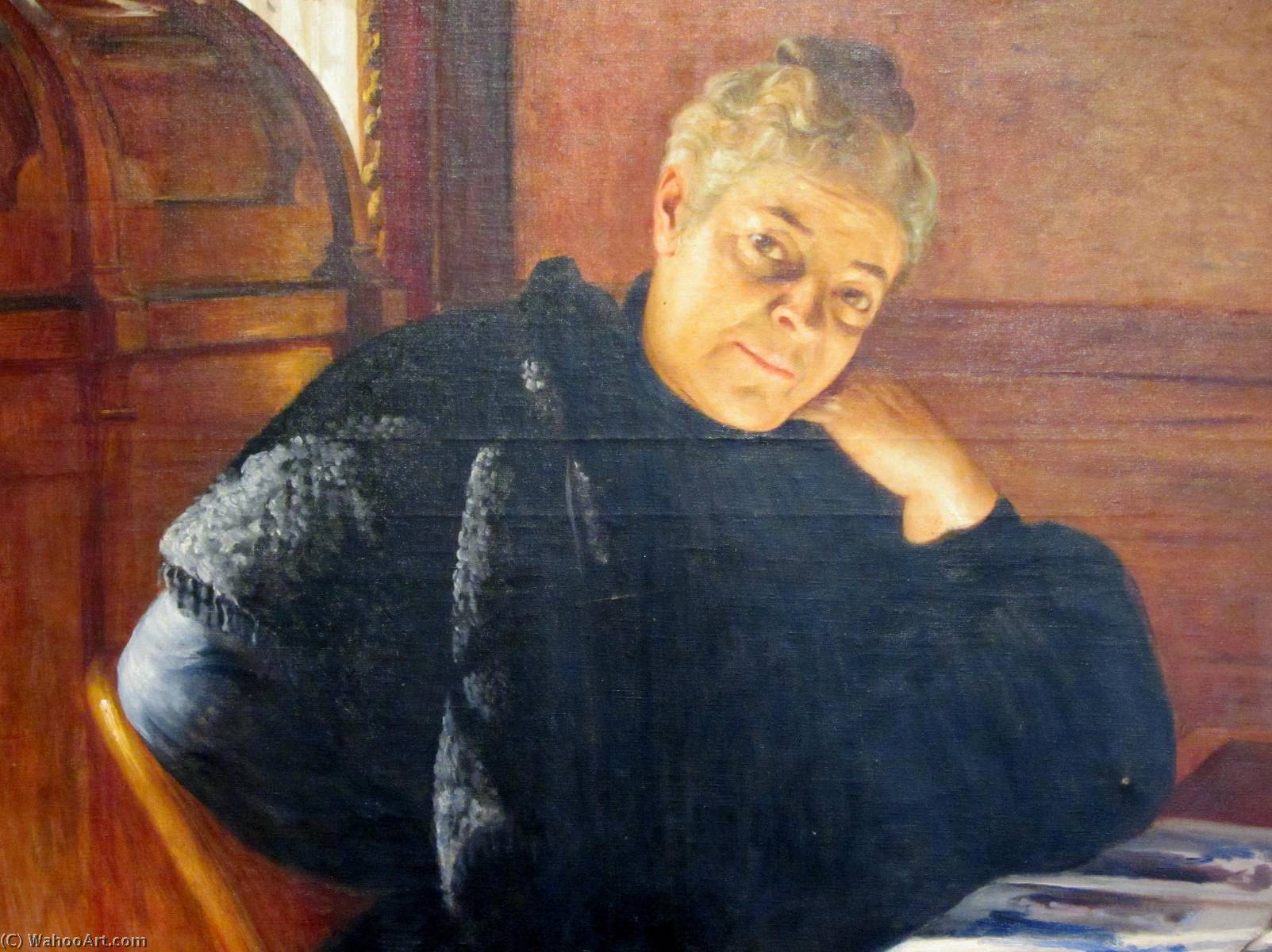
In the quietude of Alfredo Valenzuela Puelma’s 1907 masterpiece, Ser muy querido, we are invited into an intimate communion with the twilight of life. This poignant portrait of an elderly woman serves as more than a mere likeness; it is a profound meditation on the dignity found within the passage of years. As the viewer approaches this canvas, they are met with a composition that feels both deeply personal and universally resonant. The subject, seated with a grace that defies her age, occupies the frame with a presence that is both heavy with history and light with a certain serene wisdom. Through the masterful use of a muted, somber palette, Puelma captures a moment of stillness, where the shadows do not merely obscure but rather define the character and the lived experience etched into every fold of her clothing and every line of her countenance.
The technical brilliance of this work lies in its adherence to the rigorous traditions of 19th-century realism, a style in which Valenzuela Puelma was a preeminent Chilean master. The artist employs a rich, layered oil technique, where visible brushstrokes lend a tactile, breathing quality to the skin and fabric. There is a palpable texture to the piece, suggesting a thick application of paint that catches the light, creating a sense of three-dimensional reality. The lighting, emanating softly from the upper left, performs a delicate dance across the subject’s features, casting subtle shadows that provide depth and anatomical precision. This interplay of light and dark—the classic chiaroscuro influence—not only sculpts the figure but also directs the eye toward the emotional epicenter of the painting: the woman's face, which holds a gaze of quiet contemplation.
Symbolism and the Weight of Memory
Beyond its technical execution, Ser muy querido is steeped in symbolic resonance. The title itself, which translates to "To be very loved," suggests a narrative that exists just beyond the frame. It invites the observer to wonder about the hands that held hers, the voices that comforted her, and the legacy of affection that has shaped her into the figure we see today. The organic shapes of the woman’s form and the soft drapery of her dress contrast beautifully with the more rigid, geometric lines of the chair and the architectural hints in the background, symbolizing the delicate balance between the fragility of human life and the enduring structures of the world we inhabit. The painting evokes a sense of nostalgia and reverence, making it an ideal centerpiece for those who appreciate art that speaks to the human condition and the beauty of a life well-lived.
For the discerning collector or interior designer, this reproduction offers a sophisticated touch of historical elegance. Its dark, dignified tones and classical composition make it a versatile addition to a curated space, providing a focal point that commands respect without overwhelming its surroundings. Whether placed in a study filled with books or a grand living area, Ser muy querido brings with it an atmosphere of intellectual depth and emotional warmth. It is a piece designed for those who seek more than decoration—those who seek a window into the soul of the past, captured through the masterful hand of one of Chile's greatest artistic legacies.
Kunstnerens biografi
A Chilean Master of Realism: The Life and Art of Alfredo Valenzuela Puelma
Alfredo Valenzuela Puelma, born in the vibrant port city of Valparaiso, Chile, in 1856, stands as a pivotal figure in the nation’s artistic heritage. His life was a compelling narrative woven with threads of academic rigor, Parisian influence, and a deeply personal struggle that ultimately shaped his distinctive artistic vision. From an early age, Valenzuela Puelma demonstrated a remarkable aptitude for drawing, prompting his enrollment at the Academy of Fine Arts in Santiago at just twelve years old, where he studied under the tutelage of Ernesto Kirchbach and Juan Mochi. This formal training was uniquely balanced with studies in medicine—a testament to his intellectual curiosity and breadth of interests that would subtly inform his artistic perspective. He wasn’t merely a painter; he was an observer of life, anatomy, and the human condition, all elements that found their way onto his canvases.Parisian Refinement and Artistic Development
A turning point in Valenzuela Puelma's career arrived in 1881 with a Chilean government scholarship that propelled him to Paris—the epicenter of the art world at the time. He entered the workshop of Benjamin Constant, immersing himself in the artistic currents of the era. Simultaneously, he pursued anatomical studies at the Sorbonne, exposing himself to emerging movements like those championed by the Manet School. While acknowledging these modern trends, Valenzuela Puelma found a deeper resonance in the Old Masters, spending countless hours copying Spanish masters at the Louvre. This deliberate engagement with the past profoundly shaped his stylistic development, instilling within him a reverence for technique and composition that would become hallmarks of his work. A second scholarship in 1887 allowed further refinement under Jean Paul Laurens, solidifying his academic foundation and honing his skills. It was during these formative years in Paris that Valenzuela Puelma began to forge the distinctive path that would set him apart as a leading Chilean Realist painter.A Diverse Oeuvre: Themes and Techniques
Upon returning to Chile, Valenzuela Puelma actively engaged with the burgeoning art scene, consistently submitting works to exhibitions and competitions in Santiago where he garnered consistent recognition. He also took on administrative roles at the Theater La Victoria and managed various art exhibitions in Valparaíso during the 1890s, demonstrating a commitment to fostering cultural life beyond his own artistic practice. His oeuvre is remarkably diverse, encompassing landscapes imbued with atmospheric light, intimate interiors revealing glimpses of domestic life, compelling portraits that capture the essence of his subjects, delicate still lifes, and notably, sensuous nudes that challenged conventional norms. A recurring motif in his work—a testament to Constant’s influence—is the incorporation of Arabic elements, adding an exotic allure to compositions like La Perla del Mercader (The Merchant's Pearl) and El Niño del Fez (Fez Boy). Valenzuela Puelma’s technique is characterized by a meticulous realism rooted in academic principles. He possessed a masterful command of light, shadow, and color, creating paintings that are both technically brilliant and emotionally resonant. Works such as La Sevillana, Saliendo de Caza (Going Hunting), and Niña con Vestido Amarillo (Girl in a Yellow Dress) exemplify his ability to capture fleeting moments with remarkable precision and grace.Legacy and Historical Significance
In 1907, Valenzuela Puelma embarked on a final journey to France, but tragically never returned to Chile. He battled persistent depression and mental illness, conditions that ultimately led to his untimely death in Villejuif in 1909 at the age of fifty-three. His remains were later repatriated to Chile with great ceremony and interred at the National Museum of Fine Arts—a fitting tribute to a master artist. Though he did not formally dedicate himself to teaching, Valenzuela Puelma mentored several promising painters, including Alfredo Helsby and Eucarpio Espinosa, passing on his knowledge and inspiring a new generation of Chilean artists. Art critic and historian Antonio Romera rightfully recognized his significant contribution by including him among the “Great Masters of Chilean Painting.” Valenzuela Puelma’s legacy rests upon his successful synthesis of academic training with a uniquely personal vision. He left behind a body of work that continues to be admired for its technical skill, diverse subject matter, and enduring beauty—a testament to the power of realism to capture the complexities and nuances of the human experience. His paintings remain vital windows into 19th-century Chile, offering glimpses into its society, culture, and artistic aspirations.
Alfredo Valenzuela Puelma
1856 - 1909 , Chile
Kort om kunstneren
- Artistic Movement Or Style: Realism
- Artists Or Movements Influenced By This Artist:
- Alfredo Helsby
- Eucarpio Espinosa
- Artists Who Influenced This Artist:
- Benjamin Constant
- Jean Paul Laurens
- Date Of Birth: Feb 8, 1856
- Date Of Death: Oct 27, 1909
- Full Name: Alfredo Valenzuela Puelma
- Nationality: Chilean
- Notable Artworks:
- La Perla del Mercader
- El Niño del Fez
- Paisaje
- La Sevillana
- Saliendo de Caza
- Place Of Birth: Valparaiso, Chile
Relaterede artikler

The Enduring Legacy of Oil on Canvas: Technique, History & Aesthetic Impact
Explore the rich history & techniques of oil painting – from Renaissance masters to Impressionism. Discover pigments, layering methods, and why this timeless medium endures. Expert insights for artists & art enthusiasts.

Oil on Canvas: A Historical & Technical Exploration of a Timeless Artistic Medium
Explore the rich history & enduring techniques of oil painting on canvas. Discover the science behind its longevity, conservation practices, and contemporary relevance. Expert insights for art enthusiasts.

The Enduring Power of Painting: A Historical & Contemporary Exploration of Form and Emotion
Explore the rich history & enduring techniques of oil painting with OriginalUniqueArt. Discover masterpieces, learn about art collecting, and find authentic handmade reproductions crafted by skilled artists.

Oliemaleriets Arv: Teknik, Historie og Nutidig Praksis
Dyk ned i oliemaleriets fascinerende verden! Lær om teknikker, historie og nutidige kunstnere. Få ekspertviden og inspiration til dit eget maleprojekt.
The Soul of Impressionism: Why Oil on Canvas Captures Eternal Light and Timeless Emotion
Discover the enchanting alchemy of Impressionism. Explore how the mastery of oil on canvas, through glazing and impasto, captures eternal light and emotion. Perfect for lovers of Monet and Van Gogh seeking the profound depth of hand-painted fine art.


