

 Se i rummet
 Send
Send Del
Del
 Detaljer
 Studieguide til kunstværker

 Download
 Lignende værker
 Røntgenundersøgelse
 Se diasshow
 Statistik
Autumn Flowers


 Læs mere
Giclée / Kunsttryk
Giclée- eller lærredstryk i museumskvalitet med hurtig produktion og fleksible muligheder for finish. ( Bestil håndmalet reproduktion Skift til digitalt billede)




P118B Dkr10

P118H Dkr10

P118W Dkr10

P438Z Dkr10

P508JH Dkr12

P508YH Dkr12

P805H Dkr10

P805Z Dkr10

P919BZ Dkr10

P919G Dkr10

P919XJ Dkr10

P959ZH Dkr10

P968JZ Dkr12

W106C Dkr8

W218G Dkr10

W218JH Dkr8

W218Y Dkr10

W307PJ Dkr10

W316G Dkr10

W316PJ Dkr8

W316Y Dkr10

W398PJ Dkr8

W4111J Dkr10

W500HY Dkr15

W500JH Dkr15

W692G Dkr12

W849H Dkr8

W940BG Dkr15

W953PJ Dkr8




Vælg mellem vores forudindstillede størrelser, der matcher kunstværkets originale proportioner.

Du kan indtaste dine egne mål for at passe til en specifik ramme eller et bestemt område. Hvis den valgte størrelse ikke stemmer overens med det originale billedes proportioner, vil vi enten beskære kunstværket eller udvide billedet med en spejlet eller ensfarvet kant. En digital mockup vil blive sendt til din godkendelse, før produktionen påbegyndes.
Bemærk venligst, at forhåndsvisningen på skærmen ikke afspejler den faktiske beskæring eller udvidelse. Kun mockuppen vil nøjagtigt vise den endelige komposition.
Selvom specialmål er tilgængelige, anbefaler vi at vælge et mål fra den foruddefinerede liste for at bevare de originale proportioner.
Verdensomspændende levering () på 2 uger i stedet for de sædvanlige 4/5 uger. (4 oktober)

Gratis ekspresforsendelse til hele verden

Lærred af linned i høj kvalitet

Komplet transportforsikring

Garanti for refusion af told og importafgifter

Garanti for autentisk farvegengivelse

100 dages returret ved fabrikationsfejl

100% fuld returret

Mængderabat ved flere køb
 Glasmulighed er kun tilgængelig i størrelser under 110 cm

Autumn Flowers
Giclée / Kunsttryk
Reproduktionsstørrelse
-


Samlet pris
Dkr 521
A Portrait of a Moment: The Enigmatic Beauty of *Autumn Flowers*
Alfred Stevens’s *Autumn Flowers*, painted in 1867, isn't merely a depiction of a woman amidst flowers; it’s an exquisitely crafted meditation on stillness, light, and the subtle poetry of everyday life. At first glance, the painting presents a seemingly simple arrangement: a seated lady, her posture suggesting quiet contemplation, surrounded by a still-life tableau of fabrics, blossoms, and a delicately rendered table. Yet, beneath this surface lies a profound exploration of form, color, and the very essence of observation – a hallmark of Stevens’s unique artistic vision.
Stevens, a pivotal figure in 19th-century Belgian art, deliberately eschewed the prevailing trends of his time. Rejecting the fleeting effects of Impressionism's vibrant light and atmosphere, he instead focused on capturing an immutable quality – the frozen gesture, the fixed expression, the enduring presence of the subject. This deliberate choice is powerfully evident in *Autumn Flowers*. The woman’s hand, poised as if about to touch a flower, isn’t caught in motion; it's suspended, imbued with a sense of timelessness. Her gaze, directed slightly off-canvas, invites us into her private world, suggesting an inner life beyond the immediate scene.
The Language of Color and Texture: Stevens’s Masterful Technique
What immediately draws the eye is Stevens's extraordinary command of color and texture. He employs a remarkably restrained palette – primarily shades of grey, black, and muted browns – punctuated by flashes of pastel pink, chestnut brown, and the glossy sheen of the table cover. This deliberate limitation isn’t a sign of restraint but rather a strategic choice to emphasize form and light. The artist masterfully utilizes chiaroscuro, creating dramatic contrasts between light and shadow that sculpt the figures and objects with remarkable precision. Notice how the highlights on the woman's chignon and the delicate folds of her dress draw our attention while simultaneously deepening the shadows around her face, lending a sense of mystery and depth.
Stevens’s technique is equally noteworthy for its meticulous detail. He employs a smooth, almost polished surface – reminiscent of 17th-century Dutch masters like Rembrandt and Vermeer – achieved through careful layering of paint and the use of a knife to blend colors seamlessly. This creates an illusion of tactile reality, inviting us to reach out and touch the fabrics, feel the texture of the flowers, and appreciate the subtle variations in color and tone. The artist’s attention to detail extends beyond mere representation; it's a deliberate attempt to capture the *essence* of each element within the composition.
Symbolism and the Portrait of Modernity
Beyond its technical brilliance, *Autumn Flowers* is rich in symbolic meaning. The woman herself represents a type of modern femininity – poised, elegant, and seemingly detached from the bustle of Parisian life. Her attire, with its jet frills and flounces, speaks to the fashionable trends of the era while simultaneously conveying a sense of quiet dignity. The surrounding still-life elements—the fabrics, flowers, and table—are not merely decorative; they function as a carefully constructed visual language, hinting at themes of luxury, domesticity, and the fleeting beauty of life.
Stevens’s comparison to Gustave Vanzype – that the painting is a still life composed of the fabrics in which she is dressed and the things around her – reveals a deeper intention. He wasn't simply depicting a woman; he was creating a miniature world, a carefully orchestrated tableau that captures a specific moment in time and reflects the values and aesthetics of his era. The reference to Whistler’s ambition to “use colours to compete with the musician who uses sounds” underscores Stevens’s own desire to elevate color from mere decoration to an expressive element within the painting.
A Legacy of Stillness: Stevens's Enduring Appeal
*Autumn Flowers* stands as a testament to Alfred Stevens’s singular artistic vision. It is a painting that rewards careful observation, inviting us to linger and contemplate its subtle nuances. Its enduring appeal lies not in dramatic gestures or fleeting effects but in its quiet beauty, its masterful technique, and its profound exploration of the human condition. Reproductions of this captivating work offer a window into a bygone era, capturing the elegance and sophistication of 19th-century Parisian life while simultaneously reminding us of the timeless power of stillness and observation.
Spørgsmål & svar
Kan jeg se "Autumn Flowers" af Alfred Stevens på min egen væg, før jeg køber det?
"Autumn Flowers" har en augmented reality-forhåndsvisning: kunstværkets AR-forhåndsvisning-side viser det i dit eget rum på en kompatibel enhed.
Hvor gammel var Alfred Stevens, da Autumn Flowers blev skabt i 1867?
Alfred Stevens var 44 år gammel, da vedkommende skabte "Autumn Flowers" i 1867. Alderen er beregnet ud fra kunstnerens fødselsår, 1823.
Hvordan balancerer "Autumn Flowers" lys og mørke?
"Autumn Flowers" af Alfred Stevens er registreret med en lysstyrke på deep_shadow og en luminans på Dark.
Hvem er kunstneren bag "Autumn Flowers"?
Kunstneren bag "Autumn Flowers" er Alfred Stevens. Værket er katalogiseret under Alfred Stevenss navn.
I hvilket år blev "Autumn Flowers" af Alfred Stevens skabt?
"Autumn Flowers" af Alfred Stevens blev skabt i 1867.
Er "Autumn Flowers" af Alfred Stevens et portræt, landskab eller en kvadratisk komposition?
"Autumn Flowers" af Alfred Stevens er en Portrait komposition. Det er værd at tjekke proportionerne, før du vælger en printstørrelse.
Findes der værker, der ligner "Autumn Flowers"?
Værker, der ligner "Autumn Flowers", er listet på kunstværkets Lignende værker-side.
Om kunstneren
tidligt liv og uddannelse
Alfred Émile Léopold Stevens, en berømt belgisk maler, blev født den 11. maj 1823 i Bruxelles. Hans familie var dybt forankret i de visuelle kunstarter; hans ældre bror Joseph (1816–1892) og hans søn Léopold (1866–1935) var begge malere, mens en anden bror, Arthur (1825–99), virkede som kunsthandler og kritiker.kunstnerisk karriere
Stevens påbegyndte sin kunstneriske rejse ved Académie Royale des Beaux-Arts i Bruxelles, hvor han studerede under vejledning af François Navez, en neoklassisk maler. I 1843 flyttede han til Paris for at slutte sig til sin bror Joseph og blev optaget på École des Beaux-Arts. Selvom det er omdiskuteret, om han blev elev af Jean Auguste Dominique Ingres, vidner Stevens' tidlige værker, såsom The Pardon eller Absolution (Hermitage, Skt. Petersborg), underskrevet og dateret 1849, om hans mesterskab inden for den konventionelle naturalistiske stil, der var inspireret af det 17. århundredes hollandske genremaleri.vejen til berømmelse
Stevens' værker blev første gang udstillet offentligt i 1851 på salonen i Bruxelles, hvilket indbragte ham en tredjeprangsmedalje ved Paris-salonen i 1853 og en andenprangsmedalje ved Verdensudstillingen i Paris i 1855. Hans maleri Ce qu'on appelle le vagabondage (Musée d'Orsay, Paris) fangede Napoleon III's opmærksomhed, hvilket førte til en betydelig ændring i behandlingen af de fattige.bemærkelsesværdige værker og eftermæle
- La Dame en Rose eller Kvinden i lyserødt (Musées Royaux des Beaux-Arts de Belgique, Bruxelles), malet i 1866, er et pragteksempel på Stevens' arbejde i denne periode, hvor han forener en moderigtigt klædt kvinde med en detaljerende undersøgelse af japanske genstande.
- Stevens modtog Æreslegionen (Ridder) fra den franske regering i 1863 og blev forfremmet til officer af Æreslegionen i 1867.

Alfred Stevens
1823 - 1906 , Belgien
Hurtige fakta
- Artistic Movement Or Style: Akademisk realisme
- Artists Who Influenced This Artist:
- Jean Auguste Dominique Ingres
- Hollandske mestre
- Date Of Birth: 11. maj 1823
- Date Of Death: 1906
- Full Name: Alfred Émile Léopold Stevens
- Nationality: Belgisk
- Notable Artworks:
- La Dame en Rose
- Besøg i atelieret
- Preparativ tegning til 'Panorama du siècle', 'Kejserinde Joséphine og hendes hof'
- Place Of Birth: Bruxelles, Belgien
Relaterede artikler

Sir Alfred James Munnings' Top 25 Værker: En Hyldest til Heste og Engelsk Landskab | OriginalUniqueArt.dk
Oplev Sir Alfred James Munnings' 25 mest ikoniske værker – fra betagende hestemalerier til engelske landskaber. Lær om kunstnerens historie, teknik og stil. Find luksus reproduktioner & inspiration til dit hjem på OriginalUniqueArt.com

Alfred Stevens: Capturing Parisian Life with Intimate Realism & Symbolist Flair
Explore the captivating world of Alfred Stevens, a pioneer of intimate realism & Symbolist painting. Discover his elegant portraits of Parisian women and learn about his Dutch influences & lasting legacy. Art history insights at OriginalUniqueArt.
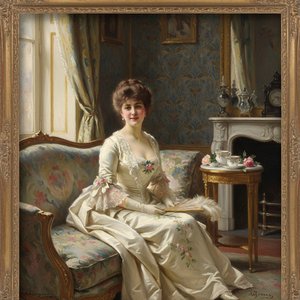
Alfred Stevens: Capturing Parisian Elegance & Fin-de-Siècle Intimacy
Discover the captivating world of Alfred Stevens, master of Parisian elegance & intimate portraiture. Explore his techniques, influences, and legacy – a prized collection for discerning art enthusiasts.

Romantic Realism's Finest: 10 Masterpieces for Your Home | OriginalUniqueArt
Explore 10 defining masterpieces of Romantic Realism! Discover Courbet, Millet & Daumier's powerful paintings—capturing emotion and social realities. Find museum-quality reproductions for your home at OriginalUniqueArt.com.
Realismens Mestre: Top 10 Kunstværker der Fanger Virkeligheden – OriginalUniqueArt.dk
Oplev realismens storhedstid! Dyk ned i top 10 kunstværker af Courbet, Millet & Repin. Historier, teknikker og inspiration til din boligindretning med museumskvalitets reproduktioner på OriginalUniqueArt.com. Find din favorit!