

 Se i rummet
 Send
Send Del
Del
 Detaljer
 Studieguide til kunstværker

 Download
 Lignende værker
 Røntgenundersøgelse
 Se diasshow
 Statistik
A Thinker, Young Roman Monk
 Oil On Canvas
- WallArt
- Academic Realism
 1848
1848 90.0 x 71.0 cm
 Musée Fabre
 Læs mere
Giclée / Kunsttryk
Giclée- eller lærredstryk i museumskvalitet med hurtig produktion og fleksible muligheder for finish. ( Bestil håndmalet reproduktion Skift til digitalt billede)




P118B Dkr10

P118H Dkr10

P118W Dkr10

P438Z Dkr10

P508JH Dkr12

P508YH Dkr12

P805H Dkr10

P805Z Dkr10

P919BZ Dkr10

P919G Dkr10

P919XJ Dkr10

P959ZH Dkr10

P968JZ Dkr12

W106C Dkr8

W218G Dkr10

W218JH Dkr8

W218Y Dkr10

W307PJ Dkr10

W316G Dkr10

W316PJ Dkr8

W316Y Dkr10

W398PJ Dkr8

W4111J Dkr10

W500HY Dkr15

W500JH Dkr15

W692G Dkr12

W849H Dkr8

W940BG Dkr15

W953PJ Dkr8




Vælg mellem vores forudindstillede størrelser, der matcher kunstværkets originale proportioner.

Indtast den bredde og højde, du har brug for, så det passer til din ramme eller din væg. Et print kan kun beskæres, aldrig gøres større end billedet, så en størrelse med en anden form vil miste en del af motivet. Vi sender dig en digital mockup til godkendelse, før vi printer noget. Billedet vist på denne side viser ikke den faktiske beskæring — det er kun mockuppen, der gør.
Verdensomspændende levering () på 2 uger i stedet for de sædvanlige 4/5 uger. (22 oktober)

Gratis ekspresforsendelse til hele verden

Lærred af linned i høj kvalitet

Komplet transportforsikring

Garanti for refusion af told og importafgifter

Garanti for autentisk farvegengivelse

100 dages returret ved fabrikationsfejl

100% fuld returret

Mængderabat ved flere køb
 Glasmulighed er kun tilgængelig i størrelser under 110 cm

A Thinker, Young Roman Monk
Giclée / Kunsttryk
Reproduktionsstørrelse
-


Samlet pris
Dkr 531
A Moment of Contemplation: Alexandre Cabanel’s “A Thinker, Young Roman Monk”
Alexandre Cabanel's "A Thinker, Young Roman Monk," painted in 1848, is more than just a portrait; it’s a profound meditation on solitude, faith, and the weight of introspection. Housed within the serene walls of the Musée Fabre in Montpellier, France, this oil-on-canvas masterpiece invites viewers to step into the quiet world of a young monk lost in reverie. Cabanel, a master of the academic style—a tradition deeply rooted in classical ideals and meticulous observation—crafted an image that transcends mere representation, achieving instead a palpable sense of inner experience.
The subject himself is strikingly rendered: a youthful Roman monk, his features etched with a thoughtful solemnity. He’s seated upon a simple stone wall, the rough texture providing a grounding contrast to the smooth, almost ethereal quality of his garments. His gaze is directed towards an unseen horizon, suggesting a journey of the mind—a contemplation that seems both deeply personal and universally resonant. The subtle play of light across his face and robes isn’t merely decorative; it's strategically employed to sculpt form and draw attention to the key areas of emotional expression.
The Academic Style: Precision and Idealization
Cabanel’s commitment to the academic style is immediately apparent. This approach, prevalent in 19th-century France, prioritized anatomical accuracy, realistic detail, and a sense of idealized beauty. Notice the meticulous rendering of his hands—folded neatly before him—a testament to Cabanel's dedication to precise observation. The composition itself adheres to classical principles: balanced symmetry, harmonious color palettes, and a carefully orchestrated use of space. Unlike later movements that sought to challenge these conventions, Cabanel embraced them, believing in their ability to capture the essence of human experience with clarity and dignity.
The painting’s palette is restrained yet evocative—a blend of muted browns, ochres, and subtle blues—creating a mood of quiet contemplation. The artist skillfully employs sfumato, a technique borrowed from Leonardo da Vinci, to soften edges and create an atmospheric haze, further enhancing the sense of introspection. This careful attention to detail isn’t simply about technical proficiency; it's about conveying a feeling – a deep sense of stillness and profound thought.
Symbolism and Spiritual Resonance
Beyond its formal qualities, “A Thinker, Young Roman Monk” is rich in symbolic meaning. The monk’s posture—seated, contemplative, and isolated—immediately evokes themes of faith, solitude, and the search for spiritual truth. The stone wall upon which he sits represents both earthly grounding and a barrier between himself and the outside world, emphasizing his inward focus. The act of thinking itself is presented as a sacred practice, a communion with something larger than oneself.
Furthermore, the young age of the monk suggests that this contemplation isn’t simply an adult concern but rather a fundamental aspect of spiritual development—a journey undertaken from youth. The painting subtly invites us to consider our own moments of quiet reflection and the importance of seeking meaning in a world often characterized by distraction and noise.
A Timeless Masterpiece: Reproduction and Legacy
Created over 175 years ago, “A Thinker, Young Roman Monk” remains remarkably relevant today. Its exploration of universal themes—contemplation, faith, and the human condition—continues to resonate with viewers across generations. High-quality reproductions, meticulously crafted by skilled artisans using traditional techniques, offer a way to bring this timeless masterpiece into your home or office.
Whether you’re an art enthusiast, a collector seeking to enrich your collection, or simply someone drawn to the beauty and serenity of this image, a reproduction of Cabanel's "A Thinker, Young Roman Monk" is more than just a decorative piece—it’s a window into the soul of 19th-century France and a reminder of the enduring power of quiet contemplation. For authentic reproductions, please visit https://OriginalUniqueArt.com.
Spørgsmål & svar
Hvem har skabt "A Thinker, Young Roman Monk"?
"A Thinker, Young Roman Monk" tilskrives Alexandre Cabanel.
Kan jeg se "A Thinker, Young Roman Monk" af Alexandre Cabanel på min egen væg, før jeg køber det?
"A Thinker, Young Roman Monk" har en augmented reality-forhåndsvisning: kunstværkets AR-forhåndsvisning-side viser det i dit eget rum på en kompatibel enhed.
Hvilken kunstretning tilhører "A Thinker, Young Roman Monk" af Alexandre Cabanel?
Den kunstretning, der er forbundet med "A Thinker, Young Roman Monk" af Alexandre Cabanel, er Academic Realism. Denne klassificering placerer værket blandt relaterede kunstnere og kunstværker.
Om kunstneren
Alexandre Cabanel: En Klassisk Konstnärs Liv och Verk
Alexandre Cabanel (født 28 september 1823 i Montpellier, död 23 januari 1889 i Paris) var en fransk målare som är mest känd för sin klassiska stil och sina imponerande historiebilder. Han föddes till ett enkelt hantverkarskap och utvecklade tidigt ett stort konstnärligt talent vilket säkerställde honom en värdefull utbildning vid École des Beaux-Arts i Paris där han studerade under François-Édouard Picot, själv elev av Jacques-Louis David. Detta samarbetes betydelse för den klassiska konstens utveckling är enorm och Cabanel skulle komma att vara en av sina samtida mest framgångsrika konstnärer.- Tidig Utbildning och Första Framgångar
- Romårigheterna och Klassisk Inspiration
- Salonernas Era och Kritikens Röster
- Venus Födsel: Ett Verk av Perfektion
- Eftermäle och Påverkan på Nästa Generation Konstnärer
Tidig Utbildning och Första Framgångar
Cabanel började sin konstnärliga resa redan i ung ålder när han fick ett stipendium för att studera vid École des Beaux-Arts i Paris. Detta gav honom tillgång till en omfattande utbildning inom klassisk konsthistoria och teknik, vilket skulle forma hans konstnärliga vision genom hela livet. Hans första målningar visar redan en imponerande förmåga till detaljrikedom och ett djupgående förståelse för klassiska kompositioner och färger. Han var särskilt inspirerad av Jacques-Louis David och Picots undervisning, vilket säkerställde honom en grundlig utbildning inom den samtida konstnärliga världen. Detta första steg på Cabanels konstnärliga väg skulle komma att vara avgörande för hans framtida utveckling och skapa förutsättningarna för hans senare klassiska mästerverk. Som elev vid École des Beaux-Arts fick han också möjlighet att studera tillsammans med andra begåvade konstnärer, vilket främjade en kreativ atmosfär och bidrog till hans konstnärliga utveckling. Detta samarbetes betydelse är enorm och Cabanel skulle komma att vara en av sina samtida mest framgångsrika konstnärer.Romårigheterna och Klassisk Inspiration
Efter att ha vunnit Prix de Rome stipendiet 1845, åldersmässigt endast 22 år, förflyttade Cabanel sig till Rom där han studerade intensivt klassiska konstverk och tekniker. Detta var en avgörande erfarenhet som skulle påverka hans konstnärliga stil och världsbild genom hela livet. Han absorberade lärdomar från mästarna Michelangelo och Rafael och utvecklade ett särskilt starkt intresse för klassisk skönhet och proportioner. Cabanel använde sina år i Rom till att skapa verk som återspeglar denna klassiska inspiration, vilket skulle komma att präglas av elegans och detaljrikedom. Detta första steg på Cabanels konstnärliga väg skulle komma att vara avgörande för hans senare klassiska mästerverk och skapa förutsättningarna för hans utveckling till en av de mest framgångsrika konstnärerna inom den akademiska traditionen. Hans studier i Rom gav honom också möjlighet att träffa andra konstnärer och forskare, vilket främjade ett kreativt klimat och bidrog till hans konstnärliga utveckling. Detta samarbetes betydelse är enorm och Cabanel skulle komma att vara en av sina samtida mest framgångsrika konstnärer.Salonernas Era och Kritikens Röster
Cabanel återvände till Paris och etablerade sig snabbt som en ledande figur inom Salon systemet, vilket var den officiella konstutställningen av Académie des Beaux-Arts. Hans verk vann konstant beröm för sin tekniska briljans och eleganta kompositioner och blev särskilt uppmärksam när han skapade Venus Födsel 1863. Detta mästerverk väckte dock också kritik från vissa konstkritiker som hävdade att det var överdrivet sensuellt eller saknade originalitet. Trots denna kritik förblev Cabanel en av de mest eftertraktade konstnärerna och hans verk fortsatte att vara populära bland samlare och offentligheten. Detta första steg på Cabanels konstnärliga väg skulle komma att vara avgörande för hans senare klassiska mästerverk och skapa förutsättningarna för hans utveckling till en av de mest framgångsrika konstnärerna inom den akademiska traditionen. Han var också aktivt engagerad i konstnärslivet och arbetade nära andra konstnärer och kritiker, vilket främjade ett kreativt klimat och bidrog till hans konstnärliga utveckling. Detta samarbetes betydelse är enorm och Cabanel skulle komma att vara en av sina samtida mest framgångsrika konstnärer.Venus Födsel: Ett Verk av Perfektion
Venus Födsel är Cabanels mest berömda verk och anses vara ett exempel på klassisk konstnärlighet i sin högsta punkt. Detta mästerverk, som finns i Musée d'Orsay och Metropolitan Museum of Art, föreställer gudinnan Venus som uppstår från havet efter syndefaldet och är präglad av en imponerande teknisk briljans och detaljrikedom. Cabanel använde sina färdigheter till perfektion för att skapa ett verk som återspeglar klassiska idéer om skönhet och harmoni och blev omedelbart uppmärksam när det presenterades på Salon 1863. Venus Födsel är ett exempel på Cabanels förmåga att skapa bilder som är både tekniskt felfria och estetiskt tilltalande och har inspirerat många andra konstnärer genom historien. Detta första steg på Cabanels konstnärliga väg skulle komma att vara avgörande för hans senare klassiska mästerverk och skapa förutsättningarna för hans utveckling till en av de mest framgångsrika konstnärerna inom den akademiska traditionen. Detta verk är ett exempel på Cabanels förmåga att skapa bilder som är både tekniskt felfria och estetiskt tilltalande och har inspirerat många andra konstnärer genom historien.Eftermäle och Påverkan på Nästa Generation Konstnärer
Cabanel fortsatte sin konstnärliga verksamhet fram till sin död 1889 och blev professor vid École des Beaux-Arts där han utbildade många framgångsrika konstnärer som för vidarebär klassisk konsttradition. Hans verk är fortfarande upptäckta av konsthistoriker och samlare och hans stil har haft ett bestående inflytande på senaregående konstnärliga utvecklingar inom den akademiska världen. Alexandre Cabanel är en ikon inom fransk konsthistoria och hans mästerverk kommer att fortsätta att inspirera kommande generationer konstnärer och forskare."
Alexandre Cabanel
1823 - 1889 , Frankrig
Hurtige fakta
- Artistic Movement Or Style: Akademisk kunst
- Artists Who Influenced This Artist:
- Jacques-Louis David
- François-Édouard Picot
- Date Of Birth: 28 september 1823
- Full Name: Alexandre Cabanel
- Nationality: Fransk
- Notable Artworks:
- Venus Fødsel
- St. John the Baptist
- The Death of Moses
- Place Of Birth: Montpellier, Frankrig
Relaterede artikler

Oil on Canvas: A Historical & Technical Exploration of a Timeless Artistic Medium
Explore the rich history & enduring techniques of oil painting on canvas. Discover the science behind its longevity, conservation practices, and contemporary relevance. Expert insights for art enthusiasts.

The Enduring Legacy of Oil on Canvas: Technique, History & Aesthetic Impact
Explore the rich history & techniques of oil painting – from Renaissance masters to Impressionism. Discover pigments, layering methods, and why this timeless medium endures. Expert insights for artists & art enthusiasts.

Olie på lærred: 10 mesterværker der ændrede kunsthistorien – OriginalUniqueArt.dk
Oplev 10 legendariske oliemalerier, der revolutionerede kunsthistorien! Fra Leonardo da Vinci til Van Gogh – dyk ned i mesterværkernes fortællinger og find inspiration til dit hjem. Museumskvalitet reproduktioner på OriginalUniqueArt.com
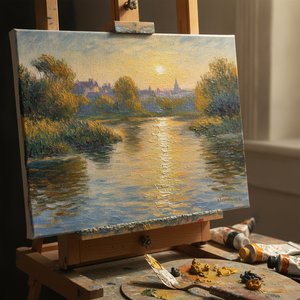
The Soul of Impressionism: Why Oil on Canvas Captures Eternal Light and Timeless Emotion
Discover the enchanting alchemy of Impressionism. Explore how the mastery of oil on canvas, through glazing and impasto, captures eternal light and emotion. Perfect for lovers of Monet and Van Gogh seeking the profound depth of hand-painted fine art.

Oliemaleriets Arv: Teknik, Historie og Nutidig Praksis
Dyk ned i oliemaleriets fascinerende verden! Lær om teknikker, historie og nutidige kunstnere. Få ekspertviden og inspiration til dit eget maleprojekt.

