Se i rummet
 Del som kort
 Del
Del
 Detaljer
 Guide
Guide

 Download
 Lignende værker
 Røntgenundersøgelse
 Diasshow
 Spørgsmål og svar
 Statistikker
Ugolino Martelli

- 102.0 x 85.0 cm


 Vis mere
Giclée / Kunsttryk
Giclée- eller lærredstryk i museumskvalitet med hurtig produktion og fleksible muligheder for finish. ( Køb håndmalet maleri Skift til digitalt billede)




P118B Dkr10

P118H Dkr10

P118W Dkr10

P438Z Dkr10

P508JH Dkr12

P508YH Dkr12

P805H Dkr10

P805Z Dkr10

P919BZ Dkr10

P919G Dkr10

P919XJ Dkr10

P959ZH Dkr10

P968JZ Dkr12

W106C Dkr8

W218G Dkr10

W218JH Dkr8

W218Y Dkr10

W307PJ Dkr10

W316G Dkr10

W316PJ Dkr8

W316Y Dkr10

W398PJ Dkr8

W4111J Dkr10

W500HY Dkr15

W500JH Dkr15

W692G Dkr12

W849H Dkr8

W940BG Dkr15

W953PJ Dkr8




Vælg mellem vores forudindstillede størrelser, der matcher kunstværkets originale proportioner.

Indtast den bredde og højde, du har brug for, så det passer til din ramme eller din væg. Et print kan kun beskæres, aldrig gøres større end selve billedet, så en størrelse med et andet format vil medføre, at dele af motivet går tabt. Vi sender dig en digital mockup til godkendelse, før vi printer noget. Billedet vist på denne side viser ikke den faktiske beskæring — det er kun mockuppen, der gør.
Verdensomspændende levering () på 2 uger i stedet for de sædvanlige 4/5 uger. (5 november)

Gratis ekspresforsendelse til hele verden

Lærred af linned i høj kvalitet

Fuld transportforsikring

Garanti for refusion af told og importafgifter

Garanti for præcis farvegengivelse

100 dages returret ved fabrikationsfejl

100% fuld returret

Mængderabat ved flere køb
 Glasmulighed er kun tilgængelig i størrelser under 110 cm

Ugolino Martelli
Giclée / Kunsttryk
Størrelse på reproduktion
-


Samlet pris
Dkr 538
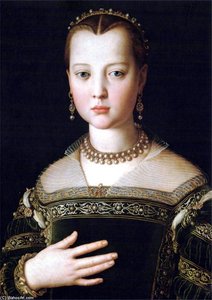
A Portrait of Quiet Dignity: Agnolo Bronzino’s Ugolino Martelli
The painting “Portrait of Ugolino Martelli,” executed by Agnolo Bronzino in 1535, stands as a testament to the Mannerist aesthetic—a deliberate rejection of High Renaissance ideals favoring restraint, psychological complexity, and meticulous observation. More than just a likeness of Ugolino Martelli, Marchese di Montalto, this artwork embodies a profound exploration of human character within a carefully constructed visual framework. It’s a piece that whispers rather than shouts, inviting contemplation on themes of intellectuality, status, and the subtle interplay between appearance and inner life—qualities particularly valued during Bronzino's time.- Subject Matter: The portrait depicts Ugolino Martelli, a prominent noble figure of Florence, seated calmly beside a statue. This deliberate positioning isn’t merely decorative; it underscores Martelli’s elevated social standing and subtly suggests an association with classical ideals of virtue and contemplation.
- Style & Technique: Bronzino's signature Mannerist style distinguishes itself from its predecessor through flattened perspectives, stylized drapery, and a disconcerting lack of illusionistic depth. Unlike the luminous realism championed by Leonardo da Vinci or Michelangelo, Bronzino prioritizes precise modeling and subtle shading to convey an impression of stillness and polished elegance. The artist’s masterful use of oil paint allows for incredible detail—notice the intricate folds of Martelli's robe and the meticulous rendering of the statue’s surface.
Historical Context: Florence Under Medici Rule
Florence in 1535 was at the zenith of Medici patronage, a period marked by political stability and artistic flourishing. Cosimo I de' Medici’s reign fostered an environment where artists like Bronzino thrived—commissioned to decorate palaces and commemorate noble families, they catered to the tastes of a discerning elite who appreciated sophistication and intellectual refinement. The portrait reflects this cultural climate, aligning with the Mannerist preoccupation with portraying individuals as embodiments of moral virtue and aristocratic dignity. It’s a visual record of Florence's power and prestige during its golden age.- Symbolism: The statue flanking Martelli is laden with symbolic significance—likely representing Apollo or Minerva, deities associated with intellect and artistic inspiration. This deliberate inclusion reinforces the notion that Martelli possesses cultivated mind and embodies noble ideals.
- Emotional Impact: Despite its apparent calmness, “Portrait of Ugolino Martelli” evokes a sense of contemplative seriousness. Bronzino’s gaze is averted from the viewer, creating an intimacy that invites us to consider Martelli's inner thoughts—a characteristic Mannerist technique designed to heighten psychological realism and convey profound emotion through subtle visual cues.
Legacy & Reproduction Considerations
Bronzino’s influence extended far beyond his own lifetime, shaping the artistic sensibilities of subsequent generations. His meticulous attention to detail and masterful command of technique continue to inspire artists today. OriginalUniqueArt offers exceptionally detailed reproductions of “Portrait of Ugolino Martelli,” utilizing archival pigments and printing processes to faithfully capture the nuances of Bronzino’s original artwork. These reproductions provide a stunning opportunity to experience the beauty and intellectual depth of this iconic Mannerist masterpiece in your own home or studio—a timeless testament to Florentine artistry and humanist ideals.Spørgsmål og svar
Hvilken stemning formidler Mannerist Style-værket "Ugolino Martelli"?
"Ugolino Martelli" har en Reflective stemning inden for Mannerist Style-bevægelsen.
Hvad foreslås der at bruge "Ugolino Martelli" af Agnolo Bronzino til?
Den foreslåede anvendelse af "Ugolino Martelli" af Agnolo Bronzino er Statement, men den kan også tjene andre formål.
Har "Ugolino Martelli" stærke lys-mørke kontraster?
Lys-mørke-kontrasten i "Ugolino Martelli" er registreret som Gentle. Kontrast beskriver, hvor kraftigt lyse og mørke områder adskiller sig fra hinanden.
Kunstnerbiografi
Agnolo Bronzino – Il Bronzino: Florentine Mannerist Master & Court Painter
Agnolo di Cosimo, known to history as Bronzino, emerged from the vibrant artistic landscape of Renaissance Florence in 1503, a period already brimming with genius. Born the son of a butcher, his path diverged sharply from familial trade, guided instead by an innate talent that would see him become one of the most sought-after portraitists of his era and a defining figure of Mannerism. His early training began with Raffaellino del Garbo, but it was under the tutelage of Jacopo da Pontormo that Bronzino’s artistic sensibilities truly took shape. While absorbing Pontormo's innovative style—characterized by expressive emotion and dynamic composition—he ultimately forged his own distinct voice—one characterized by a cool composure and refined detail markedly different from his teacher’s often emotionally charged works. This early period was also influenced by studies with Andrea del Sarto, exposing him to the legacies of Michelangelo and Leonardo da Vinci, foundational influences that would subtly permeate his mature style. The young Bronzino quickly demonstrated an aptitude for capturing not just physical likeness but a certain psychological depth, even in his earliest commissions.Early Influences & Artistic Formation
Bronzino’s formative years were marked by exposure to the artistic currents of Florence under Pontormo and Sarto. Pontormo's dramatic use of color and distorted perspective profoundly impacted Bronzino’s aesthetic sensibilities—a departure from the idealized beauty championed by Raphael and Leonardo. He absorbed Michelangelo’s monumental grandeur and sculptural approach, recognizing its power to convey emotion and physicality. These influences instilled in him a conviction that art should transcend mere imitation of nature, striving instead for an elevated form of expression. His early works reflected this ambition, demonstrating a remarkable command of technique and foreshadowing the stylistic innovations that would define his later career. The meticulous attention to detail—particularly evident in portraits like *Joseph with Jacob in Egypt*—established him as a student of Pontormo’s masterful draughtsmanship.Ascension at the Medici Court & Patronage
Bronzino's trajectory shifted dramatically when he secured the patronage of Cosimo I de’ Medici, Duke of Tuscany. This relationship solidified after Bronzino contributed to the lavish decorations celebrating Cosimo’s wedding to Eleonora di Toledo in 1539—a project that showcased his versatility as a fresco painter and cemented his position as the official court painter for much of his life. It was a role he fulfilled with unwavering dedication and remarkable skill. The portraits emanating from this period are not merely likenesses; they are carefully constructed statements of power, status, and dynastic ambition. Cosimo and Eleonora themselves became frequent subjects—immortalized in paintings that exude an aristocratic aloofness and polished elegance. These works weren’t simply about capturing physical resemblance but crafting enduring symbols of Medici authority—a deliberate effort to project an image of regal splendor and intellectual refinement. He undertook numerous commissions for the Medici family, reflecting his commitment to serving the Duke's vision of Florence as a center of artistic excellence.The Mannerist Style & Artistic Innovation
Bronzino’s distinctive artistic style is undeniably rooted in Mannerism—a movement that emerged in Italy during the mid-16th century as a reaction against the High Renaissance’s emphasis on naturalism and harmonious balance. Unlike his predecessors, Bronzino rejected the pursuit of idealized beauty, favoring instead a stylized representation of form and emotion. His figures are often rendered with elongated proportions, subtly distorted poses, and an unsettling stillness—a deliberate departure from the dynamism characteristic of earlier artistic traditions. This stylistic choice wasn’t merely aesthetic; it reflected a broader intellectual preoccupation with exploring psychological complexity and conveying profound ideas through visual imagery. He achieved this goal with unparalleled precision—employing meticulous draughtsmanship and applying subtle gradations of color to create surfaces that shimmered with an almost ethereal luminescence. His masterpiece, *Venus, Cupid, Folly & Time*, exemplifies this approach—a complex allegory rendered in breathtaking detail and imbued with a sense of enigmatic contemplation.Legacy & Enduring Influence
Bronzino’s contribution to Florentine art history is undeniable. He established himself as the foremost portraitist of his time—producing images that continue to captivate audiences centuries later. His influence extended far beyond Florence, shaping court portraiture throughout Europe and establishing a precedent for stylistic innovation within the genre. Scholars now recognize Bronzino's profound understanding of artistic principles and his masterful execution—a testament to his enduring legacy as one of Mannerism’s most accomplished practitioners. He died in Florence in 1572, leaving behind an impressive oeuvre that embodies the ideals of Renaissance refinement and intellectual sophistication. His work remains a cornerstone of art history—inspiring artists and scholars alike with its elegance, precision, and psychological depth.
Agnolo Bronzino
1503 - 1572 , Italien
Kort om kunstneren
- Artistic Movement Or Style: Mannerisme
- Artists Who Influenced This Artist:
- Jacopo da Pontormo
- Michelangelo
- Leonardo da Vinci
- Date Of Birth: 17 november 1503
- Date Of Death: 23 november 1572
- Full Name: Agnolo di Cosimo
- Nationality: Italien
- Notable Artworks:
- Venus, Cupid og Tid
- *Portræt af Cosimo I*
- *Eleonora af Toledo med hendes søn Giovanni
- Place Of Birth: Florence, Italien
Relaterede artikler

Top 10 Bronzemesterværker: Kunsthistorien Ændret for Evigt | OriginalUniqueArt.dk
Oplev de 10 mest legendariske bronzemesterværker, der har formet kunsthistorien! Fra Rodin til Degas – lær historierne bag ikoniske skulpturer og find inspiration til din indretning. Køb museumskvalitets reproduktioner på OriginalUniqueArt.com.

The Enduring Form: Exploring Themes & Techniques in Sculpture Across Historical Periods
Explore the rich history of sculpture from ancient masterpieces to contemporary innovations. Discover key techniques, influential artists & investment potential for discerning art collectors.

Bronzeskulpturers Mestre: 10 Værker der Ændrede Kunsthistorien | OriginalUniqueArt
Oplev de 10 mest legendariske bronzeskulpturer, der har formet kunsthistorien! Fra Rodin til Vigeland – lær historierne bag mesterværkerne og find inspiration til din indretning. Køb museumskvalitets reproduktioner på OriginalUniqueArt.com.

The Enduring Form: Sculpture Across History, Technique & Emotional Resonance
Explore the rich history of sculpture with OriginalUniqueArt. Discover key techniques, influential artists & investment potential for discerning collectors. Expert insights into valuing and collecting timeless masterpieces.
Bronzeskulpturens Vedvarende Arv: Historie, Teknikker og Moderne Fortolkninger
Udforsk bronzeskulpturens fascinerende historie og teknikker. Få indsigt i kunsthistorien, moderne fortolkninger og investeringsmuligheder. Ekspertviden for samlere.