
 Se i fuld skala
 Del
Del Del
Del
 Detaljer

 Download
 Lignende værker
 Røntgenundersøgelse
 Diasshow
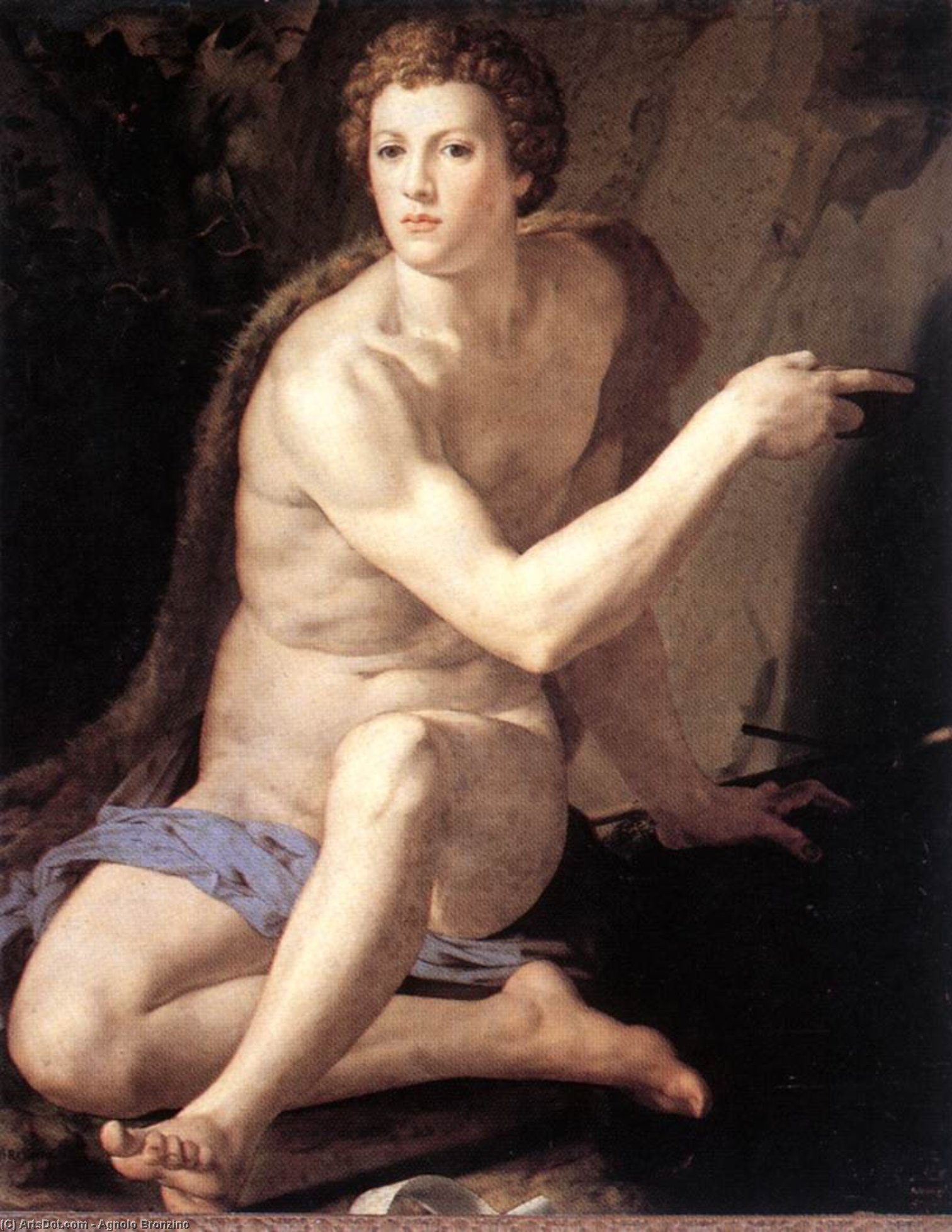
St John the Baptist
 Oil
Oil- WallArt
- Mannerist Style
 1550
1550 120.0 x 92.0 cm
 Galleria Borghese
 Se mere
Køb et højopløst, forbedret digitalt billede, der er langt bedre end online-forhåndsvisningen.
Hver fil er omhyggeligt forberedt af vores interne specialister ved hjælp af avancerede værktøjer og ekspertmæssig manuel retuschering. Vi sikrer, at hvert billede har enestående klarhed, præcis farvegengivelse og fine detaljer.
Den endelige fil leveres via e-mail inden for 72 timer og er optimeret til øjeblikkelig brug i professionelle, redaktionelle og trykte miljøer. Det er den samme kvalitet, som førende designstudier, forlag og gallerier har tillid til.
Digitalt billede
Download en højopløselig fil til personlig fremvisning, print og kreative projekter. ( Køb print Køb håndlavet maleri)
Inkluderet i alle ordrer på digitale billeder
Ekspert digital levering, garanteret
Når du vælger OriginalUniqueArt.com, får du ikke blot et billede – du modtager et professionelt optimeret digitalt kunstværk, skabt med præcision og sikret med en tilfredshedsgaranti. Her er alt, hvad din ordre automatisk indeholder:

Hurtig levering via e-mail
Din højkvalitets digitale billedfil vil blive sendt til din e-mail inden for 72 timer efter bestilling – klar til øjeblikkelig brug.

AI-optimeret digital fil
Dit kunstværk optimeres professionelt ved hjælp af avancerede AI-værktøjer og manuel redigering, hvilket sikrer maksimal detaljegrad, klarhed og farvenøjagtighed.

Gratis livslang genlevering
Har du ved en fejl slettet eller mistet din fil? Ingen bekymring – vi sender den igen til enhver tid, helt gratis.

Ingen importgebyrer – nogensinde
Nyd dit kunstværk med det samme uden told, afgifter eller leveringsgebyrer – digitale downloads er altid skattefrie.

Garanteret farvenøjagtighed
Vi sikrer, at dit digitale billede gengiver de originale farver så præcist som muligt ved hjælp af professionelle værktøjer og farvestyring.

60 dages tilfredshedsgaranti
Hvis du ikke er tilfreds med dit digitale billede, vil vi revidere det eller refundere 100% inden for 60 dage – uden spørgsmål.

100% Pengene tilbage-garanti
Ik tilfreds? Få fuld refusion inden for 60 dage efter modtagelse af din digitale fil – uden spørgsmål.

Mængderabat
Køb 3 billeder, spar 10% - Køb 5, spar 15% - Køb 10+, spar 20%. Ideelt til kreative projekter, gallerier og bureauer.
Beskrivelse af samlerobjektet
Agnolo Bronzino’s Enigmatic St. John the Baptist
Agnolo Bronzino's "St. John the Baptist," painted in 1550 and currently residing within the Galleria Borghese in Rome, is a masterful embodiment of Mannerist artistry—a period characterized by its deliberate elegance, stylized forms, and subtle psychological depth. This arresting image transcends mere portraiture; it’s an exploration of religious iconography interwoven with a profound sense of introspection and restrained emotion. The painting immediately draws the eye to the figure of St. John himself, seated on the ground in a pose that is both dynamic and subtly unsettling. His muscular physique, rendered with Bronzino's signature cool precision, contrasts sharply with the vulnerability suggested by his exposed nudity and downward-pointing hand – a gesture simultaneously inviting and enigmatic.
Bronzino’s technique is immediately recognizable: a meticulous layering of glazes that create an almost luminous surface. The colors are muted yet rich, dominated by deep blues, browns, and ochres, contributing to the painting's overall sense of stillness and formality. Notice how the folds of his garment are not simply painted but built up through countless thin layers, creating a tactile quality that invites close examination. This painstaking attention to detail is characteristic of Bronzino’s work, reflecting his position as one of Florence’s most sought-after court painters – a role demanding both technical mastery and an ability to capture the refined sensibilities of his aristocratic patrons.
The Symbolism of Restraint
Beyond its formal beauty, “St. John the Baptist” is laden with symbolic meaning. The figure's nudity, while reflecting his baptismal origins, also speaks to a deeper sense of vulnerability and exposure. He’s not depicted as a heroic warrior or triumphant prophet; instead, he embodies a quiet contemplation, a man wrestling with his role as herald of Christ. The blue cloth draped around him is particularly significant – often interpreted as representing the heavens, suggesting John's connection to divine revelation. The upward pointing hand, a gesture frequently associated with prophecy and judgment, adds another layer of complexity, hinting at the weighty responsibility he carries.
Furthermore, Bronzino’s choice of pose—the twisting torso, the slightly angled head—is deliberately unnaturalistic, a hallmark of Mannerism. This departure from classical ideals wasn't simply an aesthetic preference; it served to heighten the emotional intensity and psychological complexity of the subject. Bronzino was less interested in capturing a realistic likeness than in conveying a particular mood or state of mind – a quality that distinguishes his work from the more naturalistic styles prevalent during the High Renaissance.
Context within Florentine Art
To understand Bronzino’s “St. John the Baptist,” it's crucial to consider its place within the broader artistic landscape of Florence in the mid-16th century. Following the innovations of Leonardo da Vinci and Michelangelo, artists like Bronzino were pushing the boundaries of representation, exploring new ways to express emotion and create visual drama. He was influenced by Jacopo Pontormo’s innovative style but ultimately forged his own distinct voice—one characterized by a cool composure and refined detail markedly different from Pontormo’s often emotionally charged works. Bronzino's work reflects the patronage of Cosimo I de' Medici, Grand Duke of Tuscany, who commissioned numerous portraits and allegorical paintings to decorate the lavish palaces and chapels of Florence.
A Reproduction for Your Space
OriginalUniqueArt offers meticulously crafted hand-painted reproductions of Agnolo Bronzino’s “St. John the Baptist,” capturing the artist's exquisite detail and evocative atmosphere with unparalleled fidelity. Whether you are a seasoned art collector, an interior designer seeking to elevate your space, or simply an admirer of Renaissance beauty, our reproduction provides a stunning way to experience this iconic masterpiece. Each reproduction is created using traditional techniques and archival-quality materials, ensuring its longevity and preserving the rich colors and textures of Bronzino’s original work. Bring the enigmatic gaze of St. John into your home and immerse yourself in the timeless elegance of Mannerist art.
Kunstnerens biografi
Agnolo Bronzino – Il Bronzino: Florentine Mannerist Master & Court Painter
Agnolo di Cosimo, known to history as Bronzino, emerged from the vibrant artistic landscape of Renaissance Florence in 1503, a period already brimming with genius. Born the son of a butcher, his path diverged sharply from familial trade, guided instead by an innate talent that would see him become one of the most sought-after portraitists of his era and a defining figure of Mannerism. His early training began with Raffaellino del Garbo, but it was under the tutelage of Jacopo da Pontormo that Bronzino’s artistic sensibilities truly took shape. While absorbing Pontormo's innovative style—characterized by expressive emotion and dynamic composition—he ultimately forged his own distinct voice—one characterized by a cool composure and refined detail markedly different from his teacher’s often emotionally charged works. This early period was also influenced by studies with Andrea del Sarto, exposing him to the legacies of Michelangelo and Leonardo da Vinci, foundational influences that would subtly permeate his mature style. The young Bronzino quickly demonstrated an aptitude for capturing not just physical likeness but a certain psychological depth, even in his earliest commissions.Early Influences & Artistic Formation
Bronzino’s formative years were marked by exposure to the artistic currents of Florence under Pontormo and Sarto. Pontormo's dramatic use of color and distorted perspective profoundly impacted Bronzino’s aesthetic sensibilities—a departure from the idealized beauty championed by Raphael and Leonardo. He absorbed Michelangelo’s monumental grandeur and sculptural approach, recognizing its power to convey emotion and physicality. These influences instilled in him a conviction that art should transcend mere imitation of nature, striving instead for an elevated form of expression. His early works reflected this ambition, demonstrating a remarkable command of technique and foreshadowing the stylistic innovations that would define his later career. The meticulous attention to detail—particularly evident in portraits like *Joseph with Jacob in Egypt*—established him as a student of Pontormo’s masterful draughtsmanship.Ascension at the Medici Court & Patronage
Bronzino's trajectory shifted dramatically when he secured the patronage of Cosimo I de’ Medici, Duke of Tuscany. This relationship solidified after Bronzino contributed to the lavish decorations celebrating Cosimo’s wedding to Eleonora di Toledo in 1539—a project that showcased his versatility as a fresco painter and cemented his position as the official court painter for much of his life. It was a role he fulfilled with unwavering dedication and remarkable skill. The portraits emanating from this period are not merely likenesses; they are carefully constructed statements of power, status, and dynastic ambition. Cosimo and Eleonora themselves became frequent subjects—immortalized in paintings that exude an aristocratic aloofness and polished elegance. These works weren’t simply about capturing physical resemblance but crafting enduring symbols of Medici authority—a deliberate effort to project an image of regal splendor and intellectual refinement. He undertook numerous commissions for the Medici family, reflecting his commitment to serving the Duke's vision of Florence as a center of artistic excellence.The Mannerist Style & Artistic Innovation
Bronzino’s distinctive artistic style is undeniably rooted in Mannerism—a movement that emerged in Italy during the mid-16th century as a reaction against the High Renaissance’s emphasis on naturalism and harmonious balance. Unlike his predecessors, Bronzino rejected the pursuit of idealized beauty, favoring instead a stylized representation of form and emotion. His figures are often rendered with elongated proportions, subtly distorted poses, and an unsettling stillness—a deliberate departure from the dynamism characteristic of earlier artistic traditions. This stylistic choice wasn’t merely aesthetic; it reflected a broader intellectual preoccupation with exploring psychological complexity and conveying profound ideas through visual imagery. He achieved this goal with unparalleled precision—employing meticulous draughtsmanship and applying subtle gradations of color to create surfaces that shimmered with an almost ethereal luminescence. His masterpiece, *Venus, Cupid, Folly & Time*, exemplifies this approach—a complex allegory rendered in breathtaking detail and imbued with a sense of enigmatic contemplation.Legacy & Enduring Influence
Bronzino’s contribution to Florentine art history is undeniable. He established himself as the foremost portraitist of his time—producing images that continue to captivate audiences centuries later. His influence extended far beyond Florence, shaping court portraiture throughout Europe and establishing a precedent for stylistic innovation within the genre. Scholars now recognize Bronzino's profound understanding of artistic principles and his masterful execution—a testament to his enduring legacy as one of Mannerism’s most accomplished practitioners. He died in Florence in 1572, leaving behind an impressive oeuvre that embodies the ideals of Renaissance refinement and intellectual sophistication. His work remains a cornerstone of art history—inspiring artists and scholars alike with its elegance, precision, and psychological depth.
Agnolo Bronzino
1503 - 1572 , Italien
Kort om kunstneren
- Artistic Movement Or Style: Mannerisme
- Artists Who Influenced This Artist:
- Jacopo da Pontormo
- Michelangelo
- Leonardo da Vinci
- Date Of Birth: 17 november 1503
- Date Of Death: 23 november 1572
- Full Name: Agnolo di Cosimo
- Nationality: Italien
- Notable Artworks:
- Venus, Cupid og Tid
- *Portræt af Cosimo I*
- *Eleonora af Toledo med hendes søn Giovanni
- Place Of Birth: Florence, Italien

