Se i rummet
 Send
Send Del
Del
 Detaljer
 Studieguide til kunstværker

 Download
 Lignende værker
 Røntgenundersøgelse
 Se diasshow
 Statistik
Deposition
 Oil On Canvas
- WallArt
- Mannerist Elegance
 1565
1565 350.0 x 235.0 cm
 Galleria dell’Accademia
 Læs mere
Håndlavet oliereproduktion
Håndmalet olie på lærred i din valgte størrelse og ramme, udført efter bestilling af vores kunstnere. ( Skift til printversion Skift til digitalt billede)




P118B Dkr10

P118H Dkr10

P118W Dkr10

P438Z Dkr10

P508JH Dkr12

P508YH Dkr12

P805H Dkr10

P805Z Dkr10

P919BZ Dkr10

P919G Dkr10

P919XJ Dkr10

P959ZH Dkr10

P968JZ Dkr12

W106C Dkr8

W218G Dkr10

W218JH Dkr8

W218Y Dkr10

W307PJ Dkr10

W316G Dkr10

W316PJ Dkr8

W316Y Dkr10

W398PJ Dkr8

W4111J Dkr10

W500HY Dkr15

W500JH Dkr15

W692G Dkr12

W849H Dkr8

W940BG Dkr15

W953PJ Dkr8




Vælg mellem vores forudindstillede størrelser, der matcher kunstværkets originale proportioner.

Indtast den bredde og højde, du har brug for, så det passer til din ramme eller din væg. Da dette er håndmalet, kan kunstneren ved en anden form på størrelsen male lidt mere rundt om billedet eller skære lidt væk — det er op til dig. Vi sender dig et digitalt mockup til godkendelse, før maleriet påbegyndes. Billedet, der vises på denne side, viser ikke det endelige resultat — det er kun mockuppet, der gør.
Efter bestilling vil OriginalUniqueArt.com team sende en e-mail til kunden for at indhente instruktioner og fremsende et udkast til gennemgang.
Levering i hele verden () på 3-4 uger i stedet for de standard 5 uger. (23 oktober). Ingen kompromiser med kvaliteten.

Gratis ekspresforsendelse til hele verden

Lærred af linned i høj kvalitet

Komplet transportforsikring

Garanti for refusion af told og importafgifter

Garanti for autentisk farvegengivelse

100 dages returret ved fabrikationsfejl

100% fuld returret

Mængderabat ved flere køb
 Glasmulighed er kun tilgængelig i størrelser under 110 cm

Deposition
Reproduktionsmateriale
Reproduktionsstørrelse
-


Samlet pris
Dkr 1972
Agnolo Bronzino’s “Deposition”: A Study in Reserved Elegance
“Deposition,” painted in 1565 by the Florentine master Agnolo Bronzino, is not merely a religious scene; it's a meticulously crafted tableau of restrained emotion and profound psychological depth. Commissioned for the Observant Monastery in Cosmopoli, this work transcends simple narrative to become a meditation on grief, loss, and the delicate balance between earthly sorrow and divine grace. Bronzino, renowned for his “reserved elegance,” achieved this through an almost unnervingly controlled composition, favoring subtle gestures and averted gazes over overt displays of feeling – a hallmark of the Mannerist style that defined his career.
The scene depicts the immediate aftermath of Christ’s removal from the cross. Mary Magdalene, rendered with exquisite detail in her flowing robes, gently lowers the lifeless body of Jesus into the arms of Nicodemus, a figure identified by his distinctive cloak and posture. The figures surrounding them are not presented as dramatically distraught but rather as individuals caught in a moment of quiet contemplation. Note the careful positioning – some stand closer to Christ, their faces turned towards him in sorrowful reverence, while others remain further back, observing from a distance, creating a sense of layered grief and shared humanity. The inclusion of several other figures—including John the Evangelist, Joseph of Arimathea, and even a young soldier in green – adds to the scene’s complexity, suggesting a community united in mourning.
Mannerism and Bronzino's Signature Style
Bronzino’s mastery lies not in dramatic brushstrokes or vibrant color palettes, but in his precise rendering of form and texture. Executed primarily in oil on panel, the painting showcases his signature technique: a cool, polished surface achieved through painstaking layering of thin glazes. This creates an almost sculptural effect, emphasizing the smooth contours of the figures’ bodies and clothing. The dark background serves to heighten the luminosity of the subjects, drawing the viewer's eye directly to their faces – each subtly conveying a complex range of emotions without resorting to overt expressions.
The composition itself is deliberately static, reflecting the principles of Mannerism. Figures are arranged in carefully calculated poses, often with elongated limbs and stylized gestures. This deliberate artificiality contrasts sharply with the more naturalistic depictions favored by earlier Renaissance artists like Leonardo da Vinci and Raphael. Bronzino’s approach prioritized intellectual elegance over emotional immediacy, creating a work that demands careful observation and interpretation.
Symbolism and Context
Beyond its religious subject matter, “Deposition” is rich in symbolic detail. The presence of Nicodemus, a figure often associated with wisdom and knowledge, suggests the importance of intellectual understanding in confronting grief. The young soldier’s green cloak, a symbol of Roman authority, subtly references the sacrifice of Christ within the context of imperial power. The careful arrangement of hands—Mary Magdalene's gently cradling Jesus’ head, Nicodemus’ supporting his body—underscores the profound tenderness and respect with which he is being received.
Painted during a period of political instability in Florence – the Medici family’s grip on power was increasingly challenged – “Deposition” can be interpreted as a subtle commentary on mortality and the fragility of human existence. Bronzino, serving as court painter to Cosimo I de' Medici, skillfully navigated the complexities of patronage while maintaining his artistic independence, producing works that were both aesthetically refined and subtly imbued with intellectual and emotional resonance. The painting’s placement in a monastery underscores its intended purpose: a visual meditation on faith, loss, and the enduring power of compassion.
A Reproduction for Your Space
OriginalUniqueArt offers meticulously hand-painted reproductions of Agnolo Bronzino's “Deposition,” capturing the artist’s signature style with exceptional fidelity. Each reproduction is created using traditional techniques and archival-quality materials, ensuring that it will retain its beauty and vibrancy for generations to come. Whether you are a collector of Renaissance art, an admirer of Mannerist elegance, or simply seeking a piece that evokes a sense of quiet contemplation, this reproduction offers a stunning tribute to one of Florence’s most influential artists. Consider how the painting's cool palette and restrained emotion can complement your interior design scheme – creating a space of serene beauty and intellectual depth.
Spørgsmål & svar
Er "Deposition" af Agnolo Bronzino blandt de eftertragtede Mannerist Elegance-værker?
Inden for Mannerist Elegance-bevægelsen har "Deposition" et Iconic popularitetsniveau.
Hvor i Agnolo Bronzinos karriere placerer "Deposition" sig?
"Deposition" tilhører Late Mannerism i Agnolo Bronzino's karriere. Denne klassificering relaterer værket til kunstnerens udvikling.
Hvor intens er farveintensiteten i "Deposition" af Agnolo Bronzino?
"Deposition" af Agnolo Bronzino fremviser en Balanced farveintensitet.
Om kunstneren
Agnolo Bronzino – Il Bronzino: Florentine Mannerist Master & Court Painter
Agnolo di Cosimo, known to history as Bronzino, emerged from the vibrant artistic landscape of Renaissance Florence in 1503, a period already brimming with genius. Born the son of a butcher, his path diverged sharply from familial trade, guided instead by an innate talent that would see him become one of the most sought-after portraitists of his era and a defining figure of Mannerism. His early training began with Raffaellino del Garbo, but it was under the tutelage of Jacopo da Pontormo that Bronzino’s artistic sensibilities truly took shape. While absorbing Pontormo's innovative style—characterized by expressive emotion and dynamic composition—he ultimately forged his own distinct voice—one characterized by a cool composure and refined detail markedly different from his teacher’s often emotionally charged works. This early period was also influenced by studies with Andrea del Sarto, exposing him to the legacies of Michelangelo and Leonardo da Vinci, foundational influences that would subtly permeate his mature style. The young Bronzino quickly demonstrated an aptitude for capturing not just physical likeness but a certain psychological depth, even in his earliest commissions.Early Influences & Artistic Formation
Bronzino’s formative years were marked by exposure to the artistic currents of Florence under Pontormo and Sarto. Pontormo's dramatic use of color and distorted perspective profoundly impacted Bronzino’s aesthetic sensibilities—a departure from the idealized beauty championed by Raphael and Leonardo. He absorbed Michelangelo’s monumental grandeur and sculptural approach, recognizing its power to convey emotion and physicality. These influences instilled in him a conviction that art should transcend mere imitation of nature, striving instead for an elevated form of expression. His early works reflected this ambition, demonstrating a remarkable command of technique and foreshadowing the stylistic innovations that would define his later career. The meticulous attention to detail—particularly evident in portraits like *Joseph with Jacob in Egypt*—established him as a student of Pontormo’s masterful draughtsmanship.Ascension at the Medici Court & Patronage
Bronzino's trajectory shifted dramatically when he secured the patronage of Cosimo I de’ Medici, Duke of Tuscany. This relationship solidified after Bronzino contributed to the lavish decorations celebrating Cosimo’s wedding to Eleonora di Toledo in 1539—a project that showcased his versatility as a fresco painter and cemented his position as the official court painter for much of his life. It was a role he fulfilled with unwavering dedication and remarkable skill. The portraits emanating from this period are not merely likenesses; they are carefully constructed statements of power, status, and dynastic ambition. Cosimo and Eleonora themselves became frequent subjects—immortalized in paintings that exude an aristocratic aloofness and polished elegance. These works weren’t simply about capturing physical resemblance but crafting enduring symbols of Medici authority—a deliberate effort to project an image of regal splendor and intellectual refinement. He undertook numerous commissions for the Medici family, reflecting his commitment to serving the Duke's vision of Florence as a center of artistic excellence.The Mannerist Style & Artistic Innovation
Bronzino’s distinctive artistic style is undeniably rooted in Mannerism—a movement that emerged in Italy during the mid-16th century as a reaction against the High Renaissance’s emphasis on naturalism and harmonious balance. Unlike his predecessors, Bronzino rejected the pursuit of idealized beauty, favoring instead a stylized representation of form and emotion. His figures are often rendered with elongated proportions, subtly distorted poses, and an unsettling stillness—a deliberate departure from the dynamism characteristic of earlier artistic traditions. This stylistic choice wasn’t merely aesthetic; it reflected a broader intellectual preoccupation with exploring psychological complexity and conveying profound ideas through visual imagery. He achieved this goal with unparalleled precision—employing meticulous draughtsmanship and applying subtle gradations of color to create surfaces that shimmered with an almost ethereal luminescence. His masterpiece, *Venus, Cupid, Folly & Time*, exemplifies this approach—a complex allegory rendered in breathtaking detail and imbued with a sense of enigmatic contemplation.Legacy & Enduring Influence
Bronzino’s contribution to Florentine art history is undeniable. He established himself as the foremost portraitist of his time—producing images that continue to captivate audiences centuries later. His influence extended far beyond Florence, shaping court portraiture throughout Europe and establishing a precedent for stylistic innovation within the genre. Scholars now recognize Bronzino's profound understanding of artistic principles and his masterful execution—a testament to his enduring legacy as one of Mannerism’s most accomplished practitioners. He died in Florence in 1572, leaving behind an impressive oeuvre that embodies the ideals of Renaissance refinement and intellectual sophistication. His work remains a cornerstone of art history—inspiring artists and scholars alike with its elegance, precision, and psychological depth.
Agnolo Bronzino
1503 - 1572 , Italien
Hurtige fakta
- Artistic Movement Or Style: Mannerisme
- Artists Who Influenced This Artist:
- Jacopo da Pontormo
- Michelangelo
- Leonardo da Vinci
- Date Of Birth: 17 november 1503
- Date Of Death: 23 november 1572
- Full Name: Agnolo di Cosimo
- Nationality: Italien
- Notable Artworks:
- Venus, Cupid og Tid
- *Portræt af Cosimo I*
- *Eleonora af Toledo med hendes søn Giovanni
- Place Of Birth: Florence, Italien
Relaterede artikler
Agnolo Bronzino: Mastering Courtly Portraiture & the Enigmatic Gaze of Renaissance Florence
Explore the captivating world of Agnolo Bronzino, Renaissance master portraitist. Discover his elegant style, symbolic depth & lasting influence on art history. Expert insights for collectors.
Galleria degli Uffizi: Top 25 Kunstværker – Renæssancens Mestre | OriginalUniqueArt.dk
Oplev Galleria degli Uffizi's 25 mest ikoniske kunstværker! Dyk ned i renæssancens mestre som Leonardo da Vinci, Michelangelo & Botticelli. Find inspiration til din indretning og køb museumskvalitets reproduktioner på OriginalUniqueArt.com.
Fra Angelicos 25 Mesterværker: Renæssancekunst til Dit Hjem | OriginalUniqueArt.dk
Oplev Fra Angelicos 25 mest ikoniske renæssancemalerier. Fordyb dig i historien bag disse religiøse mesterværker, fresker og altertavler. Find inspiration til din indretning & køb museumskvalitets reproduktioner på OriginalUniqueArt.com.

Mannerism: Bridging Renaissance Harmony & Baroque Drama – A Study of Style & Affectation
Explore the fascinating world of Mannerism! Discover its key characteristics, pioneering artists like Pontormo & Bronzino, and its pivotal role in bridging Renaissance harmony to Baroque drama. A comprehensive guide for art enthusiasts.
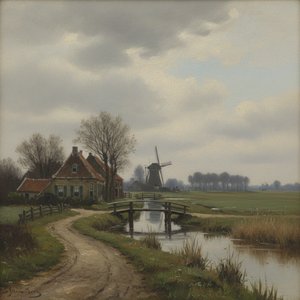
Jacob Henricus Maris: A Master of Dutch Atmospheric Realism & the Intimate Landscape
Explore the captivating world of Jacob Henricus Maris, a leading figure of the Dutch Hague School. Discover his atmospheric landscapes, signature brushstrokes & lasting influence on 19th-century art. Learn more at OriginalUniqueArt.