
 Del som kort
 Del
Del
 Detaljer
 Guide
Guide

 Download
 Lignende værker
 Diasshow
 Spørgsmål og svar
 Statistikker
Saying Grace


 Vis mere
Giclée / Kunsttryk
Giclée- eller lærredstryk i museumskvalitet med hurtig produktion og fleksible muligheder for finish. ( Køb håndmalet maleri Skift til digitalt billede)




































Vælg mellem vores forudindstillede størrelser, der matcher kunstværkets originale proportioner.

Indtast den bredde og højde, du har brug for, så det passer til din ramme eller din væg. Et print kan kun beskæres, aldrig gøres større end selve billedet, så en størrelse med et andet format vil medføre, at dele af motivet går tabt. Vi sender dig en digital mockup til godkendelse, før vi printer noget. Billedet vist på denne side viser ikke den faktiske beskæring — det er kun mockuppen, der gør.
Verdensomspændende levering () på 2 uger i stedet for de sædvanlige 4/5 uger. (4 november)

Gratis ekspresforsendelse til hele verden

Lærred af linned i høj kvalitet

Fuld transportforsikring

Garanti for refusion af told og importafgifter

Garanti for præcis farvegengivelse

100 dages returret ved fabrikationsfejl

100% fuld returret

Mængderabat ved flere køb
 Glasmulighed er kun tilgængelig i størrelser under 110 cm

Saying Grace
Giclée / Kunsttryk
Størrelse på reproduktion
-


Samlet pris
Dkr 540
The Quiet Ritual of Community: An Encounter with Adriaen van Ostade's "Saying Grace"
To gaze upon Adriaen van Ostade’s Saying Grace is not merely to observe a painting; it is to step across the threshold and into the warm, intimate glow of a Dutch Golden Age hearth. This scene captures that profound, suspended moment just before sustenance—the collective pause where gratitude takes precedence over appetite. The composition centers around a sturdy dining table, laden with the promise of a shared meal, yet the true focus lies in the human connection surrounding it. Van Ostade masterfully renders a gathering of souls, their postures suggesting familiarity and deep-rooted community bonds. It speaks to a time when domestic life was not just about survival, but about ritual, fellowship, and the quiet acknowledgment of blessings.
Mastery in Genre Detail: Technique and Atmosphere
Van Ostade’s technique is a testament to the meticulous observation characteristic of Dutch genre painting. While his early work flirted with the looser brushwork of masters like Frans Hals, here we see a refinement that lends an almost tangible weight to every fold of cloth and every expression on a face. The black and white nature of this print only heightens our appreciation for the tonal subtlety—the interplay between deep shadows pooling in the corners and the soft illumination catching the polished wood of the table. Notice how the light seems to emanate from an unseen source, bathing the central group in a gentle, almost sacred glow. This attention to atmospheric detail transforms what could be a simple depiction of dinner into a profound study of human interaction.
Symbolism of the Shared Table
The dining table itself functions as a powerful symbolic anchor within the painting. It is the nexus point where disparate lives momentarily converge under the banner of shared experience. The act of "saying grace" transcends mere religious observance; it symbolizes gratitude for provision, for family, and for the simple gift of time together. In the context of 17th-century Dutch life, such gatherings were vital social affirmations. Every figure, whether seated or standing, contributes to a tapestry of quiet devotion. The bowl upon the table is not just food; it represents bounty, the tangible result of labor and providence.
Bringing the Golden Age Home: Decorating with Narrative
For the collector or designer seeking to infuse a space with the rich narrative depth of history, a reproduction of Saying Grace offers unparalleled emotional resonance. It moves beyond mere decoration; it becomes a focal point for contemplation. Imagine this scene gracing your wall—it invites conversation, prompting viewers to pause and consider their own moments of grace. The style speaks to an appreciation for the domestic sublime, suggesting that true artistry can be found not in grand historical epics, but in the quiet dignity of everyday life shared among loved ones.
Spørgsmål og svar
Hvor lys er "Saying Grace" overordnet set?
Den oplevede lysstyrke i "Saying Grace" af Adriaen van Ostade er bright. Den kan tilpasses lyset i det tiltænkte rum.
Kan jeg bruge augmented reality til at se "Saying Grace" af Adriaen van Ostade i mit eget rum?
"Saying Grace" har en augmented reality-forhåndsvisning: kunstværkets Se i AR-side viser det i dit eget rum på en kompatibel enhed.
Hvad forestiller "Saying Grace" af Adriaen van Ostade, og hvilken stemning formidler det?
"Saying Grace" af Adriaen van Ostade skildrer genre scene, dining table, family meal, dutch life, still life, gathering i en Serene stemning. Motiv og atmosfære beskriver tilsammen værket.
Kunstnerbiografi
Adriaen Jansz van Ostade: A Master of Dutch Genre Painting
Adriaen Jansz van Ostade (1610 – 1685) stands as a pivotal figure in the history of Dutch art, specifically within the genre painting tradition that flourished during the Golden Age. Born in Haarlem, he emerged from a family steeped in artistic heritage—his father, Jan Hendricx van Eyndhoven, was a tapestry weaver—a circumstance that undoubtedly nurtured his early fascination with visual expression. While biographical details remain somewhat sparse compared to contemporaries like Rembrandt or Hals, Van Ostade’s legacy rests firmly on the profound impact of his paintings – depictions of everyday life imbued with remarkable realism and psychological insight.- Early Training & Influence: Initially apprenticed under Frans Hals, a titan of portraiture and genre painting, Van Ostade quickly distinguished himself from Hals's stylistic approach. This formative period exposed him to the techniques of Hals’s workshop, notably the loose brushwork characteristic of his style—a technique that would subtly shape his own artistic trajectory.
- The Haarlem School & Brouwer’s Partnership: Van Ostade’s artistic development coincided with a burgeoning movement centered in Haarlem, where he collaborated closely with Adriaen Brouwer. Their shared focus on portraying peasant life and tavern scenes cemented their position as representatives of the Haarlem school—a distinctive stylistic idiom characterized by subdued palettes and masterful use of light.
A Distinctive Style: Detail & Emotional Resonance
Van Ostade’s artistic hallmark was his meticulous attention to detail, a quality that elevated genre paintings beyond mere representation. Unlike many artists of his time who prioritized idealized beauty or grand narratives, Van Ostade sought to capture the complexities of human experience—the joys and sorrows, triumphs and defeats—within scenes of ordinary existence. His canvases pulsated with palpable emotion, conveyed through nuanced facial expressions and gestures that captured the essence of human psychology. He skillfully rendered textures – clothing, wood grain, surfaces – creating a sense of immersive realism that transported viewers into the heart of Dutch society.- Subject Matter: Van Ostade’s oeuvre revolved around familiar subjects—tavern gatherings, village fairs, peasant interiors—each meticulously observed and portrayed with unflinching honesty. He eschewed sentimentality, presenting his figures as they truly were – flawed, vulnerable, yet undeniably human.
- Technique & Palette: His technique involved layering thin glazes of oil paint to achieve luminous effects and subtle tonal variations—a hallmark of Baroque painting. Often employing muted colors—browns, grays, ochres—he prioritized capturing the atmosphere of his subjects rather than striving for flamboyant visual spectacle.
Notable Works & Legacy
Among Van Ostade’s celebrated paintings are *Saying Grace* (c. 1660), housed at the Cleveland Museum of Art, and *A Laughing Peasant* (1634), residing in the Kremer Collection, Amsterdam—works that exemplify his ability to imbue humble subjects with dignity and poetic beauty. His tavern scenes—particularly *The Wanderer*, *The Drinkers*, and *The Musicians*—remain enduring icons of Dutch cultural heritage. Furthermore, Van Ostade’s influence extended beyond his own lifetime, shaping the sensibilities of subsequent artists who embraced realism and psychological depth.- Influence on Impressionism & Realism: Although separated by centuries, Van Ostade's commitment to capturing naturalistic detail foreshadowed developments in Impressionist and Realist painting—artists who sought to depict the world as it appeared to the eye without embellishment or idealization.
Concluding Reflections
Adriaen Jansz van Ostade’s contribution to Dutch art transcends mere stylistic innovation. He achieved something far more profound: he transformed genre painting into a vehicle for exploring the human condition—a testament to his artistic vision and enduring legacy as one of the most perceptive chroniclers of 17th-century Dutch life.
Adriaen van Ostade
1610 - 1685 , Holland
Kort om kunstneren
- Artistic Movement Or Style: Barok kunst
- Artists Who Influenced This Artist:
- Frans Hals
- Adriaen Brouwer
- Date Of Birth: 10 december 1610
- Full Name: Adriaen Jansz van Ostade
- Nationality: Nederlands
- Notable Artworks:
- Dorfkirmes unter dem großen Baum
- BÄUERLICHES TREIBEN IN WINTERLICHER LANDSCHAFT
- WIRTSHAUSSZENE MIT PFEIFERAUCHENDER UND...
- THE WANDERING MUSICIANS
- Place Of Birth: Haarlem, Nederland
Relaterede artikler
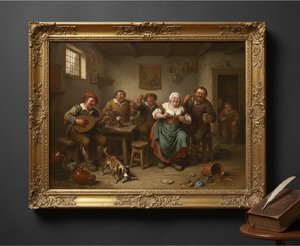
Adriaen van Ostade: A Master of Dutch Genre Painting & Social Commentary
Explore the life & work of Adriaen van Ostade, a leading Dutch Golden Age painter. Discover his realistic genre scenes, social commentary, and lasting influence on art history. Learn more at OriginalUniqueArt.

Hollandske Mestre: Top 10 Værker fra Guldalderen – Kunst til Dit Hjem
Oplev de 10 mest ikoniske værker fra den hollandske guldalder! Rembrandt, Vermeer og andre mestre afsløres. Find inspiration til dit hjem & køb museumskvalitets kunsttryk på OriginalUniqueArt.com.

Golden Light & Dutch Skies: The Timeless Magic of Dutch Golden Age Landscapes
Discover the breathtaking beauty of Dutch Golden Age landscapes. Explore the mastery of light, chiaroscuro, and 17th-century realism through an expert art history lens, celebrating the enduring legacy of the Dutch Masters for discerning collectors and art lovers.

Rembrandts Mesterværker: Top 25 Kunstværker til Din Væg – OriginalUniqueArt.dk
Oplev Rembrandts 25 mest ikoniske kunstværker! Fordyb dig i historierne bag 'Nattevagten', hans selvportrætter og bibelske motiver. Find museumskvalitets reproduktioner & inspiration til din væg på OriginalUniqueArt.com.
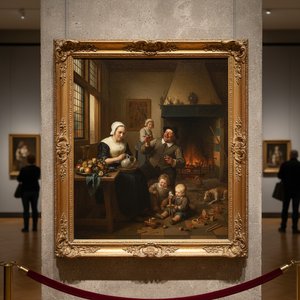
Genre Painting: A Window into Daily Life & Societal Values of the Dutch Golden Age
Explore the captivating world of Dutch Golden Age genre painting! Discover realistic depictions of daily life, masterful artists like Ostade & Metsu, and hidden symbolism. Learn about this influential art movement with OriginalUniqueArt.