
 Se i rummet
 Del som kort
 Del
Del
 Detaljer
 Guide
Guide

 Download
 Lignende værker
 Røntgenundersøgelse
 Diasshow
 Spørgsmål og svar
 Statistikker
Children Playing in a Barn

- 23.0 x 29.0 cm


 Vis mere
Giclée / Kunsttryk
Giclée- eller lærredstryk i museumskvalitet med hurtig produktion og fleksible muligheder for finish. ( Køb håndmalet maleri Skift til digitalt billede)




P118B Dkr10

P118H Dkr10

P118W Dkr10

P438Z Dkr10

P508JH Dkr12

P508YH Dkr12

P805H Dkr10

P805Z Dkr10

P919BZ Dkr10

P919G Dkr10

P919XJ Dkr10

P959ZH Dkr10

P968JZ Dkr12

W106C Dkr8

W218G Dkr10

W218JH Dkr8

W218Y Dkr10

W307PJ Dkr10

W316G Dkr10

W316PJ Dkr8

W316Y Dkr10

W398PJ Dkr8

W4111J Dkr10

W500HY Dkr15

W500JH Dkr15

W692G Dkr12

W849H Dkr8

W940BG Dkr15

W953PJ Dkr8




Vælg mellem vores forudindstillede størrelser, der matcher kunstværkets originale proportioner.

Indtast den bredde og højde, du har brug for, så det passer til din ramme eller din væg. Et print kan kun beskæres, aldrig gøres større end selve billedet, så en størrelse med et andet format vil medføre, at dele af motivet går tabt. Vi sender dig en digital mockup til godkendelse, før vi printer noget. Billedet vist på denne side viser ikke den faktiske beskæring — det er kun mockuppen, der gør.
Verdensomspændende levering () på 2 uger i stedet for de sædvanlige 4/5 uger. (4 november)

Gratis ekspresforsendelse til hele verden

Lærred af linned i høj kvalitet

Fuld transportforsikring

Garanti for refusion af told og importafgifter

Garanti for præcis farvegengivelse

100 dages returret ved fabrikationsfejl

100% fuld returret

Mængderabat ved flere køb
 Glasmulighed er kun tilgængelig i størrelser under 110 cm

Children Playing in a Barn
Giclée / Kunsttryk
Størrelse på reproduktion
-


Samlet pris
Dkr 540
A Glimpse into Golden Age Domestic Bliss
Adriaen van Ostade’s "Children Playing in a Barn" transports us directly into the heart of 17th-century Dutch life, offering more than just a depiction; it presents a carefully curated moment of pure, unadulterated joy. The scene unfolds within the rustic embrace of a barn, a space typically associated with labor and harvest, yet here, it has been transformed by the spontaneous energy of childhood play. One can almost hear the echoes of laughter mingling with the quiet sounds of the countryside filtering through the wooden beams. The composition is rich with life, featuring several children deeply engrossed in their games, overseen perhaps by a gentle adult presence whose role anchors the scene in domestic warmth.
Mastery of Genre and Detail
Van Ostade, a master practitioner of Dutch genre painting, possessed an unparalleled gift for rendering the everyday into something monumental. His technique is characterized by meticulous detail—a hallmark of the period that allowed him to imbue humble objects with profound significance. Observe the placement of the simple chair, the sturdy dining table, and even the solitary cup resting upon a surface; these elements are not mere props but integral parts of the narrative tapestry. Van Ostade’s brushwork, while capturing the lively movement of the children, retains a subtle, almost luminous quality that speaks to his technical brilliance. It is this combination of high realism with an atmosphere of gentle fantasy that makes the painting so enduringly captivating.
The Symbolism of Childhood and Community
Beyond the surface gaiety, the artwork resonates with deeper themes pertinent to Dutch culture during the Golden Age. The depiction of children at play often served as a subtle commentary on innocence, the passage of time, and the importance of community bonds. In this barn setting, the interaction between the figures suggests a harmonious microcosm—a temporary sanctuary from the rigors of adult life. The hay-strewn floor grounds the scene in nature, while the gathering itself speaks to the value placed on familial connection and simple pleasures within the burgeoning Dutch mercantile society.
Bringing Nostalgia Home
For the modern collector or interior designer, this piece offers an unparalleled infusion of warmth into any space. Reproducing "Children Playing in a Barn" allows one to curate not just artwork, but an entire mood—one steeped in nostalgia and gentle vitality. It suggests a life lived slowly, where moments of shared laughter held more value than material accumulation. Owning this reproduction is inviting a piece of that idealized Dutch pastoral memory into your home, transforming a wall from mere surface to a window onto a sun-drenched afternoon long past.
Spørgsmål og svar
Hvor anbefales det at udstille "Children Playing in a Barn" i Landscape-formatet?
Format (Landscape) og anbefalet rum (Lounge) er de to placeringsoplysninger, der er registreret for "Children Playing in a Barn" af Adriaen van Ostade.
Kan man downloade "Children Playing in a Barn"?
En download er tilgængelig for "Children Playing in a Barn": find det digitale billede på kunstværkets Download side, hvor du kan et højopløseligt digitalt billeddownload.
Hvor mættede og intense er farverne i "Children Playing in a Barn" af Adriaen van Ostade?
"Children Playing in a Barn" af Adriaen van Ostade er gengivet med en Balanced Soft mætning og en Monochromatic intensitet.
Kunstnerbiografi
Adriaen Jansz van Ostade: A Master of Dutch Genre Painting
Adriaen Jansz van Ostade (1610 – 1685) stands as a pivotal figure in the history of Dutch art, specifically within the genre painting tradition that flourished during the Golden Age. Born in Haarlem, he emerged from a family steeped in artistic heritage—his father, Jan Hendricx van Eyndhoven, was a tapestry weaver—a circumstance that undoubtedly nurtured his early fascination with visual expression. While biographical details remain somewhat sparse compared to contemporaries like Rembrandt or Hals, Van Ostade’s legacy rests firmly on the profound impact of his paintings – depictions of everyday life imbued with remarkable realism and psychological insight.- Early Training & Influence: Initially apprenticed under Frans Hals, a titan of portraiture and genre painting, Van Ostade quickly distinguished himself from Hals's stylistic approach. This formative period exposed him to the techniques of Hals’s workshop, notably the loose brushwork characteristic of his style—a technique that would subtly shape his own artistic trajectory.
- The Haarlem School & Brouwer’s Partnership: Van Ostade’s artistic development coincided with a burgeoning movement centered in Haarlem, where he collaborated closely with Adriaen Brouwer. Their shared focus on portraying peasant life and tavern scenes cemented their position as representatives of the Haarlem school—a distinctive stylistic idiom characterized by subdued palettes and masterful use of light.
A Distinctive Style: Detail & Emotional Resonance
Van Ostade’s artistic hallmark was his meticulous attention to detail, a quality that elevated genre paintings beyond mere representation. Unlike many artists of his time who prioritized idealized beauty or grand narratives, Van Ostade sought to capture the complexities of human experience—the joys and sorrows, triumphs and defeats—within scenes of ordinary existence. His canvases pulsated with palpable emotion, conveyed through nuanced facial expressions and gestures that captured the essence of human psychology. He skillfully rendered textures – clothing, wood grain, surfaces – creating a sense of immersive realism that transported viewers into the heart of Dutch society.- Subject Matter: Van Ostade’s oeuvre revolved around familiar subjects—tavern gatherings, village fairs, peasant interiors—each meticulously observed and portrayed with unflinching honesty. He eschewed sentimentality, presenting his figures as they truly were – flawed, vulnerable, yet undeniably human.
- Technique & Palette: His technique involved layering thin glazes of oil paint to achieve luminous effects and subtle tonal variations—a hallmark of Baroque painting. Often employing muted colors—browns, grays, ochres—he prioritized capturing the atmosphere of his subjects rather than striving for flamboyant visual spectacle.
Notable Works & Legacy
Among Van Ostade’s celebrated paintings are *Saying Grace* (c. 1660), housed at the Cleveland Museum of Art, and *A Laughing Peasant* (1634), residing in the Kremer Collection, Amsterdam—works that exemplify his ability to imbue humble subjects with dignity and poetic beauty. His tavern scenes—particularly *The Wanderer*, *The Drinkers*, and *The Musicians*—remain enduring icons of Dutch cultural heritage. Furthermore, Van Ostade’s influence extended beyond his own lifetime, shaping the sensibilities of subsequent artists who embraced realism and psychological depth.- Influence on Impressionism & Realism: Although separated by centuries, Van Ostade's commitment to capturing naturalistic detail foreshadowed developments in Impressionist and Realist painting—artists who sought to depict the world as it appeared to the eye without embellishment or idealization.
Concluding Reflections
Adriaen Jansz van Ostade’s contribution to Dutch art transcends mere stylistic innovation. He achieved something far more profound: he transformed genre painting into a vehicle for exploring the human condition—a testament to his artistic vision and enduring legacy as one of the most perceptive chroniclers of 17th-century Dutch life.
Adriaen van Ostade
1610 - 1685 , Holland
Kort om kunstneren
- Artistic Movement Or Style: Barok kunst
- Artists Who Influenced This Artist:
- Frans Hals
- Adriaen Brouwer
- Date Of Birth: 10 december 1610
- Full Name: Adriaen Jansz van Ostade
- Nationality: Nederlands
- Notable Artworks:
- Dorfkirmes unter dem großen Baum
- BÄUERLICHES TREIBEN IN WINTERLICHER LANDSCHAFT
- WIRTSHAUSSZENE MIT PFEIFERAUCHENDER UND...
- THE WANDERING MUSICIANS
- Place Of Birth: Haarlem, Nederland
Relaterede artikler

Rembrandts Mesterværker: Top 25 Kunstværker til Din Væg – OriginalUniqueArt.dk
Oplev Rembrandts 25 mest ikoniske kunstværker! Fordyb dig i historierne bag 'Nattevagten', hans selvportrætter og bibelske motiver. Find museumskvalitets reproduktioner & inspiration til din væg på OriginalUniqueArt.com.
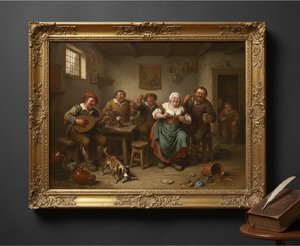
Adriaen van Ostade: A Master of Dutch Genre Painting & Social Commentary
Explore the life & work of Adriaen van Ostade, a leading Dutch Golden Age painter. Discover his realistic genre scenes, social commentary, and lasting influence on art history. Learn more at OriginalUniqueArt.

Hollandsk Barok: Top 10 Mesterværker der Definerede en Æra – Kunst til Dit Hjem
Oplev Hollandsk Barok's 10 mest ikoniske værker! Rembrandt, Vermeer & co. – dyk ned i historien bag mesterværkerne og find inspiration til din boligindretning. Køb luksus kunsttryk på OriginalUniqueArt.com.
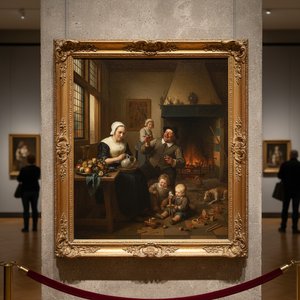
Genre Painting: A Window into Daily Life & Societal Values of the Dutch Golden Age
Explore the captivating world of Dutch Golden Age genre painting! Discover realistic depictions of daily life, masterful artists like Ostade & Metsu, and hidden symbolism. Learn about this influential art movement with OriginalUniqueArt.

Chiaroscuro and Character: A Definitive Guide to Light and Shadow in the Dutch Baroque Era
Explore the dramatic mastery of the Dutch Baroque era. Discover how masters like Rembrandt used chiaroscuro to transform everyday life into timeless art. An expert guide for collectors and enthusiasts seeking to understand the profound interplay of light and shadow.