

1

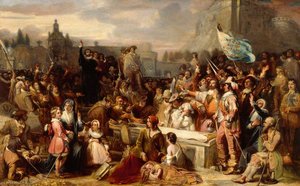
The Slave Market, Constantinople
The painting titled The Slave Market, Constantinople is a work by the artist William Allan. This specific piece was created about 1838. The canvas measures 129 x 198 cm.

Aktualizováno říjen 2026 · seřazeno podle našeho skóre popularity (vyhledávání, návštěvy a objednávky u každého díla) · 56 děl umělce William Allan v našem katalogu
Stručně řečeno
Z pohledu galerie je nejslavnějším dílem William Allan obrazem The Slave Market, Constantinople (1838), jehož originál je vystaven v Scottish National Gallery v obci Edinburgh. The Signing of the National Covenant in Greyfriars Kirkyard, Edinburgh (1838) a Tartar Robbers Dividing Spoil (1817) doplňují trio, které každé oko okamžitě pozná. Z 56 děl umělce William Allan v našem katalogu představuje galerie níže 48 nejznámějších děl, z nichž každé je originálem s uvedením roku vzniku, muzea a toho, co jej činí jedinečným.
The painting titled The Slave Market, Constantinople is a work by the artist William Allan. This specific piece was created about 1838. The canvas measures 129 x 198 cm.

The oil painting titled The Signing of the National Covenant in Greyfriars Kirkyard, Edinburgh is a work by the artist William Allan. Created in 1838, this piece depicts the historical event of the signing of the National Covenant within the Greyfriars Kirkyard in Edinburgh. The scene captures a specific moment of religious and political significance in Scottish history.

The scene unfolds in Tartar Robbers Dividing Spoil, a work painted by William Allan around 1817. Within the shadows of a cavernous space, the tension of a sudden encounter hangs heavy in the air. The composition centers on the interaction between two men, their presence illuminated against the dark, textured stone of their surroundings. Every brushstroke captures a moment of high drama, frozen in time as the figures negotiate their…

This large-scale oil painting, created in 1824, presents a crowded and dynamic street scene reminiscent of a public disturbance or uprising. The composition is defined by a diagonal thrust, driven by a central group of people and a horse, which creates a sense of instability and movement. Within this chaotic scene, numerous figures are engaged in various actions; some are seen falling, others are gesturing, and many are observing the…

The air inside the room feels thick with the scent of woodsmoke and spilled ale. Shadows dance across the walls, cast by the flickering light of candles and the glowing embers of a fireplace. In this crowded, rustic space, a lively chaos unfolds as figures press together in a moment of boisterous celebration. There is a sense of movement in every corner; some guests lean in to share a whispered…

This black and white pen and ink drawing presents a study of form and gesture, focusing on a single male figure depicted in profile. The subject is a gentleman dressed in formal attire, including a hat and a coat, and he is shown holding what appears to be a walking stick or cane. The composition is characterized by its simplicity, placing the figure against a neutral background to emphasize the…

An older gentleman sits anchored at a desk, his presence filling the frame with a heavy, quiet gravity. The light falls across his features with a dramatic intensity, carving deep shadows into the folds of his coat and the lines of his face. He gazes outward, his eyes meeting the viewer in a direct, intimate connection that feels almost intrusive, as if we have stumbled upon a private moment of…

This work, titled Study for 'The Murder of David Rizzio', was painted by William Allan in 1833. It offers a glimpse into the artist's process, capturing a moment of intense preparation for a larger historical scene. The piece reflects the specific interests of an artist deeply engaged with the dramatic narratives of the nineteenth century.

The air thickens with the weight of a historical drama in The Murder of David Rizzio. Painted by William Allan in 1833, this work captures a moment of profound betrayal and royal tragedy. The scene freezes the violent 1566 assassination of David Rizzio, the Italian secretary to Mary Queen of Scots. Chaos erupts within the palace, a sudden fracture in the order of the court that leaves the viewer suspended…

 Matthew Hardie, Violin Maker1822
12
 Matthew Hardie (1755–1826), Violin Maker1822 · Scottish National Portrait Gallery
13
 William Hey (1736–1819)1815 · Leeds General Infirmary
14
 The Black Dwarf1831 · Scottish National Gallery
15
 Sir Walter Scott in His Study with His Dog 'Maida'1831 · Abbotsford House
16
 William Blackwood (1776–1834), Publisher1830 · Scottish National Portrait Gallery
17
 Sir Walter Scott (1771–1832), Novelist and Poet – Gala Day at Abbotsford1827 · Scottish National Portrait Gallery
18
 Sir Walter Scott with One of his Daughters1826 · Scottish National Portrait Gallery
19
 Sir Walter Scott, 1st Bt1831 · National Portrait Gallery
20
 The Facade of Abbotsford, seen through the Entrance Gate1832 · Scottish National Gallery
21
 The Shepherd's Grace1835
22
 The Bride of Abydos (from the poem by Byron)1836
23
 The Stirrup Cup1836 · Royal Scottish Academy of Art - Architecture
24
 Heroism and Humanity1840
25
 The Battle of Waterloo1843 · English Heritage
26
 The Recovery of the Stolen Child1841
27
 Sir Walter Scott (1771–1832), Novelist and Poet1844
28
 The Visit of Queen Victoria and Prince Albert to Hawthornden, 14 September 18421844 · Scottish National Portrait Gallery
29
 William Henry Murray (1790–1852), Actor and Manager of Theatre Royal, Edinburgh1848 · Scottish National Portrait Gallery
30
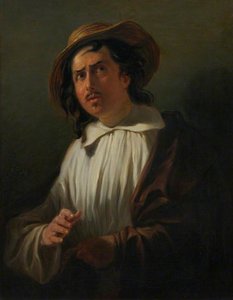 William Henry Murray (1790–1852), Actor and Manager of Theatre Royal, Edinburgh, as 'Paul Pry' (Crombie Sketchbook, fo.4)1843 · Scottish National Portrait Gallery
31
 An Officer of the 18th Regiment of (Light) Dragoons (Hussars), c.18151840
32
 Sir Walter Scott Dictating to His Daughter, Anne, in the Armoury at Abbotsford1844 · The National Trust For Scotland
33
 Highland Gillie and His Pony1850 · The Stirling Smith Art Gallery - Museum
34
 Frederick William Robert Stewart (1805–1872), Viscount Castlereagh, Later 4th Marquess of Londonderry, Wearing Hunting Costume1823 · National Trust
35
 Fair Maid of Perth
36
 The Ballad of Old Robin Gray1826
37
 The Battle of Bannockburn1850 · Royal Scottish Academy of Art - Architecture
38
 Bude harbour, DevonNational Maritime Museum
39
 Fair Maid of PerthUniversity of Edinburgh Fine Art Collection
40
 Field of Waterloo
41
 Christmas Eve
42
 The Battle of Cape St Vincent, 14 February 1797National Maritime Museum
43
 Mr Mackay of the Edinburgh Theatre as Baillie Nicol JarvieAbbotsford House
44
 James Russell, the ActorAbbotsford House
45
 The Bashkirs1814 · Státní Ermitáž
46
 The Murder of David Rizzio1833 · Scottish National Gallery
47
 The Orphan1838 · Royal Collection
48
 Frontier Guards (Circassian Prince on Horseback Selling Two Boys)1814 · Státní Ermitáž
Čtyři témata, která se v těchto originálech nejčastěji objevují, z nichž každé má svůj nejlepší příklad.
8 muzea, v nichž je umístěno nejvíce obrazů z této stránky.
| Muzeum | Město | Díla autora William Allan | Obrazy z tohoto seznamu |
|---|---|---|---|
 Scottish National Portrait Gallery |
Edinburgh | 8 | James Hogg (1770–1835), Poet (The Ettrick Shepherd) (The Ettrick Shepherd's House Heating or The Celebration of his Birthday), Matthew Hardie (1755–1826), Violin Maker, William Blackwood (1776–1834), Publisher |
 Scottish National Gallery |
Edinburgh | 7 | The Slave Market, Constantinople, Compositional Sketch for 'Death of the Regent Moray', Study for 'The Murder of David Rizzio' |
 Royal Scottish Academy of Art - Architecture |
Édin | 3 | Self Portrait, The Stirrup Cup, The Battle of Bannockburn |
 Abbotsford House |
Malvern | 3 | Sir Walter Scott in His Study with His Dog 'Maida', Mr Mackay of the Edinburgh Theatre as Baillie Nicol Jarvie, James Russell, the Actor |
 National Maritime Museum |
Londýn | 2 | Bude harbour, Devon, The Battle of Cape St Vincent, 14 February 1797 |
 Státní Ermitáž |
Sankt-Petěrburg | 2 | The Bashkirs, Frontier Guards (Circassian Prince on Horseback Selling Two Boys) |
 The Company of Merchants of The City of Edinburgh |
Edinburgh | 1 | John Robertson |
 Leeds General Infirmary |
Leeds | 1 | William Hey (1736–1819) |
Vyberte si dekádu a prohlédněte si originál, který ji definuje.
The scene unfolds in Tartar Robbers Dividing Spoil, a work painted by William Allan around 1817. Within the shadows of a cavernous space, the tension of a sudden encounter hangs heavy in the air. The composition centers on the interaction between two men, their presence illuminated against the dark, textured stone of their surroundings. Every brushstroke captures a moment of high drama, frozen in time as the figures negotiate their…
This large-scale oil painting, created in 1824, presents a crowded and dynamic street scene reminiscent of a public disturbance or uprising. The composition is defined by a diagonal thrust, driven by a central group of people and a horse, which creates a sense of instability and movement. Within this chaotic scene, numerous figures are engaged in various actions; some are seen falling, others are gesturing, and many are observing the…
The painting titled The Slave Market, Constantinople is a work by the artist William Allan. This specific piece was created about 1838. The canvas measures 129 x 198 cm.


The Slave Market, Constantinople (1838), Scottish National Gallery, Edinburgh. Následují The Signing of the National Covenant in Greyfriars Kirkyard, Edinburgh (1838) a Tartar Robbers Dividing Spoil (1817).
56 let: dílo The Slave Market, Constantinople pochází z roku 1838 a William Allan se narodil/a v roce 1782.
The Slave Market, Constantinople, The Signing of the National Covenant in Greyfriars Kirkyard, Edinburgh, Tartar Robbers Dividing Spoil, Compositional Sketch for 'Death of the Regent Moray', James Hogg (1770–1835), Poet (The Ettrick Shepherd) (The Ettrick Shepherd's House Heating or The Celebration of his Birthday), Joseph Mallord William Turner, Self Portrait, Study for 'The Murder of David Rizzio', The Murder of David Rizzio a John Robertson. Hodnocení výše uvádí rok a muzeum pro každé z nich.
Náš katalog obsahuje 56 děl umělce William Allan z let 1803 až 1850.
Většinou v Scottish National Portrait Gallery (Edinburgh), Scottish National Gallery (Edinburgh) a Royal Scottish Academy of Art - Architecture (Édin). V tabulce muzeí výše jsou vypsány všechny.
V období 1830s: 16 z celkem 48 děl na této stránce vzniklo právě tehdy, z toho The Slave Market, Constantinople z nich.
Na této stránce je nejstarší dílo z John Robertson (1803) a nejnovější z Highland Gillie and His Pony (1850).
Men (5), Historical scene (4) a People (3) napříč 48 díly na této stránce.
Oil On Canvas, u 7 z 48 děl na této stránce.
Romanticism, podle originálů na této stránce.
James Hogg (1770–1835), Poet (The Ettrick Shepherd) (The Ettrick Shepherd's House Heating or The Celebration of his Birthday), Matthew Hardie (1755–1826), Violin Maker a William Blackwood (1776–1834), Publisher: muzeum Scottish National Portrait Gallery, Edinburgh má v obsluze 8 děl z této stránky.
Sir William Allan (1782–1850) představuje klíčovou postavu skotského umění 19. století; byl to mistr historické malby, který dokázal s neuvěřitelnou zručností propojit precizní realismus s evokativním smyslem pro drama. Narodil se v významné obchodnické rodině v Edinburghu a jeho umělecká cesta byla ve velké míře vedená vlastním úsilím, rozvíjená díky brzkému kontaktu s rostoucí uměleckou scénou a později formovaná mentorstvím sira Henryho Raeburna, přední postavy skotského osvícenství. Allanovo dílo však přesahuje hranice pouhého portrétництва; je to živá tapiserie utkaná ze vláken skotské kultury, ruských intrik a romantického ducha jeho éry. Jeho odkaz sahá daleko za jednotlivá plátna, nebočí identitu Národní galerie Skotska a ovlivňuje generace následných umělců.
Allanovy formativní roky byly hluboce zakořeněny v tradicích edinburghských uměleckých kruhů. Přestože jeho formální vzdělání bylo omezené, nasávl vlivy Johna Grandma z Akademii Trusteesů spolu s technikami Davida Wilkieho a Alexandera George Frasera. Tato raná zkušenost v něm vzbudila hlubokou vážnost k detailu a kompozici – vlastnostem, které by později definovaly jeho nezaměnitelný styl. Klíčovým momentem bylo uznání Allanova talentu právě Raeburnem, který mu nabídl vedení a pomohl mu pochopit, jak zachytit nejen podobnost, ale i charakter a emoce. Toto spojení se skotským osvícenstvím hluboce utkvilo v Allanově umělecké vizi, která kladla důraz na pozorování, intelektuální zvídavost a touhu znázornit svět s přesností i jemností.
Zlomovým okamžikem v Allanově kariéře bylo jeho rozhodnutí vydat se v roce 1805 na cestu do Ruska. Poháněn fascinací východními kulturami a touhou po umělecké inspiraci, se vydal na dlouhou pouť, která měla na jeho tvorbu zásadní dopad. Allan se zcela ponořil do každodenního života Kozáků, čerkeských mužů a Tatarů, přičemž pečlivě dokumentoval jejich zvyky, oděvy i sociální interakce. Nešlo jen o prosté szkicování; aktivně se zapojoval do těchto komunit, získával jejich důvěru a získával přístup k pohledům, které byly západním umělogodům vzácné. Tato imerzivní zkušenost vyústila v sérii obrazů, které nabídly bezprecedentní vhled do ruské společnosti – tématu, které bylo tehdejším evropským uměním z velké části neprozkoumáno.
Mezi jeho nejslavnější díla z tohoto období patří „Čerkeské zajatky“, dojmově silné zobrazení skupiny žen čekajících svůj osud, a „Ruský venkované během svátků“, které zachycuje živou energii venkovského oslavování. Tato díla jsou výjimečná nejen svou technickou dokonalostí, ale i empatickým vyobrazením marginalizovaných komunit. Allanův přístup byl revoluční; snažil se tyto kultury reprezentovat s úctou a pochopením, čímž překročil stereotypní ztvárnění, která byla v dřívějších dílech běžná.
Allanův umělecký styl je charakterizován pozoruhodnou směsí realismu a romantismu. Disponoval výjimečnou schopností vykreslit textury – od hrubé vlny kozáckého oděvu až po třpytivý povrch čerkeské bižuterie – s ohromující detailností. Jeho kompozice jsou často dynamické, využívají dramatické světlo a pečlivě uspořádané postavy k vytvoření pocitu pohybu a vyprávění. Barva hraje v jeho díle zásadní roli; nepoužívá ji pouze pro dekorativní účinek, ale aby vyjádřil náladu a atmosféru.
Klíčová díla, jako například „Portrét Johna Rennyho“, jsou příkladem jeho schopnosti zachytit podobnost i osobnost svých subjektů. Autoportrét namalovaný v pozdějším věku odhaluje zamyšlený pohled a subtilní uvědomění si vlastního stárnutí. „Balada o starém Robinovi Grayovi“, strašidelné zobrazení starce vzpomínajícího na svou minulost, demonstruje Allanovu schopnost vyvolat emoce prostřednictvím gest a výrazu. Tato plátna, spolu s dalšími díly uloženými v Národní galerii Skotska, ukazují pozoruhvatelnou evoluci jeho stylu – od raných vlivů Johna Opieho k zralějšímu a jemnějšímu přístupu.
Dopad sira Williama Allana na skotské umění sahá daleko za jeho individuální úspěchy. Odegral zásadní roli při založení Národní portrétní galerie Skotska, přičemž významně přispěl k její sbírce a utvářel její identitu jako pokladnice skotského uměleckého dědictví. Jeho práce pomohla pozvednout status skotské malby v širším evropském uměleckém světě a vyzyvala panující představy o tom, co může být považováno za „vážné“ umění.
Allanův odkaz se také zrcadlí v díle následujících generací skotských malířů. Ukázal důležitost studia místní kultury a tradic a povzbudil k jemnějšímu a autentičtějšímu zobrazení Skotska na plátně. Jeho oddanost detailu, schopnost zachytit emoce a ochota zkoumat netradiční témata nás stále dnes inspirují. Trvalá appeal Allanových obrazů nespočívá pouze v jejich technické brilanci, ale především v jejich hlubokém vhledu do lidské existence a bohaté tkaniny skotského i ruského života.

