Portrét William Holman Hunt

100 nejslavnějších obrazů autora William Holman Hunt, výběr z galerie

Aktualizováno listopad 2026 · seřazeno podle našeho skóre popularity (vyhledávání, návštěvy a objednávky u každého díla) · 126 děl umělce William Holman Hunt v našem katalogu

Stručně řečeno

Z všech originálů, které William Holman Hunt zanechal, je nejslavnější W H Světlo světa. Hned za ním následují Probuzená svědomí a Koza obětní (1854). Náš katalog obsahuje 126 děl umělce William Holman Hunt; galerie si zachovala 100 děl, která obdivuje celý svět, přičemž každé je znázorněno s datem vzniku, názevem muzea a jeho příběhem.

1827 – 1910, Londýn Pre-rafaelité Nejvíce děl: Birmingham Museum and Art Gallery

10 nejlepších obrazů umělce William Holman Hunt: výběr galerie

1
W H Světlo světa od William Holman Hunt

W H Světlo světa

Olej na plátně

W H Světlo světa je dílem Williama Holmana Hunta, dokončeným v roce 1851. Kompozice se soustředí na postavu Ježíše, který drží zapalovanou lucernu, aby osvítil okolní temnotu. Tato náboženská scéna čerpá svou tematickou základnu z biblických pasáží Jana 8:12 a Zjevení 3:20.

2
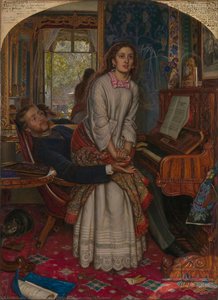
Probuzená svědomí od William Holman Hunt

Probuzená svědomí

Olej na plátně

Dílo Williama Holmana Hunta Probuzené svědomí (1853) je mnohem víc než jen zobrazením domácího života; je to silně evokativní vyprávění zmrazené v čase. Obraz odhaluje klíčový okamžik – probouzející se uvědomění ženy, která je uvězněna mezi společenskými očekáváními a osobním přestupkem, zatímco zažívá vzrušení morálního probuzení.

3
Koza obětní (1854) od William Holman Hunt

Koza obětní

1854 · Olej na plátně · Lady Lever Art Gallery, Liverpool

V tomto díle s názvem Koza obětní se umělec William Holman Hunt obrací k hlubokému biblickému narativu. Obraz vytvořený v letech 1854 až 1856 čerpá svůj námět z knihy Leviticus. Představuje jedinečný, tíživý okamžik izolace a soustředí se na zvíře, které nese tíhu hříchů celého společenství do divočiny.

4
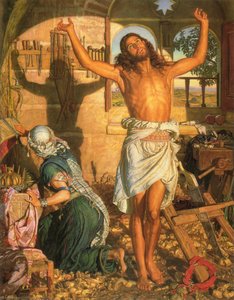
Stín smrti od William Holman Hunt

Stín smrti

Olejová barva · Manchester Art Gallery, Manchester

V obraze Stín smrti představuje William Holman Hunt hlubokou zachycení Christova oběti. Plátno zachytává Ježíše na kříži, jehož paže jsou v gestu nesmírného utrpení rozpjaté do stran. Visí na dřevě a jeho tělo vyjadřuje fyzickou realitu velké bolesti. Tento okamžik je vykreslen s takovou přímościí, která zdůrazňuje vážnost celé události.

5
Najemný pastýř (1851) od William Holman Hunt

Najemný pastýř

1851 · Olej na plátně · Manchester Art Gallery, Manchester

Ponořte se do kouzelného světa díla „Najemný pastýř“ od Williama Holmana Hunta, fascinující práce, která ztělesňuje oddanost Pre-rafaelitského společenstva naturalismu a symbolické hloubce. Toto mistrovské dílo z roku 1851 vrací diváka do pastorální scény plné drobných detailů, živých barev a hlubokých narativních vrstev.

6
The Light of the World (1851) od William Holman Hunt

The Light of the World

1851 · Oil On Canvas · Keble College, Oxford

William Holman Hunt’s “The Light of the World,” completed in 1851, is more than just a painting; it's an immersive meditation on faith and redemption. Measuring 59 x 125 cm, this oil-on-canvas masterpiece, currently residing at Keble College in Oxford, immediately draws the viewer into a scene of profound stillness and spiritual significance. Hunt, a deeply devout artist, sought to capture not merely a visual representation but an embodiment of…

7
Fanny Waugh Hunt (1868) od William Holman Hunt

Fanny Waugh Hunt

1868 · Acrylic On Canvas · Toledo Museum of Art, Toledo

The Lady of Shalott: A Vision of Faith and Fate William Holman Hunt’s “The Lady of Shalott,” completed in 1905, stands as arguably the Pre-Raphaelite Brotherhood's most ambitious undertaking—a monumental canvas that transcends mere depiction to embody a profound meditation on faith, duty, and the inescapable pull of time. More than just a visual representation of Tennyson’s iconic poem, it is an immersive experience designed to transport the viewer into…

8
The Shadow of Death od William Holman Hunt

The Shadow of Death

Oil On Canvas · Manchester Art Gallery, Manchester

William Holman Hunt’s “The Shadow of Death,” completed in 1873 during his second pilgrimage to the Holy Land, is not merely a depiction of Christ's crucifixion; it’s a profound meditation on mortality, faith, and the human condition. This monumental oil painting, measuring an impressive 214.2 cm x 168.2 cm, resides within the hallowed halls of the Manchester Art Gallery, inviting viewers into a scene brimming with symbolic weight and emotional…

9
The Lady of Shalott (1889) od William Holman Hunt

The Lady of Shalott

1889 · Oil On Canvas · Manchester Art Gallery, Manchester

To gaze upon William Holman Hunt’s “The Lady of Shalott” is to step across the threshold into a realm suspended between myth and melancholy. This evocative oil on canvas, a cornerstone of the Pre-Raphaelite movement, transcends mere visual representation to become an embodiment of artistic fate. The painting captures the profound tension between a sheltered, solitary existence and the inevitable, often tragic, confrontation with the outside world. Through his meticulous…

10
The Risen Christ with the Two Marys in the Garden of Joseph of Arimathea (1897) od William Holman Hunt

The Risen Christ with the Two Marys in the Garden of Joseph of Arimathea

1897 · Oil On Canvas · Art Gallery of South Australia, Adelaide

William Holman Hunt’s “The Risen Christ with the Two Marys in the Garden of Joseph of Arimathea,” completed in 1897, is more than a painting; it's a meticulously crafted meditation on faith, grief, and the profound mystery of resurrection. This monumental oil-on-canvas work, currently residing at the Art Gallery of South Australia in Adelaide, stands as a cornerstone of the Pre-Raphaelite Brotherhood’s artistic vision – a movement dedicated to rejecting…

Výběr umělce William Holman Hunt pokračuje, od 11 do 100

11The Awakening Conscience (1853) od William Holman HuntThe Awakening Conscience1853 · Tate Britain 12The Light of the World (1853) od William Holman HuntThe Light of the World1853 · Keble College 13Design for a Monk Succoured by a Christian (2000) od William Holman HuntDesign for a Monk Succoured by a Christian2000 14The flight of Madeline and Porphyro during the drunkenness attending the revelry (The Eve of St. Agnes) (1857) od William Holman HuntThe flight of Madeline and Porphyro during the drunkenness attending the revelry (The Eve of St. Agnes)1857 · Walker Art Gallery 15The Scapegoat (1854) od William Holman HuntThe Scapegoat1854 · Lady Lever Art Gallery 16Isabella and the Pot of Basil (1868) od William Holman HuntIsabella and the Pot of Basil1868 · Laing Art Gallery 17Mary Walker Waugh (1868) od William Holman HuntMary Walker Waugh1868 · Clevelandské muzeum umění 18Past And Present (1868) od William Holman HuntPast And Present1868 19The Ship (1875) od William Holman HuntThe Ship1875 20My Son Cyril (1877) od William Holman HuntMy Son Cyril1877 21The Triumph of the Innocents (1886) od William Holman HuntThe Triumph of the Innocents1886 · Harvard Art Museums 22The Eve of St. Agnes: The Flight of Madeleine and Porphyro during the Drunkenness attending the Revelry (1848) od William Holman HuntThe Eve of St. Agnes: The Flight of Madeleine and Porphyro during the Drunkenness attending the Revelry1848 23The Dead Sea from Siloam (1855) od William Holman HuntThe Dead Sea from Siloam1855 24The Triumph of the Innocents (1887) od William Holman HuntThe Triumph of the Innocents1887 · Walker Art Gallery 25Study of a bloodhound (1848) od William Holman HuntStudy of a bloodhound1848 · Art Gallery of New South Wales 26Portrait of William Pink (1842) od William Holman HuntPortrait of William Pink1842 27Cornfield at Ewell (1849) od William Holman HuntCornfield at Ewell1849 28The Scapegoat (1854) od William Holman HuntThe Scapegoat1854 · Manchester Art Gallery 29Portrait of Dante Gabriel Rossetti (1853) od William Holman HuntPortrait of Dante Gabriel Rossetti1853 · Birmingham Museum and Art Gallery 30The Sphinx at Gizeh (1854) od William Holman HuntThe Sphinx at Gizeh1854 31Valentine Rescuing Silvia from Proteus (1851) od William Holman HuntValentine Rescuing Silvia from Proteus1851 32Our English Coasts (1852) od William Holman HuntOur English Coasts1852 33The Dead Sea from Siloam (1857) od William Holman HuntThe Dead Sea from Siloam1857 · Birmingham Museum and Art Gallery 34The Schoolgirl's Hymn (1859) od William Holman HuntThe Schoolgirl's Hymn1859 35Portrait of Fanny Holman Hunt (1868) od William Holman HuntPortrait of Fanny Holman Hunt1868 · Toledo Museum of Art 36The Birthday (A Portrait Of The Artist's Wife, Edith) (1868) od William Holman HuntThe Birthday (A Portrait Of The Artist's Wife, Edith)1868 37The Ponte Vecchio, Florence (1867) od William Holman HuntThe Ponte Vecchio, Florence1867 38Lady Fairbairn with her Children (1864) od William Holman HuntLady Fairbairn with her Children1864 39Self-Portrait (1875) od William Holman HuntSelf-Portrait1875 40The Festival of St. Swithin or The Dovecote (1875) od William Holman HuntThe Festival of St. Swithin or The Dovecote1875 41The Apple Harvest, Valley of The Rhine, Ragaz (1885) od William Holman HuntThe Apple Harvest, Valley of The Rhine, Ragaz1885 · Birmingham Museum and Art Gallery 42Cornfield at Ewell (1849) od William Holman HuntCornfield at Ewell1849 43May Morning on Magdalen College Tower, Oxford (1891) od William Holman HuntMay Morning on Magdalen College Tower, Oxford1891 44The Importunate Neighbour (1895) od William Holman HuntThe Importunate Neighbour1895 · National Gallery of Victoria 45Claudio and Isabella (1850) od William Holman HuntClaudio and Isabella1850 · Tate Gallery 46John Key od William Holman HuntJohn Key 47John Hunt od William Holman HuntJohn Hunt 48The Beloved od William Holman HuntThe BelovedRoyal Collection 49The Ballad of Oriana od William Holman HuntThe Ballad of Oriana 50The Lady of Shalott (study) od William Holman HuntThe Lady of Shalott (study) 51The Artist od William Holman HuntThe ArtistBirmingham Museum of Art 52Stephen lushington od William Holman HuntStephen lushingtonNational Portrait Gallery 53Quakers Meeting od William Holman HuntQuakers Meeting 54The Woman Taken in Adultery od William Holman HuntThe Woman Taken in Adultery 55Cyril benoni holman hunt od William Holman HuntCyril benoni holman huntFitzwilliam Museum 56May Morning on Magdalen Tower (1888) od William Holman HuntMay Morning on Magdalen Tower1888 · Lady Lever Art Gallery 57A Study for Oriana (2000) od William Holman HuntA Study for Oriana2000 58The Ballad of Oriana (2000) od William Holman HuntThe Ballad of Oriana2000 59Sunset in the Val d’Arno (2000) od William Holman HuntSunset in the Val d’Arno2000 60Portrait of Henry Wentworth Monk (1858) od William Holman HuntPortrait of Henry Wentworth Monk1858 61Self Portrait (1845) od William Holman HuntSelf Portrait1845 · Birmingham Museum and Art Gallery 62The Lost Child od William Holman HuntThe Lost Child 63The Ponte Vecchio od William Holman HuntThe Ponte Vecchio 64Risen Lord appearing to Mary Magdalene od William Holman HuntRisen Lord appearing to Mary Magdalene 65Robert Braithwaite Martineau od William Holman HuntRobert Braithwaite Martineau 66The Ship od William Holman HuntThe Ship 67John david jenkins od William Holman HuntJohn david jenkins 68The Abundance of Egypt od William Holman HuntThe Abundance of Egypt 69F. g. stephens od William Holman HuntF. g. stephens 70The Eve of Saint Agnes od William Holman HuntThe Eve of Saint Agnes 71On English Coasts od William Holman HuntOn English Coasts 72Afterglow in Egypt od William Holman HuntAfterglow in Egypt 73The Afterglow in Egypt od William Holman HuntThe Afterglow in Egypt 74Study for 'The Eve of Saint Agnes' od William Holman HuntStudy for 'The Eve of Saint Agnes' 75The Children's Holiday od William Holman HuntThe Children's Holiday 76The Scapegoat od William Holman HuntThe Scapegoat 77The Thames at Chelsea, Evening od William Holman HuntThe Thames at Chelsea, EveningFitzwilliam Museum 78British artist William Holman Hunt od William Holman HuntBritish artist William Holman Hunt 79A Summer Landscape od William Holman HuntA Summer Landscape 80Plain of Esdraelon from the Heights above Nazareth od William Holman HuntPlain of Esdraelon from the Heights above Nazareth 81John Ruskin's dead chick od William Holman HuntJohn Ruskin's dead chick 82Little Nell and Her Grandfather od William Holman HuntLittle Nell and Her Grandfather 83Sir richard owen od William Holman HuntSir richard owen 84Morning od William Holman HuntMorning 85The haunted manor od William Holman HuntThe haunted manor 86Nazareth od William Holman HuntNazareth 87Harold rathbone od William Holman HuntHarold rathbone 88Self-portrait at the Age of - (14) od William Holman HuntSelf-portrait at the Age of - (14) 89The Festival of St Swithin (The Dovecot) od William Holman HuntThe Festival of St Swithin (The Dovecot) 90London Bridge on the Night of the Marriage of the Prince and Princess of Wales od William Holman HuntLondon Bridge on the Night of the Marriage of the Prince and Princess of Wales 91A Bloodhound od William Holman HuntA Bloodhound 92May Morning on Magdalen College Tower, Oxford, Ancient Annual Ceremony od William Holman HuntMay Morning on Magdalen College Tower, Oxford, Ancient Annual CeremonyBirmingham Museum and Art Gallery 93Study of a Head od William Holman HuntStudy of a Head 94Study of Firelight od William Holman HuntStudy of Firelight 95Henry Clark's Mother-in-Law, Mrs Davies, and Four of His Children in the Drawing Room of His Home od William Holman HuntHenry Clark's Mother-in-Law, Mrs Davies, and Four of His Children in the Drawing Room of His Home 96Amaryllis od William Holman HuntAmaryllis 97London Bridge on the Night of the Wedding of the Prince and Princess of Wales od William Holman HuntLondon Bridge on the Night of the Wedding of the Prince and Princess of Wales 98The Lady of Shalott od William Holman HuntThe Lady of Shalott 99The Sphinx od William Holman HuntThe Sphinx 100A Converted British Family Sheltering a Christian Missionary od William Holman HuntA Converted British Family Sheltering a Christian Missionary

Slavná díla William Holman Hunt podle jednotlivých období

Motivy, které zaujaly William Holman Hunt

Čtyři témata, která se v těchto originálech nejčastěji objevují, z nichž každé má svůj nejlepší příklad.

Muzea, v nichž jsou vystavena originálna umělce William Holman Hunt

8 muzea, v nichž je umístěno nejvíce obrazů z této stránky.

Muzeum Město Díla autora William Holman Hunt Obrazy z tohoto seznamu
Birmingham Museum and Art Gallery, BirminghamBirmingham Museum and Art Gallery Birmingham 7 Portrait of Dante Gabriel Rossetti, The Dead Sea from Siloam, The Apple Harvest, Valley of The Rhine, Ragaz
Manchester Art Gallery, ManchesterManchester Art Gallery Manchester 6 Stín smrti, Najemný pastýř, The Shadow of Death
Lady Lever Art Gallery, LiverpoolLady Lever Art Gallery Liverpool 2 Koza obětní, May Morning on Magdalen Tower
Keble College, OxfordKeble College Oxford 2 The Light of the World, The Light of the World
Toledo Museum of Art, ToledoToledo Museum of Art Toledo 2 Fanny Waugh Hunt, Portrait of Fanny Holman Hunt
Walker Art Gallery, LiverpoolWalker Art Gallery Liverpool 2 The flight of Madeline and Porphyro during the drunkenness attending the revelry (The Eve of St. Agnes), The Triumph of the Innocents
Fitzwilliam MuseumFitzwilliam Museum 2 Cyril benoni holman hunt, The Thames at Chelsea, Evening
Tate Britain, LondýnTate Britain Londýn 3 The Awakening Conscience

William Holman Hunt dekáda po dekádě: originální díla, která definují každou z nich

Díla podle dekád

Vyberte si dekádu a prohlédněte si originál, který ji definuje.

Otázky sběratelů o obrazech umělce William Holman Hunt

Kterým dílem je William Holman Hunt nejznámější?Odhalit odpověď

W H Světlo světa. Následují Probuzená svědomí a Koza obětní (1854).

Kterých deset nejslavnějších obrazů má William Holman Hunt?Odhalit odpověď

W H Světlo světa, Probuzená svědomí, Koza obětní, Stín smrti, Najemný pastýř, The Light of the World, Fanny Waugh Hunt, The Shadow of Death, The Lady of Shalott a The Risen Christ with the Two Marys in the Garden of Joseph of Arimathea. Hodnocení výše uvádí rok a muzeum pro každé z nich.

Kolik obrazů zanechal(a) William Holman Hunt?Odhalit odpověď

Náš katalog obsahuje 126 děl umělce William Holman Hunt z let 1842 až 1897.

Ve kterých muzeích jsou vystavena díla mistrovská umělce William Holman Hunt?Odhalit odpověď

Většinou v Birmingham Museum and Art Gallery (Birmingham), Manchester Art Gallery (Manchester) a Lady Lever Art Gallery (Liverpool). V tabulce muzeí výše jsou vypsány všechny.

V jakých letech namaloval William Holman Hunt svá nejznámější díla?Odhalit odpověď

V období 1850s: 17 z celkem 100 děl na této stránce vzniklo právě tehdy, z toho Koza obětní z nich.

Jaká jsou první a poslední slavná originální díla umělce William Holman Hunt?Odhalit odpověď

Na této stránce je nejstarší dílo z Portrait of William Pink (1842) a nejnovější z The Risen Christ with the Two Marys in the Garden of Joseph of Arimathea (1897).

Jaká témata si William Holman Hunt vybíral nejčastěji?Odhalit odpověď

Portraits (8), Women (8) a Victorian era (6) napříč 100 díly na této stránce.

Kterou techniku používal(a) William Holman Hunt nejčastěji?Odhalit odpověď

Oil On Canvas, u 13 z 100 děl na této stránce.

K kterému uměleckému směru patří William Holman Hunt?Odhalit odpověď

Pre-rafaelité, podle originálů na této stránce.

Která díla umělce William Holman Hunt jsou vystavena v Birmingham Museum and Art Gallery?Odhalit odpověď

Portrait of Dante Gabriel Rossetti, The Dead Sea from Siloam a The Apple Harvest, Valley of The Rhine, Ragaz: muzeum Birmingham Museum and Art Gallery, Birmingham má v obsluze 5 děl z této stránky.

William Holman Hunt: život a dílo

William Holman Hunt: A Life Illuminated by Faith and Vision

William Holman Hunt, born in the heart of Cheapside, London on April 2nd, 1827, wasn’t merely a painter; he was a profound seeker—a philosopher translating his deepest spiritual convictions into breathtaking visual narratives. His early life, steeped in the bustling commercial world surrounding his father's warehouse business, held within it an unexpected artistic flame that would ultimately reshape the course of Victorian art. Initially destined for a path mirroring his family’s trade, Hunt discovered solace and purpose not in ledger books but in the quiet act of sketching, a clandestine passion nurtured amidst the city’s vibrant chaos. This nascent talent, coupled with a yearning for artistic expression beyond the confines of academic convention, would soon propel him toward the formation of the Pre-Raphaelite Brotherhood—a movement that irrevocably altered the landscape of British art. Hunt's journey wasn’t simply about aesthetics; it was a relentless quest for truth, morality, and a profound spiritual resonance within the realm of visual representation – a desire fueled by his deeply held religious beliefs.

The Genesis of a Revolutionary Brotherhood

In 1848, amidst the burgeoning artistic ferment of London, William Holman Hunt, alongside Dante Gabriel Rossetti and John Everett Millais, established the Pre-Raphaelite Brotherhood (PRB). This wasn’t merely an artistic collective; it was a deliberate rebellion against what they perceived as the stifling conventions of art since Raphael. The PRB championed a return to the sincerity, meticulous detail, and vibrant colors characteristic of early Italian painting—a period before the perceived artificiality and idealized forms that had dominated High Renaissance aesthetics. Hunt’s commitment to this philosophy remained unwavering throughout his career, shaping not only his subject matter but also his artistic process. Early works like *The Hireling Shepherd*, painted in 1851, serve as a powerful testament to this dedication. The painting's astonishing realism—from the individual strands of wool on the sheep’s fleece to each blade of grass meticulously rendered—was revolutionary for its time, challenging the prevailing academic emphasis on idealized forms and atmospheric effects. It wasn’t simply a depiction of rural life; it was an attempt to convey moral and symbolic meaning through precise observation of nature, reflecting Hunt's belief that art should serve as a vehicle for truth and spiritual awakening. The Brotherhood sought to dismantle the established norms of artistic production, rejecting what they considered formulaic academic painting in favor of a more direct and honest engagement with the world around them—a radical shift that immediately garnered both admiration and controversy.

A Pilgrimage of Faith and Symbolic Depth

Hunt’s artistic journey took an extraordinary turn during his extensive travels to the Holy Land between 1854 and 1860. Driven by a profound desire for historical accuracy and a deep-seated spiritual quest, he embarked on a pilgrimage to Palestine and Syria, meticulously documenting landscapes, costumes, and customs with unparalleled attention to detail. This immersive experience profoundly influenced his later works, imbuing them with an unprecedented sense of realism and spiritual resonance—a direct result of witnessing the biblical scenes firsthand. *The Shadow of Death*, painted during this period, stands as a particularly compelling example. The painting’s dramatic depiction of Christ's sacrifice is not merely a historical record; it’s a deeply symbolic meditation on mortality, redemption, and the weight of human suffering—a testament to Hunt’s belief that art could illuminate profound spiritual truths. His meticulous research extended beyond mere observation; he sought to understand the cultural context surrounding biblical events, incorporating elements of local customs and traditions into his compositions. This commitment to authenticity was further exemplified in *The Light of the World*, arguably his most iconic work, begun in 1851 and completed in 1853—a painting that would become synonymous with Victorian faith and artistic achievement.

The Triumph of “The Light of the World” and Beyond

*The Light of the World*, depicting Christ knocking at the door of a soul, became an immediate sensation upon its exhibition in 1853. The painting’s powerful symbolism—representing divine grace offered to those who open their hearts—resonated deeply with Victorian audiences grappling with questions of faith, morality, and social reform. Its popularity was further amplified by a series of meticulously crafted engravings, which disseminated the image widely throughout Britain and America. Hunt's success wasn't merely due to the painting’s aesthetic appeal; it reflected his ability to tap into the prevailing spiritual anxieties of the era—a time marked by rapid industrialization, social unrest, and a growing sense of uncertainty about traditional values. Following *The Light of the World*, Hunt continued to produce a diverse range of works, exploring themes of biblical narratives, medieval allegory, and contemporary social issues. He remained committed to his Pre-Raphaelite principles throughout his career, consistently prioritizing meticulous detail, vibrant colors, and symbolic depth in his compositions. Despite facing personal tragedies—the loss of his beloved wife Fanny Waugh in 1856—Hunt continued to create art with unwavering dedication, solidifying his place as one of the most influential artists of the Victorian era.

Legacy and Enduring Influence

William Holman Hunt’s legacy extends far beyond the beauty of his paintings. He revolutionized Victorian art by championing realism, symbolism, and a profound engagement with spiritual themes—a shift that profoundly influenced generations of artists to come. His meticulous attention to detail, combined with his deep understanding of biblical narratives and medieval allegory, established a new standard for artistic expression. Hunt’s work continues to inspire awe and contemplation, reminding us of the power of art to illuminate the human condition and explore the enduring mysteries of faith. He remains a pivotal figure in British art history—a testament to the transformative potential of an artist driven by both vision and conviction.