Portrét Pieter Lastman

59 nejslavnějších obrazů autora Pieter Lastman, výběr z galerie

Aktualizováno listopad 2026 · seřazeno podle našeho skóre popularity (vyhledávání, návštěvy a objednávky u každého díla) · 60 děl umělce Pieter Lastman v našem katalogu

Stručně řečeno

Z všech originálů, které Pieter Lastman zanechal, je nejslavnější The adoration of the kings (1608), který se nachází ve sbírce Státní Ermitáž, Sankt-Petěrburg. Hned za ním následují Abraham and the Three Angels (1623) a The Resurrection (1612). Náš katalog obsahuje 60 děl umělce Pieter Lastman; galerie si zachovala 59 děl, která obdivuje celý svět, přičemž každé je znázorněno s datem vzniku, názevem muzea a jeho příběhem.

1583 – 1633, Amsterdam Baroque Nejvíce děl: Státní Ermitáž

10 nejlepších obrazů umělce Pieter Lastman: výběr galerie

1
The adoration of the kings (1608) od Pieter Lastman

The adoration of the kings

1608 · Oil On Canvas · Státní Ermitáž, Sankt-Petěrburg

In 1608, Pieter Lastman painted The adoration of the kings, an oil work that captures a profound moment of religious significance. The scene depicts the biblical episode of the Adoration of the Magi, focusing on the intimate encounter between the divine and the earthly. Within this composition, the Virgin Mary and the Christ Child are the central figures, receiving the homage of the three kings: Melchior, Caspar, and Balthazar. It…

2
Abraham and the Three Angels (1623) od Pieter Lastman

Abraham and the Three Angels

1623 · Oil On Panel · Státní Ermitáž, Sankt-Petěrburg

In this 1623 oil on panel, the biblical patriarch Abraham meets a divine presence through three celestial visitors. Pieter Lastman captures the moment of profound hospitality and revelation that defines this sacred encounter. The scene unfolds with a sense of immediate spiritual weight, as the elderly Abraham kneels in reverence before the visitors. This religious art focuses on the quiet intensity of the meeting, where the mortal realm brushes against…

3
The Resurrection (1612) od Pieter Lastman

The Resurrection

1612 · Oil On Canvas · J. Paul Getty Museum, Los Angeles

The Resurrection is a significant oil painting by Pieter Pietersz Lastman, created in 1612. This work captures a pivotal biblical scene, depicting the moment of Christ's Resurrection. The composition focuses on the triumph of the divine over the earthly realm, a theme central to Lastman's narrative approach to religious subjects.

4
The beheading of S. Paul (1601) od Pieter Lastman

The beheading of S. Paul

1601 · Oil On Panel · Museum Catharijneconvent, Utrecht

The tension in The beheading of S. Paul by Pieter Lastman hangs heavy in the air. Created about 1601, this work captures a moment of profound religious and visceral intensity. We find ourselves witnessing the martyrdom of Saint Paul, a scene where the spiritual weight of faith meets the brutal reality of physical sacrifice. The air seems to thicken with the gravity of the event as the executioner prepares to…

5
The Rest on the Flight to Egypt (1608) od Pieter Lastman

The Rest on the Flight to Egypt

1608 · Oil On Canvas · Gemäldegalerie, Berlín

The shadows of a dense, dark thicket press against the left side of the canvas. Within this cool, shaded sanctuary, three figures find a brief respite. The Virgin Mary, draped in deep blue and red, cradles the Christ Child, whose skin catches a soft, luminous light. Beside them, Saint Joseph sits in the stillness. The composition forms a steady triangle, anchoring the family against the ruggedness of the landscape. To…

6
The baptism of the eunuch (1608) od Pieter Lastman

The baptism of the eunuch

1608 · Oil On Panel · Gemäldegalerie, Berlín

The baptism of the eunuch is an oil on panel by Pieter Lastman. The artist, born in Amsterdam in 1583, captured this moment on a surface measuring 85 by 115 cm. A quiet weight resides in the wood, holding the figures within its grain. Lastman lived until 1633, leaving behind this specific window into a biblical encounter.

7
The Baptism of the Moorish Chamberlain (1620) od Pieter Lastman

The Baptism of the Moorish Chamberlain

1620 · Oil · Bavarské státní sbírky malby, Mnichov

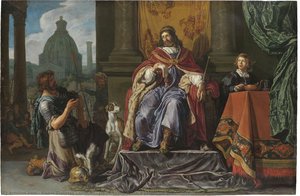
The painting titled The Baptism of the Moorish Chamberlain is an oil work by the Dutch artist Pieter Lastman. This specific piece was executed about 1620. The artist, who was born in Amsterdam in 1583, utilized a painterly technique to render this biblical scene. The composition focuses on a group of figures gathered at a water's edge, involving both individuals on foot and those on horseback.

8
Joseph Selling Corn in Egypt (1612) od Pieter Lastman

Joseph Selling Corn in Egypt

1612 · Oil On Canvas · National Gallery of Ireland, Dublin

In this work, titled Joseph Selling Corn in Egypt, the artist Pieter Lastman presents a crowded, dramatic scene of commerce and abundance. The narrative draws from the Book of Genesis, focusing on the period when Joseph, having risen to power in Egypt, manages the distribution of grain during a time of famine. It is a moment of intense human activity, where the necessity of survival meets the organized structure of…

9
Balaam and his Ass (1622) od Pieter Lastman

Balaam and his Ass

1622 · Oil · Izraelské muzeum, Jeruzalém

In this work, titled Balaam and his Ass, Pieter Lastman captures a moment of divine interruption. Created about 1622, the painting presents a man on a donkey facing a winged angel. The scene is frozen in a state of sudden tension. A sword is held aloft, cutting through the stillness of the landscape. The figure of Balaam, draped in a deep crimson cloak, reacts to the celestial presence that blocks…

10
Entombment of Christ (1612) od Pieter Lastman

Entombment of Christ

1612 · Oil · Palais des Beaux-Arts de Lille, Lille

Pieter Lastman, born in Amsterdam in 1583, executed this oil painting titled Entombment of Christ. The work emerged during the Dutch Golden Age, a period in which Lastman established himself as a significant figure in historical and biblical narrative painting. His approach to religious subject matter focused on the psychological weight of the scene, utilizing the dramatic tension inherent in the moment of Christ's burial.

Výběr umělce Pieter Lastman pokračuje, od 11 do 59

11Hippocrates and Democritus (1622) od Pieter LastmanHippocrates and Democritus1622 · Palais des Beaux-Arts de Lille 12King David Handing the Letter to Uriah (1611) od Pieter LastmanKing David Handing the Letter to Uriah1611 · Detroit Institute of Arts 13Saint Matthew (1613) od Pieter LastmanSaint Matthew1613 · Rhode Island School of Design Museum of Art 14Paris and Oenone (1619) od Pieter LastmanParis and Oenone1619 · Worcester Art Museum 15The Raising of Lazarus (1622) od Pieter LastmanThe Raising of Lazarus1622 · Mauritshuis 16Tobias catches the fish (1613) od Pieter LastmanTobias catches the fish1613 · Fries Museum 17Haman begging Esther for mercy (1618) od Pieter LastmanHaman begging Esther for mercy1618 · Národní muzeum ve Varšavě 18Wedding Night of Tobias and Sarah (1611) od Pieter LastmanWedding Night of Tobias and Sarah1611 · Muzeum umění v Bostonu 19Paul and Barnabas at Lystra (1617) od Pieter LastmanPaul and Barnabas at Lystra1617 · Amsterdam Museum 20Ecce Homo (1610) od Pieter LastmanEcce Homo1610 · Amsterdam Museum 21David in the temple (1618) od Pieter LastmanDavid in the temple1618 · Herzog Anton Ulrich Museum 22The meeting of Nausicaa and Ulysses: Ulysses, almost naked, comes out of the bushes; Nausicaa and her companions are startled at the sight (1609) od Pieter LastmanThe meeting of Nausicaa and Ulysses: Ulysses, almost naked, comes out of the bushes; Nausicaa and her companions are startled at the sight1609 · Herzog Anton Ulrich Museum 23The Annunciation of the birth of Samson to Manoah and his wife (Judges 13:2-3) (1617) od Pieter LastmanThe Annunciation of the birth of Samson to Manoah and his wife (Judges 13:2-3)1617 · Agnes Etherington Art Center 24The Good Samaritan tending the wounds of the traveller (1614) od Pieter LastmanThe Good Samaritan tending the wounds of the traveller1614 25Laban Searching for the Idols (1622) od Pieter LastmanLaban Searching for the Idols1622 · château-musée de Boulogne-sur-Mer 26The baptism of the Eunuch (1620) od Pieter LastmanThe baptism of the Eunuch1620 · Fondation Custodia 27St John the Baptist Preaching (1627) od Pieter LastmanSt John the Baptist Preaching1627 · Mauritshuis 28Hagar and the Angel in the Wilderness (1625) od Pieter LastmanHagar and the Angel in the Wilderness1625 · Izraelské muzeum 29Athena and Odysseus (1625) od Pieter LastmanAthena and Odysseus1625 · Rembrandthuis 30Dido's Sacrifice to Juno (1630) od Pieter LastmanDido's Sacrifice to Juno1630 · Nationalmuseum 31The Baptism of the Eunuch (1623) od Pieter LastmanThe Baptism of the Eunuch1623 · Staatliche Kunsthalle Karlsruhe 32De gortenteller (1730) od Pieter LastmanDe gortenteller1730 · Amsterdam Museum 33Saint John on the Isle of Patmos (1613) od Pieter LastmanSaint John on the Isle of Patmos1613 · Museum Boijmans Van Beuningen 34The flight into Egypt (1608) od Pieter LastmanThe flight into Egypt1608 · Museum Boijmans Van Beuningen 35Jonah and the Whale (1621) od Pieter LastmanJonah and the Whale1621 · Kunstpalast 36The Angel and the Young Tobit with the Fish (1610) od Pieter LastmanThe Angel and the Young Tobit with the Fish1610 · Szépművészeti Múzeum 37The Baptism of Christ (1629) od Pieter LastmanThe Baptism of Christ1629 · Scottish National Gallery 38David Gives Uriah a Letter for Joab (1619) od Pieter LastmanDavid Gives Uriah a Letter for Joab1619 · The Leiden Collection 39LE SACRIFICE D'ABRAHAM od Pieter LastmanLE SACRIFICE D'ABRAHAMLouvre 40Haman begging the mercy of Esther (Esther 7:6-7) od Pieter LastmanHaman begging the mercy of Esther (Esther 7:6-7)Národní muzeum ve Varšavě 41The lamentation of abel od Pieter LastmanThe lamentation of abel 42Susanna And The Elders od Pieter LastmanSusanna And The EldersGemäldegalerie 43Christ And The Canaanite Woman od Pieter LastmanChrist And The Canaanite WomanRijksmuseum 44The Angel Raphael Takes Leave of Old Tobit and his Son Tobias (1618) od Pieter LastmanThe Angel Raphael Takes Leave of Old Tobit and his Son Tobias1618 · Národní galerie v Kodni 45The Battle of Constantine and Maxentius (1613) od Pieter LastmanThe Battle of Constantine and Maxentius1613 · Kunsthalle Bremen 46The Angel And Tobias With The Fish od Pieter LastmanThe Angel And Tobias With The Fish 47Juno Discovering Jupiter With Io od Pieter LastmanJuno Discovering Jupiter With Io 48The Triumph Of Mordecai od Pieter LastmanThe Triumph Of MordecaiRembrandthuis 49The Angel And Tobias With The Fish (detail) od Pieter LastmanThe Angel And Tobias With The Fish (detail) 50Hagar and the Angel od Pieter LastmanHagar and the AngelLos Angeles County Museum of Art 51Orestes And Pylades Disputing At The Altar od Pieter LastmanOrestes And Pylades Disputing At The AltarRijksmuseum 52The Angel Of The Lord Preventing Abraham From Sacrificing His Son Isaac od Pieter LastmanThe Angel Of The Lord Preventing Abraham From Sacrificing His Son IsaacPlantin-Moretus Museum 53The Sacrifice Of Abraham od Pieter LastmanThe Sacrifice Of AbrahamRijksmuseum 54The Rest on the Flight into Egypt od Pieter LastmanThe Rest on the Flight into EgyptNational Gallery 55Juno discovering Jupiter with Io (1618) od Pieter LastmanJuno discovering Jupiter with Io1618 · National Gallery 56Bathsheba at her Toilette (1619) od Pieter LastmanBathsheba at her Toilette1619 · Státní Ermitáž 57Annunciation od Pieter LastmanAnnunciationStátní Ermitáž 58Odysseus And Nausicaa od Pieter LastmanOdysseus And NausicaaBavarské státní sbírky malby 59Abraham's Journey To Canaan od Pieter LastmanAbraham's Journey To CanaanStátní Ermitáž

Slavná díla Pieter Lastman podle jednotlivých období

Motivy, které zaujaly Pieter Lastman

Čtyři témata, která se v těchto originálech nejčastěji objevují, z nichž každé má svůj nejlepší příklad.

Muzea, v nichž jsou vystavena originálna umělce Pieter Lastman

8 muzea, v nichž je umístěno nejvíce obrazů z této stránky.

Muzeum Město Díla autora Pieter Lastman Obrazy z tohoto seznamu
Státní Ermitáž, Sankt-PetěrburgStátní Ermitáž Sankt-Petěrburg 5 The adoration of the kings, Abraham and the Three Angels, Bathsheba at her Toilette
Gemäldegalerie, BerlínGemäldegalerie Berlín 3 The Rest on the Flight to Egypt, The baptism of the eunuch, Susanna And The Elders
Amsterdam Museum, AmsterdamAmsterdam Museum Amsterdam 3 Paul and Barnabas at Lystra, Ecce Homo, De gortenteller
Rijksmuseum, AmsterdamRijksmuseum Amsterdam 3 Christ And The Canaanite Woman, Orestes And Pylades Disputing At The Altar, The Sacrifice Of Abraham
Bavarské státní sbírky malby, MnichovBavarské státní sbírky malby Mnichov 2 The Baptism of the Moorish Chamberlain, Odysseus And Nausicaa
Izraelské muzeum, JeruzalémIzraelské muzeum Jeruzalém 2 Balaam and his Ass, Hagar and the Angel in the Wilderness
Palais des Beaux-Arts de Lille, LillePalais des Beaux-Arts de Lille Lille 2 Entombment of Christ, Hippocrates and Democritus
Mauritshuis, HaagMauritshuis Haag 2 The Raising of Lazarus, St John the Baptist Preaching

Pieter Lastman dekáda po dekádě: originální díla, která definují každou z nich

Díla podle dekád

Vyberte si dekádu a prohlédněte si originál, který ji definuje.

Otázky sběratelů o obrazech umělce Pieter Lastman

Kterým dílem je Pieter Lastman nejznámější?Odhalit odpověď

The adoration of the kings (1608), Státní Ermitáž, Sankt-Petěrburg. Následují Abraham and the Three Angels (1623) a The Resurrection (1612).

Kolik let bylo Pieter Lastman, když bylo vytvořeno dílo The adoration of the kings?Odhalit odpověď

25 let: dílo The adoration of the kings pochází z roku 1608 a Pieter Lastman se narodil/a v roce 1583.

Kterých deset nejslavnějších obrazů má Pieter Lastman?Odhalit odpověď

The adoration of the kings, Abraham and the Three Angels, The Resurrection, The beheading of S. Paul, The Rest on the Flight to Egypt, The baptism of the eunuch, The Baptism of the Moorish Chamberlain, Joseph Selling Corn in Egypt, Balaam and his Ass a Entombment of Christ. Hodnocení výše uvádí rok a muzeum pro každé z nich.

Kolik obrazů zanechal(a) Pieter Lastman?Odhalit odpověď

Náš katalog obsahuje 60 děl umělce Pieter Lastman z let 1601 až 1630.

Ve kterých muzeích jsou vystavena díla mistrovská umělce Pieter Lastman?Odhalit odpověď

Většinou v Státní Ermitáž (Sankt-Petěrburg), Gemäldegalerie (Berlín) a Amsterdam Museum (Amsterdam). V tabulce muzeí výše jsou vypsány všechny.

V jakých letech namaloval Pieter Lastman svá nejznámější díla?Odhalit odpověď

V období 1610s: 21 z celkem 59 děl na této stránce vzniklo právě tehdy, z toho The Resurrection z nich.

Jaká jsou první a poslední slavná originální díla umělce Pieter Lastman?Odhalit odpověď

Na této stránce je nejstarší dílo z The beheading of S. Paul (1601) a nejnovější z Dido's Sacrifice to Juno (1630).

Jaká témata si Pieter Lastman vybíral nejčastěji?Odhalit odpověď

Man (20), Woman (16) a People (14) napříč 59 díly na této stránce.

Kterou techniku používal(a) Pieter Lastman nejčastěji?Odhalit odpověď

Oil, u 20 z 59 děl na této stránce.

K kterému uměleckému směru patří Pieter Lastman?Odhalit odpověď

Baroque a Dutch golden age, podle originálů na této stránce.

Která díla umělce Pieter Lastman jsou vystavena v Státní Ermitáž?Odhalit odpověď

The adoration of the kings, Abraham and the Three Angels a Bathsheba at her Toilette: muzeum Státní Ermitáž, Sankt-Petěrburg má v obsluze 5 děl z této stránky.

Pieter Lastman: život a dílo

Pionýr holandského vyprávění: Trvalé dědictví Pietersa Lastmana

Pieter Pietersz Lastman, narozený v Amsterdamu v roce 1583, zaujímá fascinující a klíčovou pozici v historii malířství holandského zlatého věku. Ačkoliv byl příliš dlouho zastíněn svým nejslavnějším žákem, Rembrandtem van Rijnem, Lastman nebyl pouze učitelem, ale i průkopníkem v pravém slova smyslu – vizionářem, který v Nizozemsku oživil historické malířství a položil základy pro dramatické příběhy, jež se staly definicí této éry. Jeho život, byť relativně krátký, byl poznamenán uměleckou ambicí, významnou cestou do Itálie a neochvějným nasazením vyprávět příběhy prostřednictvím živých obrazů. Rané Lastmanovo období poskytlo úrodnou půdu pro jeho rostoucí talent; jeho otec, Pieter Segersz, sice byl kvůli náboženskému přesvědčení odVZAT ze své funkce městského úředníka, ale v synovi vžil smysl pro občanskou povinnost, zatímco jeho matka, Barber Jacobsdr, měla díky své profesi znalce obrazů a zboží bystré oko pro umění. Toto rodinné prostředí podpořilo hlubokou zkušenost s vizuálními uměními i se světem mimo rámec plátna. Své umělecké vzdělávání začal u Gerrita Pietersze Sweelincka, bratra slavného skladatele Jana Pieterszoona Sweelincka, kde získal pevné základy techniky, než v roce 1604 vykročil na svou transformativní cestu do Itálie.

Italský vliv a návrat do Amsterdamu

Lastmanův čas v Itálii se ukázal jako zásadní pro utváření jeho uměředné vize. Ponorně se vtáhl do pulzující italské scény Říma, kde narazil na díla Caravaggia a Adama Elsheimera – umělců, kteří hluboce ovlivnili jeho přístup k malování. Na rozdíl od tehdejšího převládajícího manieristického stylu s ním Caravaggiův naturalismus a dramatické využití světla silně rezonoval, zatímco Elsheimerova precizní detailnost a zaměření na historická témata mu poskytly nový směr pro jeho vlastní narativní ambice. Přijal i italskou tradici podepisování svých děl jménem „Pietro“, čímž demonstroval své přijetí tehdejšího kulturního prostředí. Po návratu do Amsterdamu v roce 1607 se Lastman stal jednou z předních postav tamní umělecké komunity. Ugruntoval si své jméno jako malíř historických témat – žánru, který byl v nizozemském umění somewhat zanedbaný – a rychle si získal uznání pro své inovativní kompozice a poutavé vyprávění. Jeho ateliér brzy přilákal talentované učedníky, mezi něž patřil především právě Rembrandt van Rijn, který strávil pod Lastmanovým vedením v roce 1625 šest formativních měsíců.

Mistr biblického narativu

Lastmanovy obrazy jsou charakteristické svou dramatickou intenzitou, precizní pozorností k detailu a hlubokým psychologickým vhledem do svých postav. Preferoval biblické scény a často vybíral méně známé příběhy, které mu umožňující prozkoumat komplexní témata víry, zrady a odkupu. Díla jako „Bitva Konstantina“ jsou dokonalým příkladem jeho schopnosti vytvářet dynamické kompozice naplněné pohybem a emocemi. Tato scéna není pouhým zobrazením historických událostí, ale mocnou explorací lidského konfliktu a božské intervence. Podobně pak malby jako „David dává Jíru dopis Joabovi“ ukazují Lastmanovu ochotu zabývat se náročným tématem – zachycováním okamžiků morální nejednoznačnosti a psychologického napětí. Věncial zvláštní pozornost tvářím, rukám a nohám svých postav, vdechnul jim expresivní detaily, které vyjadřovaly jejich vnitřní rozpoložení. Jeho práce s barvou byla odvážná a živá, což dále umocňovalo emocionální dopad jeho scén.

Lastmanovo dědictví: Formování generace

Vliv Pietersa Lastmana sahal daleko za hranice jeho vlastního uměleckého výroby. Jako učitel hrál klíčovou roli při formování další generace nizozemských malířů. Rembrandt van Rijn, bezpochyby jeho nejslavnější žák, vstřebal mnoho z Lastmanových technik a narativních přístupů – zejména jeho dramatické využití světla a stínu, zaměření na psychologický realismus a sklon k biblickým tématům. Přínos Lastmanova vedení pocítil i Jan Lievens, který si vyvinul podobný styl charakterizovaný intenzivní emocí a dynamickou kompozicí. Kromě těchto významných postav Lastman mentoroval i několik dalších umělců, kteří přispěli k rozkvětu malířství holandského zlatého věku. Hrál zásadní roli při budování Amsterdamu jako centra historického malířství a připravil cestu pro umělecké inovace, které definovaly 17. století. Přestože zemřel v roce 1633 poměrně mladý, jeho dopad na nizozemské umění zůstává hluboký – je to svědectví o jeho vizi, dovednosti a neochvějné oddanosti vyprávění příběhů pomocí štětce.

Objevování Lastmana znovu: Rostoucí uznání

Po staletí byly Lastmanovy zásahy často zastíněny brilancí Rembrandta. Současná věda však začala tento nerovnováhu napravovat a uznává ho jako klíčovou postavu v historii nizozemského umění. S rostoucím zájmem o jeho jednotlivá díla a jeho vliv na ostatní umělce se rodí plnější ocenění jeho unikátních talentů. Muzea po celém světě nyní přehodnocují své sbírky a vystavují Lastmanovy obrazy vedle děl jeho žáků, což umožňuje divákům spatřit přímé spojení mezi jeho prací a následnými mistrovskými díly. Objevování Lastmana není pouze akademickým cvičením, ale životně důležitým krokem k pochopení komplexní evoluce malířství holandského zlatého věku – k uznání příspěvku skutečného průkopníka, který položil základy jedné z nejslavnějších období v dějinách umění.