Portrét Michiel Coxie

44 nejslavnějších obrazů autora Michiel Coxie, výběr z galerie

Aktualizováno listopad 2026 · seřazeno podle našeho skóre popularity (vyhledávání, návštěvy a objednávky u každého díla) · 44 děl umělce Michiel Coxie v našem katalogu

Stručně řečeno

Z všech originálů, které Michiel Coxie zanechal, je nejslavnější Susanna and the Elders (1554), který se nachází ve sbírce Národní galerie Kanady, Ottawa. Hned za ním následují Saint John the Baptist (after The Ghent Altarpiece) (1557) a Ecce homo (1587). Náš katalog obsahuje 44 děl umělce Michiel Coxie; galerie si zachovala 44 děl, která obdivuje celý svět, přičemž každé je znázorněno s datem vzniku, názevem muzea a jeho příběhem.

1499 – 1592, Mechelen Northern renaissance Nejvíce děl: Královské muzeum výtvarného umění Antverpy

10 nejlepších obrazů umělce Michiel Coxie: výběr galerie

1
Susanna and the Elders (1554) od Michiel Coxie

Susanna and the Elders

1554 · Oil · Národní galerie Kanady, Ottawa

This monochrome-toned painting from 1554 captures a high-contrast biblical scene of intense emotional tension. The composition is a tight, intimate grouping of three figures: a central woman flanked by two men. The lighting utilizes a chiaroscuro effect, where strong light illuminates the woman's face, chest, and hands, while the background and portions of the men's faces recede into deep shadow. This technique focuses the viewer's attention on the woman's distressed…

2
Saint John the Baptist (after The Ghent Altarpiece) (1557) od Michiel Coxie

Saint John the Baptist (after The Ghent Altarpiece)

1557 · Oil On Panel · Alte Pinakothek, Mnichov

A single figure occupies the vertical space, anchored within a stone-like arched niche. He is Saint John the Baptist, rendered with a heavy, tactile presence. His robes, thick with texture and trimmed with fur, fall in deep, shadowed folds that suggest the weight of his ascetic life. One hand holds an open book, its pages catching a sharp, directional light from the upper left, while the other hand points upward…

3
Ecce homo (1587) od Michiel Coxie

Ecce homo

1587 · Oil · Alte Pinakothek, Mnichov

A crown of thorns presses into a brow of weary suffering. In this vertical arrangement, the figure of Christ tilts his head downward, eyes cast toward the shadows. The skin is pale against the dark, heavy folds of cloth. To the right, an older man with a dark, textured beard and an ornate turban leans into the frame. His gaze is a piercing, direct confrontation with the viewer. A single…

4
Christ bearing the Cross (1555) od Michiel Coxie

Christ bearing the Cross

1555 · Oil On Panel · Museo del Prado, Madrid

Michiel van Coxcie produced Christ bearing the Cross circa 1555. This religious work focuses on the figure of Jesus Christ during the Passion, capturing a specific moment of physical and spiritual endurance. The composition centers on the weight of the cross and the suffering inherent in the narrative of the crucifixion.

5
Susanna en de ouderlingen (Daniël 13: 20-22) (1553) od Michiel Coxie

Susanna en de ouderlingen (Daniël 13: 20-22)

1553 · Oil · Staatliche Kunsthalle Karlsruhe, Karlsruhe

The oil painting titled Susanna en de ouderlingen (Daniël 13: 20-22) is a work by the artist Michiel Coxie. Known in other languages as Susanna and the Elders and Susanna und die beiden Alten, the piece depicts a specific narrative from the Book of Daniel. The subject matter focuses on the biblical figure Susanna, who is portrayed in a moment of prayer or distress. She is positioned in a close…

6
The Presentation of the Virgin at the Temple. The Visitation. The Adoration of the Magi (1530) od Michiel Coxie

The Presentation of the Virgin at the Temple. The Visitation. The Adoration of the Magi

1530 · Painting · Museo del Prado, Madrid

In this work, titled The Presentation of the Virgin at the Temple. The Visitation. The Adoration of the Magi, Michiel Coxie presents a complex narrative through a series of religious scenes. Created about 1530, the piece focuses on significant biblical moments involving sacred figures. The imagery is divided into distinct sections, moving from the intimate embrace of the Visitation in the upper panel to a more crowded, layered gathering in…

7
St John the Evangelist on Patmos (1540) od Michiel Coxie

St John the Evangelist on Patmos

1540 · Oil On Panel · Národní galerie Praha, Praha

The painting presents a vertically oriented scene, measuring 90 cm in width and 230 cm in height. In the foreground, a seated figure of St. John the Evangelist occupies the lower portion of the frame. He is draped in a saturated orange-red robe that contrasts with the dark, organic tones of the surrounding environment. His gaze is directed upward toward a turbulent sky. Beside him, an eagle, his traditional symbol,…

8
Plato's Cave (1550) od Michiel Coxie

Plato's Cave

1550 · Oil On Canvas · Musée de la Chartreuse de Douai, Duffel

Plato's Cave is an oil painting by Michiel Coxie, created about 1550. The artist likely produced this work during his residence in Rome. The composition addresses the philosophical concepts found in Plato's The Sophist, specifically regarding the way art imitates nature. Through this visual approach, the work explores how art can depict reality and the degree to which it deviates from a perfect imitation of the natural world.

9
Mary (after The Ghent Altarpiece) (1557) od Michiel Coxie

Mary (after The Ghent Altarpiece)

1557 · Oil On Panel · Bavarské státní sbírky malby, Mnichov

In Mary (after The Ghent Altarpiece), Michiel Coxie presents a figure of profound stillness. Created about 1557, this work captures the Virgin Mary in a moment of quiet devotion. She sits or kneels, her attention fixed upon an open book, lost in the sacred text. The weight of her presence fills the space, drawing the eye toward the delicate intersection of her human contemplation and her divine purpose. There is…

10
St. Mary Magdalene (1550) od Michiel Coxie

St. Mary Magdalene

1550 · Oil On Panel · Národní muzeum ve Varšavě, Varšava

The vertical portrait of St. Mary Magdalene by Michiel Coxie focuses on the upper body of the subject. Positioned slightly off-center, the figure is presented from a close-up, eye-level perspective that establishes a direct proximity to the viewer. The composition is set against a minimalist, near-black background, which removes any environmental distractions and directs all attention toward the subject. The color palette is dominated by muted, earthy tones, including pale…

Výběr umělce Michiel Coxie pokračuje, od 11 do 44

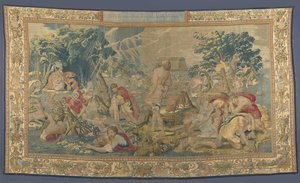
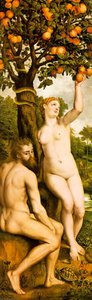
11Hermits (1557) od Michiel CoxieHermits1557 · Královské muzea krásných umění v Belgii 12Knights (after The Ghent Altarpiece) (1557) od Michiel CoxieKnights (after The Ghent Altarpiece)1557 · Královské muzea krásných umění v Belgii 13God the Father (after The Ghent Altarpiece) (1558) od Michiel CoxieGod the Father (after The Ghent Altarpiece)1558 · Gemäldegalerie 14The Crucifixion (Hosden triptych) (Matthew 27: 45-58) (1571) od Michiel CoxieThe Crucifixion (Hosden triptych) (Matthew 27: 45-58)1571 15Tryptich with Christ, John the Evangelist, Peter and donor portraits and their saints (1566) od Michiel CoxieTryptich with Christ, John the Evangelist, Peter and donor portraits and their saints1566 16St Agnes (1571) od Michiel CoxieSt Agnes1571 · Královské muzeum výtvarného umění Antverpy 17Episode from the martyrdom of St George (1571) od Michiel CoxieEpisode from the martyrdom of St George1571 · Královské muzeum výtvarného umění Antverpy 18St George (1571) od Michiel CoxieSt George1571 · Královské muzeum výtvarného umění Antverpy 19Episode from the martyrdom of St George (1571) od Michiel CoxieEpisode from the martyrdom of St George1571 · Královské muzeum výtvarného umění Antverpy 20Martyrdom of Saint Sebastian (1575) od Michiel CoxieMartyrdom of Saint Sebastian1575 · Královské muzeum výtvarného umění Antverpy 21The Martydom of St Luke (1570) od Michiel CoxieThe Martydom of St Luke1570 · Národní galerie Praha 22Annunciation (1580) od Michiel CoxieAnnunciation1580 · Státní Ermitáž 23Tapestry The Flood from the series The Story of Noah (1550) od Michiel CoxieTapestry The Flood from the series The Story of Noah1550 · Královský hrad Wawel 24The expulsion from paradise (Genesis 3: 22-24) (1566) od Michiel CoxieThe expulsion from paradise (Genesis 3: 22-24)1566 · Kunsthistorisches Museum 25The Revenge of Tomyris (1620) od Michiel CoxieThe Revenge of Tomyris1620 · Akademie výtvarních umění Praha 26The Birth of the Virgin. The Annunciation. The Adoration of the Shepherds (1530) od Michiel CoxieThe Birth of the Virgin. The Annunciation. The Adoration of the Shepherds1530 · Museo del Prado 27Christina of Denmark (1545) od Michiel CoxieChristina of Denmark1545 · Allen Memorial Art Museum 28Saint Cecilia (1569) od Michiel CoxieSaint Cecilia1569 · Museo del Prado 29The Torture of St George (1580) od Michiel CoxieThe Torture of St George1580 · Katedrála svatého Rembaulta 30The Circumcision of Christ (detail) (1580) od Michiel CoxieThe Circumcision of Christ (detail)1580 · Katedrála svatého Rembaulta 31Transfiguration od Michiel CoxieTransfigurationStaatsgalerie Aschaffenburg 32Landscape with Diana and Actaeon (Ovid, Metamorphoses, III, 193) od Michiel CoxieLandscape with Diana and Actaeon (Ovid, Metamorphoses, III, 193)Královské muzeum výtvarného umění Antverpy 33The Story of Saint George od Michiel CoxieThe Story of Saint GeorgeKrálovské muzeum výtvarného umění Antverpy 34Adam and Eve od Michiel CoxieAdam and Eve 35Adam and the God (detail of a tapestry). od Michiel CoxieAdam and the God (detail of a tapestry). 36Killing of Abel od Michiel CoxieKilling of AbelMuseo del Prado 37Saint John the Baptist in a rocky landscape od Michiel CoxieSaint John the Baptist in a rocky landscape 38Family of Mary. od Michiel CoxieFamily of Mary. 39David and Goliath od Michiel CoxieDavid and Goliath 40Cain and Abel od Michiel CoxieCain and Abel 41God's conversation with Noah od Michiel CoxieGod's conversation with Noah 42A Man with a Skull od Michiel CoxieA Man with a SkullNational Gallery 43Original Sin od Michiel CoxieOriginal SinKunsthistorisches Museum 44The Death of the Virgin (1550) od Michiel CoxieThe Death of the Virgin1550 · Museo del Prado

Slavná díla Michiel Coxie podle jednotlivých období

Motivy, které zaujaly Michiel Coxie

Čtyři témata, která se v těchto originálech nejčastěji objevují, z nichž každé má svůj nejlepší příklad.

Muzea, v nichž jsou vystavena originálna umělce Michiel Coxie

8 muzea, v nichž je umístěno nejvíce obrazů z této stránky.

Muzeum Město Díla autora Michiel Coxie Obrazy z tohoto seznamu
Královské muzeum výtvarného umění Antverpy, AntverpyKrálovské muzeum výtvarného umění Antverpy Antverpy 7 St Agnes, Episode from the martyrdom of St George, St George
Museo del Prado, MadridMuseo del Prado Madrid 6 Christ bearing the Cross, The Presentation of the Virgin at the Temple. The Visitation. The Adoration of the Magi, The Birth of the Virgin. The Annunciation. The Adoration of the Shepherds
Alte Pinakothek, MnichovAlte Pinakothek Mnichov 2 Saint John the Baptist (after The Ghent Altarpiece), Ecce homo
Národní galerie Praha, PrahaNárodní galerie Praha Praha 2 St John the Evangelist on Patmos, The Martydom of St Luke
Královské muzea krásných umění v Belgii, BruselKrálovské muzea krásných umění v Belgii Brusel 2 Hermits, Knights (after The Ghent Altarpiece)
Kunsthistorisches Museum, VídeňKunsthistorisches Museum Vídeň 2 The expulsion from paradise (Genesis 3: 22-24), Original Sin
Katedrála svatého Rembaulta, MiddelburgKatedrála svatého Rembaulta Middelburg 2 The Torture of St George, The Circumcision of Christ (detail)
Národní galerie Kanady, OttawaNárodní galerie Kanady Ottawa 1 Susanna and the Elders

Michiel Coxie dekáda po dekádě: originální díla, která definují každou z nich

Díla podle dekád

Vyberte si dekádu a prohlédněte si originál, který ji definuje.

Otázky sběratelů o obrazech umělce Michiel Coxie

Kterým dílem je Michiel Coxie nejznámější?Odhalit odpověď

Susanna and the Elders (1554), Národní galerie Kanady, Ottawa. Následují Saint John the Baptist (after The Ghent Altarpiece) (1557) a Ecce homo (1587).

Kolik let bylo Michiel Coxie, když bylo vytvořeno dílo Susanna and the Elders?Odhalit odpověď

55 let: dílo Susanna and the Elders pochází z roku 1554 a Michiel Coxie se narodil/a v roce 1499.

Kterých deset nejslavnějších obrazů má Michiel Coxie?Odhalit odpověď

Susanna and the Elders, Saint John the Baptist (after The Ghent Altarpiece), Ecce homo, Christ bearing the Cross, Susanna en de ouderlingen (Daniël 13: 20-22), The Presentation of the Virgin at the Temple. The Visitation. The Adoration of the Magi, St John the Evangelist on Patmos, Plato's Cave, Mary (after The Ghent Altarpiece) a St. Mary Magdalene. Hodnocení výše uvádí rok a muzeum pro každé z nich.

Kolik obrazů zanechal(a) Michiel Coxie?Odhalit odpověď

Náš katalog obsahuje 44 děl umělce Michiel Coxie z let 1530 až 1587.

Ve kterých muzeích jsou vystavena díla mistrovská umělce Michiel Coxie?Odhalit odpověď

Většinou v Královské muzeum výtvarného umění Antverpy (Antverpy), Museo del Prado (Madrid) a Alte Pinakothek (Mnichov). V tabulce muzeí výše jsou vypsány všechny.

V jakých letech namaloval Michiel Coxie svá nejznámější díla?Odhalit odpověď

V období 1550s: 12 z celkem 44 děl na této stránce vzniklo právě tehdy, z toho Susanna and the Elders z nich.

Jaká jsou první a poslední slavná originální díla umělce Michiel Coxie?Odhalit odpověď

Na této stránce je nejstarší dílo z The Presentation of the Virgin at the Temple. The Visitation. The Adoration of the Magi (1530) a nejnovější z Ecce homo (1587).

Jaká témata si Michiel Coxie vybíral nejčastěji?Odhalit odpověď

Man (16), Woman (10) a Drapery (10) napříč 44 díly na této stránce.

Kterou techniku používal(a) Michiel Coxie nejčastěji?Odhalit odpověď

Oil On Panel, u 13 z 44 děl na této stránce.

K kterému uměleckému směru patří Michiel Coxie?Odhalit odpověď

Northern renaissance a Renaissance, podle originálů na této stránce.

Která díla umělce Michiel Coxie jsou vystavena v Královské muzeum výtvarného umění Antverpy?Odhalit odpověď

St Agnes, Episode from the martyrdom of St George a St George: muzeum Královské muzeum výtvarného umění Antverpy, Antverpy má v obsluze 7 děl z této stránky.

Michiel Coxie: život a dílo

Flemishký Rafael: Život a odkaz Michiela van Coxcie

Michiel van Coxcie (1499–1592) zůstává jednou z nejúchvatnějších postav šestnáctého století, mistrem, jehož štětec propojil hluboké duchovní tradice Flandérie s monumentální velkolepostí italského renesančního triumfu. Historici ho často oslavují jako Flemishkého Rafaela, neboť disponoval vzácnou schopností syntetizovat anatomickou přesnost a klasickou rovnováhu Jihem s emotivním, texturovaným realismem, který je charakteristický pro jeho severní kořeny. Narodil se v belgickém Mechelenu a jeho život se odehrával v době nesmírných náboženských i uměleckých proměn, v éře, kdy vliv mistrů jako Michelangelo či Rafael přetvářel samotné hranice evropského umění. Jeho raná výchova byla hluboce zakořeněna ve vlámské tradici, kdy se učil pod dohledem postav jako Jan Portaers a legendární Pieter Bruegel starší. Od těchto mentorů zdědil oddanost preciznímu detailu a nekompromisní přístup k lidským emocím. Přesto Coxciova umělecká duše toužila po něčem širším. Jeho cesty a studia mu umožnily vstřebat revoluční pokroky italských mistrů, zejména dramatickou svalnatost Michelangela a harmonické kompozice Leonarda da Vinci. Tato unikátní fúze mu umožnila vytvářet díla, která nebyla pouhou imitací cizích stylů, ale sofistikovanou evolucí jeho vlastního dědictví, vyznačující se postavami, které disponují dechující fyzickou přesností i dojímavou psychologickou hloubkou.

Univerzální mistr médií a měřítka

Šíře Coxcieho talentu byla skutečně mimořádná, neboť se bez námahy pohyboval mezi křehkou intimitou portrétní malby i ohromující velikostí monumentálních náboženských zakázek. Jeho všestrannost sahala daleko za okraj plátna; byl stejně zdatný v navrhování složitých tapiserií i v modelování forem, které ovládaly prostor. Tento polyhistorický přístup mu umožnil získat patronáž některých z nejsilnějších postav tehdejší Evropy, včetně Maxmiliána I. Bavorského a Filipa II. španělského. Tak vysoká úroveň podpory zajistila, že jeho vliv pronikl do nejvyšších sfér evropského dvorského života a učinila z něj klíčovou postavu vizuálního jazyka celé éry. Jeho úspěchy jsou nejlépe ilustrovány příspěvkem k velkým katedrálám Nízkých zemí. V katedrále svatých Michala a Guduly v Bruselu stojí jeho masivní oltářové obrazy jako trvalé svědectví jeho technické zdatnosti, využívající komplexní kompozice k vedení diváka skrze posvátná vyprávění. Dále je jeho práce na tapiserii pro katedrálu svatého Rumolda – konkrétně jeho zobrazení Adama a Boha – považována učenci za vrchol renesančního textilního umění. V těchto dílech lze pozorovat neprostupnou integraci:
  • Anatomické mistrovství: hluboké porozumění lidské postavě, které každé figurě dodává pocit váhy a přítomnosti.
  • Narativní hloubka: schopnost vplést komplexní teologická témata do vizuálně přístupných a emocionálně rezonujících scén.
  • Chromatická brilance: sofistikované využití barvy, které prohlubuje dramatické napětí a duchovní atmosféru jeho kompozic.

Historický význam a umělecká evoluce

S postupem šestnáctého století procházel Coxcieho styl jemnou, avšak významnou evolucí, která zrcadlila měnící se proudy evropského vkusu, jak se renesance přelévala do dramatičtějších a emotivnějších kvalit raného baroka. Přestože nikdy neopustil klasické základy, které definovaly jeho ranou tvorbu, jeho pozdější díla začala přijímat větší smysl pohybu a teatrálnosti. Tato přizpůsobivost zajistila, že jeho dílo zůstalo relevantní i v době, kdy umělecká krajina rostla v komplikovanost a turbulence v důsledku náboženských zvratů reformace a protireformace. Historický význam Michiela van Coxcieho spočívá v jeho roli kulturního spojovatele. Do Flandérie nepřinesl pouze italské myšlenky; přeložil je do místního jazyka, který rezonoval se spirituální citlivostí jeho lidu. Propojením intelektuální rigoróznosti Jihu s duševním realismem Severu pomohl vytvořit unikátní estetickou identitu vlámského umění. Dnes jeho odkaz přežívá v tiché majestátnosti jeho dochovaných obrazů a tapiserií, které neustále zvou diváky do světa, kde jsou božské i lidské neoddělitelně propojeny mocí mistrovské umělecké tvorby.