Portrét Luca Carlevaris

Obrazy autora Luca Carlevaris: 67 nejznámějších díel podle pohledu galerie

Aktualizováno listopad 2026 · seřazeno podle našeho skóre popularity (vyhledávání, návštěvy a objednávky u každého díla) · 67 děl umělce Luca Carlevaris v našem katalogu

Stručně řečeno

Z pohledu galerie je nejslavnějším dílem Luca Carlevaris obraz Santa Maria della Carità (1703). Santi Giovanni e Paolo and the Scuola di San Marco (1704) a The Rialto Bridge (1703) doplňují trio, které každé oko okamžitě pozná. Z 67 děl umělce Luca Carlevaris v našem katalogu představuje galerie níže 67 nejznámějších děl, z nichž každé je originálem s uvedením roku vzniku, muzea a toho, co jej činí jedinečným.

1663 – 1730, Udine Baroque Nejvíce děl: Rijksmuseum

Top 10 obrazů umělce Luca Carlevaris v naší galerii

1
Santa Maria della Carità (1703) od Luca Carlevaris

Santa Maria della Carità

1703 · Engraving

In this monochrome engraving, the Church of Santa Maria della Carità rises within the urban landscape of Venice, Italy. Created by Luca Carlevaris in 1703, the work captures the architectural presence of the church and its immediate surroundings. The scene focuses on the structural details of the building, presenting a clear view of the facade as it meets the street. Every line works to define the stone and the space…

2
Santi Giovanni e Paolo and the Scuola di San Marco (1704) od Luca Carlevaris

Santi Giovanni e Paolo and the Scuola di San Marco

1704 · Engraving

This 1704 engraving offers a precise view of the Venetian cityscape, focusing on the architectural relationship between the Scuola di San Marco and the church of Santi Giovanni e Paolo. The composition captures the heavy, geometric presence of these structures, which were among the most significant monuments of the city. A sense of urban life is present in the arrangement of the buildings and the space between them, providing a…

3
The Rialto Bridge (1703) od Luca Carlevaris

The Rialto Bridge

1703 · Engraving · Rijksmuseum, Amsterdam

The water of the Grand Canal ripples beneath the shadow of the Rialto Bridge, catching the light in a dance of silver and grey. In this detailed engraving, the air feels thick with the movement of a city that never rests. Pedestrians navigate the stone steps, their forms caught in mid-stride, while gondoliers maneuver their vessels through the narrow channels. The architecture rises with a mathematical precision, every arch and…

4
The Reception of Cardinal César d'Estrées (detail) (1701) od Luca Carlevaris

The Reception of Cardinal César d'Estrées (detail)

1701 · Oil On Canvas · Rijksmuseum, Amsterdam

The oil on canvas depicts a dense crowd gathered in an outdoor setting, likely a public market or a significant social event. Figures are arranged in a crowded composition that emphasizes a mass of people rather than deep spatial recession. The scene is characterized by a variety of period clothing, including men in frock coats and powdered wigs, and women wearing voluminous gowns and headdresses. The perspective is slightly flattened,…

5
A Gondola End View (1710) od Luca Carlevaris

A Gondola End View

1710 · Oil On Canvas

A close-up portrait emerges from a dark, ambiguous field of brown and black. The composition is tightly cropped, focusing on the contours of a head and a helmet. Visible brushstrokes and a rough, uneven texture suggest an aged surface, where light descends from above to define the planes of the face. The palette remains limited, relying on subtle hints of gold to break the heavy shadows. This approach creates a…

6
The Piazzetta and the Library (1720) od Luca Carlevaris

The Piazzetta and the Library

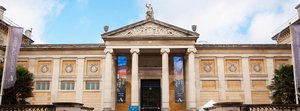
1720 · Oil · Ashmolean Museum, Oxford

The composition centers on a grand palazzo, its facade defined by a rhythmic series of arched windows and balconies that command the viewer's attention. Through a calculated use of linear perspective, the artist creates an exaggerated sense of depth, pulling the eye toward the architectural heart of the scene. The scale of the building dominates the frame, establishing a sense of monumental permanence against the fleeting movements of the figures…

7
The Bacino, Venice, with the Dogana and a Distant View of the Isola di San Giorgio (1709) od Luca Carlevaris

The Bacino, Venice, with the Dogana and a Distant View of the Isola di San Giorgio

1709 · Oil On Canvas · Metropolitan Museum of Art, New York

To gaze upon this magnificent veduta of Venice is to step directly into the golden heart of the eighteenth century. Luca Carlevaris has gifted us more than just a painting; he has preserved a moment—a vibrant, breathing tableau of life unfolding along the Grand Canal. The composition draws the eye deep into the scene, leading it from the immediate foreground where large vessels glide across the water, past the imposing…

8
The Molo, Looking toward the Doge's Palace (1710) od Luca Carlevaris

The Molo, Looking toward the Doge's Palace

1710 · Oil On Canvas · Státní Ermitáž, Sankt-Petěrburg

The scene depicts the Molo in Venice, looking toward the Doge's Palace. In the foreground, the water occupies a significant portion of the lower frame, populated by various vessels. Some boats feature upright sails, while others sit low in the water near the stone edge. Numerous figures are distributed throughout the composition. Some individuals walk along the quay, while others are positioned in the mid-ground or near the boats. A…

9
A Gentleman (1710) od Luca Carlevaris

A Gentleman

1710 · Oil On Canvas

In this 1710 oil on canvas, a male figure is captured in a three-quarter pose, seated with a relaxed yet commanding presence. He wears a blue coat accented with white trim, the texture of which is rendered through meticulous attention to the folds of the fabric and the delicate lace at his shirt. His expression is one of calm confidence, a quiet composure that defines the character of the subject.…

Obrazy autora Luca Carlevaris, seřazeny od 11 do 67

11The Molo, Venice, Looking West (1709) od Luca CarlevarisThe Molo, Venice, Looking West1709 · Metropolitan Museum of Art 12Palazzo Coccina on the Grand Canal (1703) od Luca CarlevarisPalazzo Coccina on the Grand Canal1703 · Bayerische Staatsbibliothek 13Piazza San Marco, Venice (1709) od Luca CarlevarisPiazza San Marco, Venice1709 · Metropolitan Museum of Art 14The Sea Custom House with San Giorgio Maggiore (1700) od Luca CarlevarisThe Sea Custom House with San Giorgio Maggiore1700 15The Molo with the Ducal Palace (1710) od Luca CarlevarisThe Molo with the Ducal Palace1710 16The Sea Custom House with San Giorgio Maggiore (detail) (1700) od Luca CarlevarisThe Sea Custom House with San Giorgio Maggiore (detail)1700 17A Lady Seen from Behind (1710) od Luca CarlevarisA Lady Seen from Behind1710 18View of a River Port (1710) od Luca CarlevarisView of a River Port1710 19A Lady Holding a Fan (1710) od Luca CarlevarisA Lady Holding a Fan1710 20A Lady Seen in Profile (1710) od Luca CarlevarisA Lady Seen in Profile1710 21The Reception of Cardinal César d'Estrées (1701) od Luca CarlevarisThe Reception of Cardinal César d'Estrées1701 · Rijksmuseum 22The Arrival of the Earl of Manchester in Venice (1710) od Luca CarlevarisThe Arrival of the Earl of Manchester in Venice1710 · Birmingham Museum and Art Gallery 23A Lady Seen in Full Face (1710) od Luca CarlevarisA Lady Seen in Full Face1710 24A Lady Holding a Fan and a Mask (1710) od Luca CarlevarisA Lady Holding a Fan and a Mask1710 25A Hungarian Hussar (1710) od Luca CarlevarisA Hungarian Hussar1710 26A Lady Seen in Profile, Holding a Fan (1710) od Luca CarlevarisA Lady Seen in Profile, Holding a Fan1710 27A Man in a Dark Cloak (1710) od Luca CarlevarisA Man in a Dark Cloak1710 28A Man Seen from Behind (1710) od Luca CarlevarisA Man Seen from Behind1710 29A Seated Man Seen from Behind (1710) od Luca CarlevarisA Seated Man Seen from Behind1710 30Study of Two Gondolas and Figures (1710) od Luca CarlevarisStudy of Two Gondolas and Figures1710 · Birmingham Museum and Art Gallery 31The Upper Section of a Church with a Hexagonal Dome and Two Towers (1710) od Luca CarlevarisThe Upper Section of a Church with a Hexagonal Dome and Two Towers1710 32A Gentleman Wearing a White Coat (1710) od Luca CarlevarisA Gentleman Wearing a White Coat1710 33A Man Wearing an Apron (1710) od Luca CarlevarisA Man Wearing an Apron1710 34A Gondolier (1710) od Luca CarlevarisA Gondolier1710 35Two Studies of a Dog (1710) od Luca CarlevarisTwo Studies of a Dog1710 36A Man in a White Domino Seen from Behind (1710) od Luca CarlevarisA Man in a White Domino Seen from Behind1710 37A Man Wearing a Yellow Coat (1710) od Luca CarlevarisA Man Wearing a Yellow Coat1710 38Study of a Man (1710) od Luca CarlevarisStudy of a Man1710 39Study of a Fish (1710) od Luca CarlevarisStudy of a Fish1710 40A Man Wearing a Green Coat (1710) od Luca CarlevarisA Man Wearing a Green Coat1710 41A Masked Lady (1710) od Luca CarlevarisA Masked Lady1710 42A Man Wearing a Red Jacket (1710) od Luca CarlevarisA Man Wearing a Red Jacket1710 43A Man, Perhaps a Gondolier, Seen from Behind (1710) od Luca CarlevarisA Man, Perhaps a Gondolier, Seen from Behind1710 44A Carpenter (1710) od Luca CarlevarisA Carpenter1710 45A Man Wearing a Red Coat (1710) od Luca CarlevarisA Man Wearing a Red Coat1710 46A Man Wearing a Blue Cloak (1710) od Luca CarlevarisA Man Wearing a Blue Cloak1710 47A Lady Seen from Behind, Holding a Fan (1710) od Luca CarlevarisA Lady Seen from Behind, Holding a Fan1710 48A Man, Perhaps a Lawyer (1710) od Luca CarlevarisA Man, Perhaps a Lawyer1710 49Studies of Two Gentlemen (1710) od Luca CarlevarisStudies of Two Gentlemen1710 50Three Studies of Costume (1710) od Luca CarlevarisThree Studies of Costume1710 51A Seated Man (1710) od Luca CarlevarisA Seated Man1710 52Study of a Horse's Head (1710) od Luca CarlevarisStudy of a Horse's Head1710 53Three Studies of Men (1710) od Luca CarlevarisThree Studies of Men1710 54Two Studies of Men (1710) od Luca CarlevarisTwo Studies of Men1710 55Two Costume Studies (1710) od Luca CarlevarisTwo Costume Studies1710 56View of the Wharf from the Bacino di San Marco (1720) od Luca CarlevarisView of the Wharf from the Bacino di San Marco1720 57Piazza San Marco, Looking East (1722) od Luca CarlevarisPiazza San Marco, Looking East1722 58The Piazzetta, Venice (1729) od Luca CarlevarisThe Piazzetta, Venice1729 · The Ashmolean Museum of Art and Archaeology 59The Bridge for the Feast of the Madonna della Salute (1720) od Luca CarlevarisThe Bridge for the Feast of the Madonna della Salute1720 · Wadsworth Atheneum 60A Gondola (1710) od Luca CarlevarisA Gondola1710 61Seaport (1690) od Luca CarlevarisSeaport1690 · Ca' Zenobio 62A Lawyer (1710) od Luca CarlevarisA Lawyer1710 63A View of the Molo od Luca CarlevarisA View of the Molo 64The Dock Facing the Doge's Palace od Luca CarlevarisThe Dock Facing the Doge's PalaceGalerie Sanssouci 65Piazza San Marco with Jugglers od Luca CarlevarisPiazza San Marco with JugglersSchloss Sanssouci 66St. Mark's Square with Charlatans od Luca CarlevarisSt. Mark's Square with CharlatansGalerie Sanssouci 67The Wharf, Looking toward the Doge's Palace od Luca CarlevarisThe Wharf, Looking toward the Doge's PalaceSchloss Sanssouci

Motivy, které zaujaly Luca Carlevaris

Čtyři témata, která se v těchto originálech nejčastěji objevují, z nichž každé má svůj nejlepší příklad.

Muzea, v nichž jsou vystavena originálna umělce Luca Carlevaris

8 muzea, v nichž je umístěno nejvíce obrazů z této stránky.

Muzeum Město Díla autora Luca Carlevaris Obrazy z tohoto seznamu
Rijksmuseum, AmsterdamRijksmuseum Amsterdam 3 The Rialto Bridge, The Reception of Cardinal César d'Estrées (detail), The Reception of Cardinal César d'Estrées
Metropolitan Museum of Art, New YorkMetropolitan Museum of Art New York 3 The Bacino, Venice, with the Dogana and a Distant View of the Isola di San Giorgio, The Molo, Venice, Looking West, Piazza San Marco, Venice
Birmingham Museum and Art Gallery, BirminghamBirmingham Museum and Art Gallery Birmingham 2 The Arrival of the Earl of Manchester in Venice, Study of Two Gondolas and Figures
Galerie Sanssouci, PotsdamGalerie Sanssouci Potsdam 2 The Dock Facing the Doge's Palace, St. Mark's Square with Charlatans
Schloss Sanssouci, PotsdamSchloss Sanssouci Potsdam 2 Piazza San Marco with Jugglers, The Wharf, Looking toward the Doge's Palace
Ashmolean Museum, OxfordAshmolean Museum Oxford 1 The Piazzetta and the Library
Státní Ermitáž, Sankt-PetěrburgStátní Ermitáž Sankt-Petěrburg 1 The Molo, Looking toward the Doge's Palace
Bayerische Staatsbibliothek, MnichovBayerische Staatsbibliothek Mnichov 1 Palazzo Coccina on the Grand Canal

Luca Carlevaris, jeden ikonický obraz na každé desetiletí

Díla podle dekád

Vyberte si dekádu a prohlédněte si originál, který ji definuje.

Obrazy umělce Luca Carlevaris: odpovědi galerie

Který obraz autora Luca Carlevaris je nejslavnější ze všech?Odhalit odpověď

Santa Maria della Carità (1703). Následují Santi Giovanni e Paolo and the Scuola di San Marco (1704) a The Rialto Bridge (1703).

Kolik let bylo Luca Carlevaris, když dokončil/a Santa Maria della Carità?Odhalit odpověď

40 let: dílo Santa Maria della Carità pochází z roku 1703 a Luca Carlevaris se narodil/a v roce 1663.

Kterých 10 nejlepších obrazů má Luca Carlevaris?Odhalit odpověď

Santa Maria della Carità, Santi Giovanni e Paolo and the Scuola di San Marco, The Rialto Bridge, The Reception of Cardinal César d'Estrées (detail), A Gondola End View, The Piazzetta and the Library, The Bacino, Venice, with the Dogana and a Distant View of the Isola di San Giorgio, The Molo, Looking toward the Doge's Palace, A Gentleman a Seascape. Hodnocení výše uvádí rok a muzeum pro každé z nich.

Kolik děl vytvořil/a Luca Carlevaris?Odhalit odpověď

Náš katalog obsahuje 67 děl umělce Luca Carlevaris z let 1690 až 1729.

Kde jsou vystavena nejznámější originály umělce Luca Carlevaris?Odhalit odpověď

Většinou v Rijksmuseum (Amsterdam), Metropolitan Museum of Art (New York) a Birmingham Museum and Art Gallery (Birmingham). V tabulce muzeí výše jsou vypsány všechny.

Kdy Luca Carlevaris vytvořil své nejslavnější obrazy?Odhalit odpověď

V období 1710s: 44 z celkem 67 děl na této stránce vzniklo právě tehdy, z toho A Gondola End View z nich.

Která jsou nejstarší a nejnovější slavná díla umělce Luca Carlevaris?Odhalit odpověď

Na této stránce je nejstarší dílo z Seascape (1690) a nejnovější z The Piazzetta, Venice (1729).

Kterým tématům se Luca Carlevaris věnoval(a) nejčastěji?Odhalit odpověď

Architecture (5), 18th century venice (4) a Venice (3) napříč 67 díly na této stránce.

V jaké technice tvořil(a) Luca Carlevaris nejčastěji?Odhalit odpověď

Oil On Canvas, u 5 z 67 děl na této stránce.

S jakým směrem je spojen(a) Luca Carlevaris?Odhalit odpověď

Baroque a Venetian renaissance, podle originálů na této stránce.

Jaká originální díla Luca Carlevaris má v obsluze Rijksmuseum?Odhalit odpověď

The Rialto Bridge, The Reception of Cardinal César d'Estrées (detail) a The Reception of Cardinal César d'Estrées: muzeum Rijksmuseum, Amsterdam má v obsluze 3 děl z této stránky.

Luca Carlevaris: umělec

Luca Carlevaris: Benátsský mistr světla a stínu

Luca Carlevaris (1663–1730), jméno možná méně známé než jména jeho současníků Canaletta či Guardiho, představuje klíčovou postavu v rozvoji benátské malby městských krajin. Narodil se v italském Udine a ugruntnal si své postavení jako přední umělec v Benátkách, kde strávil většinu své kariéry. Zanechal po sobě odkaz neuvěřitelně detailních a atmosférických pohledů, které zachytily podstatu živoucího života města i jeho jemnou krásu. Jeho dílo představuje zásadní most mezi dramatickou intenzitou barokní éry a následným vzestupem topografického realismu, čímž hluboce ovlivnil celé generace benátských malířů.

Carlevaris si svou první uznání získal díky spojení s prestižní Římskou Accademia di San Luca, institucí, která podporovala umělecké inovace. Právě zde byl vystaven technikám a filozofiím nizozemských mistrů, zejména Caspara van Wittela, jehož průkopnická práce v žánru veduta – detailních městských krajin – mu sloužila jako významná inspirace. Van Wittelův důraz na perspektivu, světlo a zobrazení urbanistického prostoru hluboce formoval Carlevanisův přístup k benátskému malířství. Tento vliv je jasně patrný v jeho vlastních sériích leptů a obrazů Benátek, které pečlivě rekonstruují složitou architekturu města, rušné ulice i okouzlující vodní cesty.

Pionýr žánru veduta

Carlevaris se skutečně odlišil jako průkopník žánru veduta v Benátkách. Na rozdíl od dřívějších zobrazení, která se často soustředila na monumentální památky nebo idealizované pohledy, se Carlevaris snažil zachytit každodenní realitu benátského života – přeplněné trhy, úzké uličky a odrazy světla třásající se na kanálech. Jeho malby jsou charakteristické neobyčejnou pozorností k detailu, precizně vykreslenými budovami a mistrovským využitím světla a stínu. Využíval techniku známou jako chiaroscuro, kterou s obratností manipuloval pomocí kontrastů mezi světlem a tmou, aby vytvořil hloubku, drama a pocit atmosféry.

Mezi jeho nejslavnější díla patří například „Piazzetta a knihovna“ (1720), která tento přístup dokonale ztělesňují. Obraz živě vykresluje rušné náměstí Piazza San Marco a zachycuje nejen jeho architektonický grandióznost, ale i živý pohyb jeho obyvatel – obchodníků, gondoliérů i turistů. Zvláště si zaslouží uznání použití perspektivy, která vytváří přesvědčivou iluzi hloubky a vtahuje diváka přímo do scény. Carlevarisova schopnost vyjádřit jak fyzickou realitu, tak emocionální atmosféru Benátek upevnila jeho pověst jednoho z nejvýznamnějších krajinářů tohoto města.

Vlivy a umělecká spojení

Umělecká cesta Carlevarise byla utkaná z komplexní sítě vlivů. Jak bylo zmíněno, Van Wittelova práce poskytla základní model pro jeho přístup k malbě městských krajin. Inspiraci však čerpal i z díla Lucca Signorelliho, mistra vysoké renesance, známého svými dramatickými freskami a inovativním využitím zkrácených perspektiv. Signorelliho důraz na anatomickou přesnost a dynamickou kompozici lze zaznamenat i u Carlevarisových postav, které často vyzařují pocit pohybu a vitality.

Kromě toho si Carlevaris udržoval blízké vazby s dalšími významnými benátskými umělci své doby, včetně Canaletta a Francesca Guardiho. Tyto spolupráce podnácely výměnu nápadů a technik, což přispělo k rozvoji benátského malířství jako celku. Věří se, že i tito mistři byli ovlivněni jeho prací, zejména jeho inovativním využitím perspektivy a světla.

Odkaz a historický význam

Carlevarisův přínos k benátskému umění je nepopiratelný. Pozvedl žánr veduta do nových výšin a stanovil standard pro detail, přesnost a atmosférické vyjádření, který následovalo nespočet dalších umělců. Jeho pečlivé zobrazení Benátek poskytuje nepostradatelný pohled do historie, kultury a každodenního života města. Jeho dílo i dnes fascinuje diváky svou krásou, precizností a evokativním vyprávěním o dávno uplynulé éře.

Kromě svých uměleckých úspěchů se Carlevarisův odkaz šíří skrze jeho vliv na pozdější generace benátských malířů. Jeho techniky a přístupy sloužily jako základ pro rozvoj topografické malby v Benátkách, čímž zajistily, že jeho vize města bude trvat dlouho po jeho smrti. Jeho obrazy zůstávají vzácnými uměleckými poklady, které nabízejí jedinečné okno do duše Benátek 18. století.