Portrét John Crome

54 nejslavnějších obrazů autora John Crome, každý naprosto unikátní

Aktualizováno říjen 2026 · seřazeno podle našeho skóre popularity (vyhledávání, návštěvy a objednávky u každého díla) · 54 děl umělce John Crome v našem katalogu

Stručně řečeno

Boys Bathing on the River Wensum, Norwich (1817) je obraz autora John Crome, který přitahuje nejvíce pohledů; originál se nachází v Yale Center for British Art, New Haven. Poté se zrak přesouvá k Grove Scene (1820) a Slate Quarries (1803). Z 54 děl umělce John Crome v našem katalogu je těchto 54 těch nejznámějších; každé z nich je unikátním originálem s uvedením roku vzniku, muzea a důvodu jeho nesmrtelnosti.

1768 – 1821, Norwich Romanticism Nejvíce děl: Yale Center for British Art

Top 10 obrazů autora John Crome podle výběru galerie

1
Boys Bathing on the River Wensum, Norwich (1817) od John Crome

Boys Bathing on the River Wensum, Norwich

1817 · Oil On Canvas · Yale Center for British Art, New Haven

Boys Bathing on the River Wensum, Norwich – A Reflection of Norfolk’s Soul John Crome's “Boys Bathing on the River Wensum, Norwich” isn’t merely a depiction of a picturesque riverside scene; it’s a distillation of the very spirit of Norfolk—a region steeped in tradition and celebrated for its understated beauty. Painted in 1817 during the height of the Romantic era, this landscape masterpiece encapsulates the fascination with nature that characterized…

2
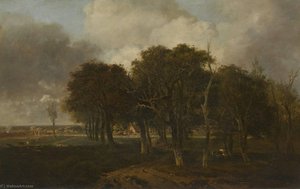
Grove Scene (1820) od John Crome

Grove Scene

1820 · Oil On Canvas · Norwich Castle Museum And Art Gallery, Norwich

A small clearing within a Norfolk forest provides the setting for this 1820 oil on canvas. Two figures stand amidst the trees, appearing as quiet observers of the landscape. Nearby, a horse grazes in the grass, contributing to the pastoral stillness of the scene. The composition uses these figures to anchor the expansive vista, establishing a connection between the human presence and the natural environment.

6
A Mountain Scene (1806) od John Crome

A Mountain Scene

1806 · Oil · Scottish National Gallery, Edinburgh

In his 1806 masterpiece, A Mountain Scene, John Crome captures a panoramic vista of East Anglian hills, a scene that serves as a profound embodiment of Romantic ideals. The composition is dominated by a substantial rock outcrop in the foreground, its rugged presence acting as a symbol of resilience and permanence against the relentless forces of time and weather. Through a skillful application of perspective, Crome draws the viewer’s gaze…

Slavná díla umělce John Crome, čísla 11 až 54

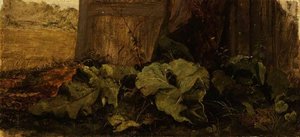
11The Beaters (1810) od John CromeThe Beaters1810 · Scottish National Gallery 12Yarmouth Jetty (1810) od John CromeYarmouth Jetty1810 · Yale Center for British Art 13Woodland Landscape near Norwich (1810) od John CromeWoodland Landscape near Norwich1810 · Yale Center for British Art 14View near Thorpe; Moonlight scene (1807) od John CromeView near Thorpe; Moonlight scene1807 · Vanderbilt Museum of Art 15Hautbois Common, Norfolk (1810) od John CromeHautbois Common, Norfolk1810 · Metropolitan Museum of Art 16High Tor, Matlock (1811) od John CromeHigh Tor, Matlock1811 · Fitzwilliam Museum 17Hautbois Common, Norfolk (1810) od John CromeHautbois Common, Norfolk1810 18Dock Leaves (1813) od John CromeDock Leaves1813 · Norwich Castle Museum And Art Gallery 19A Heath Scene: Sun after Storm (1818) od John CromeA Heath Scene: Sun after Storm1818 · National Gallery of Ireland 20A Windmill near Norwich (1816) od John CromeA Windmill near Norwich1816 21Yarmouth Harbour - Evening (1817) od John CromeYarmouth Harbour - Evening1817 22The Poringland Oak (1819) od John CromeThe Poringland Oak1819 23A Sandy Bank (1820) od John CromeA Sandy Bank1820 · Scottish National Gallery 24The Harling Gate (1817) od John CromeThe Harling Gate1817 · Vanderbilt Museum of Art 25The Edge of the Forest (1821) od John CromeThe Edge of the Forest1821 · Vanderbilt Museum of Art 26Landscape with Trees and Cattle (1820) od John CromeLandscape with Trees and Cattle1820 27Marlingford Grove (1815) od John CromeMarlingford Grove1815 28Mousehold Heath, Norwich (1820) od John CromeMousehold Heath, Norwich1820 29The Fish Market, Boulogne, France (1820) od John CromeThe Fish Market, Boulogne, France1820 · Norwich Castle Museum And Art Gallery 30Moonlight on the Yare (1817) od John CromeMoonlight on the Yare1817 · National Gallery of Art 31Moonrise on the Yare ( ) (1816) od John CromeMoonrise on the Yare ( )1816 32Ruined Buildings od John CromeRuined BuildingsNárodní galerie Kanady 33Windmill near Norwich od John CromeWindmill near NorwichMuzeum umění v Bostonu 34Landscape Edge of a Wood (1820) od John CromeLandscape Edge of a Wood1820 · Courtauld Gallery 35The Lime Kiln (1806) od John CromeThe Lime Kiln1806 36An Egyptian Poppy and a Water Mole (1812) od John CromeAn Egyptian Poppy and a Water Mole1812 · Yale Center for British Art 37View near Weymouth od John CromeView near WeymouthDetroit Institute of Arts 38A sandy hollow od John CromeA sandy hollowFitzwilliam Museum 39Yarmouth Beach od John CromeYarmouth BeachYale University Art Gallery 40A Barge with a Wounded Soldier od John CromeA Barge with a Wounded SoldierYale Center for British Art 41Moonlight Norwich, Norfolk od John CromeMoonlight Norwich, NorfolkRussell 42The Edge of the Forest od John CromeThe Edge of the Forest 43Landscape with a Waterfall near Norwich, Norfolk, 1819 od John CromeLandscape with a Waterfall near Norwich, Norfolk, 1819The Wilson: Cheltenham Art Gallery And Museum 44Wooded Landscape with an Oak od John CromeWooded Landscape with an Oak 45The Mill od John CromeThe MillNorfolk Museums 46Moonlight od John CromeMoonlight 47Mousehold Heath od John CromeMousehold Heath 48The Mill (after Rembrandt van Rijn) od John CromeThe Mill (after Rembrandt van Rijn)Norfolk Museums 49Lane near Norwich od John CromeLane near NorwichWolverhampton Art Gallery 50Landscape with a Cottage and Trees od John CromeLandscape with a Cottage and TreesNorfolk Museums 51Plowman od John CromePlowmanSheffield City Art Galleries 52Landscape with a River od John CromeLandscape with a RiverSheffield City Art Galleries 53Mousehold Heath, Norwich (1819) od John CromeMousehold Heath, Norwich1819 54The River Wensum, Norwich (1814) od John CromeThe River Wensum, Norwich1814 · Yale Center for British Art

Motivy, které zaujaly John Crome

Čtyři témata, která se v těchto originálech nejčastěji objevují, z nichž každé má svůj nejlepší příklad.

Muzea, v nichž jsou vystavena originálna umělce John Crome

8 muzea, v nichž je umístěno nejvíce obrazů z této stránky.

Muzea Město Díla autora John Crome Obrazy z tohoto seznamu
Yale Center for British Art, New HavenYale Center for British Art New Haven 6 Boys Bathing on the River Wensum, Norwich, Yarmouth Jetty, Woodland Landscape near Norwich
Scottish National Gallery, EdinburghScottish National Gallery Edinburgh 4 A Mountain Scene, The Bell Inn, The Beaters
Norwich Castle Museum And Art Gallery, NorwichNorwich Castle Museum And Art Gallery Norwich 3 Grove Scene, Dock Leaves, The Fish Market, Boulogne, France
Vanderbilt Museum of Art Nashville 3 View near Thorpe; Moonlight scene, The Harling Gate, The Edge of the Forest
Norfolk Museums, NorwichNorfolk Museums Norwich 3 The Mill, The Mill (after Rembrandt van Rijn), Landscape with a Cottage and Trees
Birmingham Museum and Art Gallery, BirminghamBirmingham Museum and Art Gallery Birmingham 2 The Way Through the Wood, View At Blofield, Near Norwich
Národní galerie Kanady, OttawaNárodní galerie Kanady Ottawa 2 The Old Oak, Ruined Buildings
Fitzwilliam MuseumFitzwilliam Museum 2 High Tor, Matlock, A sandy hollow

John Crome napříč desetiletími: jeden unikátní originál pro každou dekádu

Díla podle dekád

Vyberte si dekádu a prohlédněte si originál, který ji definuje.

Obrazy umělce John Crome: dotazy pro galerii

Kterým nejznámějším dílem je John Crome?Odhalit odpověď

Boys Bathing on the River Wensum, Norwich (1817), Yale Center for British Art, New Haven. Následují Grove Scene (1820) a Slate Quarries (1803).

V jakém věku vytvořil(a) John Crome dílo Boys Bathing on the River Wensum, Norwich?Odhalit odpověď

49 let: dílo Boys Bathing on the River Wensum, Norwich pochází z roku 1817 a John Crome se narodil/a v roce 1768.

Kterých deset obrazů autora John Crome je nejznámějších?Odhalit odpověď

Boys Bathing on the River Wensum, Norwich, Grove Scene, Slate Quarries, The Willow, Sheds and Old Houses on the Yare, A Mountain Scene, The Way Through the Wood, View At Blofield, Near Norwich, The Old Oak a The Bell Inn. Hodnocení výše uvádí rok a muzeum pro každé z nich.

Kolik známých děl má autor John Crome?Odhalit odpověď

Náš katalog obsahuje 54 děl umělce John Crome z let 1800 až 1821.

Kde lze vidět nejznámější originály umělce John Crome?Odhalit odpověď

Většinou v Yale Center for British Art (New Haven), Scottish National Gallery (Edinburgh) a Norwich Castle Museum And Art Gallery (Norwich). V tabulce muzeí výše jsou vypsány všechny.

V jakém období vytvořil(a) John Crome svá nejznámější obrazy?Odhalit odpověď

V období 1810s: 22 z celkem 54 děl na této stránce vzniklo právě tehdy, z toho Boys Bathing on the River Wensum, Norwich z nich.

Který slavný obraz od John Crome je nejstarší a který nejnovější?Odhalit odpověď

Na této stránce je nejstarší dílo z The Willow (1800) a nejnovější z The Edge of the Forest (1821).

Jakým tématům se John Crome věnoval/a nejčastěji?Odhalit odpověď

Landscape (11), Norfolk (6) a Rural scene (4) napříč 54 díly na této stránce.

Jaké materiály používal(a) John Crome nejčastěji?Odhalit odpověď

Oil On Canvas, u 5 z 54 děl na této stránce.

K kterému směru patří dílo umělce John Crome?Odhalit odpověď

Romanticism, podle originálů na této stránce.

Jaká originální díla John Crome mohu vidět v Yale Center for British Art?Odhalit odpověď

Boys Bathing on the River Wensum, Norwich, Yarmouth Jetty a Woodland Landscape near Norwich: muzeum Yale Center for British Art, New Haven má v obsluze 6 děl z této stránky.

John Crome: portrét umělce

John Crome (1768–1821): Norfolk Son, Pioneer of Romantic Landscape

John Crome, affectionately known as “Old Crome” to distinguish him from his artist son, stands as a pivotal figure in British art history—a founder and leading light of the celebrated Norwich School. Born in Norwich, United Kingdom (1768), Crome’s journey was one of remarkable self-education and dedication, rising from humble beginnings to become a respected landscape painter who captured the very essence of his beloved East Anglian countryside. His father, a weaver, instilled a strong work ethic, but it was an apprenticeship with house, coach, and sign painter Francis Whisler that first nurtured Crome’s artistic inclinations, providing him with foundational skills in design and color. This practical training proved invaluable as he began to explore his passion for depicting the natural world around him. A formative friendship with Robert Ladbrooke, a fellow aspiring artist, further fueled his development; together they sketched en plein air, honing their observational abilities and sharing a burgeoning enthusiasm for art.

Early Influences and Artistic Training

Crome’s artistic education began modestly, yet it proved profoundly influential. His apprenticeship under Whisler instilled discipline and technical proficiency—skills that would serve him well throughout his career. Crucially, he encountered Thomas Harvey of Old Catton, whose expansive art collection exposed him to the masterpieces of Gainsborough and Hobbema. These artists became models for composition, light, and atmosphere, shaping Crome’s artistic sensibilities from an early age. Furthermore, Sir William Beechey and John Opie offered invaluable guidance within the broader artistic community, cementing his connection to established traditions and fostering a collaborative spirit. It was this confluence of influences that laid the groundwork for Crome's distinctive style—a style characterized by meticulous detail and a palpable sense of place.

The Birth of the Norwich School

In 1803, John Crome achieved artistic renown by co-founding the Norwich Society of Artists with Robert Ladbrooke. This bold initiative marked the formal commencement of the Norwich School—a groundbreaking movement that championed direct observation of nature and sought to portray the Norfolk landscape in a manner radically different from prevailing trends originating in London. Rejecting academic conventions, the Norwich School artists prioritized capturing the immediacy of experience, prioritizing tonal harmonies and atmospheric perspective. Crome’s leadership within the society solidified his position as a visionary innovator—a figure who recognized the potential for artistic expression rooted in authentic engagement with one's surroundings. He wasn’t merely painting landscapes; he was conveying a profound appreciation for the beauty and character of Norfolk.

A Painter's Vision: Style and Technique

Crome’s artistic style is instantly recognizable—marked by loose brushwork, subtle gradations of tone, and an unwavering commitment to capturing the nuances of light and color. He meticulously studied plant life, accurately depicting tree species with unprecedented precision—a testament to his keen botanical eye and dedication to scientific observation. Unlike many of his contemporaries who relied on idealized representations, Crome embraced imperfection, allowing for textural variations and atmospheric haze that conveyed a sense of realism. His canvases pulsate with vitality, reflecting the dynamism of Norfolk’s seasons and conveying an emotional resonance that transcends mere visual depiction. He skillfully employed watercolor and oil mediums, blending them harmoniously to achieve breathtaking effects—a testament to his mastery of technique and artistic vision.

Legacy and Enduring Influence

John Crome's contribution extended far beyond his prolific output of paintings. The Norwich School he spearheaded fostered a distinct regional artistic identity, nurturing generations of painters who followed in his footsteps. Despite initial skepticism from the London art establishment—a reaction fueled by stylistic differences—Crome gained national recognition through thirteen exhibitions at the Royal Academy between 1806 and 1818. His etchings, though unpublished during his lifetime, revealed another facet of his talent—demonstrating a versatility that cemented his place as one of Britain’s most celebrated landscape artists. A posthumous exhibition showcasing over 100 of his works underscored the esteem in which he was held by his peers and solidified his enduring legacy. Today, Crome's paintings continue to inspire admiration for their quiet beauty, evocative atmosphere, and unwavering connection to the heart of Norfolk—a testament to a life dedicated to artistic excellence and a profound appreciation for the natural world.