The Engineer of Iron and Precision
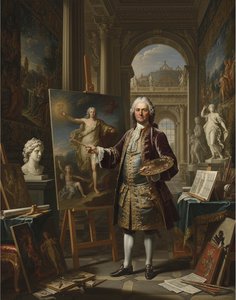
Jean-Baptiste Vaquette de Gribeauval was not a painter, but a French artillery officer and engineer. His hands worked with bronze, iron, and the heavy mathematics of ballistics rather than brushes or pigments. Born in Amiens, France, in 1715, his life followed the rigid lines of military service and scientific inquiry. He entered the royal artillery as a volunteer in 1732, moving through the ranks from captain to lieutenant general. His focus remained on the weight of a cannon barrel and the exact diameter of a shot.
The work he left behind was found in the standardization of weaponry. Before his reforms, French cannons were inconsistent, varying in weight and dimensions in a way that made battlefield logistics difficult. He looked closely at the systems used by others, including observations of Austrian artillery during the Seven Years' War. This led to the creation of what became known as the Gribeauval system. It was a method of production that favored lighter, more uniform guns without losing their range.
The Mechanics of Uniformity
His approach relied on the idea that parts should be interchangeable. He meticulously documented dimensions for cannon barrels and carriages so that components could be swapped easily. This was a shift in how things were made. He introduced iron elevating screws, iron axletrees, and standardized wheels to make the guns more durable and easier to handle across rough terrain. He also moved toward using prepackaged powder-and-shot combinations, which replaced the imprecise loose powder of the older de Vallière system.
The physical results of his engineering were specific calibers designed for different tasks:
- The 4-pounder, a light cannon used for field artillery.
- The 8-pounder, acting as a medium weight piece.
- The 12-pounder, the heaviest of the field guns, which Napoleon later favored.
- The 6-inch howitzer, designed for different trajectories and uses.
A Legacy in Metal
The impact of these technical choices was felt during the French Revolutionary Wars and the Napoleonic Wars. The mobility provided by his lighter guns allowed artillery to move more effectively with infantry. His influence reached beyond France, as his principles of interchangeable manufacture helped shape later industrial production methods. While he died in 1789, the guns he designed continued to be used in various conflicts well into the nineteenth century.
His career was marked by both service and scientific advancement. He held ranks such as maréchal de camp and received honors like the Grand Cross of the Military Order of Maria Theresa. His work was a matter of practical necessity, turning the chaos of varying artillery pieces into a disciplined, standardized force.
Otázky a odpovědi
Je k dispozici 3D virtuální prohlídka děl umělce Jean-Baptiste Vaquette De Gribeauval?
Možná je i virtuální prohlídka: na stránce 3D galerie umělce Jean-Baptiste Vaquette De Gribeauval můžete obdivovat jeho díla v trojrozměrné galerii.
Jak mohu sledovat tvorbu umělce Jean-Baptiste Vaquette De Gribeauval chronologicky?
Stránka Chronologie děl představuje díla umělce Jean-Baptiste Vaquette De Gribeauval seřazená chronologicky, rok po roce.
Pod jakými dalšími jmény nebo pseudony je Jean-Baptiste Vaquette De Gribeauval známý/á?
Jean-Baptiste Vaquette De Gribeauval se vystupuje även pod alternativními jmény Jean-Baptiste Vaquette Fréchencourt De Gribeauval.