Portrét Jan Van Bijlert

61 nejslavnějších obrazů autora Jan Van Bijlert, výběr z galerie

Aktualizováno listopad 2026 · seřazeno podle našeho skóre popularity (vyhledávání, návštěvy a objednávky u každého díla) · 63 děl umělce Jan Van Bijlert v našem katalogu

Stručně řečeno

Z všech originálů, které Jan Van Bijlert zanechal, je nejslavnější Portrait of Beatrix Gibels van Linschoten. (1650), který se nachází ve sbírce Národní muzeum ve Varšavě, Varšava. Hned za ním následují Portrait of Jan Strick van Linschoten (1647) a Young man tuning his violin (1630). Náš katalog obsahuje 63 děl umělce Jan Van Bijlert; galerie si zachovala 61 děl, která obdivuje celý svět, přičemž každé je znázorněno s datem vzniku, názevem muzea a jeho příběhem.

1597 – 1671, Utrecht Baroque Nejvíce děl: Centraal Museum

10 nejlepších obrazů umělce Jan Van Bijlert: výběr galerie

1
Portrait of Beatrix Gibels van Linschoten. (1650) od Jan Van Bijlert

Portrait of Beatrix Gibels van Linschoten.

1650 · Oil · Národní muzeum ve Varšavě, Varšava

This 1650 oil portrait presents a formal and dignified bust-length depiction of an elderly woman, identified as Beatrix Gibels van Linschoten. Positioned slightly off-center, the subject faces toward the viewer's left, though her gaze is directed toward the observer. She is dressed in formal or mourning attire, which includes a black headpiece and a translucent black veil that drapes behind her. A crisp, white collar provides a sharp geometric contrast…

2
Portrait of Jan Strick van Linschoten (1647) od Jan Van Bijlert

Portrait of Jan Strick van Linschoten

1647 · Oil On Panel · Národní muzeum ve Varšavě, Varšava

The man sits before us, caught in a moment of quiet dignity that feels as though it might break at any second. He is Jan Strick van Linschoten, and his gaze meets the viewer with a calm, composed steadying force. The light, sweeping in from the upper left, carves his features out of a deep, indeterminate darkness, casting soft shadows that trace the lines of his face and the texture…

3
Young man tuning his violin (1630) od Jan Van Bijlert

Young man tuning his violin

1630 · Oil On Canvas · Státní Ermitáž, Sankt-Petěrburg

The painting titled Young man tuning his violin is a work by the Dutch artist Jan van Bijlert. It captures a solitary moment of musical preparation, frozen in the year 1630. The subject is caught in a quiet, private interval, his attention fixed upon the tension of the strings.

4
Portrait of Beatrix Gibels van Linschoten (1650) od Jan Van Bijlert

Portrait of Beatrix Gibels van Linschoten

1650 · Oil On Canvas · Národní muzeum ve Varšavě, Varšava

An elderly woman gazes toward the viewer from a position slightly off-center, her presence defined by a somber and formal composure. The composition is a bust-length portrait, rendered with the precision characteristic of the Dutch Golden Age. A dark, indistinct background pushes the subject forward, allowing the play of light to define her features. Directional light enters from the upper left, casting soft shadows across the right side of her…

5
Girl with a flute (1630) od Jan Van Bijlert

Girl with a flute

1630 · Oil On Canvas · Art Gallery of New South Wales, Sydney

A young woman leans forward toward the viewer, her body arranged in a diagonal composition that creates a sense of immediate presence. She holds a wooden flute to her lips, her fingers positioned upon the instrument. The lighting originates from the upper left, casting a strong glow across her face, chest, and hands, while leaving the background in deep, near-black shadow. This use of chiaroscuro defines the contours of her…

6
Dice Players (1620) od Jan Van Bijlert

Dice Players

In this intimate scene from 1620, we find ourselves pulled directly into a quiet, tense corner of a tavern or a private room. Four figures are gathered around a table, their attention fixed entirely on the small, decisive movement of dice. The composition is tight, almost claustrophobic, which forces us to become silent observers of this gambling game. A man leans forward, his posture suggesting a heavy investment in the…

7
Calling of Matthew (1627) od Jan Van Bijlert

Calling of Matthew

1627 · Oil On Canvas · Museum Catharijneconvent, Utrecht

In this oil on canvas, Jan van Bijlert presents the biblical scene of the Calling of Matthew. Painted around 1627, the work captures a moment of profound transition. The composition centers on a group of men gathered around a wooden table, their attention drawn to a central figure whose gesture of invitation initiates the narrative. It is a scene of immediate, theatrical action, where the quietude of contemplation meets the…

8
Saint John the Evangelist (1625) od Jan Van Bijlert

Saint John the Evangelist

1625 · Oil · Centraal Museum, Utrecht

In Saint John the Evangelist, Jan van Bijlert presents a medium shot that focuses on the upper body of the subject. The composition is centered on the figure of the saint, who is positioned slightly to the right of the frame. He is depicted with his hands clasped, looking upward toward an unseen light source. On a table before him lies an open book, while an eagle is situated in…

9
Fortune-teller with Young Couple (1630) od Jan Van Bijlert

Fortune-teller with Young Couple

1630 · Oil On Canvas · Gemäldegalerie, Berlín

We are looking at Fortune-teller with Young Couple, a work from 1630 by the Dutch artist Jan van Bijlert. This oil painting captures a quiet, tense moment of interaction between four figures. The scene is centered on an elderly woman who acts as a fortune-teller, holding the hand of a young woman. A man leans in closely to observe the exchange, while a small child clings to the woman's back.

10
Man in Armour Holding a Pike (1630) od Jan Van Bijlert

Man in Armour Holding a Pike

1630 · Oil On Canvas · Norton Simon Museum, Pasadena

A single light source strikes from the upper left, carving a face out of the darkness. The man turns, his gaze meeting the viewer with a calm, commanding stillness. He is encased in polished dark armor, the metal reflecting the room in cold, silvered glints. A golden-yellow sash cinches his waist, a sharp puncture of color against the deep blacks of his breastplate. He holds a pike, its long diagonal…

Výběr umělce Jan Van Bijlert pokračuje, od 11 do 61

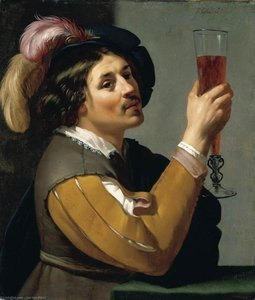
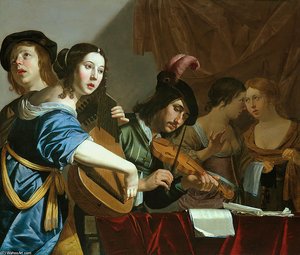
11Venus Chastising Cupid (1628) od Jan Van BijlertVenus Chastising Cupid1628 · Muzeum umění Houston 12Family Group as Cornelia, Mother of the Gracchi, Showing Her Children - c.1635 (1635) od Jan Van BijlertFamily Group as Cornelia, Mother of the Gracchi, Showing Her Children - c.16351635 · Musée des Beaux-Arts 13Portrait of a man from the Van Soesdijk family, probably Steven Jansz. van Soesdijk (ca. 1560-1646) (1630) od Jan Van BijlertPortrait of a man from the Van Soesdijk family, probably Steven Jansz. van Soesdijk (ca. 1560-1646)1630 · Centraal Museum 14The Rejected Offer (1635) od Jan Van BijlertThe Rejected Offer1635 · Centraal Museum 15The camp follower (1630) od Jan Van BijlertThe camp follower1630 · Centraal Museum 16Venus trying to prevent Adonis from going hunting (fragment) (1630) od Jan Van BijlertVenus trying to prevent Adonis from going hunting (fragment)1630 · Centraal Museum 17Merry Company (1630) od Jan Van BijlertMerry Company1630 · Walters Art Museum 18Girl Teasing a Cat (1630) od Jan Van BijlertGirl Teasing a Cat1630 · Walters Art Museum 19The procuress (1626) od Jan Van BijlertThe procuress1626 · Herzog Anton Ulrich Museum 20Charity (1630) od Jan Van BijlertCharity1630 · Musée des Beaux-Arts de Quimper 21The Feast of Alexander and Kleitos (1635) od Jan Van BijlertThe Feast of Alexander and Kleitos1635 · Gemäldegalerie 22Mercury (1627) od Jan Van BijlertMercury1627 · Gemäldegalerie 23Vanitas (1640) od Jan Van BijlertVanitas1640 · Centraal Museum 24The Black King (1645) od Jan Van BijlertThe Black King1645 25Fantasied portrait of Emperor Hendrik IV (1050-1106) (1641) od Jan Van BijlertFantasied portrait of Emperor Hendrik IV (1050-1106)1641 · Centraal Museum 26Heraclitus and Democritus (1640) od Jan Van BijlertHeraclitus and Democritus1640 · Centraal Museum 27Pastoral (1640) od Jan Van BijlertPastoral1640 · Centraal Museum 28A Concert. (1637) od Jan Van BijlertA Concert.1637 · Národní muzeum ve Varšavě 29At the procuress. (1637) od Jan Van BijlertAt the procuress.1637 · Národní muzeum ve Varšavě 30Finding of Moses (1640) od Jan Van BijlertFinding of Moses1640 · Gemäldegalerie 31Portrait of Hendrik van Leeuwen ( -1657) (1652) od Jan Van BijlertPortrait of Hendrik van Leeuwen ( -1657)1652 · Rijksmuseum Twenthe 32Portrait of a man (1650) od Jan Van BijlertPortrait of a man1650 · Centraal Museum 33Portrait of an unknown woman (1650) od Jan Van BijlertPortrait of an unknown woman1650 · Centraal Museum 34Vanity (1650) od Jan Van BijlertVanity1650 · Centraal Museum 35Paris and Oenone (1650) od Jan Van BijlertParis and Oenone1650 · Centraal Museum 36Saint Sebastian attended by Saint Irene (1650) od Jan Van BijlertSaint Sebastian attended by Saint Irene1650 37An allegory of the sense of smell (1671) od Jan Van BijlertAn allegory of the sense of smell1671 38The Concert (1635) od Jan Van BijlertThe Concert1635 39Venus and Amor and an Old Woman (1630) od Jan Van BijlertVenus and Amor and an Old Woman1630 · Musée des Beaux-Arts 40Young Man Drinking a Glass of Wine (1635) od Jan Van BijlertYoung Man Drinking a Glass of Wine1635 41Shepherd Holding a Flute (1630) od Jan Van BijlertShepherd Holding a Flute1630 42The Lute Player, Jan van Bijlert, c. 1630 - c. 1640 (1640) od Jan Van BijlertThe Lute Player, Jan van Bijlert, c. 1630 - c. 16401640 · Rijksmuseum 43Saint Marc the Evangelist od Jan Van BijlertSaint Marc the Evangelist 44Saint Matthew the Evangelist od Jan Van BijlertSaint Matthew the Evangelist 45The Holy Family od Jan Van BijlertThe Holy Family 46The Five Senses od Jan Van BijlertThe Five SensesNiedersächsisches Landesmuseum 47A Bagpipe Player od Jan Van BijlertA Bagpipe Player 48The concert (Den Haag) od Jan Van BijlertThe concert (Den Haag)Kunstmuseum Den Haag 49Young Man Playing the Lute (1625) od Jan Van BijlertYoung Man Playing the Lute1625 · Thyssen-Bornemisza Museum 50Virgin and Child (1635) od Jan Van BijlertVirgin and Child1635 · Herzog Anton Ulrich Museum 51Portrait of a Woman, Jan van Bijlert, c. 1650 (1650) od Jan Van BijlertPortrait of a Woman, Jan van Bijlert, c. 16501650 · Rijksmuseum 52A Woman Holding Pancakes od Jan Van BijlertA Woman Holding Pancakes 53Ulysses and Circe od Jan Van BijlertUlysses and Circe 54A Shepherdess od Jan Van BijlertA Shepherdess 55Musical Company od Jan Van BijlertMusical Company 56Hudební dílo (1629) od Jan Van BijlertHudební dílo1629 · Akademie výtvarních umění Praha 57Portraits of the Inhabitants at St Jobsgasthuis in Utrecht (1630) od Jan Van BijlertPortraits of the Inhabitants at St Jobsgasthuis in Utrecht1630 · Centraal Museum 58Adoration of the kings: the Wise Men present their gifts to the Christ-child (1630) od Jan Van BijlertAdoration of the kings: the Wise Men present their gifts to the Christ-child1630 · Centraal Museum 59Pulling the Pretzel (1630) od Jan Van BijlertPulling the Pretzel1630 · Centraal Museum 60in the brothel od Jan Van Bijlertin the brothelNational Museum in Wrocław 61Portrait of an Elderly Man and Two Women od Jan Van BijlertPortrait of an Elderly Man and Two WomenNational Gallery

Slavná díla Jan Van Bijlert podle jednotlivých období

Motivy, které zaujaly Jan Van Bijlert

Čtyři témata, která se v těchto originálech nejčastěji objevují, z nichž každé má svůj nejlepší příklad.

Muzea, v nichž jsou vystavena originálna umělce Jan Van Bijlert

8 muzea, v nichž je umístěno nejvíce obrazů z této stránky.

Muzeum Město Díla autora Jan Van Bijlert Obrazy z tohoto seznamu
Centraal Museum, UtrechtCentraal Museum Utrecht 16 Saint John the Evangelist, Portrait of a man from the Van Soesdijk family, probably Steven Jansz. van Soesdijk (ca. 1560-1646), The Rejected Offer
Národní muzeum ve Varšavě, VaršavaNárodní muzeum ve Varšavě Varšava 5 Portrait of Beatrix Gibels van Linschoten., Portrait of Jan Strick van Linschoten, Portrait of Beatrix Gibels van Linschoten
Gemäldegalerie, BerlínGemäldegalerie Berlín 4 Fortune-teller with Young Couple, The Feast of Alexander and Kleitos, Mercury
Walters Art Museum, BaltimoreWalters Art Museum Baltimore 2 Merry Company, Girl Teasing a Cat
Herzog Anton Ulrich Museum, BrunšvikHerzog Anton Ulrich Museum Brunšvik 2 The procuress, Virgin and Child
Rijksmuseum, AmsterdamRijksmuseum Amsterdam 2 The Lute Player, Jan van Bijlert, c. 1630 - c. 1640, Portrait of a Woman, Jan van Bijlert, c. 1650
Státní Ermitáž, Sankt-PetěrburgStátní Ermitáž Sankt-Petěrburg 1 Young man tuning his violin
Art Gallery of New South Wales, SydneyArt Gallery of New South Wales Sydney 1 Girl with a flute

Jan Van Bijlert dekáda po dekádě: originální díla, která definují každou z nich

Díla podle dekád

Vyberte si dekádu a prohlédněte si originál, který ji definuje.

Otázky sběratelů o obrazech umělce Jan Van Bijlert

Kterým dílem je Jan Van Bijlert nejznámější?Odhalit odpověď

Portrait of Beatrix Gibels van Linschoten. (1650), Národní muzeum ve Varšavě, Varšava. Následují Portrait of Jan Strick van Linschoten (1647) a Young man tuning his violin (1630).

Kolik let bylo Jan Van Bijlert, když bylo vytvořeno dílo Portrait of Beatrix Gibels van Linschoten.?Odhalit odpověď

53 let: dílo Portrait of Beatrix Gibels van Linschoten. pochází z roku 1650 a Jan Van Bijlert se narodil/a v roce 1597.

Kterých deset nejslavnějších obrazů má Jan Van Bijlert?Odhalit odpověď

Portrait of Beatrix Gibels van Linschoten., Portrait of Jan Strick van Linschoten, Young man tuning his violin, Portrait of Beatrix Gibels van Linschoten, Girl with a flute, Dice Players, Calling of Matthew, Saint John the Evangelist, Fortune-teller with Young Couple a Man in Armour Holding a Pike. Hodnocení výše uvádí rok a muzeum pro každé z nich.

Kolik obrazů zanechal(a) Jan Van Bijlert?Odhalit odpověď

Náš katalog obsahuje 63 děl umělce Jan Van Bijlert z let 1620 až 1671.

Ve kterých muzeích jsou vystavena díla mistrovská umělce Jan Van Bijlert?Odhalit odpověď

Většinou v Centraal Museum (Utrecht), Národní muzeum ve Varšavě (Varšava) a Gemäldegalerie (Berlín). V tabulce muzeí výše jsou vypsány všechny.

V jakých letech namaloval Jan Van Bijlert svá nejznámější díla?Odhalit odpověď

V období 1630s: 23 z celkem 61 děl na této stránce vzniklo právě tehdy, z toho Young man tuning his violin z nich.

Jaká jsou první a poslední slavná originální díla umělce Jan Van Bijlert?Odhalit odpověď

Na této stránce je nejstarší dílo z Dice Players (1620) a nejnovější z An allegory of the sense of smell (1671).

Jaká témata si Jan Van Bijlert vybíral nejčastěji?Odhalit odpověď

Woman (24), Man (23) a Dark background (7) napříč 61 díly na této stránce.

Kterou techniku používal(a) Jan Van Bijlert nejčastěji?Odhalit odpověď

Oil, u 22 z 61 děl na této stránce.

K kterému uměleckému směru patří Jan Van Bijlert?Odhalit odpověď

Baroque, podle originálů na této stránce.

Která díla umělce Jan Van Bijlert jsou vystavena v Centraal Museum?Odhalit odpověď

Saint John the Evangelist, Portrait of a man from the Van Soesdijk family, probably Steven Jansz. van Soesdijk (ca. 1560-1646) a The Rejected Offer: muzeum Centraal Museum, Utrecht má v obsluze 16 děl z této stránky.

Jan Van Bijlert: život a dílo

Jan Van Bijlert: Dramatická vize utrechtského caravaggisty

Jan Hermansz van Bijlert, narozený v Utrechtu kolem roku 1598 a zesťující ve stejném městě v roce 1671, představuje klíčovou postavu v bohaté umělecké krajině nizozemského Zlatého věku. Pod vlivem intenzivního realismu a dramatického světlení Caravaggia se van Bijlert vyvinul v jednoho z nejvýraznějších představitelů toho, co se později označovalo jako utrechtský caravaggismus – specifický regionální styl, který propojoval principy italského baroka s jedinečným nizozemským smyslem. Jeho bohatá tvorba, čítající přibližně 200 obrazů, nabízí fascinující pohled do éry uměleckého experimentování a rostoucího vlivu italských mistrů na evropské umění severu. Raný život van Bijlerta zůstává částečně zahalen tajemstvím, i když se věří, že své první kroky podnikl pod vedením svého otce, Hermana Beernta van Bijlerta, zdatného skláře vitráží. Tato zakládající zkušenost mu pravděpodobně vštípl cit pro detail a řemeslnou preciznost – vlastnosti, které se později s velkou silou projevily i v jeho malířství. Následně studoval u Abrahama Bloemaerta, váženého utrechtského malíře známého svými pečlivými zobrazenímmi mytologických scén a portrétů. Klíčovým momentem však byla van Bijlertova umělecká cesta mimo hranice Nizozemska, zejména významná období strávená ve Francii a Itálii. Tyto zkušenosti se ukázaly jako transformativní; vystavily ho revolučním technikám a dramatické intenzitě, kterou prosazoval právě Caravaggio, jehož vliv nevratně utvářel celý jeho styl.

Kruh Bentvueghelů a raná římská léta

Van Bijlertův příjezd do Říma v roce 1621 znamenal zásadní zlom. Rychle se stal součástí Bentvueghels, nepopulárně veselého kruhu umělců – Nizochů, Flamů i Italů – kteří si vytvořili společnou identitu prostřednictvím přijatých přezdívek. Van Bijlert si zvolil jméno „Aeneas“, což odkazovalo na římského hrdinu známého svou silou a odolností. Členové kruhu Bentvueghelů nebyli pouze uměleckými spolupracovníky; byli to také vášniví milovníci společenského života, kteří si vyměňovali vtipné verše, satirické rytiny a samozřejmě i obrazy. Toto prostředí podpořilo atmosféru intenzivní výměny myšlenek a experimentování, což umožnilo umělcům překračovat hranice a vyvíjet si vlastní individuální styl. Během tohoto římského období van Bijlert piloval své dovednosti a ovládl charakteristické techniky Caravaggia: ostrý kontrast mezi světlem a stínem (chiaroscuro), dramatické ořezávání kompozic pro vytvoření pocitu okamžitosti a neochvějné lpění na realistické reprezentaci. Jeho raná díla z této éry jsou těmito prvky definována, zobrazují scény plné silných emocí a často zachycují postavy v momentech akce či hlubokého zamyšlení.

Posun směrem k klasicismu a žánrovým scénám

Kolem roku 1630 se van Bijlertova umělecká trajektorie začala patrně měnit. Přestože si zachoval základní principy caravaggismu – zejména dramatické využití světla – začal začínat začleňovat prvky klasicizujícího stylu, možná pod vlivem svého kolegy z Utrechtu, Cornelise van Poelenbucha. Tato evoluce se projevila světlejším barevným laděním a posunem k vznešenějšímu tématu, včetně náboženských scén a alegorických kompozic. Zajímavé je, že toto období také přineslo nástup van Bijlertovy fascinace žánrovými scénami. Vytvořil sérii obrazů zobrazujících intimní okamžiky každodenního života – bordely, hudební setkání či scény v krčmách – často obydlené drobnými postavami vykreslenými s neuvěřitelným detailem a psychologickým vhledem. Tato díla, připomínající tvorbu Jacoba Ducka, nabízela nahlédnutí do sociální struktury společnosti v Utrechtu a demonstrovala van Bijlertovu schopnost zachytit lidské emoce a interakce s jemnou elegancí.

Cechovní život, patronáž a odkaz

Van Bijlertův život byl hluboce provázán se sivskými a náboženskými institucemi Utrechtu. V roce 1625 se připojil k schutterij (měšťanské milici) a v roce 1630 se stal členem utrechtského svatoluška cechu, kde působil jako děkan v letech 1632 až 1637 a později byl v roce 1634 jmenován regentem nemocnice Sint-Jobsgasthuis. Jeho zapojení však sahalo daleko za hranice uměleckých aktivit; hrál důležitou roli při založení „Schilders-College“ (malířské školy) v roce 1639, kde působil jako regent a mentoroval novou generaci umělců, včetně Bartrama de Fouchiera a Ludolfa Leendertze de Jongha. Toto oddání jak umění, tak komunitě podtrhuje jeho postavení jako vážené osobnosti v rámci kulturní elity Utrechtu. Odkaz Jana Van Bijlerta je pevně zakořeněn v hnutí utrechtských caravaggistů. Jeho malby, charakterizované dramatickým světlem, realistickým zobrazením lidských postav a průzkumem emocionální intenzity, i dnes okoukávají diváky. Jeho dílo stojí jako svědectví o dynamické výměně uměleckých myšlenek, která v období nizozemského Zlatého věku rozkvétala – éry, kdy byly italské barokní principy přijaty, adaptovány a nakonec transformovány do jedinečného severoevropského stylu. Jeho přibližně 200 obrazů poskytuje bohatý a detailní záznam této fascinující umělecké evoluce.