Portrét Francesco Del Cossa

61 nejslavnějších obrazů autora Francesco Del Cossa, každý naprosto unikátní

Aktualizováno listopad 2026 · seřazeno podle našeho skóre popularity (vyhledávání, návštěvy a objednávky u každého díla) · 64 děl umělce Francesco Del Cossa v našem katalogu

Stručně řečeno

Allegory of May: Triumph of Apollo (detail) (1476) je obraz autora Francesco Del Cossa, který přitahuje nejvíce pohledů; originál se nachází v Palazzo Schifanoia, Ferrara. Poté se zrak přesouvá k Griffoni Polyptych: St Vincent Ferrer (1473) a Griffoni Polyptych: St Peter and St John the Baptist (1473). Z 64 děl umělce Francesco Del Cossa v našem katalogu je těchto 61 těch nejznámějších; každé z nich je unikátním originálem s uvedením roku vzniku, muzea a důvodu jeho nesmrtelnosti.

1436 – 1477, Ferrara Renaissance Nejvíce děl: Palazzo Schifanoia

Top 10 obrazů autora Francesco Del Cossa podle výběru galerie

1
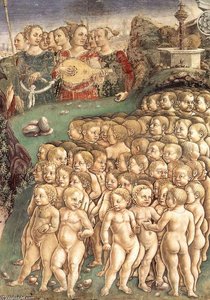
Allegory of May: Triumph of Apollo (detail) (1476) od Francesco Del Cossa

Allegory of May: Triumph of Apollo (detail)

1476 · Fresco · Palazzo Schifanoia, Ferrara

To stand before this monumental fresco detail is to step directly into the vibrant, complex heart of the Quattrocento Renaissance. The Allegory of May: Triumph of Apollo, attributed to Francesco del Cossa, is not merely a depiction of an event; it is a profound meditation on cycles—the cycle of life, the triumph over darkness, and the eternal return of divine grace. The sheer scale, measuring an impressive 216 by 320…

2
Griffoni Polyptych: St Vincent Ferrer (1473) od Francesco Del Cossa

Griffoni Polyptych: St Vincent Ferrer

1473 · Oil On Panel · National Gallery, Londýn

To stand before the Griffoni Polyptych: St Vincent Ferrer is to step directly into the luminous heart of the Italian Renaissance. Created by the masterful hand of Francesco del Cossa in 1473, this monumental work transcends mere decoration; it is a profound meditation on faith, knowledge, and divine grace. The composition immediately commands attention, drawing the viewer into an architectural space where earthly grandeur meets celestial mystery. At its core…

3
Griffoni Polyptych: St Peter and St John the Baptist (1473) od Francesco Del Cossa

Griffoni Polyptych: St Peter and St John the Baptist

1473 · Oil On Canvas · Pinacoteca di Brera, Milán

Francesco del Cossa’s “Griffoni Polyptych: St Peter and St John the Baptist,” painted in 1473, is more than just a religious depiction; it's a meticulously crafted tableau brimming with symbolism and reflecting the complex political and spiritual landscape of Renaissance Ferrara. This monumental work, measuring 112 x 55 cm, offers a captivating glimpse into the artistic prowess of a master painter whose career tragically ended far too early. The polyptych…

4
Allegory of March: Triumph of Minerva (detail) (14) (1476) od Francesco Del Cossa

Allegory of March: Triumph of Minerva (detail) (14)

1476 · Tempera · Palazzo Schifanoia, Ferrara

To gaze upon this detail from the Allegory of March: Triumph of Minerva is to step directly into the bustling, energetic heart of an artistic workshop during the Italian Renaissance. It is not merely a depiction of art; it is a profound meditation on the very act of creation itself. The scene unfolds with a palpable sense of industry, capturing painters in various stages of their laborious craft—mixing pigments, scaling…

5
Allegory of March: Triumph of Minerva (detail) (11) (1476) od Francesco Del Cossa

Allegory of March: Triumph of Minerva (detail) (11)

1476 · Fresco · Palazzo Schifanoia, Ferrara

To gaze upon this detail from the Allegory of March: Triumph of Minerva is to step directly into the luminous, thoughtful atmosphere of the Italian Renaissance. The scene unfolds with a profound sense of contemplation, centered around a magnificent male figure whose very posture speaks of classical ideals and divine purpose. Rendered in rich, muted tones—deep purples, earthy reds, and warm browns—the composition draws the eye along a stately vertical…

6
Angel of annunciation kneeling in landscape (1460) od Francesco Del Cossa

Angel of annunciation kneeling in landscape

1460 · Tempera On Panel

In Angel of annunciation kneeling in landscape, Francesco del Cossa presents a religious scene likely representing the Annunciation. The composition centers on a winged figure positioned in the lower center, kneeling within a landscape and facing toward the right. Large, prominent wings extend upward and backward from the angel, anchoring the figure within the spatial arrangement. The angel is draped in voluminous robes characterized by heavy, rhythmic folds that emphasize…

7
The Annunciation (1478) od Francesco Del Cossa

The Annunciation

1478 · Tempera On Panel · Bonnefanten Museum, Maastricht

The Annunciation, a work by Francesco del Cossa, unfolds through a complex composition that spans a main panel and a predella. This religious work, dated about 1470, captures a profound moment rooted in Christian Theology and Biblical Narrative. Within the sacred space, the Archangel Gabriel appears to the Virgin Mary, marking the divine encounter that changes everything. The scene is not a solitary event but part of a larger unfolding…

8
Saint Catherine and Saint Clare (1470) od Francesco Del Cossa

Saint Catherine and Saint Clare

1470 · Tempera On Panel · Museu Nacional d'Art de Catalunya, Barcelona

The artwork titled Saint Catherine and Saint Clare is a religious portrait created by the artist Francesco del Cossa. This work dates to about 1470. The composition focuses on the depiction of two female saints, presented within a vertical and narrow format. The subject matter centers on these two figures, which are rendered with a focus on their sanctity and individual presence.

9
Saint Florian (1474) od Francesco Del Cossa

Saint Florian

1474 · Tempera On Panel

Saint Florian is a painting by the Italian Renaissance artist Francesco del Cossa. This specific work was created around 1473/1474. It originated as the upper left panel of the Griffoni Polyptych, a larger multi-part altarpiece. The commission was requested by Floriano Griffoni for a family chapel located within the Basilica of San Petronio in Bologna.

10
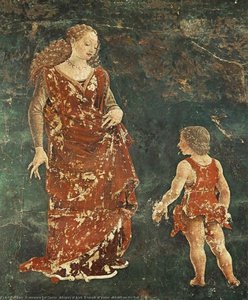
Allegory of April: Triumph of Venus (detail) (1476) od Francesco Del Cossa

Allegory of April: Triumph of Venus (detail)

1476 · Fresco · Palazzo Schifanoia, Ferrara

The fresco fragment known as Allegory of April: Triumph of Venus (detail) captures a specific moment of movement within a larger cycle. Created by the artist Francesco del Cossa, this work emerged in 1476. It resides within the walls of the Palazzo Schifanoia in Ferrara, Italy. The scene focuses on the intimate presence of pairs of lovers.

Slavná díla umělce Francesco Del Cossa, čísla 11 až 61

11The Justice of Trajan and the widow (1500) od Francesco Del CossaThe Justice of Trajan and the widow1500 12Annunciace a Narodení (Altářový obraz Pozorovacího oltáře) (1470) od Francesco Del CossaAnnunciace a Narodení (Altářový obraz Pozorovacího oltáře)1470 · Gemäldegalerie Alte Meister 13Allegory of March: Triumph of Minerva (1476) od Francesco Del CossaAllegory of March: Triumph of Minerva1476 · Palazzo Schifanoia 14Allegory of March: Triumph of Minerva (1476) od Francesco Del CossaAllegory of March: Triumph of Minerva1476 · Palazzo Schifanoia 15Allegory of May: Triumph of Apollo (1476) od Francesco Del CossaAllegory of May: Triumph of Apollo1476 · Palazzo Schifanoia 16Allegory of March: Triumph of Minerva (detail) (13) (1476) od Francesco Del CossaAllegory of March: Triumph of Minerva (detail) (13)1476 · Palazzo Schifanoia 17Griffoni Polyptych: The Crucifixion (1473) od Francesco Del CossaGriffoni Polyptych: The Crucifixion1473 · National Gallery of Art 18Allegory of May: Triumph of Apollo (detail) (1476) od Francesco Del CossaAllegory of May: Triumph of Apollo (detail)1476 · Palazzo Schifanoia 19April. Fresco in Palazzo Schifanoia (detail) - Triumph of Venus (1470) od Francesco Del CossaApril. Fresco in Palazzo Schifanoia (detail) - Triumph of Venus1470 20April. Fresco in Palazzo Schifanoia (detail) - Triumph of Venus (1470) od Francesco Del CossaApril. Fresco in Palazzo Schifanoia (detail) - Triumph of Venus1470 21Allegory of March – Triumph of Minerva and Sign of Aries. Frescos in Palazzo Schifanoia (detail) (1470) od Francesco Del CossaAllegory of March – Triumph of Minerva and Sign of Aries. Frescos in Palazzo Schifanoia (detail)1470 22Allegory of March – Triumph of Minerva and Sign of Aries. Frescos in Palazzo Schifanoia (detail) (1470) od Francesco Del CossaAllegory of March – Triumph of Minerva and Sign of Aries. Frescos in Palazzo Schifanoia (detail)1470 23Allegory of May: Triumph of Apollo (detail) (1476) od Francesco Del CossaAllegory of May: Triumph of Apollo (detail)1476 · Palazzo Schifanoia 24Allegory of March: Triumph of Minerva (detail) (16) (1476) od Francesco Del CossaAllegory of March: Triumph of Minerva (detail) (16)1476 · Palazzo Schifanoia 25Allegory of March: Triumph of Minerva (detail) (12) (1476) od Francesco Del CossaAllegory of March: Triumph of Minerva (detail) (12)1476 · Palazzo Schifanoia 26Triumph of Minerva (detail of the right side) (1476) od Francesco Del CossaTriumph of Minerva (detail of the right side)1476 · Palazzo Schifanoia 27Allegory of April Triumph of Venus (detail) (1476) od Francesco Del CossaAllegory of April Triumph of Venus (detail)1476 · Palazzo Schifanoia 28Allegory of March: Triumph of Minerva (detail) (10) (1476) od Francesco Del CossaAllegory of March: Triumph of Minerva (detail) (10)1476 · Palazzo Schifanoia 29Allegory of April: Triumph of Venus (detail from the Bull) (1476) od Francesco Del CossaAllegory of April: Triumph of Venus (detail from the Bull)1476 · Palazzo Schifanoia 30Allegory of March: Triumph of Minerva (detail) (15) (1476) od Francesco Del CossaAllegory of March: Triumph of Minerva (detail) (15)1476 · Palazzo Schifanoia 31Allegory of April: Triumph of Venus (detail) (1476) od Francesco Del CossaAllegory of April: Triumph of Venus (detail)1476 · Palazzo Schifanoia 32Saint Lucy (1474) od Francesco Del CossaSaint Lucy1474 33Allegory of April: Triumph of Venus (1476) od Francesco Del CossaAllegory of April: Triumph of Venus1476 · Palazzo Schifanoia 34Allegory of April: Triumph of Venus (1476) od Francesco Del CossaAllegory of April: Triumph of Venus1476 · Palazzo Schifanoia 35Portrait of a Man (1472) od Francesco Del CossaPortrait of a Man1472 · Thyssen-Bornemisza Museum 36The Meeting of Solomon and the Queen of Sheba; Cherub Holding Cornucopias of Cherries (recto and verso) od Francesco Del CossaThe Meeting of Solomon and the Queen of Sheba; Cherub Holding Cornucopias of Cherries (recto and verso)Muzeum umění v Bostonu 37Profile Portrait of a Boy od Francesco Del CossaProfile Portrait of a Boy 38Schifanoia - View of the Salone dei Mesi od Francesco Del CossaSchifanoia - View of the Salone dei Mesi 39Portrait of a Man od Francesco Del CossaPortrait of a ManThyssen-Bornemisza Museum 40Allegorie dubna (1476) od Francesco Del CossaAllegorie dubna1476 · Palazzo Schifanoia 41Schifanoia - March - Triumph of Minerva od Francesco Del CossaSchifanoia - March - Triumph of Minerva 42Schifanoia - April and May - Triumph of Venus (right view) od Francesco Del CossaSchifanoia - April and May - Triumph of Venus (right view) 43Schifanoia - April and May - Allegory of April (detail)2 od Francesco Del CossaSchifanoia - April and May - Allegory of April (detail)2 44Schifanoia - April and May - Triumph of Venus (detail) od Francesco Del CossaSchifanoia - April and May - Triumph of Venus (detail) 45Schifanoia - April and May - Allegory of April (detail) od Francesco Del CossaSchifanoia - April and May - Allegory of April (detail) 46Schifanoia - March - Triumph of Minerva (detail) od Francesco Del CossaSchifanoia - March - Triumph of Minerva (detail) 47Schifanoia - April and May - Triumph of Venus (detail)2 od Francesco Del CossaSchifanoia - April and May - Triumph of Venus (detail)2 48Scenes from the Life of Saint Vincent Ferrer od Francesco Del CossaScenes from the Life of Saint Vincent Ferrer 49griffoni - St Peter and St John the Baptist (details) od Francesco Del Cossagriffoni - St Peter and St John the Baptist (details) 50Griffoni Polyptych: Saint Florian (detail) od Francesco Del CossaGriffoni Polyptych: Saint Florian (detail)National Gallery of Art 51Griffoni Polyptych: The Crucifixion (detail) od Francesco Del CossaGriffoni Polyptych: The Crucifixion (detail)National Gallery of Art 52Griffoni Polyptych: The Crucifixion (detail) od Francesco Del CossaGriffoni Polyptych: The Crucifixion (detail)National Gallery of Art 53Madonna with the Child and Saints (1474) od Francesco Del CossaMadonna with the Child and Saints1474 · Pinacoteca Nazionale 54St Peter (1473) od Francesco Del CossaSt Peter1473 · Pinacoteca di Brera 55St Florian (Griffoni Polyptych) od Francesco Del CossaSt Florian (Griffoni Polyptych)National Gallery of Art 56The Annunciation (1470) od Francesco Del CossaThe Annunciation1470 · Gemäldegalerie Alte Meister 57Griffoni Polyptych: St Lucy (1473) od Francesco Del CossaGriffoni Polyptych: St Lucy1473 · National Gallery of Art 58Virgin and Child with An Angel od Francesco Del CossaVirgin and Child with An AngelMuseu Nacional d'Art de Catalunya 59griffoni - St John the Baptist od Francesco Del Cossagriffoni - St John the BaptistPinacoteca di Brera 60griffoni - St Vincent Ferrer od Francesco Del Cossagriffoni - St Vincent FerrerNational Gallery 61Schifanoia - April and May - Triumph of Venus od Francesco Del CossaSchifanoia - April and May - Triumph of VenusPalazzo Schifanoia

Slavná díla Francesco Del Cossa podle jednotlivých období

Motivy, které zaujaly Francesco Del Cossa

Čtyři témata, která se v těchto originálech nejčastěji objevují, z nichž každé má svůj nejlepší příklad.

Muzea, v nichž jsou vystavena originálna umělce Francesco Del Cossa

8 muzea, v nichž je umístěno nejvíce obrazů z této stránky.

Muzeum Město Díla autora Francesco Del Cossa Obrazy z tohoto seznamu
Palazzo Schifanoia, FerraraPalazzo Schifanoia Ferrara 22 Allegory of May: Triumph of Apollo (detail), Allegory of March: Triumph of Minerva (detail) (14), Allegory of March: Triumph of Minerva (detail) (11)
National Gallery of Art, WashingtonNational Gallery of Art Washington 6 Griffoni Polyptych: The Crucifixion, Griffoni Polyptych: Saint Florian (detail), Griffoni Polyptych: The Crucifixion (detail)
Pinacoteca di Brera, MilánPinacoteca di Brera Milán 3 Griffoni Polyptych: St Peter and St John the Baptist, St Peter, griffoni - St John the Baptist
National Gallery, LondýnNational Gallery Londýn 2 Griffoni Polyptych: St Vincent Ferrer, griffoni - St Vincent Ferrer
Museu Nacional d'Art de Catalunya, BarcelonaMuseu Nacional d'Art de Catalunya Barcelona 2 Saint Catherine and Saint Clare, Virgin and Child with An Angel
Thyssen-Bornemisza Museum, MadridThyssen-Bornemisza Museum Madrid 2 Portrait of a Man, Portrait of a Man
Bonnefanten Museum, MaastrichtBonnefanten Museum Maastricht 1 The Annunciation
Gemäldegalerie Alte Meister, DresnoGemäldegalerie Alte Meister Dresno 1 Annunciace a Narodení (Altářový obraz Pozorovacího oltáře)

Francesco Del Cossa v průběhu let: unikátní originály každého díla

Dlouhá kariéra trvající 17 let, od 1460 do 1476: nejznámější originály umělce Francesco Del Cossa představené rok po roce.

Díla podle roku

Vyberte rok a prohlédněte si originály.

Obrazy umělce Francesco Del Cossa: dotazy pro galerii

Kterým nejznámějším dílem je Francesco Del Cossa?Odhalit odpověď

Allegory of May: Triumph of Apollo (detail) (1476), Palazzo Schifanoia, Ferrara. Následují Griffoni Polyptych: St Vincent Ferrer (1473) a Griffoni Polyptych: St Peter and St John the Baptist (1473).

V jakém věku vytvořil(a) Francesco Del Cossa dílo Allegory of May: Triumph of Apollo (detail)?Odhalit odpověď

40 let: dílo Allegory of May: Triumph of Apollo (detail) pochází z roku 1476 a Francesco Del Cossa se narodil/a v roce 1436.

Kterých deset obrazů autora Francesco Del Cossa je nejznámějších?Odhalit odpověď

Allegory of May: Triumph of Apollo (detail), Griffoni Polyptych: St Vincent Ferrer, Griffoni Polyptych: St Peter and St John the Baptist, Allegory of March: Triumph of Minerva (detail) (14), Allegory of March: Triumph of Minerva (detail) (11), Angel of annunciation kneeling in landscape, The Annunciation, Saint Catherine and Saint Clare, Saint Florian a Allegory of April: Triumph of Venus (detail). Hodnocení výše uvádí rok a muzeum pro každé z nich.

Kolik známých děl má autor Francesco Del Cossa?Odhalit odpověď

Náš katalog obsahuje 64 děl umělce Francesco Del Cossa z let 1460 až 1476.

Kde lze vidět nejznámější originály umělce Francesco Del Cossa?Odhalit odpověď

Většinou v Palazzo Schifanoia (Ferrara), National Gallery of Art (Washington) a Pinacoteca di Brera (Milán). V tabulce muzeí výše jsou vypsány všechny.

V jakém období vytvořil(a) Francesco Del Cossa svá nejznámější obrazy?Odhalit odpověď

V období 1476: 21 z celkem 61 děl na této stránce vzniklo právě tehdy, z toho Allegory of May: Triumph of Apollo (detail) z nich.

Který slavný obraz od Francesco Del Cossa je nejstarší a který nejnovější?Odhalit odpověď

Na této stránce je nejstarší dílo z Angel of annunciation kneeling in landscape (1460) a nejnovější z Allegory of May: Triumph of Apollo (detail) (1476).

Jakým tématům se Francesco Del Cossa věnoval/a nejčastěji?Odhalit odpověď

Allegory (9), People (9) a Mythology (8) napříč 61 díly na této stránce.

Jaké materiály používal(a) Francesco Del Cossa nejčastěji?Odhalit odpověď

Fresco, u 23 z 61 děl na této stránce.

K kterému směru patří dílo umělce Francesco Del Cossa?Odhalit odpověď

Renaissance a Early renaissance, podle originálů na této stránce.

Jaká originální díla Francesco Del Cossa mohu vidět v Palazzo Schifanoia?Odhalit odpověď

Allegory of May: Triumph of Apollo (detail), Allegory of March: Triumph of Minerva (detail) (14) a Allegory of March: Triumph of Minerva (detail) (11): muzeum Palazzo Schifanoia, Ferrara má v obsluze 22 děl z této stránky.

Francesco Del Cossa: portrét umělce

Francesco del Cossa: Renesanční mistr z Ferrary

Francesco del Cossa (cca 1436 – 1477) byl klíčovým představitelem italské renesance, pevně spojeným se školou ferrařskou. Narodil se ve Ferrarze v Itálii a zůstal fascinující postavou, jejíž život i dílo jsou částečně zahaleny mlhou historických detailů. Přesto jeho umělecký přínos, zejména jeho fresky, stojí jako nesmazatelné svědectví o jeho virtuozitě a inovativním přístupu k tehdy rozkvétajícímu renesančnímu stylu.

Raný život a formação

Del Cossa byl synem zedníka Cristofana della Cossa, který působil také jako umělec. O Francescovo rané umělecké vzdělání není známo mnoho konkrétních informací, ale věří se, že kolem roku 1456 pomáhal svému otci při malování výzdoby kaple biskupského paláce ve Ferrare. Tato brzká zkušenost s uměleckou praxí bezpochyб ovlivnila jeho počáteční rozvoj. V období svých dvacátých nebo třicátých let se pravděpodobně vydal mimo Ferraru, kde získával cenné zkušenosti a možná narazil na nové umělecké vlivy.

Hlavní díla a umělecký styl

Del Cossa je především oslavován pro své cykly fresk, zejména ty, které zdobí Palazzo Schifanoia, letní palác nacházející se těsně za branami Ferrary. Ve spolupráci s Cosimo Turou přispěl k bohaté alegorické výzdobě zobrazující znamení zvěrokruhu a měsíce roku. Mezi konkrétní fresky připisované del Crosso patří „Alegorie května – Triumf Apolla“, která je známá svým úchvatným zobrazenem mnoha nahých miminků uspořádaných do vizuálně ohromující kompozice, a také „Alegorie dubna“, která obsahuje ranou reprezentaci Tří Grácií, předcházející slavné Botticelliho verzi. Tyto fresky prokazují jeho mistrovství v perspektivě, detailu a narativním vyprávění.

  • Fresky v Palazzo Schifanoia: Zvěrokruhové alegorie představující spojení klasické mytologie a renesančního realismu.
  • Alegorie května – Triumf Apolla: Renomovaná pro svůj jedinečný portrét četných nahých dětí.
  • Alegorie dubna: Obsahuje rané zobrazení Tří Grácií, což dokládá jeho hluboké porozumění klasickým tématům.

Kromě Palazzo Schifanoia del Cossa vytvořil i další významná díla:

  • Panna Marie s Dětátek a dva svatí (Bologna)
  • Portrét Alberto de' Catanei (Bologna)
  • Freska Madonna del Baracano (Bologna), zobrazující Pannu Marii s Dětátek spolu s portréty Giovanniego Bentivogliho a Marie Vinziguerry.
  • Vitrážné okno v kostele San Giovanni in Monte, Bologna (podepsané).

Vývoj a vlivy

Del Cossov styl odráží směs vlivů charakteristickou pro ferrařskou renesanci. Ačkoliv byl zakořeněn v dřívějších gotických tradicích, jeho dílo vykazuje rostoucí zapojení do klasických forem a humanistických ideálů. Jeho pozornost k detailu, zejména při ztvárňování látek a textur, odhaluje vynikající pozorovatelské schopnosti. V jeho precizním vykreslování detailů lze také detekovat vliv rané nizozemské malby. Jeho krátší, ale dopadové období v Bologně pod patronátem rodiny Bentivoglio dále zdokonalilo jeho styl, což vedlo k vytvoření některých z jeho nejslavnějších portrétů.

Historický význam

Francesco del Cossov odkaz spočívá v jeho přínosu k umění ferrařské renesance a jeho unikátní umělecké vizi. Přestože byla jeho kariéra relativně krátká, zanechal po sobě dílo, které demonstruje dynamismus a inovativnost této éry. Jeho fresky v Palazzo Schifanoia jsou nepostradatelnými dokumenty dvorského života a uměleckého mecenášství 15. století. Jeho ztvárnění klasických témat, jako jsou Tři Grácie, svědčí o raném přijetí humanistických ideálů. Nedávné uznání del Cossa v románu Ali Smithové „Jak být obojím“ a jeho spojení s hledáním pokladů v Google Earth dále přitáhly pozornost k tomuto často opomíjenému renesančnímu mistru.