Stručně řečeno
Portrait De Jeune Fille je obraz autora Emile Vernon, který přitahuje nejvíce pohledů. Poté se zrak přesouvá k Young Woman With Roses a Cherry Blossom. Z 27 děl umělce Emile Vernon v našem katalogu je těchto 27 těch nejznámějších; každé z nich je unikátním originálem s uvedením roku vzniku, muzea a důvodu jeho nesmrtelnosti.
Top 10 obrazů autora Emile Vernon podle výběru galerie
Slavná díla umělce Emile Vernon, čísla 11 až 27
Motivy, které zaujaly Emile Vernon
Čtyři témata, která se v těchto originálech nejčastěji objevují, z nichž každé má svůj nejlepší příklad.
Elegant woman 3 děl
Floral 2 děl
Giverny 2 děl
Obrazy umělce Emile Vernon: dotazy pro galerii
Kterým nejznámějším dílem je Emile Vernon?Odhalit odpověď
Portrait De Jeune Fille. Následují Young Woman With Roses a Cherry Blossom.
Kterých deset obrazů autora Emile Vernon je nejznámějších?Odhalit odpověď
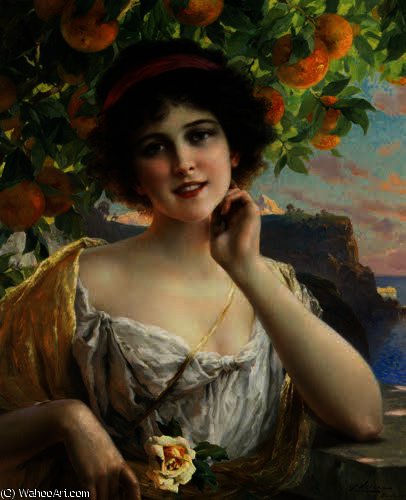
Portrait De Jeune Fille, Young Woman With Roses, Cherry Blossom, At Play, Season's Greetings, A Sweet Glance, Beauty Under the Orange Tree, A woodland maiden, The Fancy Bonnet a Starlight. Hodnocení výše uvádí rok a muzeum pro každé z nich.
Kolik známých děl má autor Emile Vernon?Odhalit odpověď
Náš katalog obsahuje 27 děl od Emile Vernon.
Jakým tématům se Emile Vernon věnoval/a nejčastěji?Odhalit odpověď
Flowers (5), Elegant woman (3) a Floral (2) napříč 27 díly na této stránce.
K kterému směru patří dílo umělce Emile Vernon?Odhalit odpověď
Academic art, podle originálů na této stránce.
Emile Vernon: portrét umělce
Emile Vernon: A Pioneer of Impressionistic Landscape Painting
Emile Vernon (1872 – 1920) stands as a significant figure in French Impressionism, celebrated for his serene depictions of Giverny’s gardens and the landscapes surrounding Claude Monet's home. Born in Blois, France, Vernon embarked on an artistic path marked by meticulous observation and a profound sensitivity to light and color—characteristics that would define his distinctive style and solidify his place within the broader movement.- Early Life & Education: Vernon’s formative years were spent honing his skills at the École des Beaux-Arts in Tours, where he secured the prestigious first drawing prize in 1888. This early success fueled his ambition to pursue formal artistic training under luminaries like William Bouguereau and Auguste Truphème at the School of Fine Arts in Paris.
- Salon Years & Artistic Development: Vernon’s involvement with the Salon des Artistes Français from 1898 until 1913 proved instrumental in shaping his artistic vision. Participating regularly allowed him to refine his technique and explore a varied repertoire of subjects, encompassing portraits, landscapes, and floral compositions—each imbued with an understated elegance and masterful execution.
- Influence of Monet & Synthetism: Vernon’s connection to Claude Monet extended beyond mere admiration; he actively absorbed Monet's revolutionary approach to capturing atmospheric effects. This influence is particularly evident in his canvases depicting Giverny, where Vernon skillfully renders the dappled sunlight filtering through foliage—a technique closely aligned with Monet’s pioneering use of Synthetism.
- Notable Works & Artistic Legacy: Among Vernon’s most enduring achievements are paintings like “A Woodland Maiden,” a captivating Pre-Raphaelite portrait that exemplifies his meticulous attention to detail and expressive tonal palette. Similarly, "Among the Blossoms" showcases his ability to convey tranquility and beauty through delicate floral arrangements—a testament to his artistic prowess and lasting impact on Impressionistic art.
Vernon's Distinctive Style & Technique
Vernon’s artistic hallmark resided in his unwavering commitment to realism tempered by an ethereal quality. He achieved this effect through painstaking layering of thin glazes—a technique borrowed from Bouguereau—that allowed him to capture subtle nuances of light and color with remarkable precision. This meticulous approach, combined with a masterful command of tonal harmony, resulted in landscapes that possess an unparalleled sense of atmosphere and evoke the profound beauty of the natural world.- Glazing Technique: Vernon’s glazing technique—applying translucent layers of pigment over previous coats—was crucial to achieving his signature luminous aesthetic.
- Color Palette & Atmospheric Rendering: He favored muted hues—primarily greens, blues, and browns—to convey the mood and ambiance of his subjects, mirroring Monet's preoccupation with capturing fleeting moments of light.