 Přepnout na tisk
 Zobrazit více







































 U děl nebo reprodukcí, u nichž je jakákoliv strana větší než 105 cm (přibližně 41 palců), bude rám dodán jako sestava v rozloženém stavu. Tato metoda zajišťuje bezpečné doručení a chrání dílo před poškozením během přepravy.


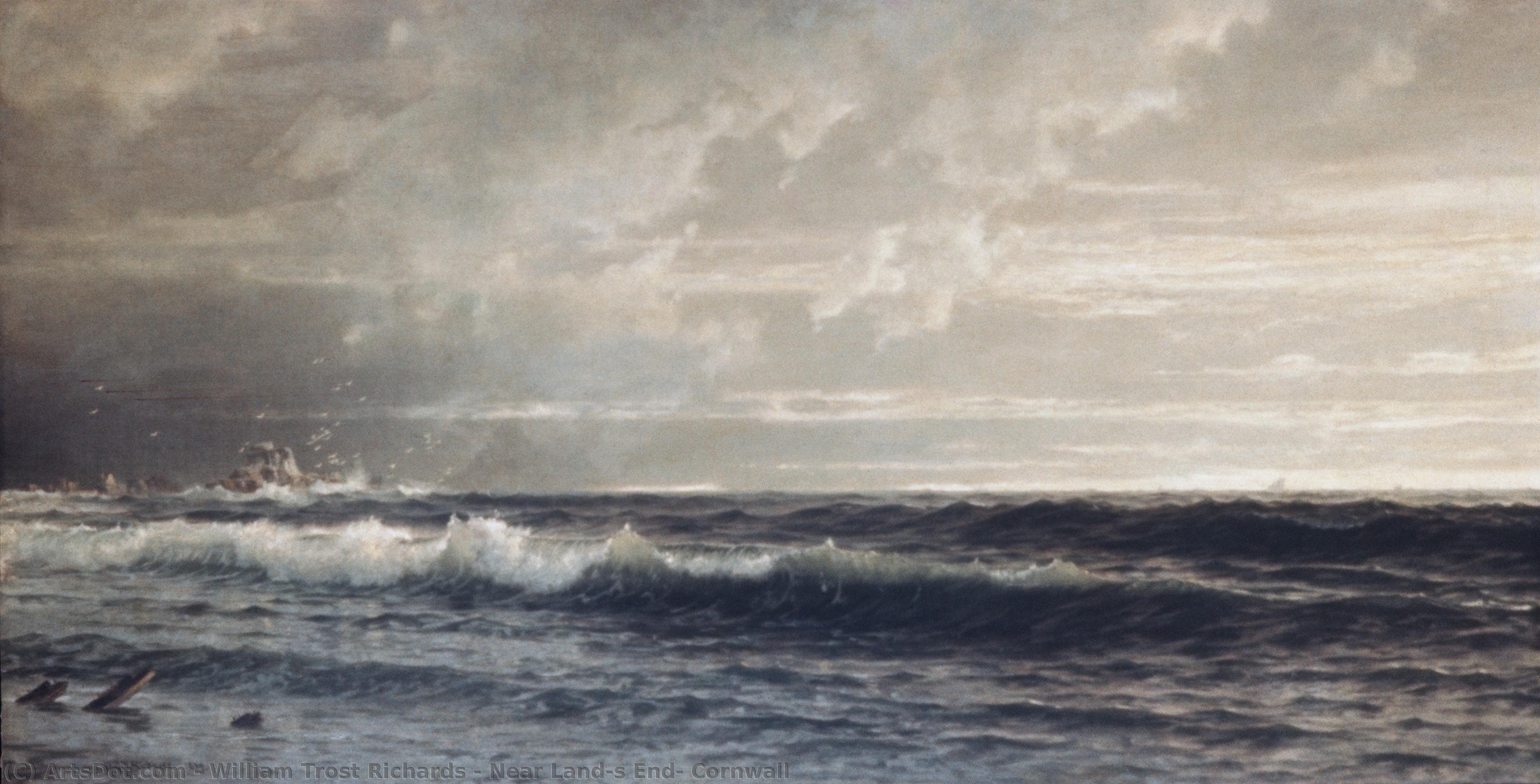
A Dramatic Embrace: William Trost Richards’ “Near Land’s End, Cornwall”
William Trost Richards' "Near Land’s End, Cornwall," painted in 1879, isn’t merely a depiction of a coastal scene; it’s an immersive experience. This oil on canvas transports the viewer to the rugged, windswept shores of southwestern England, capturing a moment of raw power and elemental beauty. Richards, a key figure bridging the realism of the Hudson River School with the meticulous detail of Pre-Raphaelite painting, eschewed romanticized vistas in favor of an almost scientific approach to rendering nature’s forces. He sought not to embellish, but to faithfully record the drama unfolding before him – a testament to his dedication to observation and craft.
The composition immediately commands attention with its horizontal format, drawing the eye across the vast expanse of turbulent water. The low horizon line amplifies the scale of the ocean, emphasizing its dominance over the land. Scattered boats in the distance offer a crucial element of human presence, providing a sense of scale and hinting at the lives intertwined with this formidable landscape. A solitary figure on the beach, positioned centrally within the frame, acts as an anchor for the viewer, inviting contemplation about humanity’s relationship to nature's grandeur – a small, vulnerable form confronting the immense power of the sea.
The Language of Light and Color
Dominating the palette is a carefully orchestrated symphony of cool tones: deep blues, steely greys, and shimmering whites. These colors perfectly mirror the overcast sky, creating an atmosphere of brooding intensity. Subtle variations within these hues – hints of warm browns and yellows in the distant landmass – provide a delicate contrast, preventing the scene from becoming overwhelmingly somber. Richards masterfully employs atmospheric perspective; objects receding into the distance appear paler and less distinct, skillfully conveying depth and spatial illusion. The visible brushstrokes, particularly evident in the rendering of the waves and clouds, contribute to a palpable sense of texture and movement.
The artist’s use of dynamic lines is crucial to the painting's impact. The crests of the waves are rendered with energetic, almost frenetic strokes, conveying an undeniable sense of motion and power. These lines aren’t simply decorative; they actively shape the composition, guiding the viewer’s eye through the scene. The shapes themselves – the irregular forms of the waves, clouds, and coastline – feel entirely organic, reflecting Richards' commitment to naturalism rather than idealized representation.
A Study in Detail and Technique
"Near Land’s End, Cornwall" exemplifies Richards’ meticulous technique. He employed short, choppy brushstrokes to capture the frothy texture of the waves, while softer marks were used to depict the billowing clouds. This deliberate layering of paint creates a remarkable sense of depth and volume, allowing the viewer to almost feel the spray of the ocean and the chill of the wind. The painting’s academic realism is further underscored by its evident adherence to 19th-century landscape conventions – a testament to Richards' rigorous training and unwavering dedication to his craft.
Symbolism and Emotional Resonance
Beyond its technical brilliance, “Near Land’s End, Cornwall” evokes a profound sense of awe and perhaps a touch of melancholy. The stormy atmosphere, the relentless crashing waves, and the solitary figure on the beach all contribute to this emotional resonance. It's a painting that speaks to the untamed beauty and inherent power of the Cornish coast – a reminder of humanity’s smallness in the face of nature’s majesty. The scene invites reflection on themes of resilience, vulnerability, and the enduring allure of the wild.
Otázky a odpovědi
V jakém roce a v rámci kterého uměleckého směru bylo dílo "Near Land's End, Cornwall" vytvořeno?
Dílo „Near Land's End, Cornwall“ vzniklo v roce 1879 jako reprezentativní dílo směru Academic Realism. Datum vzniku a příslušnost k danému směru pevně ukotvují toto umělecké dílo v dějinách umění.
K kterému uměleckému směru patří „Near Land's End, Cornwall“ od William Trost Richards?
Umělecký směr, ke kterému patří dílo „Near Land's End, Cornwall“ od William Trost Richards, je Academic Realism. Tato klasifikace toto dílo umísťuje mezi související umělce a další umělecká díla.
Působí barvy díla "Near Land's End, Cornwall" výrazně, nebo jemně?
Barvy v díle „Near Land's End, Cornwall“ od William Trost Richards mají Monochromatic intenzitu.
 Náhled v interiéru
 Sdílet
 Sdílet
 Podrobnosti o díle
 Průvodce

 Stáhnout
 Podobné položky
 Rentgenové snímky
 Slideshow
 Otázky a odpovědi
 Statistiky