Přepnout na tisk
 Zobrazit více







































 U děl nebo reprodukcí, u nichž je jakákoliv strana větší než 105 cm (přibližně 41 palců), bude rám dodán jako sestava v rozloženém stavu. Tato metoda zajišťuje bezpečné doručení a chrání dílo před poškozením během přepravy.


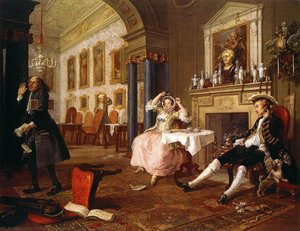
The Countess's Morning Levee: A Satirical Snapshot of Georgian Society
William Hogarth’s “The Countess’s Morning Levee,” completed around 1745, stands as a cornerstone of Rococo art and a masterful distillation of Enlightenment observation. More than just a depiction of an aristocratic gathering, it's a meticulously crafted commentary on social mores and anxieties prevalent in Georgian England—a subject that continues to fascinate historians and artists alike.
- Subject Matter: The painting portrays a lavish bedroom scene featuring a countess surrounded by twelve individuals representing various professions and social strata. Notably, a dog occupies a prominent position near the bottom right corner, adding an element of domesticity to this otherwise formal setting.
- Style & Technique: Hogarth’s approach aligns perfectly with Rococo aesthetics—characterized by delicate ornamentation and pastel hues—yet he employs a distinctly unflinching realism. The artist utilizes oil paint on canvas, applying brushstrokes with precision to capture subtle nuances of expression and gesture. This technique ensures that every detail contributes to the overall narrative and moralizing intent.
- Historical Context: Created during a period marked by burgeoning social ambition and anxieties surrounding propriety, “The Countess’s Morning Levee” reflects Hogarth's broader engagement with societal critique. The painting satirizes the obsession with appearances and the hypocrisy inherent in upholding social conventions—a theme that resonates powerfully even today.
- Symbolism & Narrative: Beyond its visual beauty, the artwork is laden with symbolic significance. The arrangement of figures—the dog, the servants, the musicians—represents various facets of aristocratic life. Furthermore, Hogarth subtly mocks the prevailing custom of “toilette,” highlighting the perceived vulgarity of displaying one’s wealth and status in such an intimate space.
- Emotional Impact: Viewing "The Countess's Morning Levee" evokes a sense of unease mingled with amusement. Hogarth compels us to confront uncomfortable truths about human behavior and social expectations, prompting contemplation on the complexities of morality and decorum. Its enduring appeal lies in its ability to capture both the grandeur and the folly of aristocratic society—a timeless reminder of art’s capacity for social commentary.
Currently housed at The Fitzwilliam Museum in Cambridge, United Kingdom, this masterpiece exemplifies Hogarth's dedication to documenting his era with unflinching honesty and artistic brilliance.
Otázky a odpovědi
Jaká velikost reprodukce se doporučuje pro „The Countess's Morning Levee“ od Vilém Hogarth?
Doporučená velikost tisku pro dílo „The Countess's Morning Levee“ od Vilém Hogarth je Velký formát.
Kde mohu najít umělecká díla podobná dílu „The Countess's Morning Levee“ od Vilém Hogarth?
Stránka Podobná díla pro dílo „The Countess's Morning Levee“ od Vilém Hogarth obsahuje související umělecká díla.
Patří dílo „The Countess's Morning Levee“ mezi slavná děl směru Classicism?
V rámci směru Classicism má dílo „The Countess's Morning Levee“ úroveň popularity Ikonické.
 Náhled v interiéru
 Sdílet
 Sdílet
 Podrobnosti o díle
 Průvodce

 Stáhnout
 Podobné položky
 Rentgenové snímky
 Slideshow
 Q&A
Q&A Statistiky