 Přepnout na tisk
 Zobrazit více







































 U děl nebo reprodukcí, u nichž je jakákoliv strana větší než 105 cm (přibližně 41 palců), bude rám dodán jako sestava v rozloženém stavu. Tato metoda zajišťuje bezpečné doručení a chrání dílo před poškozením během přepravy.


A Visceral Encounter with Postwar Emotion
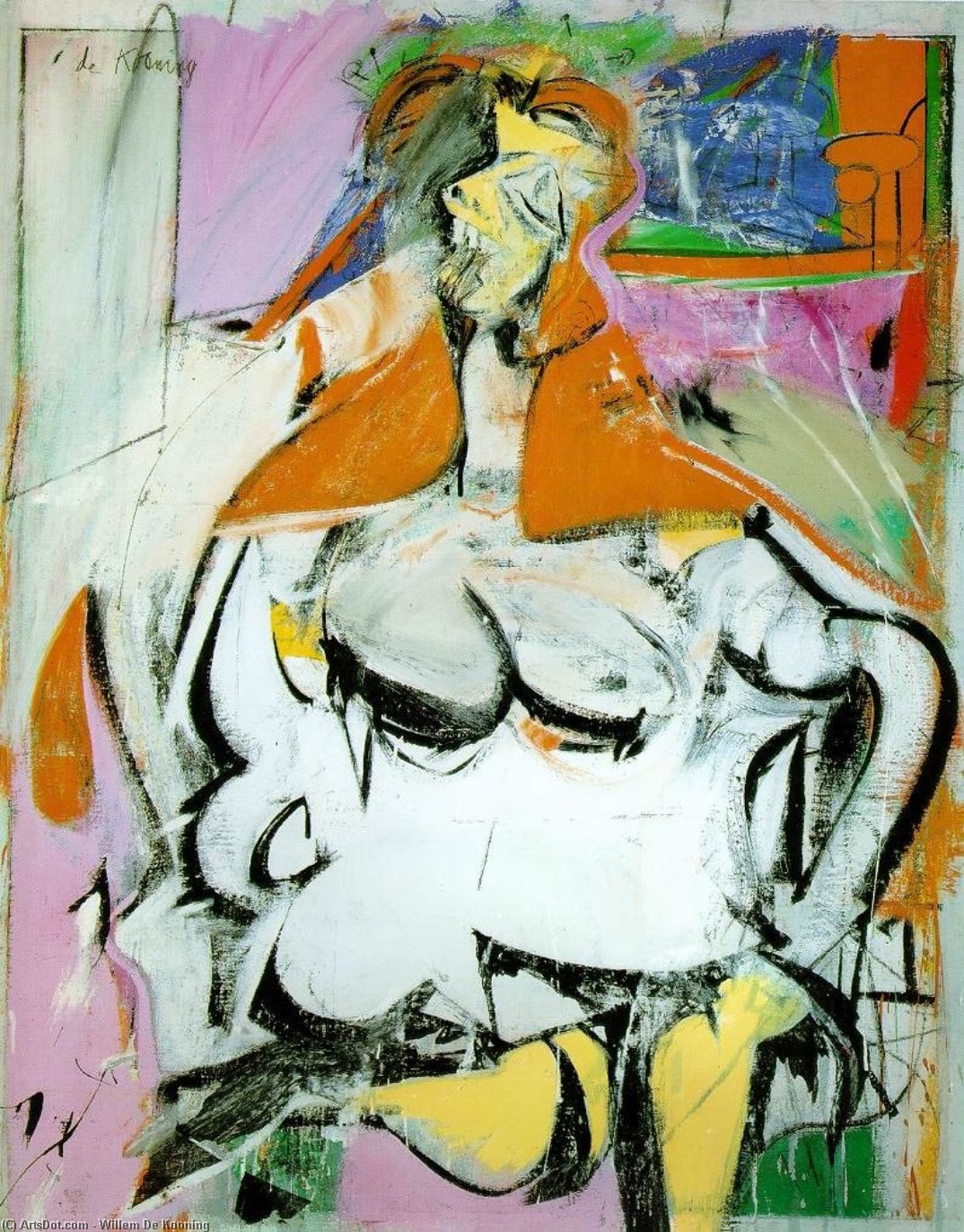
To stand before Willem de Kooning’s "Woman," executed in 1949, is to enter a whirlwind of raw, unbridorp emotion that defines the very essence of Abstract Expressionism. This monumental canvas does not merely depict a subject; it excavates the human psyche. At its heart lies a figure that is simultaneously recognizable and hauntingly fragmented—a woman seated in a chair, yet rendered through a lens of profound psychological intensity. De Kooning deliberately eschews the comforts of realistic representation, opting instead to present a form that feels as though it is being pulled apart by the very energy used to create it. The composition is thick with tension, featuring obscured figures in the background and a solitary bird perched atop the chair, an emblem that suggests both the lightness of freedom and the heavy weight of confinement.
The painting serves as a powerful mirror to the turbulent spirit of postwar America. Created in the wake of World War II, the work vibrates with the anxieties and fractured identities of an era searching for meaning amidst reconstruction. The palette is dominated by fiery reds and yellows—colors that pulse with passion, aggression, and a certain primal urgency. Through this lens, the "Woman" becomes more than a portrait; she is a symbol of the societal shifts and the visceral, often uncomfortable, rebirth of the mid-20th century.
The Mastery of Gestural Expression
De Kooning’s technique is a masterclass in gestural painting, a method where the act of creation is as significant as the final image. There is no meticulous planning here; instead, we witness the spontaneous, aggressive energy of the artist's hand. The surface of the canvas is a landscape of thick, impasto paint, creating ridges and textures that invite the viewer to feel the physicality of the work. Each brushstroke is an expressive movement, a record of a moment frozen in time yet brimming with unspoken movement.
For the discerning collector or interior designer, this piece offers an unparalleled sense of drama and depth. The way the light interacts with the heavy textures of the oil and enamel creates a dynamic visual experience that changes depending on the viewer's perspective. It is a work that demands attention, providing a sophisticated focal point for any space that seeks to celebrate the bold, the avant-garde, and the emotionally profound. Bringing a high-quality reproduction of this masterpiece into a curated environment allows one to inhabit the same electric atmosphere that defined the New York School, turning a room into a gallery of historical significance and artistic passion.
Otázky a odpovědi
Mohu si prohlédnout rentgenový snímek díla „Woman“ od Willem de Kooning?
X-ray pohled na dílo „Woman“ od Willem de Kooning naleznete na stránce Rentgenové snímky: jde o interaktivní prohlídku obrazu skrze jedenáct optických vrstev.
Obsahuje "Woman" výrazné světlonápadové kontrasty?
Kontrast světla a stínu u díla „Woman“ je klasifikován jako Statement. Kontrast popisuje, jak výrazně se liší světlé a tmavé oblasti.
Kde mohu koupit print díla „Woman“ od Willem de Kooning?
Tisk díla „Woman“ od Willem de Kooning si můžete objednat přímo na jeho stránce Kvalitní umělecký tisk: umělecký tisk na bavlněném plátně nebo archivním plátnovém papíře.
 Náhled v interiéru
 Sdílet
 Sdílet
 Podrobnosti o díle
 Průvodce

 Stáhnout
 Podobné položky
 Rentgenové snímky
 Slideshow
 Q&A
Q&A Statistiky