Přepnout na tisk
 Zobrazit více







































 U děl nebo reprodukcí, u nichž je jakákoliv strana větší než 105 cm (přibližně 41 palců), bude rám dodán jako sestava v rozloženém stavu. Tato metoda zajišťuje bezpečné doručení a chrání dílo před poškozením během přepravy.


Vincent van Gogh: A Pioneer of Emotional Expression
Vincent Willem van Gogh (1853 – 1890), born in Groot-Zundert, Netherlands, remains an icon of artistic innovation and psychological depth. His early life was marked by religious devotion and a fascination with the natural world—influences that would profoundly shape his distinctive style and worldview.
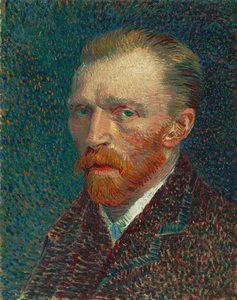
The Birth of Pointillism: “Self Portrait (10)”
"Self Portrait (10)," completed in 1888, represents a pivotal moment in Van Gogh’s artistic development. It marks the emergence of pointillist technique—a revolutionary approach championed by Georges Seurat and Henri Matisse—where dots of pure color are meticulously applied to create an image rather than blending hues together.
A Vibrant Palette: Technique and Composition
Van Gogh's masterful brushwork is evident in every stroke, layering thick impasto onto the canvas to achieve remarkable textural richness. The dominant green background serves as a counterpoint to his pale blue jacket and the luminous yellow necklace—details that draw the eye directly to his gaze. This gaze, intense and unwavering, conveys both vulnerability and determination.
Symbolism of Color: Emotion Embodied
Color plays an integral role in conveying emotion within "Self Portrait (10)." The vibrant green symbolizes vitality and growth—a reflection of Van Gogh’s connection to the landscapes he inhabited during his time in Provence. Simultaneously, it hints at underlying anxieties and uncertainties.
Historical Context: Impressionism's Legacy
"Self Portrait (10)" stands firmly within the broader context of Impressionist art, which challenged academic conventions by prioritizing subjective experience over objective representation. Like Monet and Renoir, Van Gogh sought to capture fleeting moments of beauty—transforming visual impressions into emotionally resonant artworks.
A Timeless Reflection: Emotional Impact
"Self Portrait (10)" continues to captivate audiences worldwide with its raw honesty and profound psychological insight. It serves as a poignant reminder of Van Gogh’s unwavering commitment to artistic expression and his enduring legacy as one of the most influential figures in modern art history.
Otázky a odpovědi
Jaké nastavení tisku se doporučuje pro „Portrét (10)“ od Vincent Van Gogh?
Pro tisknutí díla „Portrét (10)“ od Vincent Van Gogh se doporučuje velikost Střední velikost v orientaci Portrétní orientace.
Jaké je historické postavení díla "Portrét (10)"?
Z historického hlediska je „Portrét (10)“ dílem stylů Post-Impressionismus, které patří do širší éry – 19. století.
Kdo vytvořil dílo "Portrét (10)" a v jakém roce?
Autorem díla „Portrét (10)“ je Vincent Van Gogh a vzniklo v roce 1888.
 Náhled v interiéru
 Sdílet
 Sdílet
 Podrobnosti o díle
 Průvodce

 Stáhnout
 Podobné položky
 Rentgenové snímky
 Slideshow
 Otázky a odpovědi
 Statistiky