

 Náhled
 Sdílet
 Sdílet
 Podrobnosti o díle

 Stáhnout
 Podobné položky
 Rentgenové snímky
 Slideshow
Praying Saviour
 Acrylic On Canvas
- WallArt
- Expressionism
 1903
1903 100.0 x 82.0 cm
 Janus Pannonius Múzeum
 Zobrazit více
Giclée / Umělecký tisk
Giclée nebo plátěný tisk muzeální kvality s rychlou výrobou a flexibilními možnostmi povrchové úpravy. ( Koupit ručně malovaný obraz Koupit obrázek)




P118B $10

P118H $10

P118W $10

P438Z $10

P508JH $12

P508YH $12

P805H $10

P805Z $10

P919BZ $10

P919G $10

P919XJ $10

P959ZH $10

P968JZ $12

W106C $8

W218G $10

W218JH $8

W218Y $10

W307PJ $10

W316G $10

W316PJ $8

W316Y $10

W398PJ $8

W4111J $10

W500HY $15

W500JH $15

W692G $12

W849H $8

W940BG $15

W953PJ $8




Vyberte si z našich přednastavených velikostí, které odpovídají původním proporcím díla.

Můžete zadat vlastní rozměry tak, aby výtvor odpovídal konkrétnímu rámu nebo prostoru. Pokud zvolená velikost nebude odpovídat poměru stran původního obrazu, dílo buď ořížeme, nebo obraz rozšíříme pomocí zrcadlového efektu či jednobarevného okraje. Před zahájením výroby vám bude zaslán digitální náhled k schválení.
Mějte prosím na paměti, že náhled na obrazovce neodráží skutečné oříznutí nebo rozšíření. Pouze digitální náhled přesně zobrazí finální kompozici.
Ačkoliv jsou k dispozici i vlastní rozměry, pro zachování původních proporcí doporučujeme vybrat si rozměr z předdefinovaného seznamu.
Celosvětové doručení () do 2 týdnů namísto standardních 4/5 týdnů. (22 srpen)

Zdarma celosvětová expresní doprava

Vysoce kvalitní lněné plátno

Kompletní přepravní pojištění

Záruka vrácení celního poplatku

Záruka přesného barevného shodu

60denní lhůta pro vrácení zboží (pouze při vadách výroby)

100% garance vrácení peněz

Sleva při hromadné objednávce
 Skleněná varianta je dostupná pouze u rozměrů menších než 110 cm

Praying Saviour
Giclée / Umělecký tisk
Rozměry reprodukce
-


Celková cena za výběr
$ 80
Popis sběratelského kousku
A Moment of Reverence: Tivadar Csontváry Kosztka’s “Praying Saviour”
Tivadar Csontváry Kosztka, born Mihály Tivadar Kosztka on July 5th, 1853, in Kisszeben (modern-day Sabinov, Slovakia), remains a figure of enduring fascination within Hungarian artistic circles—a painter whose life mirrored the turbulent currents of his era and whose canvases pulsed with an arresting blend of spirituality and psychological depth. His formative years were marked by a rich tapestry of influences: his father’s medical practice instilled in him a disciplined intellect alongside familial ties to Polish heritage, while Kosztka himself absorbed the vibrant cultural landscape of Slovakia and Germany—a confluence that undeniably shaped his artistic sensibilities. Unlike many of his contemporaries who embraced Impressionism's fleeting beauty, Kosztka resolutely pursued Expressionism, forging a path distinct from mainstream trends and establishing himself as one of Hungary’s foremost artists.The Expressionist Vision: Atmosphere and Emotion
“Praying Saviour,” completed in 1903, exemplifies the core tenets of Expressionist art—a movement characterized by its rejection of objective representation in favor of conveying subjective emotion and psychological experience. Kosztka eschewed meticulous detail, prioritizing instead a hazy, atmospheric depiction that captures not merely what is seen but how it feels. The muted palette—dominated by shades of grey, ochre, and indigo—creates an oppressive yet contemplative mood, mirroring the solemnity of the depicted prayer scene. Thick brushstrokes dominate the canvas, layering textures and conveying a palpable sense of urgency and emotional intensity. This deliberate disregard for photographic accuracy wasn’t merely stylistic choice; it was a conscious effort to bypass rational thought and tap into primal instincts—a hallmark of Expressionist philosophy.A Biblical Narrative Illuminated
The painting portrays Jesus Christ kneeling before a congregation, bathed in the diffused glow of twilight. Kosztka skillfully utilizes pyramidal composition to draw the viewer’s eye upwards towards Jesus' outstretched hands, symbolizing supplication and yearning for divine grace. The figures surrounding him are rendered with varying degrees of detail—some sharply defined, others blurred into the background—suggesting a hierarchy of importance while simultaneously emphasizing the universality of faith. Notably absent is any explicit depiction of faces; Kosztka deliberately obscures individual expressions, fostering instead an atmosphere of collective contemplation and shared devotion. This anonymity serves to elevate the scene beyond mere biographical representation, transforming it into a timeless meditation on spirituality and human aspiration.Symbolism Embedded in Texture and Color
The dominant grey hue underscores the painting’s solemn mood and evokes feelings of melancholy—a deliberate reflection of the spiritual struggles inherent in faith itself. The scattered trees silhouetted against the darkening sky contribute to the overall sense of isolation and vulnerability, mirroring Jesus' position as a solitary figure confronting divine authority. Kosztka’s masterful use of impasto technique – applying paint thickly onto the canvas – amplifies these textural qualities, creating palpable depth and conveying an emotional resonance that transcends visual perception. The subtle variations in color—particularly the indigo patches adorning the sky—suggest a profound contemplation of the cosmos and its mysteries.Legacy and Emotional Impact
“Praying Saviour” continues to resonate with audiences today due to its uncompromising honesty and its ability to evoke powerful emotions. Kosztka’s masterful portrayal of human vulnerability combined with his evocative Expressionist style ensures that this artwork remains a poignant reminder of the enduring quest for spiritual solace—a testament to the transformative power of art to transcend time and connect us to fundamental truths about the human condition. Its haunting beauty and contemplative atmosphere inspire viewers to consider questions of faith, compassion, and the significance of inner reflection.Biografie umělce
A Life Illuminated: The Journey of Tivadar Csontváry Kosztka
Tivadar Csontváry Kosztka, a name that for decades remained largely unknown outside Hungary, is now recognized as one of the nation’s most significant and profoundly original painters. Born Mihály Tivadar Kosztka on July 5th, 1853, in Kisszeben (modern-day Sabinov), Slovakia, his life was a tapestry woven from diverse cultural threads—a Polish heritage intertwined with Slovak and German influences—and ultimately defined by an unwavering artistic vision. From his early days as a pharmacist, punctuated by a startlingly clear prophetic voice at the age of twenty-seven, to his later years spent traversing the Middle East and capturing its ethereal beauty on canvas, Csontváry’s journey was one of relentless self-belief and a profound connection with the natural world. His art wasn't merely about depicting landscapes; it was about translating the very essence of light, color, and spirituality into visual form—a pursuit that set him apart from many of his contemporaries.From Apothecary to Artistic Pilgrim
Csontváry’s transformation from a dutiful pharmacist to an ardent painter began with a moment of profound revelation. On October 13th, 1880, while working in his pharmacy, he claimed to have heard a distinct voice declaring that he was destined to become “the greatest painter of the world, greater than Raphael.” This extraordinary claim, initially met with skepticism, ignited within him an unshakeable conviction—a belief so absolute that it fueled his subsequent artistic endeavors. Rather than dismissing this divine calling, Csontváry embraced it wholeheartedly, embarking on a period of intense preparation and self-study. He initially sought acceptance into traditional art schools, but was repeatedly rejected, deemed unsuitable by the established institutions. Undeterred, he turned to independent study, traveling extensively throughout Europe—Rome, Paris, Munich—immersing himself in the works of the masters while simultaneously developing his own unique style. Crucially, he financed these journeys and his artistic training through continued work as an apothecary, demonstrating a remarkable dedication to his chosen path. This period was marked by a relentless pursuit of technical skill, but more importantly, by a deep exploration of his inner world—a quest for a visual language capable of expressing the profound emotions and spiritual insights that he felt compelled to convey.The ‘Sunway’ and a Unique Artistic Voice
Csontváry's artistic style is instantly recognizable, characterized by its monumental scale – many of his canvases stretch several meters in width and height – and a bold use of color and composition. He developed what he himself termed the “sunway” (*napút*), a technique that went far beyond simply depicting sunlight; it was about capturing the very essence of illumination—its transformative power, its ability to reveal hidden truths and evoke feelings of awe and wonder. This approach is vividly apparent in his landscapes, which are often imbued with an almost palpable sense of grandeur and spiritual depth. His depictions of Middle Eastern scenes, particularly those inspired by his travels to Lebanon, Palestine, Egypt, and Syria, possess a haunting beauty and an undercurrent of melancholy—a reflection of the artist’s own contemplative nature. He wasn't simply recording what he saw; he was interpreting it through the lens of his deeply personal vision, often imbuing his paintings with symbolic meaning and exploring themes of solitude, faith, and the sublime. Works such as *The Lonely Cedar* (1907) and *Pilgrimage to the Cedars in Lebanon* (1907) exemplify this approach—towering trees silhouetted against dramatic skies, evoking feelings of both profound isolation and spiritual reverence. The use of color is particularly striking – often employing a rich palette of blues, greens, and golds to capture the ethereal quality of light and atmosphere.Recognition Delayed, Legacy Enduring
Despite his undeniable talent and innovative approach, Csontváry faced significant challenges during his lifetime. His unconventional lifestyle—a devout vegetarian, teetotaler, and outspoken pacifist—and his often-prophetic writings led many to dismiss him as an eccentric figure, largely outside the mainstream artistic circles of Hungary. He struggled to gain recognition within his own country, finding greater appreciation among critics in Western Europe, particularly in Paris where he exhibited in 1907. However, even there, full acceptance remained elusive. His paintings were rarely sold during his life, and financial hardship plagued his later years. Tragically, Csontváry died in Budapest on June 20th, 1919, largely unappreciated by the Hungarian art establishment—a poignant irony for a man who had dedicated his entire life to creating works of enduring beauty. It wasn’t until after his death that his genius was truly recognized, with his paintings now celebrated as national treasures and housed in prestigious collections such as the Hungarian National Gallery in Budapest and the Csontváry Museum in Pécs. In 2006, *Rendez-vous* (1902), also known as “Meeting of the Lovers,” sold at auction for over one million euros—a remarkable testament to the enduring value and artistic merit of his work—a fitting tribute to a man who dared to pursue his vision with unwavering conviction.A Lasting Influence
Csontváry’s story is not merely that of an artist; it's a powerful narrative of faith, perseverance, and the pursuit of beauty. His legacy continues to resonate today, inspiring artists and viewers alike. Several key aspects contribute to his enduring influence:- Pioneering Spirit: Csontváry’s unwavering commitment to his artistic vision, despite facing rejection and hardship, serves as an inspiration to artists today.
- Unique Style: His “sunway” technique and monumental scale continue to influence landscape painters seeking to capture the spiritual essence of nature.
- Cultural Icon: Csontváry’s work has become a symbol of Hungarian national identity, celebrated for its unique blend of Eastern and Western influences.
- Spiritual Depth: His paintings offer viewers a profound meditation on themes of solitude, faith, and the sublime, resonating with audiences across cultures and generations.
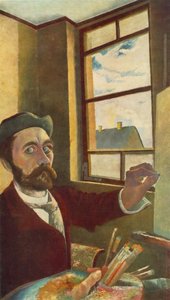
Tivadar Csontváry Kosztka
1853 - 1919 , Slovensko
Rychlé fakta
- Artistic Movement Or Style: Post-impressionismus, Expressionismus
- Artists Or Movements Influenced By This Artist: ['Impressionismus']
- Artists Who Influenced This Artist: ['Raphael']
- Date Of Birth: 5. července 1853
- Date Of Death: 20. června 1919
- Full Name: Tivadar Csontváry Kosztka
- Nationality: Maďar
- Notable Artworks:
- Osamělý cedr
- Cesta k cedrům
- Válka v Jeruzalémě
- Place Of Birth: Sabinov, Slovensko
Související články

Tivadar Csontváry Kosztka: A Hungarian Visionary Between Symbolism and Existential Isolation
Explore the captivating art of Tivadar Csontváry Kosztka, a Hungarian visionary bridging Symbolism & Expressionism. Discover his unique 'sunway' style and profound themes – available as museum-quality reproductions at OriginalUniqueArt.
Fra Angelico: 25 mistrovských děl renesančního umění pro váš domov | OriginalUniqueArt.cz
Objevte 25 ikonických děl Fra Angelica – renesančního mistra andělských freskek a náboženských maleb. Prozkoumejte jeho techniku, inspiraci a duchovní poselství. Luxusní reprodukce obrazů pro váš interiér na OriginalUniqueArt.cz
Figurative Expressionism: Emotional Intensity & Subjective Reality in 20th-Century Art
Explore the powerful world of Figurative Expressionism with OriginalUniqueArt. Discover key artists like Kirchner & Beckmann, understand its emotional depth, and learn how to collect this influential 20th-century art movement.
The Raw Emotion of Expressionism: A Deep Dive into its History, Characteristics & Enduring Influence
Explore the raw emotion of Expressionism with OriginalUniqueArt. Discover its history, key artists like Kirchner & Munch, and lasting influence on modern art. Expert insights for collectors & enthusiasts.

Károly Ferenczy: Pioneering Hungarian Modernism & the Soul of a Nation
Explore the life & art of Károly Ferenczy, a pivotal figure in Hungarian Modernism. Discover his landscapes, portraits, and role in founding the Nagybánya colony. Expert insights for collectors & enthusiasts.

