

 Zobrazit v interiéru
 Odeslat
 Sdílet
 Podrobnosti
 Průvodce

 Stáhnout obrázek
 Podobné kousky
 Rentgenové snímky
 Slideshow
 Statistiky
Landscape with Water Mill
 Acrylic On Canvas
- WallArt
- Romantic Landscape
 1803
1803 71.0 x 91.0 cm
 Manchester Art Gallery
 Přečíst si více
Ručně malovaná olejová reprodukce
Ručně malované olejné plátno v libovolném rozměru i s rámem, vyrobené našimi umělci na zakázku. ( Přepnout na tiskové verze Přepnout na digitální verzi obrazu)




P118B $10

P118H $10

P118W $10

P438Z $10

P508JH $12

P508YH $12

P805H $10

P805Z $10

P919BZ $10

P919G $10

P919XJ $10

P959ZH $10

P968JZ $12

W106C $8

W218G $10

W218JH $8

W218Y $10

W307PJ $10

W316G $10

W316PJ $8

W316Y $10

W398PJ $8

W4111J $10

W500HY $15

W500JH $15

W692G $12

W849H $8

W940BG $15

W953PJ $8




Vyberte si z našich přednastavených velikostí, které odpovídají původním proporcím díla.

Můžete zadat vlastní rozměry pro konkrétní rám nebo prostor. Pokud se vámi vybraná velikost neshoduje s proporcemi původního obrazu, dílo buď ořízneme, nebo jej doplníme ručně malovanými prvky. Před zahájením výroby vám bude zaslán digitální náhled ke schválení.
Upozorňujeme, že náhled na obrazovce neodpovídá skutečnému ořezu ani rozšíření. Pouze digitální náhled přesně zobrazí finální kompozici.
Ačkoliv je možné zvolit vlastní velikost, pro zachování původních proporcí doporučujeme vybrat rozměr z předdefinovaného seznamu.
Po přijetí objednávky vám tým OriginalUniqueArt.com zašle e-mail s pokyny a poskytne náhledovou verzi.
Celosvětová doprava () za 3–4 týdny namísto standardních 5 týdnů. (25 září). Bez kompromisů v kvalitě.

Zdarma celosvětová expresní doprava

Vysoce kvalitní lněné plátno

Úplné pojištění přepravy

Záruka vrácení celního poplatku

Záruka věrného barevného shodu

100dení lhůta pro vrácení zboží (pouze při vadách výroby)

100% garance vrácení peněz

Sleva při více objednávkách
 Skleněná varianta je dostupná pouze u rozměrů menších než 110 cm

Landscape with Water Mill
Technika provedení
Velikost reprodukce
-


Celková cena
$ 300
A Serene Vision of Rural England: Augustus Wall Callcott’s ‘Landscape with Water Mill’
Augustus Wall Callcott's “Landscape with Water Mill,” painted in 1803, is more than just a picturesque depiction of the English countryside; it’s a carefully constructed evocation of Romantic ideals and a subtle meditation on humanity’s relationship to nature. Housed within the esteemed Manchester Art Gallery, this work offers a glimpse into a world where tranquility reigns supreme, yet hints at an underlying drama – a quiet storm brewing in the sky mirroring perhaps the complexities of human experience.
The scene unfolds with remarkable clarity and detail. A modest water mill, constructed from weathered stone and topped with a charming thatched roof, dominates the foreground. Its wooden wheel, perpetually turning, represents not just mechanical industry but also the relentless passage of time. The river flowing alongside is rendered with a delicate touch, reflecting the overcast sky above – a subtle indication of an impending change. The artist’s brushwork is loose and expressive, capturing the movement of water and foliage with a captivating sense of dynamism. Notice how Callcott utilizes varying shades of green to create depth and texture within the surrounding trees, suggesting a dense, vibrant woodland.
Romanticism and the Sublime
“Landscape with Water Mill” firmly resides within the Romantic tradition, a movement that prioritized emotion, imagination, and the beauty of nature over strict academic rules. Callcott’s work embodies this shift by emphasizing atmosphere and feeling rather than precise representation. The dramatic clouds in the sky are not merely decorative; they contribute to the painting's overall sense of drama and the sublime – that awe-inspiring experience when confronted with something vast and powerful, like a storm or a grand landscape.
The inclusion of figures—a solitary man standing by the riverbank and another seated in contemplation—adds an element of human scale to the scene. These individuals are not imposing rulers but rather humble observers, inviting us to share their moment of quiet reflection amidst the grandeur of nature. They serve as a reminder of our own smallness within the vastness of the world.
Technical Details and Artistic Influence
Callcott’s technique is characterized by his masterful use of light and shadow. He skillfully employs atmospheric perspective, creating a sense of distance by subtly diminishing the colors and details of objects in the background. The muted palette—dominated by earthy tones—contributes to the painting's overall mood of serenity and contemplation. It’s evident that Callcott was influenced by artists like Thomas Gainsborough and John Constable, both masters of capturing the beauty of the English countryside with a sensitive eye for detail and an appreciation for light.
The signature “A.W. Callcott” in the lower right corner confirms the artist's identity and adds to the painting’s historical significance. The image itself, likely reproduced from an original source, further emphasizes its status as a treasured work of art.
Symbolism and Emotional Resonance
Beyond its aesthetic qualities, “Landscape with Water Mill” carries symbolic weight. The water mill represents both progress and tradition – the harnessing of natural power for human benefit. The river symbolizes life’s flow, while the solitary figures suggest themes of introspection and connection to nature. The impending storm hints at uncertainty and change, reminding us that even in moments of tranquility, disruption is always possible.
Ultimately, this painting invites viewers to pause, reflect, and appreciate the simple beauty of the natural world. It’s a testament to Callcott's skill as an artist and his ability to capture not just a landscape but also the emotions it evokes – a serene vision of rural England that continues to resonate with audiences today.
Biografie umělce
Sir Augustus Wall Callcott (1779–1844) – A Pioneer of Romantic Landscape Painting
Augustus Wall Callcott (1779–1844) stands as a pivotal figure in the history of British landscape painting, embodying the spirit of Romanticism and establishing himself as one of its foremost practitioners. Born at Kensington Gravel Pits, Middlesex—now part of London—Callcott’s early life was shaped by musical inclinations; his elder brother, John Wall Callcott (1766–1821), a celebrated composer and organist, instilled in him a lifelong passion for music, which manifested in performances with Westminster Abbey choir. This formative experience profoundly influenced his artistic sensibilities, fostering an appreciation for harmony and visual elegance that would permeate his oeuvre.Early Artistic Training and Influences
Following the footsteps of his brother, Callcott pursued formal training at the Royal Academy Schools, where he honed his skills under John Hoppner, a fellow Academician renowned for his portraiture prowess. However, Callcott swiftly transitioned away from portraiture towards landscape painting—a decision that would define his artistic trajectory and solidify his reputation as a master of atmospheric perspective and tonal subtlety. His formative years were marked by exposure to the works of Claude Lorrain and Nicolas Poussin—artists who championed idealized landscapes infused with mythological narratives—influences that instilled in him a belief in the transformative power of art and its ability to convey profound emotional resonance.The Rise of Romantic Landscape Style
Callcott’s artistic breakthrough arrived in 1804, coinciding with his election as an Associate Academician. From this moment onward, he exclusively devoted himself to landscape painting, eschewing portraiture altogether—a deliberate choice that reflected the prevailing aesthetic trends of the era and distinguished him from contemporaries like Turner. His canvases captured the grandeur of British riversides and coastlines with remarkable precision and sensitivity, employing a technique characterized by luminous color palettes and meticulous attention to detail. Unlike Turner’s dramatic explorations of light and shadow, Callcott favored a more restrained approach—one that prioritized tranquility and harmony while simultaneously conveying an awareness of the sublime beauty inherent in nature.Notable Works and Recognition
Callcott's artistic achievements garnered considerable acclaim during his lifetime, securing him commissions from wealthy patrons and establishing him as a favorite among connoisseurs. Among his most celebrated paintings are *The Entrance to the Pool of London* (1816), *The Mouth of the Tyne* (1818), and *A Dead Calm on the Medway* (1820)—works that exemplify his mastery of tonal gradation and atmospheric rendering—as well as *Rochester* (1824) – a monumental depiction of Rochester Cathedral reflecting Callcott’s fascination with Gothic architecture. His artistic reputation extended beyond Britain, attracting admiration from artists across Europe who recognized the elegance and sincerity of his vision. Furthermore, he was awarded knighthood in 1837 by Queen Victoria—a testament to his enduring contribution to British art history.Legacy and Artistic Significance
Augustus Wall Callcott’s legacy resides not merely in his impressive artistic output but also in his role as a champion of Romantic landscape painting—a genre that profoundly shaped the visual culture of Victorian England. His unwavering commitment to capturing the beauty of the natural world, combined with his refined artistic style and profound understanding of tonal harmony, cemented his place among the most influential painters of his time. Callcott’s work continues to inspire artists today, serving as a reminder of the enduring power of art to evoke emotion and convey sublime grandeur—a testament to his enduring contribution to British artistic heritage.
Sir Augustus Wall Callcott
1779 - 1844 , Spojené království
Rychlé informace
- Artistic Movement Or Style: Romantic Landscape Painting
- Artists Or Movements Influenced By This Artist: ['Turner']
- Artists Who Influenced This Artist: ['John Hoppner']
- Date Of Birth: 20 Feb. 1779
- Date Of Death: 25 Nov. 1844
- Full Name: Augustus Wall Callcott
- Nationality: British
- Notable Artworks:
- The Entrance to the Pool of London
- The Mouth of the Tyne
- A Dead Calm on the Medway
- Rochester
- Raffaelle and the Fornarina
- Place Of Birth: Kensington, United Kingdom
Související články

Evocations of Place: A Historical Journey Through Landscape Art
Explore the rich history of landscape art with OriginalUniqueArt. Discover renowned artists, movements like Impressionism & Romanticism, and expert guidance for collecting timeless pieces. Find your perfect serene escape today!
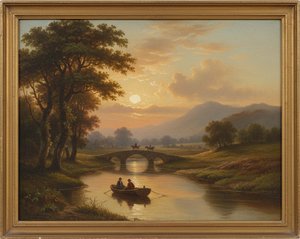
Sir Augustus Wall Callcott: A Life Painted with Light & Atmosphere
Explore the life & art of Sir Augustus Wall Callcott, a celebrated British landscape painter known for his serene scenes and elegant compositions. Discover his Romantic influences & lasting legacy at OriginalUniqueArt.
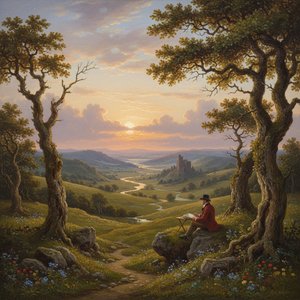
John Varley I: Intimate Observation & the British Romantic Landscape
Explore the serene landscapes of John Varley I, a key figure in British Romanticism. Discover his unique watercolour style, collaboration with William Blake & lasting artistic legacy. Learn about collecting Varley's work.

Romantická krajina v malbě: 10 mistrovských děl, které definovaly umělecký proud | OriginalUniqueArt
Prozkoumejte 10 ikonických děl romantické krajinářské malby! Objevte příběhy Caspara Davida Friedricha, Turnera a dalších mistrů. Reprodukce obrazů nejvyšší kvality pro váš interiér na OriginalUniqueArt.com.

John Constable: 25 mistrovských děl krajinářské poezie | OriginalUniqueArt.com
Prozkoumejte 25 ikonických děl Johna Constabla, mistra anglického krajinářství a romantismu. Obdivujte jeho olejomalby, plátna s venkovskou atmosférou a inspirujte se pro dekoraci interiéru. Reprodukce obrazů nejvyšší kvality na OriginalUniqueArt.com
