
 Sdílet
 Sdílet
 Podrobnosti o díle

 Stáhnout
 Podobné položky
 Slideshow
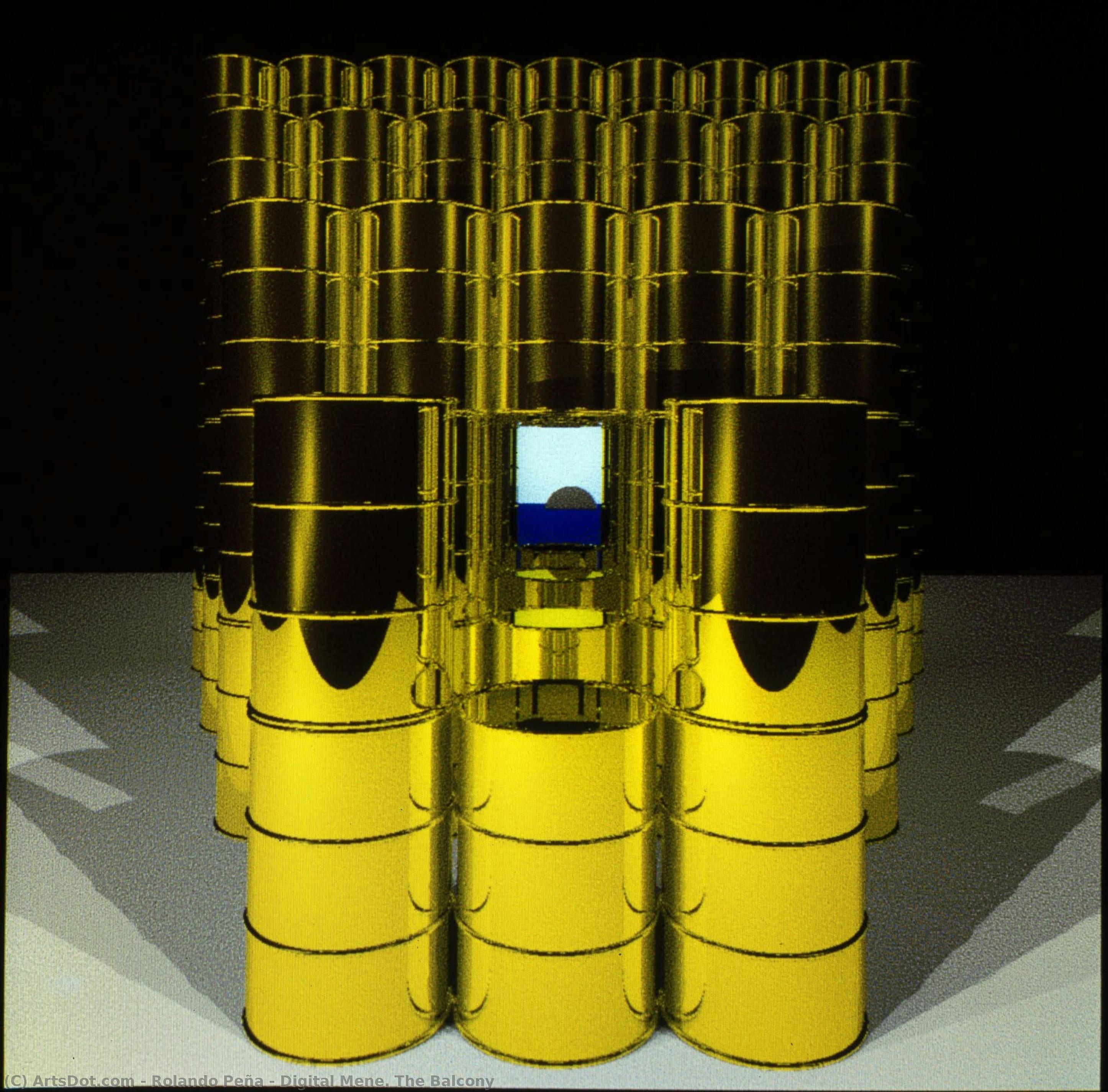
Digital Mene. The Balcony


 Zobrazit více
Giclée / Umělecký tisk
Giclée nebo plátěný tisk muzeální kvality s rychlou výrobou a flexibilními možnostmi povrchové úpravy. ( Koupit ručně malovaný obraz Koupit obrázek)




































Vyberte si z našich přednastavených velikostí, které odpovídají původním proporcím díla.

Můžete zadat vlastní rozměry tak, aby výtvor odpovídal konkrétnímu rámu nebo prostoru. Pokud zvolená velikost nebude odpovídat poměru stran původního obrazu, dílo buď ořížeme, nebo obraz rozšíříme pomocí zrcadlového efektu či jednobarevného okraje. Před zahájením výroby vám bude zaslán digitální náhled k schválení.
Mějte prosím na paměti, že náhled na obrazovce neodráží skutečné oříznutí nebo rozšíření. Pouze digitální náhled přesně zobrazí finální kompozici.
Ačkoliv jsou k dispozici i vlastní rozměry, pro zachování původních proporcí doporučujeme vybrat si rozměr z předdefinovaného seznamu.
Celosvětové doručení () do 2 týdnů namísto standardních 4/5 týdnů. (18 srpen)

Zdarma celosvětová expresní doprava

Vysoce kvalitní lněné plátno

Kompletní přepravní pojištění

Záruka vrácení celního poplatku

Záruka přesného barevného shodu

60denní lhůta pro vrácení zboží (pouze při vadách výroby)

100% garance vrácení peněz

Sleva při hromadné objednávce
 Skleněná varianta je dostupná pouze u rozměrů menších než 110 cm

Digital Mene. The Balcony
Giclée / Umělecký tisk
Rozměry reprodukce
-


Celková cena za výběr
$ 80
Popis sběratelského kousku
The Geometry of Modern Existence
Rolando Peña’s Digital Mene. The Balcony presents itself as a mesmerizing study in contemporary urban architecture reimagined through the lens of digital abstraction. One is immediately drawn into the composition, which features a striking yellow structure—a balcony or pavilion seemingly suspended in an undefined space. This is not merely a depiction of a building; it is an exploration of form, repetition, and the way modern life accumulates visual elements. The scattered cylindrical shapes dominate the foreground and middle ground, creating a rhythm that is both orderly and playfully chaotic. These forms suggest everything from industrial piping to abstract sculptural elements, inviting the viewer to question the function and meaning behind their placement.
A Dialogue Between Digital Medium and Physical Form
The technique employed here speaks volumes about its time of creation; it possesses a distinctly digital quality, lending the piece an almost luminous, hyper-real sheen. This modern execution allows Peña to treat solid architectural elements with a weightlessness that belies their apparent mass. The inclusion of a mounted television screen within the structure adds a crucial layer of narrative tension. In an era saturated with mediated images, this detail forces contemplation: what is being broadcast? What stories are contained within these glowing rectangles? It speaks to our contemporary condition—a life lived simultaneously in physical space and digital stream.
Symbolism of Structure and Connection
Peña’s work has always been deeply interwoven with themes of identity and the modern human experience, a thread visible even in this seemingly straightforward composition. The balcony itself can be read as a liminal space—a threshold between inside and out, private life and public view. The repeating cylinders might symbolize the relentless flow of information or the interconnected systems that govern our daily routines. They are markers, points of connection, yet their sheer number suggests an overwhelming density. It is a visual metaphor for the complexity of contemporary urban living, where structure provides support but also risks becoming suffocating.
Emotional Resonance and Interior Application
For the collector or designer seeking a piece that anchors a modern space with intellectual depth, Digital Mene. The Balcony offers profound resonance. Its vibrant yellow hue injects an immediate burst of optimistic energy, while the cool, precise lines of the digital rendering maintain a sophisticated composure. It functions as a powerful focal point, capable of elevating a minimalist gallery wall or lending an avant-garde edge to a contemporary living area. Viewing it is not just looking at art; it is engaging in a thoughtful dialogue about how we build our lives—physically, digitally, and emotionally.
Biografie umělce
A Life Intertwined with Art, Dance, and the Warholian Spirit
Rolando Peña, born October 27, 1942, in Caracas, Venezuela, is an artist whose life reads as a compelling narrative bridging disciplines – visual art, dance, performance, and film. He remains an active force in contemporary art today. His journey isn’t simply one of artistic evolution; it's a testament to the power of embracing diverse influences and pushing creative boundaries. From his early explorations in movement and theatrical expression to his pivotal role within Andy Warhol’s Factory and subsequent pioneering work with digital media, Peña has consistently sought new ways to express the complexities of identity, spirituality, and the modern human condition. His Venezuelan heritage is deeply woven into the fabric of his artistic vision, often manifesting as subtle yet powerful commentary on power structures and cultural transformation.The Allure of New York and Warhol’s Orbit
Peña's formative years in Caracas provided a rich foundation for his future endeavors. His training in dance instilled within him an acute awareness of the body, space, and rhythm – qualities that would profoundly influence his multimedia work. However, it was his relocation to New York City in 1963 that truly ignited his artistic trajectory. Immersing himself in the city’s vibrant avant-garde scene, he quickly became a magnetic presence, drawn to the experimental spirit of artists challenging conventional norms. This led to an extraordinary association with Andy Warhol, becoming one of the celebrated “superstars” of the Factory. Within this iconic circle, Peña earned the evocative nicknames "the Black Prince" or "El Principe Negro," reflecting his striking physical presence and enigmatic aura. He appeared in numerous Warhol films, contributing to a groundbreaking exploration of performance, celebrity culture, and the blurring lines between art and life. This period wasn’t merely about participation; it was an immersion into a revolutionary artistic ecosystem that fundamentally shaped Peña's understanding of image-making and self-representation.From Performance to Pixels: An Evolving Artistic Language
While his time with Warhol cemented his place in art history, Rolando Peña refused to be defined solely by this association. He embarked on a path of independent artistic exploration, driven by an insatiable curiosity and a willingness to embrace emerging technologies. His work evolved significantly, moving beyond performance-based art towards a distinctive visual language centered around digital media. This wasn’t simply a shift in medium; it was a conceptual leap, allowing him to explore themes with greater nuance and complexity. The “Digital Mene” series exemplifies this evolution – intricate compositions that juxtapose technological aesthetics with devotional imagery, creating a compelling dialogue between the secular and the sacred. Oil, a potent symbol of Venezuela's economic and cultural landscape, frequently appears in his work as a metaphor for power, transformation, and societal structures. Geometric abstraction also plays a crucial role, echoing ancient symbolism while simultaneously embracing contemporary design principles. Pieces like "Digital Mene. The Labyrinth II," "Digital Mene. The Spiral," and “Digital Mene. The Squaring of the Circle” demonstrate this masterful interplay of form and meaning.Recognition and Lasting Legacy
Rolando Peña’s artistic contributions have garnered significant recognition throughout his career, most notably with a prestigious Guggenheim Fellowship in 2009. This award underscored his commitment to pushing boundaries within multimedia art and solidified his position as an innovative voice in contemporary art. Beyond accolades, his legacy lies in his ability to seamlessly blend diverse influences – dance, film, technology, Venezuelan heritage – into a uniquely personal artistic practice. His early photomaton photography exhibitions in Miami, Florida, demonstrate a continued engagement with experimentation and self-portraiture. As both a Warhol superstar and a pioneering digital artist, Peña embodies the spirit of experimentation that defined the late 20th century art scene. He offers a compelling commentary on globalization, identity, and the evolving relationship between humanity and technology – themes that resonate deeply with contemporary audiences navigating an increasingly complex digital age. His work is not merely about reflecting the world around us; it’s about questioning its foundations and imagining new possibilities.Key Themes in Peña's Work
- Oil as a Metaphor: Frequently uses imagery related to oil—a significant element in Venezuela's economy and culture—to explore broader concepts of power, transformation, and societal structures.
- Technology & Spirituality: His digital art often juxtaposes technological aesthetics with devotional or spiritual themes, creating a dialogue between the secular and the sacred.
- Geometric Abstraction: Many of his pieces feature striking geometric patterns and abstract forms, reminiscent of both ancient symbolism and contemporary design.

Rolando Peña
1942 - , Venezuela
Rychlé fakta
- Artistic Movement Or Style: Multimedia, Digital Art
- Artists Who Influenced This Artist: ['Andy Warhol']
- Date Of Birth: October 27, 1942
- Full Name: Rolando Peña
- Nationality: Venezuelan-American
- Notable Artworks:
- Digital Mene. The Labyrinth II
- Digital Mene. The Spiral
- Digital Mene. The Squaring...
- Digital Mene. Devotional Object
- Digital Mene. I am Oil
- Digital Mene. The Balcony
- Place Of Birth: Caracas, Venezuela
Související články

10 legendárních bronzových soch, které změnily umění | OriginalUniqueArt
Objevte 10 legendárních bronzových soch od Michelangela, Rodina a dalších mistrů! Ponořte se do historie umění, technik a příběhů za těmito nadčasovými díly. Najděte inspiraci pro váš interiér s OriginalUniqueArt.com – repliky nejvyšší kvality.

Geometrická abstrakce: 10 mistrovských děl, které změnily umění | OriginalUniqueArt.cz
Prozkoumejte 10 ikonických děl geometrické abstrakce od Mondriana, Maleviče a Kandinského. Objevte příběhy umělců, techniky a historii tohoto revolučního hnutí. Najděte inspiraci pro moderní dekorace a luxusní reprodukce obrazů na OriginalUniqueArt.com.

Wassily Kandinsky: Top 25 mistrovských děl abstrakce pro váš interiér | OriginalUniqueArt.com
Prozkoumejte 25 ikonických děl Wassily Kandinského – průkopníka abstraktního umění a expresionismu. Objevte příběhy za barevnými kompozicemi, Bauhaus styl a inspirujte se pro váš interiér s reprodukcemi nejvyšší kvality na OriginalUniqueArt.com.

The Enduring Form: Exploring Themes & Techniques in Sculpture Across Historical Periods
Explore the rich history of sculpture from ancient masterpieces to contemporary innovations. Discover key techniques, influential artists & investment potential for discerning art collectors.

10 legendárních bronzových mistrovských děl, která změnila umění | OriginalUniqueArt
Objevte 10 legendárních bronzových mistrovských děl od Rodina, Donatella a dalších. Ponořte se do historie umění a nechte se inspirovat nadčasovými sochařskými replikami pro váš interiér. Prozkoumejte celou kolekci online na OriginalUniqueArt.com!

