Náhled v interiéru
 Sdílet
 Sdílet
 Podrobnosti o díle
 Průvodce

 Stáhnout
 Podobné položky
 Rentgenové snímky
 Slideshow
 Q&A
Q&A Statistiky
Group of Men
 Acrylic On Canvas
- WallArt
- Early Netherlandish Painting
 1460
1460 50.0 x 31.0 cm
 Musées Royaux des Beaux-Arts
 Zobrazit více
Giclée / Umělecký tisk
Giclée nebo plátěný tisk muzeální kvality s rychlou výrobou a širokou nabídkou povrchových úprav. ( Koupit ručně malovaný obraz Přepnout na digitální obraz)




P118B Kč10

P118H Kč10

P118W Kč10

P438Z Kč10

P508JH Kč12

P508YH Kč12

P805H Kč10

P805Z Kč10

P919BZ Kč10

P919G Kč10

P919XJ Kč10

P959ZH Kč10

P968JZ Kč12

W106C Kč8

W218G Kč10

W218JH Kč8

W218Y Kč10

W307PJ Kč10

W316G Kč10

W316PJ Kč8

W316Y Kč10

W398PJ Kč8

W4111J Kč10

W500HY Kč15

W500JH Kč15

W692G Kč12

W849H Kč8

W940BG Kč15

W953PJ Kč8




Vyberte si z našich přednastavených velikostí, které odpovídají původním proporcím díla.

Zadejte šířku a výšku, které potřebujete pro váš rám nebo stěnu. Tisk lze pouze oříznout, nikdy však nelze zvětšit obraz nad jeho původní rozměr, proto při výběru jiného formátu dochází ke ztrátě části obrazu. Před samotným tiskem vám zašleme digitální náhled k schválení. Obraz zobrazený na této stránce nenabízí skutečný výřez — ten uvidíte pouze v náhledu.
Celosvětové doručení () do 2 týdnů namísto standardních 4/5 týdnů. (30 říjen)

Zdarma celosvětová expresní doprava

Vysoce kvalitní lněné plátno

Kompletní pojištění přepravy

Záruka vrácení celního poplatku

Záruka věrného barevného souladu

100dení lhůta pro vrácení zboží (pouze při vadách výroby)

100% záruka vrácení peněz

Sleva při více objednávkách
 Skleněná varianta je dostupná pouze u rozměrů menších než 110 cm

Group of Men
Giclée / Umělecký tisk
Rozměry reprodukce
-


Celková cena za vybrané možnosti reprodukcí
Kč 1738
A Moment Frozen in Time: Rogier van der Weyden’s “Group of Men”
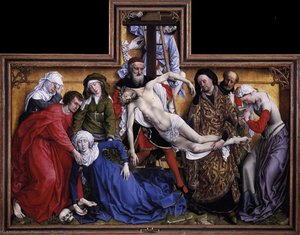
Rogier van der Weyden's "Group of Men," painted around 1460, is not merely a depiction of figures; it’s a carefully constructed tableau brimming with the quiet dignity and subtle anxieties of late medieval life. This intimate scene, rendered in oil on panel, offers a rare glimpse into the social fabric of its time, inviting us to contemplate the roles, responsibilities, and perhaps even the unspoken tensions within this assembled company. Measuring a modest 50 x 31 cm, the painting’s scale belies the depth of observation and emotional resonance it conveys.
The composition immediately draws the eye to the architectural setting – a building distinguished by its prominent columns, a feature common in Flemish architecture of the period. These columns aren't simply structural; they provide a sense of stability and authority, framing the men within a space that suggests both formality and containment. The figures themselves are rendered with an astonishing level of realism, characteristic of van der Weyden’s meticulous approach. Each man is distinct, not just in his attire but also in his posture and gaze – a testament to the artist's ability to capture individual character.
The Language of Dress and Status
- Van der Weyden was renowned for his unparalleled skill in portraying fabrics and textures. Here, this is particularly evident in the costumes worn by the men. The variations in their garments – from the more elaborate robes to the simpler tunics – subtly communicate social status and profession. It’s likely that these figures represent a guild or civic group, with each man embodying a specific role within the community: perhaps merchants, artisans, or even officials.
- The detail in the rendering of the clothing is extraordinary; one can almost feel the weight of the velvet, the texture of the wool, and the sheen of the leather. This meticulous attention to material reflects van der Weyden’s training as a goldsmith – a skill that translated seamlessly into his painting, allowing him to imbue his figures with an unparalleled sense of physicality.
- The positioning of the men is also significant. The figure on the left, slightly elevated, commands attention, while those in the center and right appear more engaged in conversation or contemplation. This arrangement creates a dynamic flow within the composition, guiding the viewer’s eye through the scene.
A Master of Emotion: Context and Technique
Painted during a period of significant artistic innovation, “Group of Men” exemplifies van der Weyden's mastery of oil painting techniques. Unlike the tempera paints used previously, oils allowed for greater subtlety in color mixing, blending, and layering – crucial elements in achieving the luminous quality and nuanced gradations of tone that define his work. He employed a technique known as *sfumato*, subtly blurring edges and creating an atmospheric haze, particularly around the figures’ faces, which contributes to the painting's sense of realism and psychological depth.
Historically, van der Weyden was deeply influenced by the East Roman (Byzantine) tradition, evident in his use of pyramidal compositions and his emphasis on conveying spiritual or moral themes. However, he pushed beyond mere imitation, imbuing his paintings with a distinctly humanistic sensibility – a focus on individual emotion and experience. “Group of Men” is a prime example of this evolution, capturing not just the outward appearance of the figures but also hinting at their inner thoughts and feelings.
A Timeless Portrait of Human Connection
More than six centuries after its creation, "Group of Men" continues to resonate with viewers. It’s a painting that invites contemplation – prompting us to consider the complexities of human relationships, the weight of social expectations, and the enduring power of visual storytelling. The quiet dignity of the figures, combined with van der Weyden's masterful technique, creates an image of profound beauty and lasting significance. OriginalUniqueArt offers meticulously crafted reproductions of this remarkable work, allowing you to bring its timeless charm into your home or office – a perfect addition for art lovers, collectors, and those seeking to infuse their spaces with a touch of historical elegance.
Otázky a odpovědi
Jak se v díle "Group of Men" propojují kontrast a harmonie?
Barevná kompozice díla „Group of Men“ od Rogier van der Weyden spojuje Statement kontrast s Strong Color Unity harmonií.
Jak intenzivní jsou barvy v díle „Group of Men“ od Rogier van der Weyden?
„Group of Men“ od Rogier van der Weyden má Balanced barevnou intenzitu.
Kde je dnes možné vidět dílo „Group of Men“ od Rogier van der Weyden?
Originál díla „Group of Men“ od Rogier van der Weyden je uložen v instituci Musées Royaux des Beaux-Arts, Brusel, Belgie. Reprodukce však umožňuje toto dílo vystavit i ve vašem domově.
Biografie umělce
A Master of Emotion: The Life and Legacy of Rogier van der Weyden
Rogier van der Weyden, známý také jako Roger de la Pasture, byl klíčovou postavou rané nizozemské malířské školy. Jeho život a dílo jsou plná zajímavostí a odhalují fascinující pohled do uměleckého prostředí 15. století. Narodil se kolem roku 1400 v živém městě Tournai, ležícím v dnešní Belgii, a jeho rané roky byly spojeny s řemeslem zlatníka – tradicí, která ovlivnila jeho preciznost a cit pro detail, které se později staly charakteristickými rysy jeho mistrovských děl. Zlatnická práce vyžadovala neochvějnou pečlivost a zručnost, což se jistě promítlo do dokonalého zpracování textur, látek a výrazů, které definují jeho nejvýznamnější díla. Van der Weyden nebyl jen reprodukce reality; spíše ji vytvářel s neuvěřitelnou přesností, obohacenou téměř zbožným respektem k detailu.From Tournai to Brussels: A Rising Star
K roku 1427 se van der Weyden stal mistrem v řemesle svatého Lukáše v Tournai, což byl důkaz jeho rostoucího talentu a schopností. Tato událost představovala zásadní obrat ve jeho kariéře, posilující jeho postavení jako profesionálního umělce a otevírající mu dveře k významným zakázkům. Jeho povědomí dále stoupalo, když vstoupil do služeb Filipa Dobrého, vévody z Burgundska, v roce 1435 – patronát, který zásadně ovlivnil jeho kariéru po zbytek života. Služba u dvora mu nejen zajistila finanční zabezpečení, ale také mu poskytla přístup k elitní společnosti a vystavení se pohledům nejvlivnějších osobností té doby. Během této éry se jeho umělecké vize začala zralit, odklánějíc se od rigidních konvencí raných nizozemských malířů směrem k emotivně bohatší a naturalistickému přístupu. Nejednalo se jen o obrazování náboženských scén; usiloval o vyvolání skutečných pocitů u diváka, o vytvoření zážitku, který přesahuje pouhé pozorování.The Language of Feeling: Style and Technique
Umělecký podpis Rogiera van der Weydena je okamžitě rozpoznatelný několika klíčovými charakteristikami. Jeho paleta byla mimořádně bohatá a rozmanitá, živá tapisérie barev pečlivě vybraných tak, aby se vyhnula opakování a vytvořila hloubku a komplexnost v jeho kompozicích. Vlastnil neobyčejnou schopnost vyjadřovat hluboké emoce – *pathos* – zejména ve scénách zobrazujících náboženské motivy, jako je Lamentace, kde smutek a bolest jsou znatelné. Tento emocionální intenzitní výraz nebyl dosažen dramatickými gesty nebo přehnanými výrazy; spíše byl jemně vpleten do samotného tkaniva obrazu, vyjádřený subtilními nuancemi tváří, těla a kompozice. Jeho postavy, i když dodržovaly konvence doby, demonstrují rostoucí zájem o realistické zobrazení – nejen anatomii a oděvy, ale také o zachycení psychologických stavů svých subjektů. Mají důstojný, téměř sochařský vzhled, zejména ve svých monumentálních triptychích, které jim dodávají vážnost a úctu. Mistrně využíval olejovou techniku, budoval vrstvené, průsvitné glazury k dosažení luminózních efektů a vytvoření dojmu hloubky a realismu, který byl revoluční pro svou dobu.Notable Works and Enduring Masterpieces
Během své plodné kariéry vytvořil van der Weyden mnoho děl, která jsou svědectvím jeho uměleckého mistrovství. *St Luke Drawing a Portrait of the Madonna*, vystavené v Muzeu umění ve Bostonu, ukazuje jeho mistrovské zvládnutí oleje na panelu a pečlivé pozorování. *Lamentace*, umístěné v Musée des Beaux-Arts Tournai, Belgie, je bezesporu jeho nejvýznamnějším dílem – dramatická a emotivní scéna z křesu Krista s důrazem na smutek a bolest. Několik verzí obrazu *The Deposition* existuje, každá demonstruje jeho schopnost vyjádřit hluboké emoce s dechberoucí citlivostí. *Annunciation*, mistrovské dílo zdobné elegance a pozornosti k detailu, ukazuje jeho schopnost obohacovat i tradiční témata o pocit svěžesti a vitality. A konečně, složitý a bohatě zdobený triptych *Bladelin* představuje monumentální úspěch – komplexní oltářní obraz, který demonstruje celý rozsah van der Weydenova uměleckého talentu. Tato díla, spolu s mnoha dalšími, stále fascinují diváky po celém světě a posilují jeho pozici jako jednoho z nejvýznamnějších malířů 15. století.Historical Significance and Legacy
Rogier van der Weyden byl nejen významným umělcem, ale také průkopníkem v oblasti olejové techniky a realistického vyobrazení emocí v umění. Jeho díla měla obrovský dopad na další generace malířů, inspirující je k experimentování s novými technikami a k zkoumání hlouběji lidské zkušenosti. Díky svému talentu a inovativnímu přístupu se stal jedním z nejvlivnějších umělců své doby a jeho dílo zůstává důkazem trvalého vlivu, který měl na vývoj evropského umění. Jeho práce jsou dodnes vystaveny v předních galeriích po celém světě, přičemž jejich krásu a emocionální hloubku si mohou ocenit milovníci umění po celém světě.
Rogier van der Weyden
1400 - 1464 , Belgie
Rychlé informace o umělci
- Artistic Movement Or Style: Raná nizozemská malba
- Artists Or Movements Influenced By This Artist:
- Italská renesance
- Španělská malba
- Artists Who Influenced This Artist:
- Robert Campin
- Jan van Eyck
- Date Of Birth: c. 1400
- Date Of Death: 1464
- Full Name: Rogier van der Weyden
- Nationality: Belgian
- Notable Artworks:
- Ukřižování
- Lamentace
- Poslední soud
- Place Of Birth: Tournai, Belgie
Související články

10 mistrovských děl rané nizozemské malby, které změnily umění | OriginalUniqueArt
Objevte 10 ikonických děl rané nizozemské malby – Jan van Eyck, Rogier van der Weyden a další mistři. Ponořte se do renesanční techniky a historie umění s OriginalUniqueArt.com! Prohlédněte si reprodukce obrazů pro váš interiér.

Rogier van der Weyden: Emotion, Innovation & the Early Netherlandish Renaissance
Explore the revolutionary art of Rogier van der Weyden, a pivotal figure of the Early Netherlandish Renaissance. Discover his emotional realism, innovative compositions, and lasting impact on painting history.

Hugo van der Goes: Devotion, Innovation & the Psychological Depth of Early Netherlandish Painting
Explore the revolutionary art of Hugo van der Goes – a master of Early Netherlandish painting renowned for his dramatic realism, psychological depth & profound influence on Renaissance artists. Discover his iconic works and lasting legacy.

Rembrandt van Rijn: Top 25 mistrovských děl pro váš interiér | OriginalUniqueArt.cz
Prozkoumejte 25 nejlepších děl Rembrandta van Rijna – od portrétů po biblické scény. Objevte příběhy, techniky a inspiraci nizozemského baroka. Reprodukce obrazů pro váš interiér na OriginalUniqueArt.cz.

10 mistrovských děl rané nizozemské renesance – inspirace pro váš interiér
Objevte 10 ikonických děl rané nizozemské renesance – Jan van Eyck, Robert Campin a další mistři. Ponořte se do příběhů olejomalby, portrétů a symboliky. Najděte inspiraci pro váš interiér s reprodukcemi nejvyšší kvality na OriginalUniqueArt.com