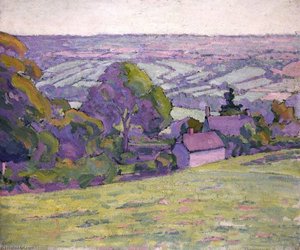
Náhled v interiéru
 Sdílet
 Sdílet
 Podrobnosti o díle
 Průvodce

 Stáhnout
 Podobné položky
 Rentgenové snímky
 Slideshow
 Q&A
Q&A Statistiky
Showing at Tattersall's
 Oil On Panel
- WallArt
- British Modernism
 1919
1919- Modern
 58.0 x 71.0 cm
 Ashmolean Museum
 Zobrazit více
Giclée / Umělecký tisk
Giclée nebo plátěný tisk muzeální kvality s rychlou výrobou a širokou nabídkou povrchových úprav. ( Koupit ručně malovaný obraz Přepnout na digitální obraz)




P118B Kč10

P118H Kč10

P118W Kč10

P438Z Kč10

P508JH Kč12

P508YH Kč12

P805H Kč10

P805Z Kč10

P919BZ Kč10

P919G Kč10

P919XJ Kč10

P959ZH Kč10

P968JZ Kč12

W106C Kč8

W218G Kč10

W218JH Kč8

W218Y Kč10

W307PJ Kč10

W316G Kč10

W316PJ Kč8

W316Y Kč10

W398PJ Kč8

W4111J Kč10

W500HY Kč15

W500JH Kč15

W692G Kč12

W849H Kč8

W940BG Kč15

W953PJ Kč8




Vyberte si z našich přednastavených velikostí, které odpovídají původním proporcím díla.

Zadejte šířku a výšku, které potřebujete pro váš rám nebo stěnu. Tisk lze pouze oříznout, nikdy však nelze zvětšit obraz nad jeho původní rozměr, proto při výběru jiného formátu dochází ke ztrátě části obrazu. Před samotným tiskem vám zašleme digitální náhled k schválení. Obraz zobrazený na této stránce nenabízí skutečný výřez — ten uvidíte pouze v náhledu.
Celosvětové doručení () do 2 týdnů namísto standardních 4/5 týdnů. (28 říjen)

Zdarma celosvětová expresní doprava

Vysoce kvalitní lněné plátno

Kompletní pojištění přepravy

Záruka vrácení celního poplatku

Záruka věrného barevného souladu

100dení lhůta pro vrácení zboží (pouze při vadách výroby)

100% záruka vrácení peněz

Sleva při více objednávkách
 Skleněná varianta je dostupná pouze u rozměrů menších než 110 cm

Showing at Tattersall's
Giclée / Umělecký tisk
Rozměry reprodukce
-


Celková cena za vybrané možnosti reprodukcí
Kč 1723
A Vibrant Snapshot of Racing Tradition
Robert Bevan's “Showing at Tattersall’s,” completed in 1919, stands as a remarkable testament to British Modernism and a captivating portrayal of the social fabric surrounding horse racing during its golden age. This oil on panel painting transcends mere depiction; it captures an atmosphere brimming with energy and ambition—a feeling palpable even through high-quality reproductions. The scene unfolds as a bustling tableau, presenting a horse race unfolding against the backdrop of London’s streets. Bevan skillfully employs diagonal lines to guide the viewer's eye across the canvas, emphasizing the movement of the horses as they surge forward. At the heart of this composition lies a striking blue horse, appearing to gallop with a sense of unbridled power, serving as a focal point that anchors the surrounding chaos.
The painting is far more than a simple record of an event; it is a meticulously crafted tableau vivant, a frozen moment brimming with the energy and social significance of an era. Tattersalls, renowned for its history of selling thoroughbred racehorses, serves here as a microcosm of society, a place where wealth, status, and tradition converged. Through his brush, Bevan captures the excitement of the competition, utilizing warmer tones of reds and yellows emanating from the spectators to highlight the palpable tension and joy of the crowd. For the collector or interior designer, this piece offers a window into a vanished world, bringing a sense of historical prestige and dynamic movement into any contemporary space.
Mastery of Color and Fauvist Influence
Bevan’s artistic approach aligns closely with the burgeoning Fauvist movement, spearheaded by legends like Matisse and Derain. Like his contemporaries, Bevan prioritized expressive color over strict realism, choosing to prioritize emotion and sensation above meticulous detail. This stylistic choice is evident in the textured brushstrokes that imbue the canvas with a palpable sense of immediacy. The dominant hue of striking blue is chosen not just for its visual impact but also to represent prestige and nobility—associations fitting for the legendary auction house. These bold colors are balanced by a sophisticated use of light, where diffused daylight creates an atmospheric depth that anchors the scene.
The technique showcases Bevan's distinctive style, characterized by smooth planes of color, sharp outlines, and a deliberate flattening of perspective. While his approach is reminiscent of Impressionism, he pushes beyond mere representation to achieve a modern abstraction. The figures within the painting are rendered with a remarkable degree of realism, yet they are imbued with a subtle sense of ambiguity; faces are often obscured by hats or coats, suggesting a detachment that emphasizes the spectacle itself rather than individual personalities. This deliberate choice invites the viewer to become an observer within the scene, making the artwork an immersive experience.
A Timeless Addition to the Modern Interior
As a founding member of the Camden Town Group, Robert Bevan sought to capture the gritty yet vibrant realities of London life. “Showing at Tattersall’s” exemplifies this mission, offering a sophisticated blend of movement and stillness. The painting's ability to balance energetic composition with a harmonious color palette makes it an exceptional choice for art lovers seeking pieces that provoke conversation and evoke emotion. Whether placed in a grand gallery or as a focal point in a curated residential collection, the work radiates a sense of vitality.
For those looking to invest in a high-quality reproduction, this piece provides more than just decoration; it offers an infusion of British heritage and modernist innovation. The interplay of the cool blues against the warm, sunlit tones creates a visual rhythm that complements various interior aesthetics, from classic traditionalism to sleek modern minimalism. Owning a piece of this caliber allows one to possess a fragment of the golden age of racing, preserved through the lens of a master who redefined the boundaries of British art.
Otázky a odpovědi
Jak výrazné jsou barvy díla „Showing at Tattersall's“?
Dílo „Showing at Tattersall's“ od Robert Polhill Bevan je zachyceno s Clear Color Presence saturací a Vivid intenzitou.
V jaké technice a jaké velikosti je originál díla „Showing at Tattersall's“ od Robert Polhill Bevan?
Technikou díla „Showing at Tattersall's“ od Robert Polhill Bevan je Oil On Panel a jeho rozměry jsou 58 x 71 cm.
Z jakého období pochází dílo „Showing at Tattersall's“ od Robert Polhill Bevan?
Dílo „Showing at Tattersall's“ od Robert Polhill Bevan pochází z období Modern. Toto období poskytuje dílu historický kontext.
Biografie umělce
Robert Polhill Bevan (1865–1925): British painter & Camden Town Group founder
Robert Polhill Bevan, born in Hove in 1865, occupies a pivotal yet often understated position within the narrative of early 20th-century British art. Emerging from a Quaker background steeped in banking connections – his parents were Richard Alexander Bevan and Laura Maria Polhill – he defied conventional expectations to become a daring innovator, a key figure in the transition from Impressionism towards more radical explorations of color and form. His journey was one of constant experimentation, absorbing influences from across Europe while forging a distinctly personal artistic vision that would profoundly impact the development of modern art in Britain. Bevan’s early education at Westminster School of Art under Fred Brown provided a solid foundation, but it was his subsequent studies at the Académie Julian in Paris that truly ignited his creative spark. There, he encountered a constellation of rising stars – Paul Sérusier, Pierre Bonnard, Édouard Vuillard, and Maurice Denis – artists who were challenging academic conventions and embracing new approaches to painting. These encounters proved formative, exposing Bevan to the principles of synthetism and laying the groundwork for his future explorations.Brittany, Fauvism, and the Search for Pure Color
The impact of Brittany on Bevan’s artistic development cannot be overstated. Two significant journeys in 1890 and 1891 immersed him in the atmosphere of Pont-Aven, a small coastal town that had become a magnet for artists seeking an alternative to Parisian salon culture. The bold colors and simplified forms championed by artists like Gauguin resonated deeply with Bevan, influencing his early drawings and prints. He was particularly drawn to the luminous landscapes of Breton Brittany, where he spent considerable time studying the works of Paul Gauguin and Vincent van Gogh. This fascination fueled his experimentation with pure color – a technique that would foreshadow the emergence of Fauvism on the continent – as evidenced by paintings like “The Chestnut Tree” and “Landscape in the Blackdown Hills.” Bevan’s approach wasn't merely decorative; it represented a deliberate rejection of academic realism, prioritizing expressive chromatic intensity over accurate representation. This bold stylistic choice distinguished him from many of his contemporaries and cemented his place among the vanguard of British modernism. The influence of Cézanne was also palpable in Bevan’s work during this period, particularly in his exploration of geometric forms and spatial relationships – a testament to his intellectual curiosity and engagement with broader artistic trends.Collective Visions: The Camden Town Group and Beyond
Bevan wasn't an artist who operated alone; he actively sought connection with fellow innovators determined to redefine British art. He was a founding member of the Fitzroy Street Group, alongside artists like Walter Sickert and Frank Auerbach, which quickly evolved into the Camden Town Group in 1911. This collective aimed to depict modern urban life – particularly London’s East End – with uncompromising honesty and emotional intensity. Bevan's involvement with the Camden Town Group was crucial for fostering a dialogue about artistic experimentation and challenging established conventions. He joined forces with Spencer Gore, Joseph Crawhall and Henry Tonks, creating a vibrant artistic community that pushed boundaries and explored new expressive possibilities. Furthermore, Bevan’s membership in the London Group (established in 1913) alongside artists like Vanessa Bell and Roger Fry solidified his commitment to avant-garde ideals and broadened his artistic horizons. He also participated in the Cumberland Market Group in 1915, collaborating with fellow Camden Town painters on ambitious projects that reflected the spirit of the era. Bevan’s engagement with these groups wasn't merely social; it stimulated intellectual debate and encouraged him to confront pressing societal issues – a characteristic that would inform his artistic output throughout his career.Landscapes, Urban Scenes, and Lasting Legacy
Bevan’s oeuvre spanned diverse subjects—portraits capturing the dignity of individuals—and urban scenes documenting the realities of modern life (“The Cab Horse”). However, he is most celebrated for his landscapes – particularly those depicting the Blackdown Hills near Lewes, Sussex. His paintings embody a profound appreciation for the beauty of the natural world and are imbued with an expressive dynamism that captures fleeting moments of light and atmosphere. Works like “In the Downs Near Lewes,” “The Chestnut Tree” and “Landscape in the Blackdown Hills, Devon” exemplify Bevan’s mastery of color and brushwork—techniques honed during his formative years in Brittany and Paris. He skillfully employed divisionist principles – a technique pioneered by Georges Seurat – to achieve remarkable tonal effects, creating luminous surfaces that convey both visual splendor and emotional depth. Bevan's artistic vision extended beyond mere representation; he sought to communicate an inner experience—a feeling for the rhythms of nature and the complexities of human existence. His paintings remain treasured examples of British landscape art from the early twentieth century, demonstrating a commitment to innovation and aesthetic integrity that continues to inspire artists today. Bevan’s contribution to British modernism is undeniable; he stands as a beacon of artistic courage and intellectual curiosity—a legacy that secures his place in art history- Notable artworks: “The Farmhouse”, “Ploughing on the Downs”, “Queen’s Grove”, “The Cab Horse”
- Places of birth: Hove, United Kingdom

Robert Polhill Bevan
1865 - 1925 , Spojené království
Rychlé informace o umělci
- Artistic Movement Or Style: Fauvism, Divisionism
- Artists Or Movements Influenced By This Artist: ['Modern British Art']
- Artists Who Influenced This Artist:
- Paul Gauguin
- Velázquez
- Goya
- Renoir
- Date Of Birth: 1865
- Date Of Death: 1925
- Full Name: Robert Polhill Bevan
- Nationality: British
- Notable Artworks:
- The Farmhouse
- Ploughing on the Downs
- Queen’s Grove
- The Cab Horse
- Place Of Birth: Hove, United Kingdom
Související články

The Equine Muse: A Historical & Artistic Exploration of Horses in Painting
Explore the captivating history of horses in painting! Discover Renaissance masterpieces, Baroque grandeur & expert insights for collecting equestrian art. Learn about symbolism, techniques & lasting value with OriginalUniqueArt.
The Noble Steed: A Historical and Artistic Exploration of Horses in Fine Art
Explore the rich history of horses in fine art! From ancient depictions to Renaissance masterpieces & beyond, discover iconic artworks and artists. Learn about symbolism, techniques, and find museum-quality reproductions at OriginalUniqueArt.

The Noble Steed on Canvas: A Historical & Artistic Exploration of Horse Painting Across Cultures
Explore the rich history of horse painting! Discover masterpieces from Stubbs to Munnings & learn about symbolism, techniques & artists. Find museum-quality reproductions at OriginalUniqueArt.
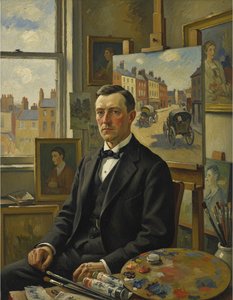
Robert Bevan: Pioneering British Post-Impressionism & the Camden Town Group's Intimate Vision
Explore the life & work of Robert Bevan, a pioneer of British Post-Impressionism and founding member of the Camden Town Group. Discover his vibrant landscapes and lasting impact on early 20th-century art.

Hubert Robert: Picturing Ruins, Preserving Memory – A Study of Romantic Antiquarianism & Artistic Innovation
Explore the captivating world of Hubert Robert, master of Romantic landscape painting & 'capriccio' ruins. Discover his historical context, artistic innovations, and collecting insights with OriginalUniqueArt.