Zobrazit v interiéru
 Odeslat
 Sdílet
 Podrobnosti
 Průvodce

 Stáhnout obrázek
 Podobné kousky
 Rentgenové snímky
 Slideshow
 Statistiky
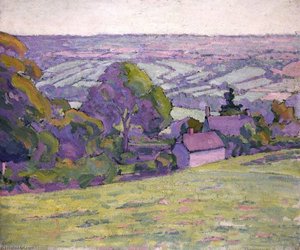
Devonshire Valley, No. 2
 Oil On Canvas
- WallArt
- Camden Town Group
 1913
1913- Modern
 48.0 x 58.0 cm
 Přečíst si více
Ručně malovaná olejová reprodukce
Ručně malované olejné plátno v libovolném rozměru i s rámem, vyrobené našimi umělci na zakázku. ( Přepnout na tiskové verze Přepnout na digitální verzi obrazu)




P118B Kč10

P118H Kč10

P118W Kč10

P438Z Kč10

P508JH Kč12

P508YH Kč12

P805H Kč10

P805Z Kč10

P919BZ Kč10

P919G Kč10

P919XJ Kč10

P959ZH Kč10

P968JZ Kč12

W106C Kč8

W218G Kč10

W218JH Kč8

W218Y Kč10

W307PJ Kč10

W316G Kč10

W316PJ Kč8

W316Y Kč10

W398PJ Kč8

W4111J Kč10

W500HY Kč15

W500JH Kč15

W692G Kč12

W849H Kč8

W940BG Kč15

W953PJ Kč8




Vyberte si z našich přednastavených velikostí, které odpovídají původním proporcím díla.

Můžete zadat vlastní rozměry pro konkrétní rám nebo prostor. Pokud se vámi vybraná velikost neshoduje s proporcemi původního obrazu, dílo buď ořízneme, nebo jej doplníme ručně malovanými prvky. Před zahájením výroby vám bude zaslán digitální náhled ke schválení.
Upozorňujeme, že náhled na obrazovce neodpovídá skutečnému ořezu ani rozšíření. Pouze digitální náhled přesně zobrazí finální kompozici.
Ačkoliv je možné zvolit vlastní velikost, pro zachování původních proporcí doporučujeme vybrat rozměr z předdefinovaného seznamu.
Po přijetí objednávky vám tým OriginalUniqueArt.com zašle e-mail s pokyny a poskytne náhledovou verzi.
Celosvětová doprava () za 3–4 týdny namísto standardních 5 týdnů. (13 říjen). Bez kompromisů v kvalitě.

Zdarma celosvětová expresní doprava

Vysoce kvalitní lněné plátno

Úplné pojištění přepravy

Záruka vrácení celního poplatku

Záruka věrného barevného shodu

100dení lhůta pro vrácení zboží (pouze při vadách výroby)

100% garance vrácení peněz

Sleva při více objednávkách
 Skleněná varianta je dostupná pouze u rozměrů menších než 110 cm

Devonshire Valley, No. 2
Technika provedení
Velikost reprodukce
-


Celková cena
Kč 6269
A Window into the English Pastoral: The Soul of Devonshire Valley
In the quietude of 1913, just before the world was irrevocably altered by the shadows of the Great War, Robert Polhill Bevan captured a moment of profound serenity in Devonshire Valley, No. 2. This exquisite oil on canvas serves as more than a mere landscape; it is an evocative portal into a lost era of English tranquility. The painting presents a sweeping, panoramic vista of a verdant valley, where rolling hills meet a sky painted in soft, atmospheric tones. At the heart of this pastoral dream lies a small stone cottage, its pink-hued roof nestled intimately among a cluster of dark, expressive trees. As the eye wanders through the composition, one encounters the gentle rhythm of the countryside—a church steeple rising subtly above the rooftops and the distant silhouette of a windmill, standing as a silent sentinel of rural industry and tradition.
The emotional resonance of the piece lies in its ability to balance solitude with a sense of warmth. While the vastness of the valley might suggest a lonely expanse, the presence of human habitation—the houses adorned with red roofs and the inviting glow of the cottage—infuses the scene with a comforting vitality. There is a palpable sense of peace, an invitation to pause and breathe in the stillness of the meadows. For the collector or the interior designer, this artwork offers a sanctuary of calm, making it an ideal centerpiece for spaces designed for reflection, relaxation, and the celebration of natural beauty.
Mastery of Color and the Modernist Touch
Technically, Devonshire Valley, No. 2 is a masterclass in the application of color and texture, reflecting Bevan’s pivotal role within the Camden Town Group. Moving away from the strictures of traditional representational art, Bevan embraced a more modernist, almost Fauvist approach to the landscape. The palette is strikingly bold; deep purelish blues and vibrant greens interweave to create an atmospheric depth that feels both tactile and dreamlike. The artist utilizes a heavy impasto technique, particularly in the foliage and the cottage walls, where thick, visible brushstrokes catch the light and lend a sculptural quality to the canvas.
This emphasis on texture and color over precise line work allows the landscape to breathe with an organic energy. The lighting appears diffused, as if filtered through a soft English mist, which softens the edges of the world and blends the distant hills into the pale sky. This technique creates a flattened perspective that is characteristic of plein air painting, drawing the viewer not just to look at the scene, but to feel the very atmosphere of the valley. The interplay between the intense, saturated hues and the more muted, atmospheric tones ensures that the painting remains visually dynamic from every angle.
A Legacy of Innovation and Timeless Appeal
To understand this work is to understand a turning point in British art history. As a pioneer of modernism, Bevan’s ability to synthesize the light-filled traditions of Impressionism with the bold, simplified forms of the early 20th century makes this piece a significant historical document. It captures the essence of a landscape untouched by the ravages of industrial upheaval or war, preserving a nostalgic vision of the English countryside that continues to captivate contemporary audiences.
For those seeking to adorn their homes with art that possesses both historical weight and aesthetic grace, a high-quality reproduction of this masterpiece offers an unparalleled opportunity. Whether placed in a sunlit library or a sophisticated modern living space, Devonshire Valley, No. 2 brings with it a sense of enduring elegance and a profound connection to the beauty of the natural world. It is an investment in atmosphere, a piece that does not merely decorate a wall but enriches the very spirit of a room.
Otázky a odpovědi
Kdo vytvořil dílo "Devonshire Valley, No. 2" a v jakém stylu je zpracováno?
Za dílem "Devonshire Valley, No. 2" stojí Robert Polhill Bevan a směr Camden Town Group.
Mohu si před koupí prohlédnout „Devonshire Valley, No. 2“ od Robert Polhill Bevan na své vlastní stěně?
Stránka Náhled v AR díla „Devonshire Valley, No. 2“ od Robert Polhill Bevan využívá rozšířenou realitu k tomu, aby vám toto umělecké dílo zobrazila přímo ve vašem prostoru pomocí kompatibilního zařízení.
Jaký je formát a rozměr díla "Devonshire Valley, No. 2"?
„Devonshire Valley, No. 2“ od Robert Polhill Bevan je kompozice ve formátu Landscape o původních rozměrech 48 x 58 cm.
Mohu si prohlédnout rentgenový snímek díla „Devonshire Valley, No. 2“ od Robert Polhill Bevan?
Stránka Rentgenové snímky díla „Devonshire Valley, No. 2“ od Robert Polhill Bevan představuje interaktivní prohlížeč, který vám umožňuje procházet jedenácty optickými vrstvami obrazu díla, včetně pohledu ve stylu rentgenu.
Jakou techniku a jakou velikost má originál díla „Devonshire Valley, No. 2“ od Robert Polhill Bevan?
Dílo „Devonshire Valley, No. 2“ je vytvořeno v technice Oil On Canvas a v původní podobě má rozměry 48 x 58 cm.
Do které období tvorby Robert Polhill Bevan spadá dílo "Devonshire Valley, No. 2"?
„Devonshire Valley, No. 2“ představuje období Mature Period umělce Robert Polhill Bevan.
Jakou barevnou harmonii představuje dílo „Devonshire Valley, No. 2“ od Robert Polhill Bevan?
Barevná harmonie díla "Devonshire Valley, No. 2" je hodnocena jako Discordant Palette.
Jak "Devonshire Valley, No. 2" vyvažuje světlo a stín?
Zaznamenané hodnoty pro dílo „Devonshire Valley, No. 2“ od Robert Polhill Bevan jsou: jas brilliant, luminance Bright Balance.
Biografie umělce
Robert Polhill Bevan (1865–1925): British painter & Camden Town Group founder
Robert Polhill Bevan, born in Hove in 1865, occupies a pivotal yet often understated position within the narrative of early 20th-century British art. Emerging from a Quaker background steeped in banking connections – his parents were Richard Alexander Bevan and Laura Maria Polhill – he defied conventional expectations to become a daring innovator, a key figure in the transition from Impressionism towards more radical explorations of color and form. His journey was one of constant experimentation, absorbing influences from across Europe while forging a distinctly personal artistic vision that would profoundly impact the development of modern art in Britain. Bevan’s early education at Westminster School of Art under Fred Brown provided a solid foundation, but it was his subsequent studies at the Académie Julian in Paris that truly ignited his creative spark. There, he encountered a constellation of rising stars – Paul Sérusier, Pierre Bonnard, Édouard Vuillard, and Maurice Denis – artists who were challenging academic conventions and embracing new approaches to painting. These encounters proved formative, exposing Bevan to the principles of synthetism and laying the groundwork for his future explorations.Brittany, Fauvism, and the Search for Pure Color
The impact of Brittany on Bevan’s artistic development cannot be overstated. Two significant journeys in 1890 and 1891 immersed him in the atmosphere of Pont-Aven, a small coastal town that had become a magnet for artists seeking an alternative to Parisian salon culture. The bold colors and simplified forms championed by artists like Gauguin resonated deeply with Bevan, influencing his early drawings and prints. He was particularly drawn to the luminous landscapes of Breton Brittany, where he spent considerable time studying the works of Paul Gauguin and Vincent van Gogh. This fascination fueled his experimentation with pure color – a technique that would foreshadow the emergence of Fauvism on the continent – as evidenced by paintings like “The Chestnut Tree” and “Landscape in the Blackdown Hills.” Bevan’s approach wasn't merely decorative; it represented a deliberate rejection of academic realism, prioritizing expressive chromatic intensity over accurate representation. This bold stylistic choice distinguished him from many of his contemporaries and cemented his place among the vanguard of British modernism. The influence of Cézanne was also palpable in Bevan’s work during this period, particularly in his exploration of geometric forms and spatial relationships – a testament to his intellectual curiosity and engagement with broader artistic trends.Collective Visions: The Camden Town Group and Beyond
Bevan wasn't an artist who operated alone; he actively sought connection with fellow innovators determined to redefine British art. He was a founding member of the Fitzroy Street Group, alongside artists like Walter Sickert and Frank Auerbach, which quickly evolved into the Camden Town Group in 1911. This collective aimed to depict modern urban life – particularly London’s East End – with uncompromising honesty and emotional intensity. Bevan's involvement with the Camden Town Group was crucial for fostering a dialogue about artistic experimentation and challenging established conventions. He joined forces with Spencer Gore, Joseph Crawhall and Henry Tonks, creating a vibrant artistic community that pushed boundaries and explored new expressive possibilities. Furthermore, Bevan’s membership in the London Group (established in 1913) alongside artists like Vanessa Bell and Roger Fry solidified his commitment to avant-garde ideals and broadened his artistic horizons. He also participated in the Cumberland Market Group in 1915, collaborating with fellow Camden Town painters on ambitious projects that reflected the spirit of the era. Bevan’s engagement with these groups wasn't merely social; it stimulated intellectual debate and encouraged him to confront pressing societal issues – a characteristic that would inform his artistic output throughout his career.Landscapes, Urban Scenes, and Lasting Legacy
Bevan’s oeuvre spanned diverse subjects—portraits capturing the dignity of individuals—and urban scenes documenting the realities of modern life (“The Cab Horse”). However, he is most celebrated for his landscapes – particularly those depicting the Blackdown Hills near Lewes, Sussex. His paintings embody a profound appreciation for the beauty of the natural world and are imbued with an expressive dynamism that captures fleeting moments of light and atmosphere. Works like “In the Downs Near Lewes,” “The Chestnut Tree” and “Landscape in the Blackdown Hills, Devon” exemplify Bevan’s mastery of color and brushwork—techniques honed during his formative years in Brittany and Paris. He skillfully employed divisionist principles – a technique pioneered by Georges Seurat – to achieve remarkable tonal effects, creating luminous surfaces that convey both visual splendor and emotional depth. Bevan's artistic vision extended beyond mere representation; he sought to communicate an inner experience—a feeling for the rhythms of nature and the complexities of human existence. His paintings remain treasured examples of British landscape art from the early twentieth century, demonstrating a commitment to innovation and aesthetic integrity that continues to inspire artists today. Bevan’s contribution to British modernism is undeniable; he stands as a beacon of artistic courage and intellectual curiosity—a legacy that secures his place in art history- Notable artworks: “The Farmhouse”, “Ploughing on the Downs”, “Queen’s Grove”, “The Cab Horse”
- Places of birth: Hove, United Kingdom

Robert Polhill Bevan
1865 - 1925 , Spojené království
Rychlé informace
- Artistic Movement Or Style: Fauvism, Divisionism
- Artists Or Movements Influenced By This Artist: ['Modern British Art']
- Artists Who Influenced This Artist:
- Paul Gauguin
- Velázquez
- Goya
- Renoir
- Date Of Birth: 1865
- Date Of Death: 1925
- Full Name: Robert Polhill Bevan
- Nationality: British
- Notable Artworks:
- The Farmhouse
- Ploughing on the Downs
- Queen’s Grove
- The Cab Horse
- Place Of Birth: Hove, United Kingdom
Související články
Robert Seldon Duncanson: Landscape, Abolitionism & Shaping American Identity
Discover Robert Seldon Duncanson, the first internationally acclaimed African American landscape artist. Explore his connection to the Hudson River School, abolitionism, and enduring legacy through serene vistas & powerful symbolism.
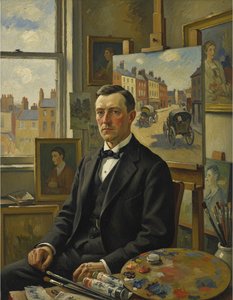
Robert Bevan: Pioneering British Post-Impressionism & the Camden Town Group's Intimate Vision
Explore the life & work of Robert Bevan, a pioneer of British Post-Impressionism and founding member of the Camden Town Group. Discover his vibrant landscapes and lasting impact on early 20th-century art.

Hubert Robert: Picturing Ruins, Preserving Memory – A Study of Romantic Antiquarianism & Artistic Innovation
Explore the captivating world of Hubert Robert, master of Romantic landscape painting & 'capriccio' ruins. Discover his historical context, artistic innovations, and collecting insights with OriginalUniqueArt.
Robert Havell Sr.: Botanical Precision & the Rise of Colour Plate Publishing
Explore the life & work of Robert Havell Sr., a pioneer of botanical illustration and key collaborator with Audubon. Discover his stunning aquatint engravings, artistic techniques, and lasting impact on 19th-century art.

David Roberts: A Scottish Pioneer of Topographical Art & Orientalist Vision
Explore the captivating world of David Roberts, a pioneering Scottish painter renowned for his detailed Orientalist scenes & stunning Egyptian landscapes. Discover his legacy and find museum-quality reproductions at OriginalUniqueArt.