Text size

() ·

A painting made for you, by hand

Snow in New York

Ručně malovaná olejová reprodukce

Rukou malované olejné plátno v libovolném rozměru i s rámem, vyrobené našimi umělci na zakázku. ( Přepnout na tisk Přepnout na digitální obraz)

Popis sbírného předmětu

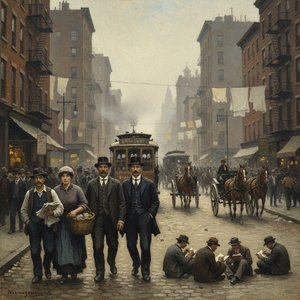
Robert Henri’s "Snow in New York" (1902) captures a gritty NYC street scene with thick impasto and muted tones, reflecting the Ashcan School's realism. Explore urban life through this iconic painting.

Biografie umělce

Robert Henri (1865-1929) byl americký malíř, klíčová postava Ashcan School. Zachytával realitu života s upřímností a ovlivnil řadu umělců. Inspirace od Edwarda Hoppera.

from ·

Chapter 1

How large should it be?

Slide to change the size; the picture on the left shows the frame at its real width. The proportions of the original are kept.

Standardní velikost
na zakázku
CM
INCH

Vyberte si z našich přednastavených velikostí, které odpovídají původním proporcím díla.

šířka
výška

Zadejte šířku a výšku, které potřebujete pro váš rám nebo stěnu. Protože se jedná o ruční malbu, při výběru jiného formátu může umělec kolem obrazu domalovat o něco více, nebo jej mírně oříznout — rozhodnete si vy. Před zahájením malby vám zašleme digitální náhled ke schválení. Obraz zobrazený na této stránce neodpovídá skutečnému výsledku — pouze digitální náhled jej zobrazuje.

Chapter 2

How should it arrive?

Choose the edges of the stretched canvas

Choose your frame

Corner sample of the WhiteWrap canvas edge finish, stretched on masivní dřevo bars
White Kč1
Corner sample of the BlurSideWrap canvas edge finish, stretched on masivní dřevo bars
Blurside Kč1
Corner sample of the ExtendedWrap canvas edge finish, stretched on masivní dřevo bars
Extended Kč1
Corner sample of the P118B picture frame: tvarovaný polystyren, 5 cm wide and 3 cm thick
P118B Kč10
Corner sample of the P118H picture frame: tvarovaný polystyren, 5 cm wide and 3 cm thick
P118H Kč10
Corner sample of the P118W picture frame: tvarovaný polystyren, 5 cm wide and 3 cm thick
P118W Kč10
Corner sample of the P438Z picture frame: tvarovaný polystyren, 5.5 cm wide and 3.5 cm thick
P438Z Kč10
Corner sample of the P508JH picture frame: tvarovaný polystyren, 7 cm wide and 3.5 cm thick
P508JH Kč12
Corner sample of the P508YH picture frame: tvarovaný polystyren, 7 cm wide and 3.5 cm thick
P508YH Kč12
Corner sample of the P805H picture frame: tvarovaný polystyren, 5 cm wide and 3.5 cm thick
P805H Kč10
Corner sample of the P805Z picture frame: tvarovaný polystyren, 5 cm wide and 3.5 cm thick
P805Z Kč10
Corner sample of the P919BZ picture frame: tvarovaný polystyren, 7 cm wide and 3.5 cm thick
P919BZ Kč10
Corner sample of the P919G picture frame: tvarovaný polystyren, 7 cm wide and 3.5 cm thick
P919G Kč10
Corner sample of the P919XJ picture frame: tvarovaný polystyren, 7 cm wide and 3.5 cm thick
P919XJ Kč10
Corner sample of the P959ZH picture frame: tvarovaný polystyren, 5 cm wide and 3 cm thick
P959ZH Kč10
Corner sample of the P968JZ picture frame: tvarovaný polystyren, 6 cm wide and 4 cm thick
P968JZ Kč12
Corner sample of the W106C picture frame: masivní dřevo, 5 cm wide and 3 cm thick
W106C Kč8
Corner sample of the W218G picture frame: masivní dřevo, 5 cm wide and 3 cm thick
W218G Kč10
Corner sample of the W218JH picture frame: masivní dřevo, 5 cm wide and 3 cm thick
W218JH Kč8
Corner sample of the W218Y picture frame: masivní dřevo, 5 cm wide and 3 cm thick
W218Y Kč10
Corner sample of the W307PJ picture frame: masivní dřevo, 6 cm wide and 3 cm thick
W307PJ Kč10
Corner sample of the W316G picture frame: masivní dřevo, 6 cm wide and 3 cm thick
W316G Kč10
Corner sample of the W316PJ picture frame: masivní dřevo, 6 cm wide and 3 cm thick
W316PJ Kč8
Corner sample of the W316Y picture frame: masivní dřevo, 6 cm wide and 3 cm thick
W316Y Kč10
Corner sample of the W398PJ picture frame: masivní dřevo, 5 cm wide and 3 cm thick
W398PJ Kč8
Corner sample of the W4111J picture frame: masivní dřevo, 6.5 cm wide and 3.5 cm thick
W4111J Kč10
Corner sample of the W500HY picture frame: masivní dřevo, 7 cm wide and 5 cm thick
W500HY Kč15
Corner sample of the W500JH picture frame: masivní dřevo, 7 cm wide and 5 cm thick
W500JH Kč15
Corner sample of the W692G picture frame: masivní dřevo, 8 cm wide and 4 cm thick
W692G Kč12
Corner sample of the W849H picture frame: masivní dřevo, 5 cm wide and 3 cm thick
W849H Kč8
Corner sample of the W940BG picture frame: masivní dřevo, 7.5 cm wide and 4.5 cm thick
W940BG Kč15
Corner sample of the W953PJ picture frame: masivní dřevo, 6 cm wide and 3.5 cm thick
W953PJ Kč8
Corner sample of the H24-GOLD picture frame: řezané dřevo s gessu, 10 cm wide and 6 cm thick
H24-GOLD Kč30
Corner sample of the H24-SILVER picture frame: řezané dřevo s gessu, 10 cm wide and 6 cm thick
H24-SILVER Kč30
Corner sample of the H36-GOLD picture frame: řezané dřevo s gessu, 15 cm wide and 6.5 cm thick
H36-GOLD Kč45
Corner sample of the H36-SILVER picture frame: řezané dřevo s gessu, 15 cm wide and 6.5 cm thick
H36-SILVER Kč45

Moulding: . Overall size with the frame: .

Chapter 3

Who paints it, and should anything change?

Examples of what can be changed: Replace face with customer photo; Add pet (e.g., replace cat with dog); Include hidden message in background; Change background landscape or elements.
After order, OriginalUniqueArt.com team will email client for instructions and provide a mockup preview

Celosvětová doprava () za 3–4 týdny namísto standardních 5 týdnů. (2 listopad). Bez kompromisů v kvalitě.

Chapter 4

The finishing touches

A nameplate, as in a museum?

Detaily ryté bronzové plakety

This elegant plaque features the artist's name and the title of the artwork, finely engraved for a timeless presentation.

It is made from bronze with a refined, elegant finish. The text is precisely laser-engraved for a sharp and permanent result. Measuring 9x2 cm, the plaque is compact yet easy to read. It's built to be durable and scratch-resistant, offering a professional, museum-quality look. Mounting is simple thanks to the included adhesive backing.

Detaily průhledné akrylové desky

The plaque includes essential engraved details such as the artist's name, the title of the artwork, the date it was created, the type of media used-like oil on canvas or watercolor-a brief description of the piece, and a QR code that links to the complete artwork information.

It is crafted from clear acrylic, offering a sleek, modern appearance. The text is UV-engraved in black to ensure strong visual contrast. With a size of 10x15 cm, it ensures optimal readability. It comes equipped with two metal hooks for secure wall mounting. The plaque is designed to be weather-resistant, making it suitable for various environments, and it includes interactive features that work seamlessly with smartphone scanning.

Detaily černé akrylové destičky

This elegant plaque includes engraved information such as the artist's name, the title of the artwork, the date it was created, the type of media used (like oil on canvas or watercolor), a short description of the artwork, and a QR code for quick access to more information.

The plaque itself is made from refined black acrylic with a premium finish. The text is laser-engraved in white for high contrast and readability. Its size is 10x15 cm, designed to be easy to read. It comes with two metal hooks for professional mounting. The design is sleek and fits any interior style. It is also weather-resistant and durable, with built-in digital integration for mobile compatibility.

A protective varnish?

When do you need it?

Chapter 5

Your painting, as you ordered it

Snow in New York

Technika reprodukce

Rozměry reprodukce

-

Vybraní mistři umění

Vyšší míra detailu, jemnosti a delší doba výroby

-

Možnosti rámování reprodukcí

-

-

U děl nebo reprodukcí, u nichž je jakákoliv strana větší než 105 cm (přibližně 41 palců), bude rám dodán jako sestava v rozloženém stavu. Tato metoda zajišťuje bezpečné doručení a chrání dílo před poškozením během přepravy.

Vyžaduje se odborná montáž – nejedná se o produkt pro svépomocnou realizaci (DIY).
Sestava musí být složena a plátno napnuto zkušeným profesionálním rámovačem s použitím dřevěného lepidla (není součástí balení), kleští na napínání plátna a svorek pro udržení pravých úhlů křížů během schnutí lepidla. Nesprávná montáž nebo nerovnoměrné napnutí plátna může způsobit trvalé poškození uměleckého díla, které není kryto naší zárukou.

  • Jsou zahrnuty všechny lišty z masivního dřeva, přesně na míru nařezané.

  • Sestavuje se pomocí součástí balení (šroubů), plus dřevěného lepidla na rohové spoje, které není součástí balení a musí jej zajistit váš rámovač.

  • Vyžaduje se profesionální nářadí, které není součástí sady: kleště na napínání plátna a svorky pro udržení kolmosti příček během schnutí lepidla.

Důležité:
Spoje v rozích vyžadují lepidlo na dřevo, tyčinky musí být přichyceny pomocí svorek, dokud lepidlo zcela neuschne, a pro napnutí plátna na sestavený rám je zapotřebí kleští na natahování plátna. Žádný z těchto náčiní není součástí sady. Před objednáním této velikosti prosím zajistěte zkušeného profesionálního rámovače.

Popisek díla

-

-

Ochranný lak

Lesklý lak (zvýrazňuje barvy, chrání před světlem a vlhkostí)

-

Přizpůsobit své umělecké dílo

Příklady možných úprav: nahrazení obličeje fotografií zákazníka; přidání domácího mazlíčka (např. výměna kočky za psa); vložení skrytého vzkazu do pozadí; změna krajiny nebo prvků v pozadí.

-

Prioritní doručení

Celosvětové doručení () za 3–4 týdny namísto standardních 5 týdnů. (2 listopad). Bez kompromisů v kvalitě.

-

Expresní doručení

Celosvětová doprava () do 5 týdnů. (9 listopad).

V ceně

Celková cena za vybrané možnosti reprodukcí

Kč 6518

Celková cena Kč 6518

Skleněná varianta je dostupná pouze u rozměrů menších než 110 cm

Included with every order

  • Zdarma celosvětová expresní doprava
  • Vysoce kvalitní lněné plátno
  • Kompletní pojištění přepravy
  • Záruka vrácení celního poplatku
  • Záruka věrného barevného souladu
  • 100dení lhůta pro vrácení zboží (pouze při vadách výroby)
  • 100% záruka vrácení peněz
  • Sleva při více objednávkách

A Winter’s Gaze: Robert Henri's "Snow in New York"

Robert Henri’s “Snow in New York,” painted in 1902, isn’t merely a depiction of a snowy street; it’s a raw, almost brutal, distillation of urban life captured with an unprecedented honesty for its time. Far removed from the idealized landscapes favored by many of his contemporaries, Henri plunges headfirst into the gritty reality of New York City, presenting a scene both familiar and profoundly unsettling. The painting immediately commands attention not through picturesque beauty, but through its stark simplicity and the palpable sense of unease it evokes – a feeling that speaks volumes about the burgeoning anxieties of a rapidly changing America.

Henri’s style firmly places “Snow in New York” within the Ashcan School movement. Rejecting the academic traditions of the National Academy of Design, the Ashcan painters sought to portray everyday life—often the less glamorous aspects—with unflinching realism. This isn't a romanticized view; instead, we encounter a common side street, devoid of grand avenues or iconic landmarks. The composition is deliberately straightforward, utilizing a single-point perspective that draws the eye directly into the scene, emphasizing its immediacy and lack of embellishment. Thick impasto—a technique where paint is applied thickly to create texture—dominates the canvas, lending a tactile quality to the buildings, the snowdrifts, and even the figures traversing the street. The muted palette – browns, grays, and whites – further contributes to the painting’s somber mood, creating an atmosphere of quiet desperation.

The Painter's Perspective: Henri and the Ashcan School

Understanding Robert Henri requires acknowledging his pivotal role in shaping the Ashcan School. Born Robert Henry Cozad in Cincinnati in 1865, Henri’s early life was marked by instability following a fatal shooting involving his father. This event profoundly shaped his artistic vision, leading him to embrace a radical approach to painting—one that prioritized direct observation and honest representation over idealized beauty. Henri's time in Paris exposed him to the Impressionists, but he quickly moved beyond their focus on light and color, seeking instead to capture the essence of American life with unflinching detail. He famously declared that art should be “akin to journalism,” mirroring the straightforwardness and social commentary found in contemporary newspapers.

Henri’s studio became a hub for a group of like-minded artists—including George Luks, Everett Shinn, and William Glackens—collectively known as the "Philadelphia Four." They gathered regularly to discuss art, literature, and philosophy, fostering a spirit of experimentation and challenging established artistic conventions. This collaborative environment fueled their shared desire to depict the realities of urban America, often focusing on marginalized communities and the struggles faced by ordinary people.

Symbolism in the Streetscape

While seemingly simple, “Snow in New York” is rich with symbolic meaning. The absence of grand buildings or recognizable landmarks suggests a sense of anonymity and isolation within the vastness of the city. The figures walking along the street—carrying handbags, bundled in coats—represent the everyday lives of New Yorkers, their faces obscured by the gloom, lost in their own thoughts. The snow itself acts as a metaphor for both hardship and resilience – covering the streets but also creating a temporary sense of stillness. The presence of a wagon suggests commerce and the relentless cycle of urban activity, highlighting the constant struggle for survival.

Notably, Henri’s choice to depict a common street rather than a major avenue is significant. It reflects his deliberate rejection of romanticized views of New York and his focus on the overlooked corners of the city—the places where life unfolded with quiet intensity. The painting isn't about spectacle; it’s about capturing the essence of an ordinary day in an extraordinary place.

A Legacy of Realism

“Snow in New York” remains a powerful testament to Robert Henri’s artistic vision and his pioneering role in American art. It stands as a crucial example of the Ashcan School, demonstrating a commitment to realism, social commentary, and an honest portrayal of urban life. Reproductions of this evocative painting continue to resonate with viewers today, offering a glimpse into the heart of early 20th-century New York—a city grappling with rapid change, industrialization, and the challenges of modernity. Its enduring appeal lies in its ability to capture not just a scene, but also the complex emotions and experiences of those who lived within it.

Otázky a odpovědi

Kdo prodává ručně malované kopie díla „Snow in New York“ od Robert Henri?

„Snow in New York“ je dostupná jako ručně malovaná olejová reprodukce na lněném plátně. Objednávku můžete zadat na její stránce Ručně malovaná reprodukce, kde si můžete vybrat z různých rozměrů.

Nachází se dílo "Snow in New York" v zemi svého autora?

Ne – dílo se nachází v zahraničí. Dílo „Snow in New York“ je uloženo v zemi USA, zatímco Robert Henri se narodil(a) v zemi Spojené státy americké.

K čemu se doporučuje reprodukce díla „Snow in New York“ od Robert Henri?

Reprodukci díla „Snow in New York“ od Robert Henri doporučujeme pro Statement. Toto doporučení vychází z tématu, nálady a barevnosti tohoto díla.

More about this painting

Náhled v interiéru Náhled v AR Přepnout na tisk Přepnout na digitální obraz Sdílet
Podrobnosti o díle Průvodce Přidat do oblíbených Stáhnout Podobné položky Rentgenové snímky Slideshow Q&A Statistiky

In numbers

  • 1902the year it was painted
  • 29frames to choose from
  • standard sizes, in its own proportions
  • 5weeks to paint and deliver it
Robert Henri

Robert Henri

1865 - 1929, Spojené státy americké

Quick facts about Robert Henri

  • Artistic Movement Or Style: Ashcan School, Realismus
  • Artists Or Movements Influenced By This Artist:
    • Edward Hopper
    • The Eight
  • Artists Who Influenced This Artist:
    • William Bouguereau
    • François Millet
  • Date Of Birth: 24. června 1865
  • Date Of Death: 12. července 1929
  • Full Name: Robert Henry Cozad
  • Nationality: Američan
  • Notable Artworks:
    • Žena v mantlu
    • Ne sníh
    • Sissy ve žlutém
  • Place Of Birth: Cincinnati, USA

Biografie umělce

A Turbulent Genesis: The Early Life of Robert Henri

Robert Henri, born Robert Henry Cozad in Cincinnati, Ohio, in 1865, carried within him from the outset a sense of displacement and reinvention that would profoundly shape both his life and art. His childhood was far from idyllic; shadowed by the volatile relationship between his father, John Jackson Cozad—a man of ambition and risk as a gambler and real estate developer—and his mother, Theresa Gatewood Cozad. This instability culminated in a dramatic event in 1882: a fatal shooting over a land dispute that forced the family into flight, adopting new identities to escape retribution. Young Robert became Robert Henri, a deliberate severing from a past fraught with conflict and a symbolic rebirth as an artist. The westward journey through Nebraska and Colorado, culminating in a settling in New York City and then Atlantic City, instilled within him a deep empathy for those living on the fringes of society—an empathy that would become a defining characteristic of his artistic vision. This early experience of upheaval and reinvention fostered a spirit of independence and a commitment to portraying life as it truly was, unburdened by convention or societal expectation.

Forging a New Vision: Artistic Development and Influences

Henri’s formal artistic education began at the Pennsylvania Academy of the Fine Arts in Philadelphia under Thomas Anshutz, where he honed his technical skills. However, it was his subsequent journey to Paris in 1888 that truly ignited his artistic awakening. Initially drawn to the academic tradition at the Académie Julian and influenced by masters like William-Adolphe Bouguereau and François Millet, Henri gradually gravitated towards Impressionism. Yet, he wasn’t content with merely replicating what he saw; he sought a more profound engagement with reality—a way to capture not just the fleeting effects of light but also the raw emotion and vitality of modern life. This quest led him to embrace a bolder, more direct approach, influenced by the Dutch Realist Franz Hals, whose loose brushwork and psychological insight resonated deeply with Henri’s own artistic sensibilities. He began experimenting with *pochades*, small wood panels used for quick sketches, encouraging spontaneity and immediacy in his work. Returning to America, he became a dedicated teacher, imparting not just technique but also a philosophy of art rooted in observation, honesty, and individual expression.

Championing the Real: The Ashcan School and “The Eight”

Robert Henri’s impact on American art extended far beyond his own canvases; he became a catalyst for change, challenging the conservative norms of the established art world. He was a central figure in the emergence of the Ashcan School—a group of artists who dared to depict the gritty realities of urban life, from bustling city streets to crowded tenements. Henri’s commitment to realism and his rejection of academic pretension led him to organize “The Eight” in 1908—a collective of like-minded artists including William Glackens, George Luks, Everett Shinn, and John Sloan—who staged an independent exhibition as a direct protest against the restrictive policies of the National Academy of Design. This act of defiance was a watershed moment in American art history, signaling a shift away from European dominance and towards a uniquely American artistic voice. Henri’s paintings during this period, such as “Woman in Manteau” (1899) and his evocative portraits, captured the dignity and resilience of ordinary people, offering a powerful counterpoint to the idealized representations favored by the establishment.

Legacy and Enduring Influence

Robert Henri’s influence on subsequent generations of American artists is immeasurable. As a teacher, he mentored a remarkable roster of talent, including Joseph Stella, Edward Hopper, Rockwell Kent, George Bellows, Norman Raeben, Louis D. Fancher, and Stuart Davis—artists who would go on to shape the course of 20th-century art. His book, *The Art Spirit*, published posthumously in 1923, remains a seminal text for aspiring artists, offering timeless wisdom on observation, technique, and the importance of artistic integrity. *Henri’s commitment to portraying life with honesty and empathy*, his rejection of convention, and his unwavering belief in the power of art to connect with audiences continue to inspire artists today. His paintings are not merely representations of reality; they are windows into the human condition—testaments to the beauty, struggle, and resilience of the human spirit. He left an indelible mark on American Realism, paving the way for a more democratic and inclusive art world that celebrated the everyday experiences of ordinary people. His legacy endures not only through his own masterful works but also through the countless artists he inspired to find their own voices and tell their own stories.

Rychlé informace

  • Medium: Oil on canvas
  • Movement: Ashcan School
  • Dimensions: 81.3 x 65.5 cm
  • Artistic style: Realism, Urban scene
  • Year: 1902
  • Subject or theme: City streetscape

Artový kvíz

U každé otázky je pouze jedna správná odpověď.

Otázka 1:
What artistic movement is Robert Henri’s ‘Snow in New York’ most closely associated with?
Otázka 2:
According to the description, what is a notable characteristic of ‘Snow in New York’ that distinguishes it from typical Impressionist urban snow scenes?
Otázka 3:
What year was ‘Snow in New York’ painted?
Otázka 4:
Robert Henri's biography mentions a significant family event that shaped his early life and artistic perspective. What was this event?
Prozkoumejte umělecká díla uspořádaná podle témat, stylů a charakteristik.