American Realism · 1914
Nelson (Robert Henri, 1914)
Robert Henri (1865–1929) vytvořil dílo Nelson. Pochází z roku 1914. Patří k hnutí American Realism. Je vyrobeno z Oil On Canvas.
- 1914
- Oil On Canvas

 Náhled v interiéru

 Ručně malovaná olejná reprodukce
 Sdílet
 Sdílet
 Informační list


 Stáhnout
 Podobné položky
 Rentgenové snímky
 Slideshow
 Otázky a odpovědi

 Statistiky
Nelson v kostce
- Název díla
- Nelson
- Autor
- Robert Henri (1865–1929)
- Rok narození umělce
- Cincinnati, Spojené státy americké
- Datum vytvoření
- 1914
- Technika
- Oil On Canvas
- Pohyb
- American Realism
- Období
- Modern
- Motiv
- portrait, boy, realism, introspection, american art, henri
Co przedstawuje dílo Nelson?
Nelson: A Glimpse into American Realism
Robert Henri’s "Nelson," painted in 1914, stands as a poignant example of American Realism, capturing the essence of everyday life with striking honesty and emotional depth. This oil on canvas portrait depicts a young boy, his gaze direct and seemingly introspective, inviting viewers to contemplate his inner world. The painting's power lies not just in its skillful execution but also in Henri’s ability to convey a sense of quiet dignity and perhaps even a touch of melancholy through the subject's posture and expression. The deep blue background serves to isolate Nelson, focusing attention on his face and upper body, enhancing the intimacy of the portrait.The Artist and His Vision: Robert Henri and the Ashcan School
Robert Henri (1865-1929) was a pivotal figure in American art, renowned for his bold style and commitment to portraying urban life with unflinching realism. As a leading member of the Ashcan School, Henri rejected the idealized subjects favored by traditional academic painting, instead choosing to depict scenes from everyday existence – bustling city streets, working-class neighborhoods, and ordinary people. His approach was revolutionary, challenging artistic conventions and paving the way for future generations of American artists. Henri’s influence extended beyond his own paintings; he was a dedicated teacher who encouraged his students to find beauty and significance in the commonplace, fostering a spirit of independent expression and social awareness within the art world. He was also an organizer of "The Eight," a group of artists who protested against the restrictive exhibition practices of the National Academy of Design, further solidifying his reputation as a champion of artistic freedom.Composition and Technique: Capturing Emotion Through Brushwork
Henri’s technique in “Nelson” is characterized by loose, expressive brushstrokes that imbue the painting with a sense of energy and spontaneity. The visible texture of the paint adds depth and dimension to the portrait, creating a dynamic interplay between light and shadow. The artist's use of color is equally impactful; the warm tones of Nelson’s skin contrast beautifully with the cool blue background, drawing the viewer's eye directly to the subject. The composition itself is deliberately simple, allowing the focus to remain squarely on Nelson’s face and expression. This deliberate restraint amplifies the emotional impact of the portrait, inviting viewers to project their own interpretations onto the young boy’s contemplative gaze. The absence of distracting details further emphasizes the intimacy between the viewer and the subject, creating a powerful sense of connection.Symbolism and Emotional Resonance
While seemingly straightforward in its depiction, "Nelson" carries layers of symbolic meaning. The boy's posture—arms crossed, head slightly bowed—suggests introspection or perhaps a quiet defiance. His direct gaze challenges the viewer, inviting them to engage with his emotions and experiences. Henri’s choice to portray Nelson not as an idealized figure but as a real boy, complete with subtle imperfections, speaks to his commitment to portraying humanity in all its complexity. The painting evokes a sense of nostalgia and reflection, prompting viewers to consider the lives and stories of those often overlooked by mainstream society. "Nelson" is more than just a portrait; it's a window into a specific moment in time, capturing the spirit of American Realism and offering a glimpse into the heart of an individual.Vysokorozlišené fotografie díla Nelson

Robert Henri, Nelson (1914). Veřejná doména
Odpovědi na otázky k dílu Nelson
V jakém roce vzniklo dílo „Nelson“ od Robert Henri?
Dílo "Nelson" pochází z roku 1914. Toto datum situuje dílo do období tvůrčí činnosti Robert Henri i do jeho dobové kontextu.
Jakou technikou je vytvořeno dílo "Nelson"?
Technikou díla „Nelson“ od Robert Henri je Oil On Canvas. Reprodukce mají za cíl věrně zachytit vzhled této techniky.
Co zachycuje dílo "Nelson"?
Témata obsažená v díle „Nelson“ od Robert Henri zahrnují portrait, boy, realism, introspection, american art, henri, 1914, expression. Tato témata společně shrnují obsah celého uměleckého díla.
Lze obraz díla „Nelson“ od Robert Henri volně reprodukovat?
Stav autorských práv pro dílo „Nelson“ od Robert Henri: toto dílo spadá do v rámci volného užití – autorská práva vypršela. To určuje, zda lze volně vytvářet reprodukce tohoto obrazu.
K kterému umělci je dílo "Nelson" připisováno?
Autorem díla „Nelson“ je Robert Henri. Práce je v katalogu uvedena pod jménem Robert Henri.
K kterému uměleckému směru patří „Nelson“ od Robert Henri?
Umělecký směr, ke kterému patří dílo „Nelson“ od Robert Henri, je American Realism. Tato klasifikace toto dílo umísťuje mezi související umělce a další umělecká díla.
Do které éry tvorby Robert Henri spadá dílo "Nelson"?
V rámci kariéry umělce Robert Henri spadá dílo „Nelson“ do období Mature Period. Tato fáze umožňuje jeho srovnání s dalšími díly tohoto umělce.
Kolik let bylo Robert Henri, když v roce 1914 vytvořil(a) dílo „Nelson“?
Při vzniku díla „Nelson“ v roce 1914 bylo umělcům Robert Henri (narozenému/é v 1865) 49 let.
Jak lze vysvětlit situaci s autorskými právy u díla „Nelson“ od Robert Henri?
Dílo „Nelson“ od Robert Henri spadá do volného užívání (v rámci volného užití – autorská práva vypršela). Autorské právo vyprší po určité době od úmrtí umělce, ke kterému došlo v roce 1929.
O umělci, Robert Henri

1865–1929, Spojené státy americké
Robert Henri
A Turbulent Genesis: The Early Life of Robert Henri Robert Henri, born Robert Henry Cozad in Cincinnati, Ohio, in 1865, carried within him from the outset a sense of displacement and reinvention that would profoundly shape both his life and art. His childhood was far from idyllic; shadowed by the volatile relationship between his father, John Jackson Cozad—a man of ambition and risk as a gambler and real estate developer—and his mother, Theresa Gatewood Cozad. This instability culminated in a dramatic event in 1882: a fatal shooting over a land dispute that forced the family into flight, adopting new identities to escape retribution. Young Robert became Robert Henri, a deliberate severing from a past fraught with conflict and a symbolic rebirth as an artist.
Také od autora Robert Henri
 Betalo Rubino, Dramatic Dancer1916
 The Green Fan (Girl of Toledo, Spain)
 O'Malley Home (Achill Island, County Mayo, Ireland)1913
 Young Woman in Black
Eseje k tématu Nelson
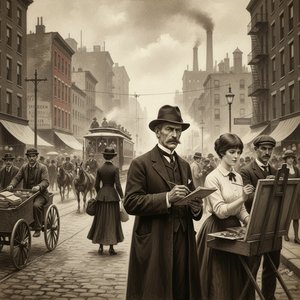 Robert Henri & the Spirit of American Realism: A Legacy of Urban Life and Artistic IndependenceExplore the life & legacy of Robert Henri, a pivotal figure in American Realism. Discover his captivating portraits, influence on the Ashca…
 Ashcan School vs. Social Realism: Understanding Two American MovementsMaster the differences between Ashcan School and Social Realism. Explore the history and key artists of these American movements now.
 Emotion vs. Observation: A Guide to Romanticism and RealismMaster the differences between Romanticism and Realism through expert analysis. Discover the art of emotion versus observation now.