Olejová verze
 Vše o Rythm







































 U děl nebo reprodukcí, u nichž je jakákoliv strana větší než 105 cm (přibližně 41 palců), bude rám dodán jako sestava v rozloženém stavu. Tato metoda zajišťuje bezpečné doručení a chrání dílo před poškozením během přepravy.


The Composition of Form and Color
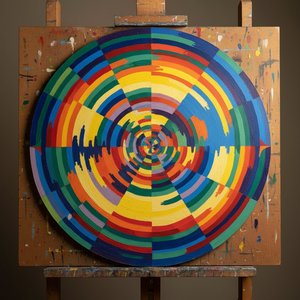
The painting Rythm, dated 1939, presents a central circular structure composed of intersecting geometric shapes and varied color segments. This primary circle is divided into multiple sections, each containing distinct patterns and internal designs. Smaller circles are nested within the larger circular framework, creating a layered effect of concentricity. Two additional circles appear in the periphery: one in the upper right corner and another in the lower left corner. The arrangement of these shapes suggests a spiral or a swirling motion. The surface is characterized by a variety of hues that interact through their proximity, creating a sense of movement across the canvas.
The technique relies on the application of color to define form rather than using line to outline recognizable objects. The artist utilizes the principles of Orphism, focusing on the interaction of light and chromatic intensity. The shapes are not static; they are organized to create a visual rhythm through the interplay of curves and counter-curves. This method uses the physical action of looking to activate the vision, as the eye moves between the contrasting colors and the varying thicknesses of the circular discs.
Historical Context and Artistic Intent
Created in 1939, this work belongs to a period when the artist had moved toward a more radical, non-objective form of abstraction. This phase of production followed a return to the circular forms that characterized earlier explorations of harmony. The composition reflects a departure from figurative subjects, focusing instead on the expressive potential of color alone. The organization of these shapes and their spatial relationships determine the visual tempo of the piece.
The work is situated within the School of Paris movement. It reflects a theoretical interest in how color functions as an active force capable of shaping perception. By utilizing contrasting complementary colors, such as red and green or blue and orange, the painting creates a synchromic effect. This approach seeks to move beyond the representation of the physical world, aiming instead to establish a direct connection between the viewer's eye and the agitation of light and color.
Otázky a odpovědi
Je dílo Rythm ručně malované, nebo jde o tisk?
Ručně malováno: zkušený malíř přetvoří Rythm v olejomalbu na lněném plátně.
Jakou velikost si mám vybrat pro Rythm?
Velikosti se pohybují od 30.2 x 33.2 cm (Kč4332) až po 218.9 x 240.7 cm (Kč41479); v tabulce na této stránce jsou uvedeny jednotlivé varianty a jejich ceny.
Jak dlouho trvá doručení?
Doručení trvá 4 až 5 týdnů a zahrnuje bezplatnou expresní přepravu po celém světě; na této stránce je k dispozici i možnost urgentní výroby. Dílo můžete vrátit během 100 dnů s plným vrácením peniędzy, bez jakýchkoliv podmínek.
Kde se nachází originál díla Rythm?
Originál se nachází ve sbírkách Musée d'Art Moderne de la Ville de Paris, Paříž.
Jakou techniku použil/a Robert Delaunay pro dílo Rythm?
Oil On Canvas
 Náhled v interiéru

 Sdílet
 Sdílet
 Podrobnosti o díle
 Informační list


 Stáhnout
 Podobné položky
 Rentgenové snímky
 Slideshow
 Otázky a odpovědi

 Statistiky