

 Náhled
 Sdílet
 Sdílet
 Podrobnosti o díle

 Stáhnout
 Podobné položky
 Rentgenové snímky
 Slideshow
 Statistiky
Demonstration Drawings


 Zobrazit více
Ručně malovaná olejová reprodukce
Ručně malovaná olejná barva na plátně ve vašem zvoleném rozměru i s rámem, vyrobená našimi umělci na zakázku. ( Přepnout na tisk Přepnout na digitální obraz)




P118B $10

P118H $10

P118W $10

P438Z $10

P508JH $12

P508YH $12

P805H $10

P805Z $10

P919BZ $10

P919G $10

P919XJ $10

P959ZH $10

P968JZ $12

W106C $8

W218G $10

W218JH $8

W218Y $10

W307PJ $10

W316G $10

W316PJ $8

W316Y $10

W398PJ $8

W4111J $10

W500HY $15

W500JH $15

W692G $12

W849H $8

W940BG $15

W953PJ $8




Vyberte si z našich přednastavených velikostí, které odpovídají původním proporcím díla.

Můžete zadat vlastní rozměry pro konkrétní rám nebo prostor. Pokud se vámi vybraná velikost neshoduje s proporcemi původního obrazu, dílo buď ořízneme, nebo jej doplníme ručně malovanými prvky. Před zahájením výroby vám bude zaslán digitální náhled ke schválení.
Upozorňujeme, že náhled na obrazovce neodpovídá skutečnému ořezu ani rozšíření. Pouze digitální náhled přesně zobrazí finální kompozici.
Ačkoliv je možné zvolit vlastní velikost, pro zachování původních proporcí doporučujeme vybrat rozměr z předdefinovaného seznamu.
Po přijetí objednávky vám tým OriginalUniqueArt.com zašle e-mail s pokyny a poskytne náhledovou verzi.
Celosvětová doprava () za 3–4 týdny namísto standardních 5 týdnů. (11 září). Bez kompromisů v kvalitě.

Zdarma celosvětová expresní doprava

Vysoce kvalitní lněné plátno

Kompletní přepravní pojištění

Záruka vrácení celního poplatku

Záruka přesného barevného shodu

100dená lhůta pro vrácení zboží (pouze při vadách)

100% garance vrácení peněz

Sleva při hromadné objednávce
 Skleněná varianta je dostupná pouze u rozměrů menších než 110 cm

Demonstration Drawings
Technika reprodukce
Rozměry reprodukce
-


Celková cena za výběr
$ 300
Demonstration Drawings - Rirkrit Tiravanija: A Reflection on Shared Experience
Rirkrit Tiravanija stands apart from many contemporary artists, prioritizing not merely visual aesthetics but the profound connection between art and human interaction. His artistic philosophy—described succinctly as “bringing people together”—is rooted in a childhood traversing continents, fostering an understanding of diverse cultures that profoundly informs his creative endeavors. This nomadic upbringing instilled within him a belief that true artistic expression resides in communal engagement, transforming gallery spaces into arenas for spontaneous dialogue and shared sensory experiences. His distinctive approach aligns powerfully with the burgeoning field of Relational Aesthetics, championed by theorists like Nicolas Bourriaud, who argued that art should transcend traditional notions of authorship and production to stimulate social relationships and collective action. Tiravanija’s work deliberately eschews solitary contemplation, instead inviting viewers into immersive environments where culinary traditions—such as Pad Thai and Tom Kha soup—become conduits for cultural exchange and fostering a sense of belonging. These installations aren't simply decorative objects; they are carefully orchestrated performances designed to provoke conversation and encourage participants to reconsider their roles within society. The artist’s artistic trajectory draws inspiration from Minimalism and Conceptual Art, prioritizing simplicity of form and intellectual rigor alongside emotional resonance. Tiravanija’s Demonstration Drawings (2006– 2015), commissioned from Thai artists, powerfully captures the spirit of mass uprisings against oppressive regimes—a visual testament to the collective capacity for spontaneous organization. Each drawing meticulously translates photographic images published in publications like The International Herald Tribune, reflecting a commitment to documenting social movements and amplifying voices marginalized by mainstream media. The medium itself—drawing—is chosen deliberately for its immediacy and vulnerability. Unlike painting or sculpture, drawing resists grand gestures of artistic ambition, focusing instead on capturing fleeting moments of observation and conveying subtle nuances of emotion. This technique underscores Tiravanija’s belief that art should be accessible to all, fostering a connection between artist and audience that transcends linguistic barriers. The resulting images are imbued with a palpable sense of atmosphere—a quiet contemplation punctuated by bursts of vibrant color—reflecting the artist's desire to evoke empathy and provoke reflection on fundamental questions about human experience. Ultimately, Tiravanija’s art seeks to transcend the confines of the museum or gallery, extending its influence into everyday life. By distributing bricks among participants in his Venice Biennale installation Untitled 2010–2015—a symbolic gesture referencing the construction of a modest home for a family in China—he expands the intimacy of domestic space and opens it up to a broader community. This deliberate act embodies Tiravanija’s conviction that art possesses the transformative potential to reshape social dynamics, fostering connections between individuals and encouraging collective action toward a more equitable future.Biografie umělce
The Art of Shared Experience: The Life and Vision of Rirkrit Tiravanija
To encounter the work of Rirkrit Tiravanija is to step away from the silent, sterile halls of traditional galleries and into a living, breathing space of human connection. Born in Buenos Aires, Argentina, in 1961, Tiravanija’s identity was forged through a nomadic childhood that spanned the diverse landscapes of Thailand, Ethiopia, and Canada. This global upbringing instilled in him a profound understanding of cultural fluidity and the universal language of shared existence. His artistic journey, while academically rooted in history and fine arts—spanning institutions from Carleton University to the School of the Art Institute of Chicago—eventually transcended the boundaries of the canvas and the sculpture to embrace the very essence of social interaction.
Tiravanija’s practice is famously defined by the concept of Relational Aesthetics, a term coined by curator Nicolas Bourriaud to describe art that takes as its theoretical horizon the realm of human interactions and its social context. Rather than producing static objects for passive observation, Tiravan andija creates environments that function as stages for living. His work rejects the idea of the artwork as an isolated commodity, instead prioritizing the ephemeral magic that occurs when strangers become participants in a shared moment. Through his lens, art is not something to be looked at, but something to be lived, tasted, and felt.
Breaking Bread: The Radicalism of the Everyday
The early 1990s marked a seismic shift in contemporary art with the arrival of Tiravanija’s groundbreaking installations. In his seminal work, “Pad Thai,” presented at the Paula Allen Gallery, he famously abandoned the traditional gallery object entirely. Instead of hanging paintings or placing pedestals, he transformed the exhibition space into a communal kitchen, preparing and serving Pad Thai to visitors. This audacious act of hospitality turned the gallery into a site of nourishment and dialogue, blurring the line between the artist’s labor and the audience's experience. This practice was not merely a performance but an invitation to engage with the conviviality of the everyday.
This theme of culinary connection continued through subsequent projects, such as his 1995 Carnegie International exhibition, where he provided instructions for cooking South-East Asian green curry. By utilizing familiar, domestic tasks like cooking and eating, Tiravanija strips away the pretension often associated with high art, replacing it with a sense of ritual and intimacy. His work serves as a powerful reminder that the most profound artistic experiences can be found in the simplest acts of togetherness, echoing his childhood memories of his grandmother’s garden restaurant where food was always a catalyst for community.
A Legacy of Connection and Social Dialogue
Beyond the sensory delights of shared meals, Tiravanija’s work carries a deep sociopolitical resonance. His more recent endeavors, such as his “Demonstration Drawings,” showcase a different facet of his practice—one that uses visual imagery to reflect on mass uprisings, power, and global capital. By commissioning Thai artists to translate photojournalistic images into drawings, he bridges the gap between historical documentation and contemporary social critique, proving that his commitment to "bringing people together" also extends to fostering critical awareness of the world around us.
The historical significance of Rirkrit Tiravanija lies in his ability to redefine the role of the artist from a creator of objects to a facilitator of experiences. His influence can be seen across generations of artists who seek to dismantle the walls between art and life. As he continues to work between New York, Berlin, and Chiang Mai, his practice remains an enduring testament to the power of relationality—a belief that in an increasingly fragmented world, the most radical act an artist can perform is to create a space where we might truly encounter one another.

Rirkrit Tiravanija
1961 -
Rychlé fakta
- Artistic Movement Or Style: Relational Aesthetics
- Artists Or Movements Influenced By This Artist: ['Social Sculpture']
- Artists Who Influenced This Artist:
- Minimalism
- Conceptual Art
- Date Of Birth: 1961
- Full Name: Rirkrit Tiravanija
- Nationality: Thai
- Notable Artworks:
- Pad thai
- Untitled (free/still)
- Tom kha soup
- Place Of Birth: Buenos Aires, Argentina
Související články

10 legendárních bronzových soch, které změnily umění | OriginalUniqueArt
Objevte 10 legendárních bronzových soch od Michelangela, Rodina a dalších mistrů! Ponořte se do historie umění, technik a příběhů za těmito nadčasovými díly. Najděte inspiraci pro váš interiér s OriginalUniqueArt.com – repliky nejvyšší kvality.
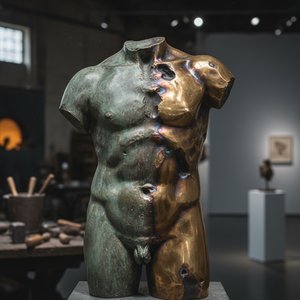
Trvalé dědictví bronzového sochařství: Historie, techniky a současné interpretace
Prozkoumejte historii a techniky bronzového sochařství. Průvodce pro sběratele, investory i milovníky umění. Objevte hodnotu a dědictví bronzu.

The Enduring Form: Exploring Themes & Techniques in Sculpture Across Historical Periods
Explore the rich history of sculpture from ancient masterpieces to contemporary innovations. Discover key techniques, influential artists & investment potential for discerning art collectors.

The Enduring Form: Sculpture Across History, Technique & Emotional Resonance
Explore the rich history of sculpture with OriginalUniqueArt. Discover key techniques, influential artists & investment potential for discerning collectors. Expert insights into valuing and collecting timeless masterpieces.

10 legendárních bronzových mistrovských děl, která změnila umění | OriginalUniqueArt
Objevte 10 legendárních bronzových mistrovských děl od Rodina, Donatella a dalších. Ponořte se do historie umění a nechte se inspirovat nadčasovými sochařskými replikami pro váš interiér. Prozkoumejte celou kolekci online na OriginalUniqueArt.com!
