
 Náhled
 Sdílet
 Sdílet
 Podrobnosti o díle

 Stáhnout
 Podobné položky
 Rentgenové snímky
 Slideshow
Child with a Dove - Dítě s dovou


 Zobrazit více
Ručně malovaná olejová reprodukce
Ručně malovaná olejná barva na plátně ve vašem zvoleném rozměru i s rámem, vyrobená našimi umělci na zakázku. ( Koupit tisk Koupit obrázek)




P118B $10

P118H $10

P118W $10

P438Z $10

P508JH $12

P508YH $12

P805H $10

P805Z $10

P919BZ $10

P919G $10

P919XJ $10

P959ZH $10

P968JZ $12

W106C $8

W218G $10

W218JH $8

W218Y $10

W307PJ $10

W316G $10

W316PJ $8

W316Y $10

W398PJ $8

W4111J $10

W500HY $15

W500JH $15

W692G $12

W849H $8

W940BG $15

W953PJ $8




Vyberte si z našich přednastavených velikostí, které odpovídají původním proporcím díla.

Můžete zadat vlastní rozměry pro konkrétní rám nebo prostor. Pokud se vámi vybraná velikost neshoduje s proporcemi původního obrazu, dílo buď ořízneme, nebo jej doplníme ručně malovanými prvky. Před zahájením výroby vám bude zaslán digitální náhled ke schválení.
Upozorňujeme, že náhled na obrazovce neodpovídá skutečnému ořezu ani rozšíření. Pouze digitální náhled přesně zobrazí finální kompozici.
Ačkoliv je možné zvolit vlastní velikost, pro zachování původních proporcí doporučujeme vybrat rozměr z předdefinovaného seznamu.
Po přijetí objednávky vám tým OriginalUniqueArt.com zašle e-mail s pokyny a poskytne náhledovou verzi.
Celosvětová doprava () za 3–4 týdny namísto standardních 5 týdnů. (20 srpen). Bez kompromisů v kvalitě.

Zdarma celosvětová expresní doprava

Vysoce kvalitní lněné plátno

Kompletní přepravní pojištění

Záruka vrácení celního poplatku

Záruka přesného barevného shodu

60denní lhůta pro vrácení zboží (pouze při vadách výroby)

100% garance vrácení peněz

Sleva při hromadné objednávce
 Skleněná varianta je dostupná pouze u rozměrů menších než 110 cm

Child with a Dove - Dítě s dovou
Technika reprodukce
Rozměry reprodukce
-


Celková cena za výběr
$ 300
Popis díla
Ridolfo Schadow’s “Girl with Doves”: A Testament to Neoclassical Innocence
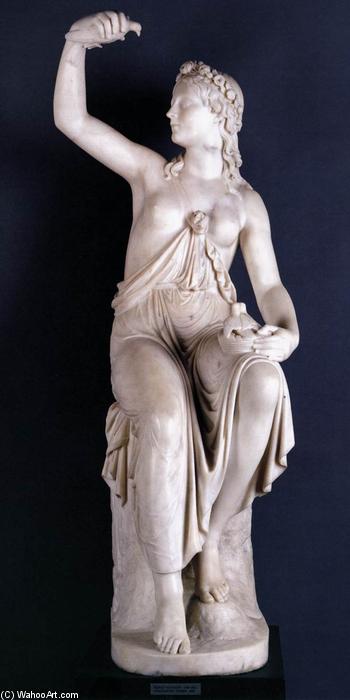
Ridolfo Schadow (1786 – 1822), a German sculptor who found his artistic home in Rome, remains an enigmatic figure despite the considerable acclaim he garnered during his lifetime. His oeuvre is marked by a distinctive blend of neoclassical formalism and Romantic sensibilities—a combination that finds its most poignant expression in “Girl with Doves,” completed in 1820. This sculpture, housed at the Staatliche Museen Berlin, transcends mere representation; it embodies an idealized vision of feminine virtue and contemplation, reflecting the artistic currents of its era while simultaneously resonating with enduring emotional depth.- Subject Matter: The artwork depicts a young woman seated gracefully on a pedestal, her gaze directed upwards—a gesture imbued with serenity and introspection. Her left arm gently curves towards her head, suggesting an unspoken thought or prayer, while her right hand delicately cradles a dove – a symbol universally recognized for peace and purity.
- Style: Schadow’s approach aligns squarely with the neoclassical movement, prioritizing anatomical accuracy and balanced proportions. However, unlike many of his contemporaries who adhered rigidly to classical ideals, Schadow subtly incorporates Romantic elements into his composition, conveying a sense of vulnerability and emotional sensitivity.
- Technique: Executed in marble—a material favored by Schadow for its ability to capture subtle nuances of form—the sculpture showcases meticulous craftsmanship. The artist skillfully employs modeling techniques to sculpt the woman’s facial features and body contours with remarkable precision, achieving a surface finish that is both smooth and subtly textured.
- Historical Context: “Girl with Doves” emerged during a period marked by significant intellectual and artistic upheaval—the Romantic movement challenged Enlightenment rationalism and championed emotion, imagination, and individualism. Schadow’s work reflects this broader cultural shift, articulating a humanist vision that prioritizes moral virtue and spiritual contemplation.
- Symbolism: The dove itself serves as a potent emblem of innocence and divine grace—a motif frequently employed by Romantic artists to convey themes of purity, compassion, and spiritual aspiration. Schadow’s careful positioning of the dove—held aloft in the woman's hand—underscores this symbolic significance, inviting viewers to contemplate notions of moral integrity and inner peace.
- Emotional Impact: The sculpture possesses a remarkable ability to evoke feelings of tranquility and contemplation—a testament to Schadow’s masterful manipulation of form and gesture. Its serene posture and expressive gaze convey an aura of quiet dignity and spiritual serenity, capturing the essence of Romantic idealism while simultaneously grounding it in classical aesthetic standards.
Biografie umělce
Early Life and Training in the Shadow of a Master
Ridolfo Schadow, born Rudolf Schadow on July 9, 1786, in Rome, entered a world already steeped in artistic tradition. His father, Johann Gottfried Schadow, was a prominent German sculptor whose Neoclassical style profoundly shaped the art scene in Berlin. From an early age, Ridolfo benefited from his father’s tutelage, receiving foundational training within the family studio. This initial period saw him exhibiting statues and reliefs at the prestigious Berlin Akademie between 1802 and 1810, demonstrating a burgeoning talent for both mythological and religious subjects. However, it was his subsequent journey to Rome in 1810 that would truly define his artistic trajectory. The allure of Italy—the heartland of classical sculpture—proved irresistible, offering an environment ripe with inspiration and opportunity.Roman Influences and the Pursuit of Individual Style
Upon arriving in Rome, Ridolfo quickly immersed himself in the city’s vibrant art community. He received invaluable guidance from masters like Antonio Canova and Bertel Thorvaldsen, giants whose work epitomized Neoclassical ideals. While initially absorbing their influence, Schadow soon began to forge his own path, seeking a balance between classical precision and a more realistic, genre-based approach. His early Roman sculpture, *Paris*, though ultimately destroyed, signaled this emerging individuality. It was the companion piece—a captivating depiction of a *Woman Spinning*—that truly captured the attention of the art world. This work, portraying a young woman absorbed in her task, resonated with viewers for its serene beauty and naturalism. Multiple versions were commissioned by prominent collectors, including the King of Prussia and the Duke of Devonshire, testament to its widespread appeal. The sculpture’s success stemmed not merely from technical skill but from Schadow's ability to imbue classical forms with a sense of intimate humanity.Themes of Innocence and Religious Conversion
Schadow’s artistic focus often centered on themes of innocence, domesticity, and quiet contemplation. *Girl with Doves (Innocence)*, completed in 1820, exemplifies this sensibility. The sculpture depicts a young girl tenderly holding doves, symbolizing peace and purity. This work, now housed in the Alte Nationalgalerie in Berlin, showcases Schadow’s refined technique and his ability to evoke emotional resonance through subtle gestures and expressions. A pivotal moment in Schadow's life occurred in 1814 with his conversion to Catholicism, influenced by his brother Wilhelm and Friedrich Overbeck. This spiritual shift profoundly impacted his later work, leading him to create statues of religious figures such as *John the Baptist* and the *Virgin and Child*. These sculptures reflect a newfound depth of emotion and devotion, further solidifying his reputation as a sensitive and skilled artist.Legacy and Historical Significance
Despite a tragically short life—Ridolfo Schadow died in Rome on January 31, 1822, at the age of thirty-five—he left an indelible mark on the landscape of 19th-century sculpture. His untimely death interrupted his work on *Achilles with the Body of Penthesilea*, a colossal group intended for the King of Prussia. Though unfinished in marble, the plaster model was widely admired for its antique character and ambitious scale. Schadow’s contribution lies not only in his individual works but also in his ability to bridge the gap between Neoclassical formality and Romantic expressiveness. He infused classical ideals with a sense of realism and emotional depth that resonated with audiences seeking art that spoke to their own experiences and sensibilities. His sculptures, characterized by grace, serenity, and subtle symbolism, continue to captivate viewers today, offering a glimpse into the artistic world of early 19th-century Rome and the enduring power of human emotion.
ridolfo schadow
1786 - 1822 , Italy
Rychlé fakta
- Artistic Movement Or Style: Neoclassical sculpture
- Artists Who Influenced This Artist:
- Johann Gottfried Schadow
- Antonio Canova
- Bertel Thorvaldsen
- Date Of Birth: July 9, 1786
- Date Of Death: January 31, 1822
- Full Name: Ridolfo Schadow
- Nationality: German
- Notable Artworks:
- Woman Tying Her Sandal
- Paris
- Girl with Doves (Innocence)
- Place Of Birth: Rome, Italy
Související články
Pablo Picasso: 25 mistrovských děl geniálního umělce | OriginalUniqueArt.cz
Prozkoumejte 25 ikonických děl Pabla Picassa – od Guernicy po kubistické revoluce. Objevte příběhy, techniky a inspiraci za těmito mistrovskými díly moderního umění. Reprodukce obrazů nejvyšší kvality na OriginalUniqueArt.com.

Deset ikonických obrazů v odstínech šedé modré: Umění a inspirace pro váš domov
Objevte deset ikonických obrazů v odstínech šedé modré od Van Gogha, Moneta a dalších mistrů. Ponořte se do příběhů umění, technik a inspirace pro váš interiér. Reprodukce obrazů nejvyšší kvality na OriginalUniqueArt.com.
Top 10 mistrovských děl kubismu: Umění, které změnilo pohled na svět | OriginalUniqueArt.com
Prozkoumejte 10 ikonických děl kubismu od Picassa, Braquea a dalších. Objevte příběhy za slavnými obrazy tohoto revolučního uměleckého hnutí a inspirujte se pro svůj interiér s OriginalUniqueArt.com! Reprodukce obrazů nejvyšší kvality.

Serene Blue Backgrounds: Discover Soulful Art to Transform Your Space with Timeless Elegance
Transform your home with soulful blue art. From serene Monet impressions to modern textured sculptures, discover curated masterpieces designed to inspire calm. Explore expert art consultations and bespoke hand-painted reproductions to create your personal sanctuary.
Top 10 kubistických portrétů: Mistrovská díla, která změnila umění | OriginalUniqueArt
Prozkoumejte 10 ikonických kubistických portrétů od Picassa, Braquea a dalších. Objevte příběhy za těmito revolučními díly moderního umění a inspirujte se pro váš interiér s OriginalUniqueArt.com. Reprodukce obrazů nejvyšší kvality online.


