

 Náhled v interiéru
 Sdílet
 Sdílet
 Podrobnosti o díle
 Průvodce

 Stáhnout
 Podobné položky
 Rentgenové snímky
 Slideshow
 Statistiky
Painter in his Studio


 Zobrazit více
Ručně malovaná olejová reprodukce
Rukou malované olejné plátno v libovolném rozměru i s rámem, vyrobené našimi umělci na zakázku. ( Přepnout na tisk Přepnout na digitální obraz)




P118B Kč10

P118H Kč10

P118W Kč10

P438Z Kč10

P508JH Kč12

P508YH Kč12

P805H Kč10

P805Z Kč10

P919BZ Kč10

P919G Kč10

P919XJ Kč10

P959ZH Kč10

P968JZ Kč12

W106C Kč8

W218G Kč10

W218JH Kč8

W218Y Kč10

W307PJ Kč10

W316G Kč10

W316PJ Kč8

W316Y Kč10

W398PJ Kč8

W4111J Kč10

W500HY Kč15

W500JH Kč15

W692G Kč12

W849H Kč8

W940BG Kč15

W953PJ Kč8




Vyberte si z našich přednastavených velikostí, které odpovídají původním proporcím díla.

Zadejte šířku a výšku, které potřebujete pro váš rám nebo stěnu. Protože se jedná o ruční malbu, při výběru jiného formátu může umělec kolem obrazu domalovat o něco více, nebo jej mírně oříznout — rozhodnete si vy. Před zahájením malby vám zašleme digitální náhled ke schválení. Obraz zobrazený na této stránce neodpovídá skutečnému výsledku — pouze digitální náhled jej zobrazuje.
Po přijetí objednávky vám tým OriginalUniqueArt.com zašle e-mail s pokyny a poskytne náhledovou verzi.
Celosvětová doprava () za 3–4 týdny namísto standardních 5 týdnů. (25 říjen). Bez kompromisů v kvalitě.

Zdarma celosvětová expresní doprava

Vysoce kvalitní lněné plátno

Kompletní pojištění přepravy

Záruka vrácení celního poplatku

Záruka věrného barevného souladu

100dení lhůta pro vrácení zboží (pouze při vadách výroby)

100% záruka vrácení peněz

Sleva při více objednávkách
 Skleněná varianta je dostupná pouze u rozměrů menších než 110 cm

Painter in his Studio
Technika reprodukce
Rozměry reprodukce
-


Celková cena za vybrané možnosti reprodukcí
Kč 7484
Pietro Longhi’s Venetian Revelations: A Window into 18th-Century Life
Pietro Longhi, born Pietro Falca in Venice in 1701, wasn't a painter of grand historical narratives or mythological epics. Instead, he meticulously captured the quiet dramas unfolding within the vibrant heart of his city – Venice. He became renowned for his witty and remarkably intimate genre paintings, offering viewers glimpses into the lives of Venetian bourgeois society during the Rococo era. These weren’t sweeping landscapes or heroic portraits; they were snapshots of everyday life: masked balls, lively conversations in cafes, family gatherings, and the subtle rituals of a thriving mercantile republic. Longhi's genius lay not just in his technical skill but in his ability to imbue these seemingly mundane scenes with a captivating charm and a keen observational eye – earning him the affectionate moniker “the Venetian Hogarth” by art historians.
Longhi’s artistic journey began under the tutelage of Antonio Balestra, a respected Veronese painter who recognized and nurtured the young artist's talent. This foundation in traditional technique provided a solid base for his later innovations. He adopted the surname “Longhi,” a symbolic shedding of his father’s trade – a silversmith – to fully embrace his artistic aspirations. His career blossomed during a period when Venetian painting was largely dominated by grand historical and religious works; Longhi's focus on domestic scenes and social interactions offered a refreshing and distinctly human perspective.
“The Painter in His Studio”: A Masterpiece of Illusion and Observation
"The Painter in His Studio," painted around 1740-1745, stands as perhaps Longhi’s most ambitious and captivating work. This oil on canvas isn't merely a portrait; it’s an intricate allegory – a layered exploration of the artistic process itself, interwoven with social commentary and a subtle celebration of Venetian culture. The scene unfolds within the artist’s studio, a meticulously rendered space filled with objects that speak to his craft and his world. At the center stands Longhi himself, diligently painting a landscape depicting the Loue River valley in Franche-Comté – a region deeply connected to his own origins.
Around him are figures representing various facets of artistic life: a young boy observing intently, a nude female model (a deliberate nod to the academic tradition of “contrapposto” and the debate over the superiority of male versus female models), and a white cat curled up on a table. The background reveals partially obscured paintings – remnants of unfinished works, hinting at the challenges and rewards of artistic creation. A map of the Seventeen Provinces of the Netherlands hangs prominently on the wall, adorned with miniature depictions of Dutch cities, reflecting Venice’s historical ties to its northern neighbors. The inclusion of these details isn't arbitrary; they serve as symbolic markers, inviting viewers to contemplate the interconnectedness of art, knowledge, and society.
Decoding the Symbolism: A Window into Venetian Society
Beyond its technical brilliance, “The Painter in His Studio” is rich with symbolism. The presence of a "crucified figure" on the left side of the painting has been interpreted as a representation of the death of the Royal Academy’s artistic standards – a critique of the rigid conventions that Longhi sought to challenge. The map itself holds multiple layers of meaning, referencing both historical connections and the pursuit of knowledge. The inclusion of figures representing Parisian society—including Charles Baudelaire, Champfleury, and Alfred Bruyas—highlights Longhi's engagement with contemporary intellectual currents.
Longhi’s meticulous attention to detail – from the textures of the fabrics to the play of light on the objects in the studio – creates a remarkably immersive experience for the viewer. The painting isn’t just *about* art; it *is* an artwork, demonstrating Longhi's mastery of technique and his profound understanding of how to capture both the physical reality and the emotional essence of his subject matter. It offers a rare glimpse into the world of a Venetian artist at work, revealing not only his craft but also his perspective on society and the creative process.
A Legacy of Observation: Longhi’s Enduring Appeal
Pietro Longhi's legacy extends far beyond the confines of his studio. His paintings provide invaluable insights into 18th-century Venetian life, capturing a world of social customs, artistic trends, and intellectual debates with remarkable wit and precision. His work stands as a testament to the power of genre painting – its ability to illuminate the everyday experiences of ordinary people. Today, Longhi’s art continues to resonate with audiences, offering a captivating blend of realism, symbolism, and human insight. Reproductions of “The Painter in His Studio” provide a beautiful and accessible way to experience this remarkable masterpiece, bringing a touch of Venetian charm into any space.
Otázky a odpovědi
Pro jaké místo a za jakým účelem se doporučuje dílo "Painter in his Studio"?
Dílo „Painter in his Studio“ od Pietro Longhi se doporučuje pro Reflective, ideálně do Living Room. Způsob využití a prostor společně určují, kam se reprodukce hodí.
V jaké technice je vytvořeno dílo „Painter in his Studio“ od Pietro Longhi?
Technikou díla „Painter in his Studio“ od Pietro Longhi je Oil On Canvas. Reprodukce mají za cíl věrně zachytit vzhled této techniky.
Nachází se dílo "Painter in his Studio" v zemi svého autora?
Ano – dílo se nachází v zemi původu umělce. Rodimá země Pietro Longhi je Itálie, zatímco muzeum, které uchovává originál díla „Painter in his Studio“, se nachází v zemi Itálie.
Biografie umělce
A Venetian Chronicler of Daily Life
Pietro Longhi, born Pietro Falca in Venice on November 5th, 1701, wasn’t painting grand historical narratives or mythological scenes; he was capturing the quiet dramas unfolding within the city's elegant homes and bustling streets. He became renowned for his witty genre paintings – intimate glimpses into the lives of 18th-century Venetians, a departure from the prevailing artistic trends of his time. The son of Alessandro Falca, a silversmith, Longhi’s early training began under the Veronese painter Antonio Balestra, who recognized and nurtured the young artist's talent. This foundation in traditional technique would later serve as a subtle counterpoint to the innovative spirit he brought to his chosen subject matter. He adopted the surname “Longhi” upon beginning his artistic career, a symbolic shedding of his father’s trade for the pursuit of painting.From Religious Scenes to Venetian Interiors
Longhi's initial works reflected the expectations of the era: altarpieces and religious themes dominated his early portfolio. His 1732 altarpiece for the church of San Pellegrino demonstrates a skillful command of traditional techniques, showcasing broken brushwork and vibrant color glazes characteristic of Venetian painting. These masterful compositions exemplify the stylistic conventions of Baroque art – dramatic lighting, rich pigments, and meticulous attention to detail—a testament to Balestra’s influence. However, it was in the late 1730s that Longhi truly found his voice, shifting towards the small-scale genre scenes that would define his legacy. This transition wasn't merely a change in subject matter; it represented a deliberate engagement with the burgeoning social and cultural shifts of the time. The 18th century witnessed a growing fascination with the private lives of the bourgeoisie, a focus on domesticity and everyday rituals. Longhi masterfully captured this shift, offering viewers a window into Venetian society that was both charming and subtly satirical. He married Caterina Maria Rizzi in 1732, and together they had eleven children, though only three survived to adulthood. This personal life, while not directly reflected in his art, undoubtedly shaped his understanding of the domestic sphere he so frequently depicted.The “Venetian Hogarth” and a Satirical Eye
Longhi quickly earned the moniker "the Venetian William Hogarth," a testament to his ability to infuse seemingly innocuous scenes with layers of social commentary. Like Hogarth, Longhi didn’t shy away from depicting human foibles and societal contradictions. However, while Hogarth's satire was often pointed and moralizing, Longhi’s tended to be more nuanced, imbued with a gentle irony. His paintings are populated with masked figures – a nod to the exuberant Carnival celebrations of Venice – engaged in various activities, from gambling and flirtation to clandestine meetings and dubious transactions. The Concert portrays a lavish gathering where social status is keenly observed, highlighting distinctions between noblemen and commoners alike. Longhi’s meticulous attention to detail—the textures of fabrics, the expressions on faces—creates an immersive experience for the viewer, inviting contemplation about human behavior and societal norms. He wasn't simply recording life as it was; he was offering a sly commentary on its complexities and contradictions. His ability to capture these subtleties is what sets him apart, elevating his genre scenes beyond mere documentation into insightful social observations.Technique, Influence, and Lasting Legacy
Longhi’s technique was as distinctive as his subject matter. He favored small canvases, meticulously rendered with a delicate touch and a keen eye for detail. His interiors are bathed in soft light, creating an atmosphere of intimacy and realism—a characteristic found in the works of Giuseppe Maria Crespi, who championed naturalistic observation alongside artistic virtuosity. He possessed a remarkable ability to depict textures – the sheen of silk, the roughness of wood, the delicate folds of fabric – adding depth and authenticity to his scenes. His masterful use of color glazes—particularly evident in paintings like *The Tailor*—demonstrates an understanding of Venetian painting’s legacy. While influenced by earlier Venetian masters like Giuseppe Maria Crespi, Longhi forged his own path, anticipating later developments in genre painting. He served as Director of the Academy of Drawing and Carving from 1763, furthering artistic education and fostering a new generation of talent. His son, Alessandro Longhi, also pursued painting, assisting him in later portrait commissions—a continuation of Longhi’s commitment to preserving Venetian artistic traditions. Pietro Longhi passed away on May 8th, 1785, leaving behind a body of work that continues to captivate and intrigue viewers today. He remains a vital figure in the history of Venetian art, celebrated for his unique blend of observation, wit, and technical skill—a true chronicler of 18th-century life. ## Notable Works- The Tailor (Gallerie dell'Accademia, Venice)
- The Baptism (Fondazione Querini Stampalia, Venice)
- Painter in his Studio (Ca’ Zenobio, Venice)

Pietro Longhi
1701 - 1785 , Itálie
Rychlé informace o umělci
- Artistic Movement Or Style: Venetian painting, Rococo
- Artists Or Movements Influenced By This Artist: ['William Hogarth']
- Artists Who Influenced This Artist:
- Antonio Balestra
- Giuseppe Maria Crespi
- Date Of Birth: November 5, 1701
- Date Of Death: May 8, 1785
- Full Name: Pietro Longhi
- Nationality: Italian
- Notable Artworks:
- The Tailor
- The Baptism
- Painter in his studio
- Place Of Birth: Venice, Italy
Související články
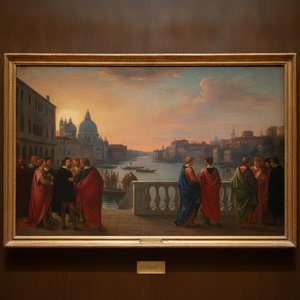
The Venetian Renaissance: A Masterclass in Colorito, Light, and the Birth of Atmospheric Brilliance
Explore the breathtaking mastery of the Venetian Renaissance. Discover how legends like Titian revolutionized art through Colorito, capturing the luminous light and vibrant pigments of the Venetian lagoon in a visual journey of unparalleled color and texture.

Venetian Renaissance: The Mastery of Color, Light, and the Art of Colorito
Explore the luminous mastery of the Venetian Renaissance. Discover how masters like Titian and Giorgione revolutionized art through colorito, light, and atmosphere. An expert guide to the golden age of Italian painting for collectors and enthusiasts.

Pietro Longhi's Venetian Scenes: A Study of Rococo Society & Domestic Life
Explore the captivating world of Pietro Longhi's Venetian scenes! Discover insightful analysis of his Rococo masterpieces & social commentary on 18th-century life. Learn about this 'Venetian Hogarth' and his lasting artistic legacy.
Jacopo Tintoretto: 25 mistrovských děl benátského mistra | OriginalUniqueArt.com
Prozkoumejte 25 ikonických děl Jacopa Tintoretta, benátského mistra dramatické renesance. Objevte příběhy za obrazy plnými emocí a světla. Reprodukce obrazů nejvyšší kvality na OriginalUniqueArt.com – inspirace pro váš interiér.
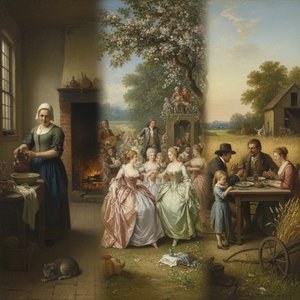
Scenes of Daily Life: A Comprehensive Exploration of Genre Painting Through History
Explore the rich history of genre painting! Discover Dutch Masters & European artists who captured everyday life with stunning realism. Learn about symbolism, techniques & lasting influence.