

 Náhled v interiéru
 Sdílet
 Sdílet
 Podrobnosti o díle
 Průvodce

 Stáhnout
 Podobné položky
 Rentgenové snímky
 Slideshow
 Statistiky
Extreme Unction
 Etching
- Rococo
 1755
1755- Early Modern
 57.0 x 44.0 cm
 Los Angeles County Museum of Art
 Zobrazit více
Ručně malovaná olejová reprodukce
Rukou malované olejné plátno v libovolném rozměru i s rámem, vyrobené našimi umělci na zakázku. ( Přepnout na tisk Přepnout na digitální obraz)




P118B Kč10

P118H Kč10

P118W Kč10

P438Z Kč10

P508JH Kč12

P508YH Kč12

P805H Kč10

P805Z Kč10

P919BZ Kč10

P919G Kč10

P919XJ Kč10

P959ZH Kč10

P968JZ Kč12

W106C Kč8

W218G Kč10

W218JH Kč8

W218Y Kč10

W307PJ Kč10

W316G Kč10

W316PJ Kč8

W316Y Kč10

W398PJ Kč8

W4111J Kč10

W500HY Kč15

W500JH Kč15

W692G Kč12

W849H Kč8

W940BG Kč15

W953PJ Kč8




Vyberte si z našich přednastavených velikostí, které odpovídají původním proporcím díla.

Zadejte šířku a výšku, které potřebujete pro váš rám nebo stěnu. Protože se jedná o ruční malbu, při výběru jiného formátu může umělec kolem obrazu domalovat o něco více, nebo jej mírně oříznout — rozhodnete si vy. Před zahájením malby vám zašleme digitální náhled ke schválení. Obraz zobrazený na této stránce neodpovídá skutečnému výsledku — pouze digitální náhled jej zobrazuje.
Po přijetí objednávky vám tým OriginalUniqueArt.com zašle e-mail s pokyny a poskytne náhledovou verzi.
Celosvětová doprava () za 3–4 týdny namísto standardních 5 týdnů. (25 říjen). Bez kompromisů v kvalitě.

Zdarma celosvětová expresní doprava

Vysoce kvalitní lněné plátno

Kompletní pojištění přepravy

Záruka vrácení celního poplatku

Záruka věrného barevného souladu

100dení lhůta pro vrácení zboží (pouze při vadách výroby)

100% záruka vrácení peněz

Sleva při více objednávkách
 Skleněná varianta je dostupná pouze u rozměrů menších než 110 cm

Extreme Unction
Technika reprodukce
Rozměry reprodukce
-


Celková cena za vybrané možnosti reprodukcí
Kč 6415
A Somber Glimpse into Venetian Devotion
In the quiet, shadowed corners of eighteenth-century Venice, life was often defined by its most profound transitions. Pietro Longhi’s 1755 etching, Extreme Unction, serves as a hauntingly beautiful window into these private moments of mortality and faith. Unlike the grand, sweeping canvases of his contemporaries that celebrated the triumphs of gods and heroes, Longhi turned his gaze toward the intimate, often heavy atmosphere of the Venetian domestic sphere. This particular work captures the solemnity of the Last Rites, a sacred ritual where a priest administers the final sacraments to the departing soul. Through the delicate medium of etching, Longhi masterfully orchestrates a scene that is as much about the presence of the divine as it is about the palpable weight of human grief.
The composition draws the viewer into a room thick with tension and reverence. At the heart of the narrative lies the bed, where the patient rests in a state of vulnerability, surrounded by the witnesses of their final journey. The priest, an elder figure draped in heavy, traditional robes, stands as the bridge between the earthly and the eternal. Longhi’s ability to render texture through fine, etched lines allows us to feel the weight of the liturgical garments and the stillness of the air. Scattered throughout the room are the humble artifacts of daily life—cups, bowls, and vases—which, in this context, take on a symbolic significance. These objects, mundane in any other setting, become silent participants in the ritual, grounding the spiritual event in the tangible reality of a Venetian household.
Mastery of Line and Emotional Resonance
Technically, this etching showcases Longhi’s profound command over light and shadow, a skill honed during his early training under Antonio Balestra. The monochromatic palette of the etching does not strip the scene of its depth; rather, it enhances the dramatic chiaroscuro effect, pulling focus to the central figures while allowing the periphery to recede into a mysterious, atmospheric gloom. The interplay of light hitting the surfaces of the ceramic bowls and the metallic glint of a cup creates a sense of three-dimensional space that invites the collector to step directly into the room. For the discerning eye, the precision of the linework reveals a master who understood that the smallest detail—the fold of a sleeve or the tilt of a head—could communicate the deepest complexities of human emotion.
For art lovers and interior designers alike, Extreme Unction offers more than just historical interest; it provides a profound emotional anchor for a curated space. The piece possesses a timeless, melancholic elegance that complements sophisticated, classical interiors. It is a work that demands contemplation, making it an ideal centerpiece for a study, a library, or a gallery wall dedicated to the mastery of printmaking. Owning a high-quality reproduction of this etching allows one to preserve the somber beauty of Longhi’s vision, bringing a sense of historical gravity and quiet, reflective grace into the modern home.
Otázky a odpovědi
Jakou barevnou harmonii představuje dílo „Extreme Unction“ od Pietro Longhi?
Barvy díla „Extreme Unction“ od Pietro Longhi vykazují Unified Palette harmonii. Harmonie popisuje vzájemný vztah barev k sobě navzájem.
Jakou úroveň kontrastu má dílo „Extreme Unction“ od Pietro Longhi?
Kontrast světla a stínu u díla „Extreme Unction“ je klasifikován jako Bold. Kontrast popisuje, jak výrazně se liší světlé a tmavé oblasti.
Kdo prodává ručně malované kopie díla „Extreme Unction“ od Pietro Longhi?
Ručně malované kopie díla „Extreme Unction“ od Pietro Longhi jsou k zakoupení na webu tato webová stránka: ručně malovaná olejová reprodukce na lněném plátně, a to prostřednictvím jeho stránky Ručně malovaná reprodukce.
Biografie umělce
A Venetian Chronicler of Daily Life
Pietro Longhi, born Pietro Falca in Venice on November 5th, 1701, wasn’t painting grand historical narratives or mythological scenes; he was capturing the quiet dramas unfolding within the city's elegant homes and bustling streets. He became renowned for his witty genre paintings – intimate glimpses into the lives of 18th-century Venetians, a departure from the prevailing artistic trends of his time. The son of Alessandro Falca, a silversmith, Longhi’s early training began under the Veronese painter Antonio Balestra, who recognized and nurtured the young artist's talent. This foundation in traditional technique would later serve as a subtle counterpoint to the innovative spirit he brought to his chosen subject matter. He adopted the surname “Longhi” upon beginning his artistic career, a symbolic shedding of his father’s trade for the pursuit of painting.From Religious Scenes to Venetian Interiors
Longhi's initial works reflected the expectations of the era: altarpieces and religious themes dominated his early portfolio. His 1732 altarpiece for the church of San Pellegrino demonstrates a skillful command of traditional techniques, showcasing broken brushwork and vibrant color glazes characteristic of Venetian painting. These masterful compositions exemplify the stylistic conventions of Baroque art – dramatic lighting, rich pigments, and meticulous attention to detail—a testament to Balestra’s influence. However, it was in the late 1730s that Longhi truly found his voice, shifting towards the small-scale genre scenes that would define his legacy. This transition wasn't merely a change in subject matter; it represented a deliberate engagement with the burgeoning social and cultural shifts of the time. The 18th century witnessed a growing fascination with the private lives of the bourgeoisie, a focus on domesticity and everyday rituals. Longhi masterfully captured this shift, offering viewers a window into Venetian society that was both charming and subtly satirical. He married Caterina Maria Rizzi in 1732, and together they had eleven children, though only three survived to adulthood. This personal life, while not directly reflected in his art, undoubtedly shaped his understanding of the domestic sphere he so frequently depicted.The “Venetian Hogarth” and a Satirical Eye
Longhi quickly earned the moniker "the Venetian William Hogarth," a testament to his ability to infuse seemingly innocuous scenes with layers of social commentary. Like Hogarth, Longhi didn’t shy away from depicting human foibles and societal contradictions. However, while Hogarth's satire was often pointed and moralizing, Longhi’s tended to be more nuanced, imbued with a gentle irony. His paintings are populated with masked figures – a nod to the exuberant Carnival celebrations of Venice – engaged in various activities, from gambling and flirtation to clandestine meetings and dubious transactions. The Concert portrays a lavish gathering where social status is keenly observed, highlighting distinctions between noblemen and commoners alike. Longhi’s meticulous attention to detail—the textures of fabrics, the expressions on faces—creates an immersive experience for the viewer, inviting contemplation about human behavior and societal norms. He wasn't simply recording life as it was; he was offering a sly commentary on its complexities and contradictions. His ability to capture these subtleties is what sets him apart, elevating his genre scenes beyond mere documentation into insightful social observations.Technique, Influence, and Lasting Legacy
Longhi’s technique was as distinctive as his subject matter. He favored small canvases, meticulously rendered with a delicate touch and a keen eye for detail. His interiors are bathed in soft light, creating an atmosphere of intimacy and realism—a characteristic found in the works of Giuseppe Maria Crespi, who championed naturalistic observation alongside artistic virtuosity. He possessed a remarkable ability to depict textures – the sheen of silk, the roughness of wood, the delicate folds of fabric – adding depth and authenticity to his scenes. His masterful use of color glazes—particularly evident in paintings like *The Tailor*—demonstrates an understanding of Venetian painting’s legacy. While influenced by earlier Venetian masters like Giuseppe Maria Crespi, Longhi forged his own path, anticipating later developments in genre painting. He served as Director of the Academy of Drawing and Carving from 1763, furthering artistic education and fostering a new generation of talent. His son, Alessandro Longhi, also pursued painting, assisting him in later portrait commissions—a continuation of Longhi’s commitment to preserving Venetian artistic traditions. Pietro Longhi passed away on May 8th, 1785, leaving behind a body of work that continues to captivate and intrigue viewers today. He remains a vital figure in the history of Venetian art, celebrated for his unique blend of observation, wit, and technical skill—a true chronicler of 18th-century life. ## Notable Works- The Tailor (Gallerie dell'Accademia, Venice)
- The Baptism (Fondazione Querini Stampalia, Venice)
- Painter in his Studio (Ca’ Zenobio, Venice)

Pietro Longhi
1701 - 1785 , Itálie
Rychlé informace o umělci
- Artistic Movement Or Style: Venetian painting, Rococo
- Artists Or Movements Influenced By This Artist: ['William Hogarth']
- Artists Who Influenced This Artist:
- Antonio Balestra
- Giuseppe Maria Crespi
- Date Of Birth: November 5, 1701
- Date Of Death: May 8, 1785
- Full Name: Pietro Longhi
- Nationality: Italian
- Notable Artworks:
- The Tailor
- The Baptism
- Painter in his studio
- Place Of Birth: Venice, Italy
Související články

The Intricate World of Etching: A Historical Survey of Technique, Aesthetic Evolution, and Enduring Artistic Impact
Explore the rich history of etching, from its origins to modern practice. Discover techniques, key artists like Rembrandt, and insights for collectors. A comprehensive guide by OriginalUniqueArt.

Pietro Longhi's Venetian Scenes: A Study of Rococo Society & Domestic Life
Explore the captivating world of Pietro Longhi's Venetian scenes! Discover insightful analysis of his Rococo masterpieces & social commentary on 18th-century life. Learn about this 'Venetian Hogarth' and his lasting artistic legacy.

Etching: A Historical Survey of Technique, Aesthetic Qualities & Enduring Artistic Significance
Explore the rich history of etching, from its origins to Rembrandt's masterful innovations. Discover the technique, aesthetic qualities & enduring legacy of this captivating art form. Expert insights for collectors and enthusiasts.
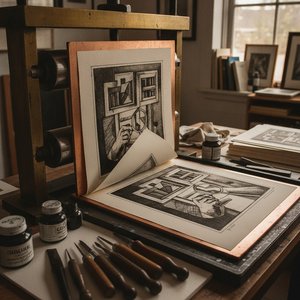
Etching Unlocked: The Sharp, High-Impact Art of Line and Shadow for the Modern Collector
Master the high-impact world of etching. Explore the transformative power of line and shadow through the intaglio tradition, from its armor-making origins to modern collecting strategies for the sophisticated art enthusiast.

10 legendárních leptů, které změnily umění navždy | OriginalUniqueArt
Prozkoumejte 10 legendárních leptů od Rembrandta, Goya a dalších mistrů. Objevte historii umělecké grafiky, etingové techniky a inspirujte se pro váš interiér s reprodukcemi nejvyšší kvality na OriginalUniqueArt.com.