
 Náhled v interiéru
 Sdílet
 Sdílet
 Podrobnosti o díle
 Průvodce

 Stáhnout
 Podobné položky
 Rentgenové snímky
 Slideshow
 Q&A
Q&A Statistiky
The Visit

- 68.0 x 58.0 cm


 Zobrazit více
Giclée / Umělecký tisk
Giclée nebo plátěný tisk muzeální kvality s rychlou výrobou a širokou nabídkou povrchových úprav. ( Koupit ručně malovaný obraz Přepnout na digitální obraz)




P118B Kč10

P118H Kč10

P118W Kč10

P438Z Kč10

P508JH Kč12

P508YH Kč12

P805H Kč10

P805Z Kč10

P919BZ Kč10

P919G Kč10

P919XJ Kč10

P959ZH Kč10

P968JZ Kč12

W106C Kč8

W218G Kč10

W218JH Kč8

W218Y Kč10

W307PJ Kč10

W316G Kč10

W316PJ Kč8

W316Y Kč10

W398PJ Kč8

W4111J Kč10

W500HY Kč15

W500JH Kč15

W692G Kč12

W849H Kč8

W940BG Kč15

W953PJ Kč8




Vyberte si z našich přednastavených velikostí, které odpovídají původním proporcím díla.

Zadejte šířku a výšku, které potřebujete pro váš rám nebo stěnu. Tisk lze pouze oříznout, nikdy však nelze zvětšit obraz nad jeho původní rozměr, proto při výběru jiného formátu dochází ke ztrátě části obrazu. Před samotným tiskem vám zašleme digitální náhled k schválení. Obraz zobrazený na této stránce nenabízí skutečný výřez — ten uvidíte pouze v náhledu.
Celosvětové doručení () do 2 týdnů namísto standardních 4/5 týdnů. (1 listopad)

Zdarma celosvětová expresní doprava

Vysoce kvalitní lněné plátno

Kompletní pojištění přepravy

Záruka vrácení celního poplatku

Záruka věrného barevného souladu

100dení lhůta pro vrácení zboží (pouze při vadách výroby)

100% záruka vrácení peněz

Sleva při více objednávkách
 Skleněná varianta je dostupná pouze u rozměrů menších než 110 cm

The Visit
Giclée / Umělecký tisk
Rozměry reprodukce
-


Celková cena za vybrané možnosti reprodukcí
Kč 1738
A Moment Frozen in Delft Light
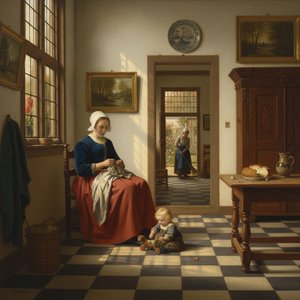
In the quiet, sun-drenched interiors of the seventeenth century, moments of profound connection were often found in the most mundane settings. Pieter de Hooch's "The Visit," painted in 1657, stands as a quintessential emblem of Dutch Baroque artistry—a deceptively simple tableau that speaks volumes about the social fabric and artistic sensibilities of its era. Captured in muted tones of ochre, ivory, and charcoal gray, this masterpiece transports us back to Delft during the zenith of the Dutch Golden Age, offering an intimate glimpse into the daily life of a bourgeois household. The painting’s enduring appeal lies not merely in its visual beauty but also in its masterful execution and subtle symbolic resonance, inviting viewers to step through a doorway into a world of domestic tranquility.
The scene unfolds with a palpable sense of realism, as de Hooch captures a group of individuals gathered around a dining table. There is a quiet drama in the way the figures are positioned; some stand while others sit, their presence suggesting a convivial conversation and shared enjoyment. The table itself is laden with details that ground the scene in reality—multiple wine glasses catch the light, hinting at a celebratory or social meal, while a book rests near one of the guests, perhaps a remnant of a shared intellectual pursuit before dinner began. Even the subtle inclusion of a clock on the wall serves as a poignant reminder of the passage of time, anchoring this fleeting social interaction within the eternal flow of history.
Mastery of Light and Texture
De Hooch's style embodies the Baroque preoccupation with illusionism and chiaroscuro—the dramatic interplay between light and shadow. Unlike the overtly theatrical compositions of his contemporaries, "The Visit" achieves grandeur through the meticulous observation of natural light filtering into a domestic interior. The artist skillfully renders textures with remarkable accuracy; one can almost feel the grain of the worn wooden bench and the crispness of the linen tablecloth. Through subtle gradations of tone, de Hooch sculpts form and conveys a profound sense of depth, drawing the viewer’s eye into the room's corners and through its architectural layers.
This technical precision makes the work an extraordinary subject for high-quality reproductions. For the art collector or interior designer, the painting offers a sophisticated palette that complements a variety of decor styles. Its monochrome-leaning tones of gray and earth colors provide a neutral yet emotionally resonant anchor for a room, bringing a sense of historical weight and calm sophistication to any space. The way de Hooich utilizes light creates an atmospheric quality that can transform a modern living area into a sanctuary of classical elegance.
A Reflection of Golden Age Prosperity
Beyond its aesthetic brilliance, "The Visit" reflects a pivotal moment in Dutch history—the burgeoning prosperity fueled by global trade and exploration. During this era, Delft was a thriving center for craftsmanship and commerce, attracting affluent families eager to establish their social standing through the cultivation of refined domestic environments. De Hooch’s depiction captures the aspirational ideal of bourgeois comfort: a world where peace, plenty, and companionship are the ultimate markers of success.
To possess a reproduction of this work is to invite the spirit of the Dutch Golden Age into one's home. It serves as more than just decoration; it is a window into a vanished era of stability and grace. Whether placed in a sunlit study or a formal dining room, "The Visit" continues to inspire awe through its ability to find the extraordinary within the ordinary, reminding us that true beauty often resides in the quietest moments of human connection.
Otázky a odpovědi
Jakým způsobem se dílo „The Visit“ vpisuje do celkové tvorby umělce Pieter de Hooch?
V rámci tvorby umělce Pieter de Hooch se dílo „The Visit“ řadí do stylu Baroque a doplňuje tak motivy baroque realism, domestic tranquility, dutch society, light’s subtle grace, artistic legacy.
Jak mohu získat digitální kopii díla „The Visit“ od Pieter de Hooch?
Digitální obraz díla „The Visit“ od Pieter de Hooch si můžete zakoupit na jeho stránce pro digitální objednávky Digitální snímek: stažení digitálního obrazu ve vysokém rozlišení.
Kdo je autorem díla "The Visit"?
Autorem díla „The Visit“ je Pieter de Hooch. Práce je v katalogu uvedena pod jménem Pieter de Hooch.
Biografie umělce
raný život a vzdělání
Pieter de Hooch, významná postava nizozemského zlatého věku, se narodil 20. prosince 1629 v Rotterdamu v Nizozemsku. Jako nejstarší z pěti dětí se narodil do rodiny Hendricka Hendricksze de Hoocha, zedníka, a Annetge Pieters, porodní báby. O jeho raném životě je známo jen málo, ale věří se, že působil v Rottendamu, Delftu i Amsterdamu. De Hoochovo umělecké vzdělání probíhalo v Haarlemu pod vedením krajináře Nicolaese Berchema, spolu s Jacobem Ochterveltem. Toto období položilo základy jeho budoucí úspěšnosti jako malíře tichých domácích scén s charakteristickým otevřeným průchodem.umělecký styl a témata
De Hoochovo dílo je definováno neuvěřitelnou pozorností k detailu, naturalismem a mistrným využitím světla. Jeho obrazy často zachycovaly každodenní život, čímž odrážely hodnoty a ambice tehdejší rostoucí střední třídy. Výrazným příkladem tohoto stylu je dílo "dvůr domu v Delftu" (1658), které demonstruje jeho schopnost zachytit i ty nejobyčejnější detaily každodennosti. Ačkoliv de Hoochovo dílo sdílí témata a kompozice s dílem Emanuela de Witte, jeho zaměření na lidi a jejich vzájemné vztahy ho vyčleňuje z davu. To je patrné například v obrazech "žena kojící" (1658) a "žena s dítětem na klíně" (1658), které projevují jeho hluboký zájem o intimní domácí scény.významná díla a odkaz
Mezi nejvýznamnější de Hoochova díla patří:- "veselý pitíř" (cca 1650)
- "hráči karet v osvětlené místnosti" (1658)
- "žena připravující chleba s máslem pro chlapce" (1661)
muzea a sbírky
Díla de Hoocha lze nalézt v různých muzeích, včetně Koninklijk Museum voor Schone Kunsten v Antverpách v Belgii, které disponuje rozsáhlou sbírkou evropského umění od 15. do 20. století. Objevte více o Pieteru de Hoochovi a jeho díle na OriginalUniqueArt: [https://OriginalUniqueArt.com/@/pieter-de-hooch](https://OriginalUniqueArt.com/@/pieter-de-hooch) /cs/art/show/art-d3b4kt-cs/ (objevte mistrovská díla Koninklijk Museum voor Schone Kunsten v Belgii)
Pieter de Hooch
1629 - 1694 , Nizozemsko
Rychlé informace o umělci
- Artistic Movement Or Style: Zlatý věk nizozemského malířství
- Artists Or Movements Influenced By This Artist: ['Jacob Ochtervelt']
- Artists Who Influenced This Artist:
- Jan Vermeer
- Nicolaes Berchem
- Date Of Birth: Rotterdam, Nizozemsko (1629)
- Date Of Death: později 1684
- Full Name: Pieter Hendricksz. de Hooch
- Nationality: Nizozemský
- Notable Artworks:
- Ulička v Delftu
- Dva vojáci a trubač s obsluhující ženou
- Ložnice
- Place Of Birth: Rotterdam
Související články

Golden Light & Dutch Skies: The Timeless Magic of Dutch Golden Age Landscapes
Discover the breathtaking beauty of Dutch Golden Age landscapes. Explore the mastery of light, chiaroscuro, and 17th-century realism through an expert art history lens, celebrating the enduring legacy of the Dutch Masters for discerning collectors and art lovers.

Willem van de Velde the Elder: Master of Maritime Painting & Chronicler of the Dutch Golden Age
Discover the captivating maritime paintings of Willem van de Velde the Elder, a master chronicler of the Dutch Golden Age. Explore his unparalleled realism and lasting influence on naval art history.

Mastering Light & Shadow: A Journey Through the Dutch Golden Age's Luminous Legacy
Embark on a cultural journey through the Dutch Golden Age. Explore the masterful interplay of light and shadow in 17th-century masterpieces, from Rembrandt to Vermeer, and discover how this era of profound realism continues to inspire fine art collectors today.
Pieter de Hooch: Illuminating Dutch Domestic Life & Golden Age Charm
Explore the captivating world of Pieter de Hooch, a master of Dutch Golden Age painting. Discover his innovative use of light, intimate domestic scenes, and lasting influence on art history. Learn more at OriginalUniqueArt.

Zlatý věk nizozemského malířství: 10 mistrovských děl pro váš domov | OriginalUniqueArt.com
Prozkoumejte 10 ikonických děl nizozemského zlatého věku – Rembrandt, Vermeer a další mistři. Objevte příběhy za obrazy, techniky a inspiraci pro váš interiér s reprodukcemi nejvyšší kvality na OriginalUniqueArt.com.


