Přepnout na tisk
 Zobrazit více







































 U děl nebo reprodukcí, u nichž je jakákoliv strana větší než 105 cm (přibližně 41 palců), bude rám dodán jako sestava v rozloženém stavu. Tato metoda zajišťuje bezpečné doručení a chrání dílo před poškozením během přepravy.


A Moment Frozen in Delft Light
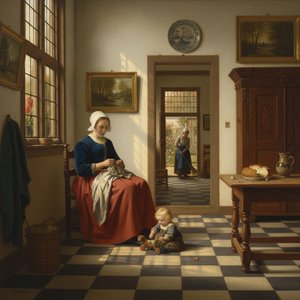
In the quiet corners of seventeenth-century Delft, where the soft glow of morning light often danced through open doorways, Pieter de Hooch captured a world of profound stillness. His masterpiece, "The Drinker," serves as a breathtaking window into the Dutch Golden Age, offering much more than a mere depiction of a domestic scene. It is an invitation to step into a sanctuary of peace, where the frantic pace of the outside world dissolves into the gentle rhythm of everyday life. As one gazes upon this canvas, there is an immediate sense of being present in that sun-drenched courtyard, feeling the warmth of the diffused daylight as it filters through the architecture to illuminate a scene of quiet, unhurried existence.
The composition is a masterclass in spatial storytelling and balanced restraint. De Hooch, a contemporary of the legendary Johannes Vermeer, utilizes perspective not merely as a technical tool, but as an emotional guide. The viewer’s eye is led through a carefully constructed depth of field, moving from the intimate foreground—where a man sits cradling a feline companion with tender care—toward the subtle movement of figures conversing near a doorway in the background. This layering of space creates a revolutionary sense of realism, making the courtyard feel like an extension of our own world. The presence of three cats, scattered throughout the scene, adds a layer of domestic charm and organic life, grounding the painting in the relatable, tactile reality of a middle-class home.
The Artistry of Light and Texture
Technically, "The Drinker" is a triumph of chiaroscuro and meticulous observation. De Hooch’s ability to render the interplay of light and shadow transforms a simple interior into a luminous experience. He employs thin, delicate layers of oil paint to achieve a translucent quality, allowing light to appear as if it is truly emanating from within the scene itself. One can almost feel the varied textures underfoot: the cool stone of the courtyard, the smooth wood of the chairs, and the soft, organic warmth of the cat’s fur. This dedication to material accuracy serves to heighten the painting's naturalism, making every element—from the humble dining table to the simple cup—feel significant and permanent.
For the discerning collector or interior designer, this artwork offers a unique emotional resonance that transcends time. It does not demand attention through grand, dramatic gestures; instead, it commands respect through its understated elegance and psychological nuance. The painting evokes a sense of domestic tranquility and refined sensibility, making it an ideal centerpiece for spaces designed to inspire contemplation and calm. Whether placed in a contemporary gallery or a classic study, a high-quality reproduction of "The Drinker" brings with it the timeless prestige of the Dutch masters, offering a sophisticated touch of history that celebrates the beauty found in life's most quiet, fleeting moments.
Otázky a odpovědi
Jak významné je dílo „The Drinker“ v rámci směru Dutch Golden Age?
Dílo "The Drinker" je v katalogu hodnoceno jako Recognized mezi díly z období Dutch Golden Age.
Zůstalo dílo "The Drinker" ve své domovské zemi?
Ne – dílo se nachází v zahraničí. Rodimá země Pieter de Hooch je Nizozemsko, zatímco muzeum, které uchovává originál díla „The Drinker“, se nachází v zemi France.
K kterému uměleckému směru patří „The Drinker“ od Pieter de Hooch?
Umělecký směr, ke kterému patří dílo „The Drinker“ od Pieter de Hooch, je Dutch Golden Age. Tato klasifikace toto dílo umísťuje mezi související umělce a další umělecká díla.
 Náhled v interiéru
 Sdílet
 Sdílet
 Podrobnosti o díle
 Průvodce

 Stáhnout
 Podobné položky
 Rentgenové snímky
 Slideshow
 Q&A
Q&A Statistiky