

 Náhled
 Sdílet
 Sdílet
 Podrobnosti o díle

 Stáhnout
 Podobné položky
 Rentgenové snímky
 Slideshow
 Statistiky
Rudá divokyně
 Olej na plátně
- Obrazová tvorba na stěnu
- American Impressionism
 1908
1908- 19. století
 64.0 x 77.0 cm
 Zobrazit více
Koupě vysoce rozlišeného, vylepšeného digitálního obrazu, který je mnohem kvalitnější než online náhled.
Každý soubor je pečlivě připraven našimi odborníky pomocí pokročilých nástrojů a expertní manuální retuše. Zajišťujeme, aby každý obraz disponoval výjimečnou ostrostí, přesnou barevnou věrností a jemnými detaily.
Finální soubor vám bude do 72 hodin zaslán e-mailem, optimalizovaný pro okamžité použití v profesionálním, redakčním i tiskovém prostředí. Nabízíme stejnou kvalitu, které důvěřují špičková designová studia, nakladatelství i galerie.
Digitální obrazy
Stáhněte si soubor ve vysokém rozlišení pro osobní prohlížení, tisk a kreativní projekty. ( Přepnout na tisk Koupit ručně malovaný obraz)
Součást každé objednávky digitálního obrazu
Profesionální digitální doručení, zaručeno.
Když si vyberete OriginalUniqueArt.com, nezískáváte pouze obrázek – získáváte digitální umělecké dílo s profesionálně vylepšenými detaily, zpracované s precizností a podpořené zárukou za spokojenost. Zde je vše, co vaše objednávka automaticky obsahuje:

Rychlé doručení e-mailem
Váš digitální obraz ve vysokém rozlišení vám bude zaslán e-mailem do 72 hodin od objednávky – připraven k okamžitému použití.

Digitální soubor s využitím AI
Vaše umělecké dílo je profesionálně optimalizováno pomocí pokročilých nástrojů umělé inteligence a manuální úpravy, což zajišťuje maximální úroveň detailu, ostrosti a přesnosti barev.

Bezplatné doživotní znovuodeslání
Soubor jste omylem smazali nebo ztratili? Žádný problém – kdykoliv vám ho znovu zašleme zcela zdarma.

Bez poplatků za dovoz – navždy
Užijte si své umělecké dílo okamžitě bez celních poplatků, daní nebo nákladů na dopravu – digitální stažení je vždy bez daňových povinností.

Záruka přesnosti barev
Pomocí profesionálních nástrojů a správy barev zajišťujeme, aby váš digitální obraz odrážel původní barvy co nejvěrněji.

100dená záruka spokojenosti
Pokud nebudete s digitálním obrázkem spokojeni, provedeme jeho revizi nebo vám vrátíme 100% platby do 100 dnů – bez jakýchkoliv dotazů.

100% záruka vrácení peněz
Nespokojeni? Získejte plnou náhradu peněz do 100 dnů od obdržení digitálního souboru – bez zbytečných dotazů.

Slevy při hromadných objednávkách
Koupěte si 3 obrazy, ušetřete 10% - Koupěte si 5, ušetřete 15% - Koupěte si 10+, ušetřete 20%. Ideální pro kreativní projekty, galerie a agentury.
The Crimson Rambler: A Jewel of American Impressionism
Phillip Leslie Hale’s “The Crimson Rambler” is more than just a painting; it's an invitation into a sun-drenched moment, a carefully constructed tableau of elegance and the quiet beauty of nature. Completed in 1908, this work exemplifies the burgeoning American Impressionist movement, capturing not photographic realism but rather the fleeting essence of light and atmosphere – a hallmark of Hale’s distinctive style. The painting depicts a young woman seated on a veranda, seemingly lost in contemplation as she engages with a vibrant rose trellis dominating the foreground. This isn't merely a portrait; it’s an exploration of harmony between human presence and the natural world, rendered with a remarkable sensitivity to color and texture.
Hale masterfully employs a diagonal composition, guiding the viewer’s eye from the lush, red-flowered bush on the left – a bold splash of color against the softer tones of the background – towards the woman. This dynamic arrangement creates a sense of movement and depth, preventing the scene from feeling static. The veranda itself, with its subtle architectural details, provides a grounding element, anchoring the composition while allowing the eye to wander through the interplay of light and shadow. Notice how Hale uses horizontal lines in the porch railing and the distant lawn to create stability, juxtaposed against the diagonal thrust of the woman and the rose trellis – a deliberate choice that enhances the painting’s visual interest.
A Painter's Technique: Impressionism in Action
The brushwork in “The Crimson Rambler” is instantly recognizable as characteristic of Hale’s Impressionist approach. Loose, visible strokes are layered upon each other, creating a textured surface that seems to shimmer with reflected light. He doesn’t meticulously render every detail; instead, he captures the overall impression – the feeling of warmth, the play of sunlight on petals, the gentle curve of the woman's silhouette. Hale skillfully uses color not just to represent reality but to evoke emotion. The dominant reds of the roses are balanced by the greens of the foliage and the muted tones of the veranda, creating a harmonious palette that is both vibrant and soothing.
The artist’s use of light is particularly noteworthy. Hale expertly captures the diffused sunlight filtering through the trees, casting dappled shadows across the scene. This creates a sense of depth and atmosphere, drawing the viewer into the painting's world. Observe how he uses highlights to emphasize certain elements – the woman’s face, the delicate petals of the roses – while leaving other areas in shadow, adding to the overall drama.
Historical Context & Symbolism
Phillip Leslie Hale was a pivotal figure in the American Impressionist movement, deeply influenced by his time studying in Paris and Giverny, where he encountered the revolutionary techniques of Claude Monet. Born in Boston in 1865, Hale’s artistic training combined academic rigor with an embrace of Impressionistic principles – a testament to his versatility as an artist. “The Crimson Rambler” reflects this synthesis, demonstrating his ability to blend traditional composition with innovative color and brushwork.
Beyond its aesthetic qualities, the painting is rich in symbolism. The red roses, traditionally associated with love, passion, and remembrance, suggest a deeper narrative – perhaps a moment of reflection on past joys or future aspirations. The veranda itself represents domesticity, refuge, and a connection to nature. The woman’s pose, seemingly lost in thought, invites the viewer to contemplate their own relationship with beauty and tranquility. It's a scene that speaks to the quiet pleasures of life, captured with exquisite sensitivity by Hale’s skilled hand.
Bringing “The Crimson Rambler” into Your Space
A reproduction of "The Crimson Rambler" offers a beautiful way to bring a touch of American Impressionism into your home. Whether displayed in a formal living room or a more casual space, this painting’s serene beauty and evocative atmosphere will undoubtedly enhance any environment. OriginalUniqueArt's hand-painted reproductions capture the essence of Hale’s original work with remarkable fidelity, ensuring that you own a piece of art history – a timeless treasure to be cherished for generations.
Biografie umělce
Philip Leslie Hale: Bridging Academia and Monet’s Vision
Phillip Leslie Hale (1865-1931) stands as a pivotal figure in American Impressionism, an artist who skillfully blended rigorous academic training with the revolutionary aesthetic principles championed by Claude Monet. Born in Boston, Massachusetts, on September 22nd, 1865, Hale’s artistic journey began amidst a family steeped in intellectual pursuits – his father, Edward Everett Hale, was a reverend and prominent writer, and his sister, Ellen Day Hale, herself an accomplished artist. This familial environment undoubtedly fostered a passion for creativity and observation that would define his lifelong career.- Early Education & Training: Hale’s formative years were spent at the School of the Museum of Fine Arts in Boston under the tutelage of Edmund Tarbell, establishing a foundation in traditional painting techniques. However, he quickly sought expansion beyond these boundaries, enrolling at New York’s Art Students League where influential mentors like Kenyon Cox and J. Alden Weir honed his artistic sensibilities.
- Parisian Influence: Recognizing the transformative potential of European art movements, Hale embarked on a pivotal expedition to Paris in 1887, immersing himself in the vibrant artistic milieu of Impressionism. Spending five formative years abroad, he particularly absorbed Monet’s groundbreaking approach to capturing fleeting moments of light and color – an influence that would permeate his subsequent works.
A Painter's Palette: Style and Technique
Hale’s distinctive style is characterized by a luminous quality—a hallmark of Impressionism—where light dominates the canvas, shaping colors and creating atmospheric depth. He meticulously employed brushstrokes to convey texture and movement, mirroring the dynamism of nature itself. Unlike many of his contemporaries who adhered strictly to academic conventions, Hale embraced Monet's innovative techniques, prioritizing subjective perception over precise representation. This approach is vividly evident in paintings such as “Garden Party” (1913), a masterful depiction of a leisurely afternoon gathering bathed in dappled sunlight—a testament to Hale’s ability to translate Impressionist ideals into compelling visual narratives.- Monet's Legacy: Hale’s dedication to Monet’s method is palpable, particularly in his use of broken color and layering techniques. These innovations allowed him to capture the ephemeral beauty of landscapes and interiors with unparalleled sensitivity.
- Notable Works: Among Hale’s celebrated compositions are “The Crimson Rambler” (1908), an expansive landscape brimming with rich hues and textural nuances, showcased at the Pennsylvania Academy of Fine Arts in Philadelphia. This painting exemplifies Hale's commitment to portraying natural grandeur while simultaneously conveying a profound emotional resonance.
Academic Roots & Artistic Mentorship
Despite his embrace of Impressionism’s expressive freedom, Hale maintained connections with academic traditions through his teaching positions at the Museum School of Boston and the Metropolitan Museum of Art. He nurtured the talents of aspiring artists like Mary Bradish Titcomb, fostering a legacy of artistic excellence. His influence extended beyond the classroom; he championed innovative approaches to art education, emphasizing observation and experimentation alongside foundational skills.- Publications & Scholarship: Hale’s intellectual curiosity manifested in his scholarly pursuits, culminating in “Jan Vermeer of Delft” (1913)—the inaugural monograph dedicated to Vermeer published in the United States—a pioneering effort that solidified his reputation as a respected Vermeer scholar and contributed significantly to the dissemination of Vermeer's artistic vision.
Legacy & Recognition
Phillip Leslie Hale’s contributions to American Impressionism are recognized through exhibitions at institutions like the Pennsylvania Academy of Fine Arts, the Metropolitan Museum of Art, and Somerville College. His enduring influence continues to inspire artists today, cementing his place as a significant figure in the history of art—a painter who successfully reconciled artistic innovation with intellectual rigor, leaving behind a body of work that embodies both beauty and profound insight.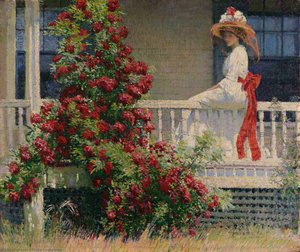
phillip leslie hale
1865 - 1931
Stručné informace
- Artistic Movement Or Style: Impressionism
- Artists Or Movements Influenced By This Artist: ['Boston School painting']
- Artists Who Influenced This Artist:
- Claude Monet
- Edmund Tarbell
- Date Of Birth: 1865
- Date Of Death: 1931
- Full Name: Phillip Leslie Hale
- Nationality: American
- Notable Artworks:
- The Crimson Rambler
- Garden Party
- Place Of Birth: Boston, Massachusetts