Olejová verze
 Vše o Old Trees







































 U děl nebo reprodukcí, u nichž je jakákoliv strana větší než 105 cm (přibližně 41 palců), bude rám dodán jako sestava v rozloženém stavu. Tato metoda zajišťuje bezpečné doručení a chrání dílo před poškozením během přepravy.


Identification of Old Trees by Peder Balke
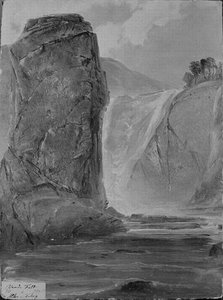
Old Trees is an oil painting by Peder Balke, executed in 1840. The work originates from a period in the artist's career marked by a profound connection to the Norwegian landscape. Balke, a Norwegian Romantic Visionary, was born in 1804 on the island of Helgøya, Norway, and lived until 1887.
The piece captures a desolate, wintry scene defined by crepuscular light. In this composition, mountains and trees appear to part ways to admit a pale, winter glow. The landscape is characterized by its untamed, rugged qualities, reflecting the natural environment of the Norwegian countryside that shaped the artist's early development.
The Composition and Visual Elements
The composition is tightly framed, concentrating on a solitary figure amidst a snow-covered forest. To the left, a prominent pine tree is partially obscured by falling snow, while a large, imposing cliff face dominates the background. This arrangement emphasizes the scale of the environment, rendering the bundled figure small and vulnerable against the vastness of the landscape. The scene is defined by a somber, melancholic mood, established through a predominantly dark and muted color palette of grays, browns, and blues.
Lighting is used dramatically to direct the viewer's eye. A strong light source illuminates the figure and specific portions of the foreground, creating a sharp contrast against the background, which remains shrouded in shadow. This interplay of light and dark heightens the sense of isolation within the bleak, wintry setting. The use of lines is primarily linear, tracing the forms of the trees, the cliff, and the human figure to define their shapes within the composition.
Technique and Artistic Materials
Executed in oil on canvas, the work utilizes an impasto technique characterized by a thick application of paint. This heavy layering creates a tactile surface, particularly visible in the rough textures of the tree bark and the accumulation of snow. The artist employs primarily linear brushstrokes to define the structural forms of the trees, the cliff face, and the solitary figure.
A deliberate departure from traditional finish is evident in the lower register, where loosely brushed brown paint remains visible as a mid-tone base coat. This approach prioritizes painterly effect over verisimilitude, favoring the immediate impact of the medium over precise representation. The resulting surface emphasizes the physical presence of the pigment, contributing to the work's atmospheric weight.
Documented Interpretations and Debates
The reception of this work has historically been polarized by its departure from established painterly standards. In 1843, a Norwegian critic dismissed the artist's entire body of work, characterizing it as the result of a dirty palette handled without discrimination. This critique reflects the tension between the artist's provocative technique and the expectations of the contemporary art establishment. By prioritizing atmospheric effect over polished verisimilitude, the work often challenged the formal conventions of the era.
Interpretations of the scene often focus on the agency of the natural world. Rather than acting as a passive backdrop, the landscape functions as a dramatic protagonist. The composition captures a stark winter atmosphere where the terrain feels heavy under the weight of the season. Through the use of crepuscular light, the mountains and timber appear to yield to an ethereal glow, creating a sense of a desolate, untamed environment.
Related Works by Peder Balke
Balke’s exploration of the Norwegian landscape continued through several significant compositions. The 1845 work Seascape and the 1846 The Harbor at Skjervøy demonstrate his interest in coastal environments and maritime activity. These works share a preoccupation with the interaction between water and light, a theme further developed in The North Cape by Moonlight, painted in 1848.
The artist's output also included more structured views, such as VUE DE CHRISTIANIA (AUJOURD'HUI OSLO) from 1872. This later work offers a perspective on the capital, contrasting with the more rugged, naturalistic focus of his earlier years. Additionally, VUE DE KONGSBERG, created about 1847, shares a thematic connection to the atmospheric qualities found in Old Trees.
Otázky a odpovědi
Je dílo Old Trees ručně malované, nebo jde o tisk?
Ručně malováno: zkušený malíř přetvoří Old Trees v olejomalbu na lněném plátně.
Jakou velikost si mám vybrat pro Old Trees?
Rozměry originálu jsou 14 x 18 cm. Velikosti se pohybují od 28.5 x 35.1 cm (Kč4355) až po 197.8 x 244.3 cm (Kč38589); v tabulce na této stránce jsou uvedeny jednotlivé varianty a jejich ceny.
Jak dlouho trvá doručení?
Doručení trvá 4 až 5 týdnů a zahrnuje bezplatnou expresní přepravu po celém světě; na této stránce je k dispozici i možnost urgentní výroby. Dílo můžete vrátit během 100 dnů s plným vrácením peniędzy, bez jakýchkoliv podmínek.
Jakou techniku použil/a Peder Balke pro dílo Old Trees?
Oil On Canvas
 Náhled v interiéru

 Sdílet
 Sdílet
 Podrobnosti o díle
 Informační list


 Stáhnout
 Podobné položky
 Rentgenové snímky
 Slideshow
 Otázky a odpovědi

 Statistiky