
 Náhled v interiéru
 Sdílet
 Sdílet
 Podrobnosti o díle
 Průvodce

 Stáhnout
 Podobné položky
 Rentgenové snímky
 Slideshow
 Q&A
Q&A Statistiky
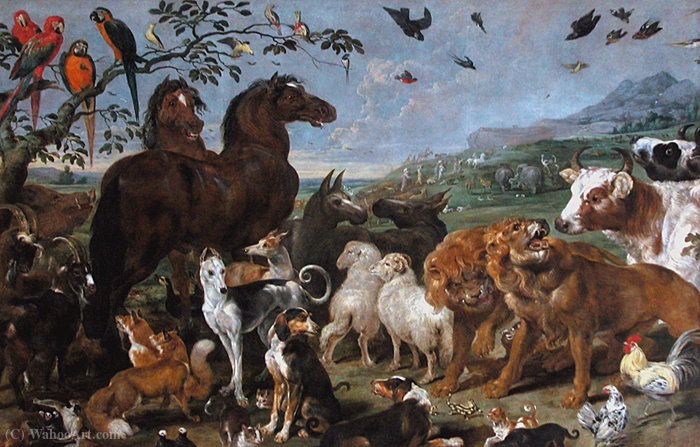
Noah's ark

 Zobrazit více
Umělecké dílo zobrazené na této stránce je chráněno autorským zákonem, což znamená, že nemůžeme legálně vytvářet ani prodávat jeho identickou reprodukci. Tato ochrana je vymáhána na základě mezinárodních dohod, jako například Berberská úmluva a národními zákony, včetně těch stanovených v Americký autorský zákon – Díl 17. Všechna práva vyhrazena.
Jako etická a právní alternativa nabízíme vlastní, ručně malovaná umělecká díla inspirovaná originálem. Naši zdatní a profesionální umělci si pečlivě studují styl, náladu a uměleckou podstatu originálu, aby vytvořili nové, jedinečné dílo, které vyvolává stejný pocit – přičemž zůstává samostatným originálním tvůrčím dílem.
Tato metoda je plně v souladu s autorským právem, protože nezahrnuje kopírování ani duplikování chráněného díla. Jde o kreativní reinterpretaci – nový obraz, který je inspirován originálem, ale není s ním identický.
Ručně malovaná olejová reprodukce
Rukou malované olejné plátno v libovolném rozměru i s rámem, vyrobené našimi umělci na zakázku. ( Přepnout na tisk Přepnout na digitální obraz)




































Vyberte si z našich přednastavených velikostí, které odpovídají původním proporcím díla.

Zadejte šířku a výšku, které potřebujete pro váš rám nebo stěnu. Protože se jedná o ruční malbu, při výběru jiného formátu může umělec kolem obrazu domalovat o něco více, nebo jej mírně oříznout — rozhodnete si vy. Před zahájením malby vám zašleme digitální náhled ke schválení. Obraz zobrazený na této stránce neodpovídá skutečnému výsledku — pouze digitální náhled jej zobrazuje.
Po přijetí objednávky vám tým OriginalUniqueArt.com zašle e-mail s pokyny a poskytne náhledovou verzi.
Celosvětová doprava () za 3–4 týdny namísto standardních 5 týdnů. (28 říjen). Bez kompromisů v kvalitě.

Zdarma celosvětová expresní doprava

Vysoce kvalitní lněné plátno

Kompletní pojištění přepravy

Záruka vrácení celního poplatku

Záruka věrného barevného souladu

100dení lhůta pro vrácení zboží (pouze při vadách výroby)

100% záruka vrácení peněz

Sleva při více objednávkách
 Skleněná varianta je dostupná pouze u rozměrů menších než 110 cm

Noah's ark
Technika reprodukce
Rozměry reprodukce
-


Celková cena za vybrané možnosti reprodukcí
Kč 6460
Biografie umělce
The Master of the Flemish Wild: The Life and Legacy of Paul de Vos
In the golden age of the Flemish Baroque, where grand mythological dramas and sweeping portraits often commanded the halls of European nobility, a more intimate yet equally profound artistry was taking root. Paul de Vos emerged as a singular voice within this vibrant era, turning his gaze away from the heavens and toward the earth. While his contemporaries sought to immortalize gods and kings, De Vos found his muse in the raw, pulsing energy of the natural world. His canvases became windows into the wild, capturing the tension of the hunt and the quiet dignity of still life with a precision that commanded respect from the very masters who defined his age.
Born in Hulst, Netherlands, De Vos’s destiny was inextricably linked to the artistic heartbeat of Antwerp. Moving to this bustling metropolis as a young child, he was thrust into an environment where creativity was the city's primary currency. His formal education was a rigorous journey through the prestigious Guild of St. Luke, studying under masters such as Denijs van Hove, David Remeeus, and Eduard Snayers. This deep immersion in the Antwerp tradition provided him with more than just technical skill; it granted him entry into an elite circle of innovators. The influence of his brother-in-law, the legendary Frans Snyders, and the monumental presence of Peter Paul Rubens acted as both a foundation and a challenge, pushing De and Vos to refine a style that was uniquely his own.
A Symbiosis of Technique and Nature
The true brilliance of De Vos lies in his ability to marry the dramatic flair of the Baroque period with an almost scientific devotion to anatomical accuracy. His work is characterized by a remarkable sense of movement; one can almost hear the rustle of leaves or the sudden, sharp breath of a predator in mid-pursuit. Unlike the often overwhelming scale of Rubens’s compositions, De Vos mastered a more restrained yet equally impactful aesthetic. He utilized luminous colors—warm yellows and earthy ochres—to create an atmospheric depth that breathed life into his subjects.
His technical prowess was so highly regarded that he became a sought-after collaborator for the giants of his time. The historical record reveals a profound professional respect between De Vos and Peter Paul Rubens, with the latter famously entrusting De Vos with the execution of animal figures within larger, more complex compositions. This partnership allowed De Vos to contribute to some of the most significant works of the 17th century, blending his specialized talent for wildlife with the grand narrative structures of the Baroque masters. His ability to render the texture of fur, the glint in a predator's eye, and the delicate decay of a still life arrangement set him apart as a specialist of unparalleled skill.
Historical Significance and Artistic Endurance
The legacy of Paul de Vos extends far beyond the borders of 17th-century Flanders. He played a crucial role in elevating animal painting from mere decorative accompaniment to a respected genre of fine art. By focusing on the intrinsic beauty and drama of the natural world, he provided a different kind of spectacle—one that resonated with the burgeoning interest in natural history and the visceral reality of life and death.
Today, his contributions are recognized as a vital component of the Flemish Baroque tapestry. His work serves as a testament to the era's ability to find profound meaning in the smallest details of existence. Through his mastery of light, color, and motion, De Vos ensured that the creatures of the wild would forever hold a place of honor in the annals of art history. His paintings remain enduring studies in:
- Dynamic Composition: The use of tension and movement to guide the viewer's eye through hunting scenes.
- Anatomical Precision: A meticulous dedication to the realistic depiction of fauna.
- Atmospheric Mastery: The creation of depth and mood through a sophisticated palette of warm, natural tones.
- Collaborative Excellence: His role in shaping the visual language of the Antwerp school alongside Rubens and Van Dyck.

Paul de Vos
1916 - 2006 , Netherlands
Rychlé informace o umělci
- Full Name: Paul de Vos
- Nationality: Flemish
- Date Of Birth: 1916
- Date Of Death: 2006
- Place Of Birth: Hulst, Netherlands
- Notable Artworks:
- Diana the Huntress
- Peacock and Cock Fighting
- Artistic Movement Or Style: Baroque
- Artists Who Influenced This Artist:
- Anthony van Dyck
- Peter Paul Rubens
- Artists Or Movements Influenced By This Artist: ['Rembrandt']
Související články

Paul Cézanne: 25 mistrovských děl a revoluce v moderním umění | OriginalUniqueArt.cz
Prozkoumejte 25 ikonických děl Paula Cézanna – průkopníka moderního umění a impresionismu. Obdivujte jeho still life, krajiny a portréty. Reprodukce obrazů v nejvyšší kvalitě na OriginalUniqueArt.com. Inspirace pro váš interiér!

Paul Klee: 25 mistrovských děl a inspirace pro váš interiér | OriginalUniqueArt.com
Objevte 25 ikonických děl Paula Kleeho – od abstraktních kompozic po barevné sny. Ponořte se do světa expresionismu, Bauhausu a jedinečného uměleckého stylu. Reprodukce obrazů nejvyšší kvality pro váš interiér na OriginalUniqueArt.com

O nás
Objevte náš příběh! Přinášíme umění světové úrovně do vašeho života prostřednictvím odborného výběru, zakázkové tvorby a bezplatných náhledů. Osvědčeno jednotlivcům i firmám od roku 2000.

Barokní mistrovská díla: 10 obrazů, které definovaly umělecký styl | OriginalUniqueArt.cz
Objevte 10 ikonických děl barokního umění – od Caravaggia po Rembrandta. Ponořte se do příběhů mistrů, technik a emocí tohoto velkolepého období. Reprodukce obrazů nejvyšší kvality na OriginalUniqueArt.com! Prozkoumejte celou kolekci online.

Francisco Goya: 25 mistrovských děl španělského génia | OriginalUniqueArt.cz
Prozkoumejte 25 ikonických děl Francisca Goyi – od romantických portrétů po temné tiskoviny. Objevte příběhy, techniky a umělecký význam španělského mistra na OriginalUniqueArt.cz. Reprodukce obrazů pro váš interiér.
